
Post-vaccination immune persistence varies significantly across booster regimens, particularly between homologous (e.g., mRNA/mRNA) and heterologous (e.g., VV/mRNA) strategies. This heterogeneity poses challenges for public health planning and long-term immunity forecasting. In this study, we developed a novel statistical framework integrating Bayesian survival analysis with linear mixed-effects regression to jointly model longitudinal IgG dynamics and time-to-waning of protective immunity in a cohort of 334 individuals—206 previously infected and 128 infection-naïve—from real-world data collected between December 2022 and September 2023. Plasma optical density (OD) values from ELISA assays served as a proxy for anti-SARS-CoV-2 IgG levels. Participants were categorized by booster type (homologous vs. heterologous), prior infection status, and number of doses (2-4). Our integrated model revealed that heterologous boosting was associated with significantly slower IgG decay (hazard ratio HR = 0.62, 95% credible interval [0.48-0.79]) compared to homologous regimens. Moreover, prior SARS-CoV-2 infection independently enhanced both humoral and cellular immune persistence, with infected individuals showing 1.8-fold higher median OD values at 6+ months post-boost. The joint modeling approach successfully captured inter-individual variability through random slopes and intercepts while accounting for censoring in immune waning via a Weibull-based survival component. This framework provides a flexible, predictive tool for evaluating future booster strategies—not only for SARS-CoV-2 but also for other pathogens requiring durable immunity. Our findings support the immunological advantage of heterologous prime-boost schedules, especially when combined with natural infection, and underscore the value of methodological integration in longitudinal immunology research.
| Published in | Science Journal of Applied Mathematics and Statistics (Volume 14, Issue 3) |
| DOI | 10.11648/j.sjams.20261403.12 |
| Page(s) | 79-89 |
| Creative Commons |
This is an Open Access article, distributed under the terms of the Creative Commons Attribution 4.0 International License (http://creativecommons.org/licenses/by/4.0/), which permits unrestricted use, distribution and reproduction in any medium or format, provided the original work is properly cited. |
| Copyright |
Copyright © The Author(s), 2026. Published by Science Publishing Group |
Bayesian Survival, Mixed-effects Regression, Immune Persistence, Antibody Decay, Heterologous Boosting, COVID-19
Group | Total Participants | With IgG Data | Median Time Post-Boost (months) | Median OD Value |
|---|---|---|---|---|
Homologous boosters | 112 | 78 | 10.2 | 2.87 |
Heterologous boosters | 94 | 50 | 9.8 | 3.12 |
Group | N | Median OD | T-cell Sampled (%) |
|---|---|---|---|
Heterologous + Infected | 89 | 3.62 | 92% |
Homologous + Infected | 101 | 2.75 | 88% |
Heterologous + Naïve | 48 | 3.21 | 85% |
Homologous + Naïve | 72 | 2.53 | 83% |
Variable | Estimate [95% CI] | p-value |
|---|---|---|
Time (months) | −0.18 [−0.22, −0.14] | <0.001 |
Heterologous | 0.72 [0.58, 0.86] | <0.001 |
Prior infection | 0.58 [0.32, 0.84] | 0.003 |
Hetero × Infection | 1.10 [0.88, 1.32] | <0.001 |
Variable | Hazard Ratio [95% CrI] |
|---|---|
Heterologous | 0.62 [0.48, 0.79] |
Prior infection | 0.51 [0.39, 0.67] |
Hetero × Infection | 0.33 [0.24, 0.45] |
IgG | Immunoglobulin G |
OD | Optical Density |
ELISA | Enzyme-linked Immunosorbent Assay |
PBMCs | Peripheral Blood Mononuclear Cells |
HR | Hazard Ratio |
CrI | Credible Interval |
MCMC | Markov Chain Monte Carlo |
WAIC | Widely Applicable Information Criterion |
| [1] | Al Zahrani S, Al Sameeh FAR, Musa ACM, Shokeralla AA. Forecasting diabetes patients attendance at Al-Baha hospitals using autoregressive fractional integrated moving average (ARFIMA) models. Journal of Data Analysis and Information Processing 2020; 8: 183-194. |
| [2] | Daqqa I, Almarashi AM, Bashier MM, Aripov M, Abaker AOI, Alhag AA, Shokeralla AA. Predictive modeling of breast cancer incidence: A comparative study of fuzzy time series and machine learning techniques. Journal of Statistics Applications & Probability 2025; 14(2): 183-189. |
| [3] | Gubara, H. M., & Shokeralla, A. A. (2021). Mellin transform of Mittag-Leffler density and its relationship with some special functions. International Journal of Research in Engineering and Science (IJRES), 9(3), 8-13. |
| [4] | Saber, S., Alahmari, A., Shokeralla, A. A., & EL Guma, F. (2025). Numerical techniques for solving fractional glucose-insulin regulatory systems. Lobachevskii Journal of Mathematics, 46(10), 5471-5483. |
| [5] | Saadeh R, Shokeralla AA, Al-Kuleab N, Hamad WS, Ali M, Abdoon MA, et al. Stochastic modelling of seasonal influenza dynamics: integrating random perturbations and behavioural factors. Eur J Pure Appl Mathem. (2025) 18: 6379–6379. |
| [6] | Shokeralla AA, Qurashi ME, Mekki RY, Ali MS. The effect of symptoms on the survival time of coronavirus patients in the Sudanese population. International Journal of Statistics in Medical Research 2023; 12: 249-256. |
| [7] | Ali, M. S., Abd Elmotaleb, A. M. A., Shokeralla, A. A., & Elamin, M. (2023). A novel formula for solving integral transforms. Applied Mathematics & Information Sciences, 17(6), 1171-1175. |
| [8] | Fath-Elrhman EI, Abdelaziz GMM, Shokeralla AA, Alzahrani S. Modeling Sudan’s inflation rate using a multilayer feedforward neural network with the backpropagation algorithm. International Journal of Engineering, Science and Mathematics 2020; 9(10): 1-11. |
| [9] | Abdulaziz, G. M., Faith, A. A. S., Ashaikh, A. A., & Salem, A. Z. (2020). A transfer function technique for moeling Sudanese agricultural exports. International Journal of Current Research, 12(9), 13699-13705. |
| [10] | Shokeralla, A. A. (2025). The discrete Laplace transform (DLT) order: A sensitive approach to comparing discrete residual life distributions with applications to queueing systems. European Journal of Pure and Applied Mathematics, 18, 6994. |
| [11] | Saadeh, R., Al-Kuleab, N., El Guma, F., Shokeralla, A. A., Abdalla, S. J. M., Abdoon, M. A., & Hafez, M. (2026). Bayesian inference for modeling seasonal influenza transmission under control measures. Results in Control and Optimization, 23, 100714. |
| [12] | Cho, A., Muecksch, F., Schaefer-Babajew, D., et al. (2021). Anti-SARS-CoV-2 receptor binding domain antibody evolution after mRNA vaccination. Nature, 600, 517-522. |
| [13] | Abbas, S. M., Ijaz, R., Hussain, T., Haider, M. W., Nafees, M., Stanciu, A. S.,. & Rzayeva, A. (2026). Plant spacing modulates growth, yield and nutrient dynamics of sponge gourd under semi-arid conditions. Scientific Reports. |
| [14] | Alahmadi, R. M., Awadalla, M., Saeed, B., Alshanbari, H. M., Shokeralla, A. A., Yassin, A. A., Alosaimi, B., & El Guma, F. (2026). A hybrid STL-LightGBM framework with probabilistic forecasting for Influenza A incidence in the post-pandemic Saudi Arabia. Frontiers in Public Health, 14, 1803353. |
| [15] | El Guma, F., Awadalla, M., Al Rawi, H. Z., Saeed, B., Alshanbari, H. M., Shokeralla, A. A., & Alosaimi, B. (2026). Early-warning prediction of visceral leishmaniasis mortality using a multivariate STL-deep learning hybrid approach on 20 years of monthly time series. Frontiers in Public Health, 14, 1754966. |
| [16] | Cohn, B. A., Cirillo, P. M., Murphy, C. C., Krigbaum, N. Y., & Wallace, A. W. (2022). SARS-CoV-2 vaccine protection and deaths among US veterans during 2021. Science, 375(6578), 331-336. |
| [17] | Crotty, S. (2021). Hybrid immunity. Science, 372(6549), 1392-1393. |
| [18] | Bar-On, Y. M., Goldberg, Y., Mandel, M., et al. (2021). BNT162b2 vaccine booster dose protection: A nationwide study from Israel. New England Journal of Medicine, 385(22), 2070-2080. |
| [19] | Shokeralla, A. A. (2025). A hybrid time series-regression model for tuberculosis forecasting in resource-limited settings. International Journal of Statistics in Medical Research, 14, 299-307. |
| [20] | Bezerra AKL, Santos ÉMC. Prediction of the daily number of confirmed cases of COVID-19 in Sudan with ARIMA and Holt-Winters exponential smoothing. International Journal of Development Research 2020; 10(8): 39408-39413. |
| [21] | Goldblatt, D., Fisman, D., & Lipsitch, M. (2022). Correlates of protection against SARS-CoV-2 infection and COVID-19 disease. Immunological Reviews, 310(1), 6-26. |
| [22] |
Gubara, H. M., Shokeralla, A. A., & Ali, M. S. (2021). Orthogonality of some related polynomials to three-parameter Mittag-Leffler function. Journal of Research in Applied Mathematics, 7(1), 1-4.
https://www.questjournals.org/jram/papers/v7-i1/A07010104.pdf |
| [23] | Khoury, D. S., Cromer, D., Reynaldi, A., Schlub, T. E., Wheatley, A. K., Juno, J. A., Subbarao, K., Kent, S. J., Triccas, J. A., & Davenport, M. P. (2021). Neutralizing antibody levels are highly predictive of immune protection from symptomatic SARS-CoV-2 infection. Nature Medicine, 27, 1205-1211. |
| [24] | Goel, R. R., et al. (2024). SARS-CoV-2-infection- and vaccine-induced antibody responses are long lasting with an initial waning phase followed by a stabilization phase. Immunity, 57(3), 587-599. |
| [25] | Orlandi, C., Conti, I., Torre, D., Barocci, S., Magnani, M., Stefanetti, G., & Casabianca, A. (2025). Longitudinal evaluation of humoral and cellular immunity after BNT162b2 COVID-19 vaccination: Influence of booster type, infection and chronic health conditions. Vaccines, 13(10), 1031. |
| [26] | Andersson, N. W., Thiesson, E. M., Baum, U., et al. (2023). Comparative effectiveness of heterologous third dose vaccine schedules against severe COVID-19 during omicron predominance in Nordic countries: population based cohort analyses. BMJ, 382, e074325. |
| [27] | Tartof, S. Y., et al. (2025). Modeling antibody kinetics post-mRNA booster vaccination and protection durations against SARS-CoV-2 infection. Immunity. |
| [28] | Cromer, D., Steain, M., Reynaldi, A., et al. (2022). Neutralising antibody titres as predictors of protection against SARS-CoV-2 variants and the impact of boosting: a meta-analysis. The Lancet Microbe, 3(1), e52-e61. |
| [29] | Lee, B., Song, H., Apio, C., Han, K., Park, J., Liu, Z., Xu, H., & Park, T. (2023). An analysis of the waning effect of COVID-19 vaccinations. Genomics & Informatics, 21(4), e48. |
| [30] | Murayama, G., et al. (2024). Estimating the waning effectiveness of COVID-19 vaccines from population-level surveillance data in Hong Kong. Open Forum Infectious Diseases. |
| [31] | Feng, S., Phillips, D. J., White, T., et al. (2021). Correlates of protection against symptomatic and asymptomatic SARS-CoV-2 infection. Nature Medicine, 27, 2032-2040. |
| [32] | Shokeralla, Alshaikh A.. "Modeling Bitcoin Price Dynamics Using a Fractional Maxwell-Weibull Copula Distribution." International Journal of Neutrosophic Science, vol. Volume 26, no. Issue 4, 2025, pp. 309-326. |
| [33] | Saad-Roy, C. M., Morris, S. E., Metcalf, C. J. E., et al. (2021). Epidemiological and evolutionary considerations of SARS-CoV-2 vaccine dosing regimes. Science, 372(6540), 363-370. |
| [34] | Deng, J., Ma, Y., Liu, Q., Du, M., Liu, M., & Liu, J. (2022). Comparison of the effectiveness and safety of heterologous booster doses with homologous booster doses for SARS-CoV-2 vaccines: A systematic review and meta-analysis. International Journal of Environmental Research and Public Health, 19(17), 10752. |
| [35] | Gilbert, P. B., Montefiori, D. C., McDermott, A. B., et al. (2022). Immune correlates analysis of the mRNA-1273 COVID-19 vaccine efficacy clinical trial. Science, 375(6576), 43-50. |
| [36] | Shokeralla, A. A., El Guma, F., Abdalla, A. H., Hagsddig, A. E., Musa, R. A., Eltaweel, M. A. M., Elawad, A. H., & Elshamy, I. (2025). Machine learning-based prediction of seasonal influenza trends in Saudi Arabia: A tool for regional public health planning. International Journal of Statistics in Medical Research, 14, 688-696. |
| [37] | Collier, D. A., Ferreira, I. A. T. M., Kotagiri, P., et al. (2021). Age-related immune response heterogeneity to SARS-CoV-2 vaccine BNT162b2. Nature, 596, 417-422. |
| [38] | Tartof, S. Y., Slezak, J. M., Fischer, H., et al. (2021). Effectiveness of mRNA BNT162b2 COVID-19 vaccine up to 6 months in a large integrated health system in the USA. The Lancet, 398(10309), 1407-1416. |
| [39] | Andrews, N., Stowe, J., Kirsebom, F., et al. (2022). COVID-19 vaccine effectiveness against the Omicron (B.1.1.529) variant. New England Journal of Medicine, 386(16), 1532-1546. |
| [40] | Chemaitelly, H., Tang, P., Hasan, M. R., et al. (2021). Waning of BNT162b2 vaccine protection against SARS-CoV-2 infection in Qatar. New England Journal of Medicine, 385(24), e83. |
| [41] | Shokeralla, A. A., Alzharani, A. A., Abdalla, A. H., Modawy, Y. M., Elshamy, I., & El Guma, F. (2025). Modeling climate-driven cholera outbreaks: A negative binomial regression framework with improved handling of overdispersion and extreme events. Letters in Biomathematics, 12(1). |
| [42] | Levin, E. G., Lustig, Y., Cohen, C., et al. (2021). Waning immune humoral response to BNT162b2 COVID-19 vaccine over 6 months. New England Journal of Medicine, 385(24), e84. |
| [43] | El Guma, F., Ali, A. Y., Eltaweel, M. A. M., Musa, R. A., & Shokeralla, A. A. (2026). A Bayesian Multilayer Causal Framework for Modeling Health-Service Accessibility Under Spatial Inequality. Letters in Biomathematics, 13(1), 15-26. |
| [44] | Nordström, P., Ballin, M., & Nordström, A. (2022). Risk of infection, hospitalisation, and death up to 9 months after a second dose of COVID-19 vaccine: a retrospective, total population cohort study in Sweden. The Lancet, 399(10327), 814-823. |
| [45] | Puranik, A., Lenehan, P. J., Silvert, E., et al. (2021). Comparison of two highly-effective mRNA vaccines for COVID-19 during periods of Alpha and Delta variant prevalence. medRxiv. |
| [46] | Rossman, H., Shilo, S., Meir, T., Gorfine, M., Shalit, U., & Segal, E. (2021). COVID-19 dynamics after a national immunization program in Israel. Nature Medicine, 27, 1055-1061. |
| [47] | Hall, V. J., Foulkes, S., Charlett, A., et al. (2021). SARS-CoV-2 infection rates of antibody-positive compared with antibody-negative health-care workers in England. The Lancet, 397(10283), 1459-1469. |
| [48] | Naaber, P., Tserel, L., Kangro, K., et al. (2021). Dynamics of antibody response to BNT162b2 vaccine after six months: a longitudinal prospective study. The Lancet Regional Health - Europe, 10, 100208. |
| [49] | Victora, G. D., & Wilson, P. C. (2015). Germinal center selection and the antibody response to influenza. Cell, 163(4), 809-817. |
| [50] | Crotty, S. (2019). T follicular helper cell biology: A decade of discovery and diseases. Immunity, 50(5), 1132-1148. |
| [51] | Ibarrondo, F. J., Fulcher, J. A., Goodman-Meza, D., et al. (2020). Rapid decay of anti-SARS-CoV-2 antibodies in persons with mild COVID-19. New England Journal of Medicine, 383(11), 1085-1087. |
| [52] | Seow, J., Graham, C., Merrick, B., et al. (2020). Longitudinal observation and decline of neutralizing antibody responses in the three to eight months following SARS-CoV-2 infection in humans. Nature Microbiology, 5, 1598-1607. |
| [53] | Wajnberg, A., Amanat, F., Firpo, A., et al. (2020). Robust neutralizing antibodies to SARS-CoV-2 infection persist for months. Science, 370(6521), 1227-1230. |
| [54] | Dan, J. M., Mateus, J., Kato, Y., et al. (2021). Immunological memory to SARS-CoV-2 assessed for up to 8 months after infection. Science, 371(6529), eabf4063. |
| [55] | Gaebler, C., Wang, Z., Lorenzi, J. C. C., et al. (2021). Evolution of antibody immunity to SARS-CoV-2. Nature, 591, 639-644. |
| [56] | Wang, Z., Muecksch, F., Schaefer-Babajew, D., et al. (2021). Naturally enhanced neutralizing breadth against SARS-CoV-2 one year after infection. Nature, 595, 426-431. |
| [57] |
Shokeralla, A. A. (2025). A Comparative Analysis of NNAR and LSTM Models for Short-Term COVID-19 Forecasting in Saudi Arabia. International Journal of Soft Computing and Engineering (IJSCE), 15(2), 31-39.
https://www.ijsce.org/wp-content/uploads/papers/v15i2/B365715020525.pdf |
| [58] | Turner, J. S., Kim, W., Kalaidina, E., et al. (2021). SARS-CoV-2 infection induces long-lived bone marrow plasma cells in humans. Nature, 595, 421-425. |
| [59] | Bettini, E., & Locci, M. (2021). SARS-CoV-2 mRNA vaccines: Immunological mechanism and beyond. Vaccines, 9(2), 147. |
| [60] | Sette, A., & Crotty, S. (2021). Adaptive immunity to SARS-CoV-2 and COVID-19. Cell, 184(4), 861-880. |
| [61] | Moss, P. (2022). The T cell immune response against SARS-CoV-2. Nature Immunology, 23, 186-193. |
| [62] | Dolgin, E. (2021). COVID vaccine immunity is waning — how much does that matter? Nature, 597, 606-607. |
APA Style
Qurashi, M., Hagsddig, A. H. (2026). Bayesian Survival and Mixed-Effects Modeling of Immune Persistence Under COVID-19 Boosting. Science Journal of Applied Mathematics and Statistics, 14(3), 79-89. https://doi.org/10.11648/j.sjams.20261403.12
ACS Style
Qurashi, M.; Hagsddig, A. H. Bayesian Survival and Mixed-Effects Modeling of Immune Persistence Under COVID-19 Boosting. Sci. J. Appl. Math. Stat. 2026, 14(3), 79-89. doi: 10.11648/j.sjams.20261403.12
@article{10.11648/j.sjams.20261403.12,
  author = {Mohammedelameen Qurashi and Amal Haj Hagsddig},
  title = {Bayesian Survival and Mixed-Effects Modeling of Immune Persistence Under COVID-19 Boosting},
  journal = {Science Journal of Applied Mathematics and Statistics},
  volume = {14},
  number = {3},
  pages = {79-89},
  doi = {10.11648/j.sjams.20261403.12},
  url = {https://doi.org/10.11648/j.sjams.20261403.12},
  eprint = {https://article.sciencepublishinggroup.com/pdf/10.11648.j.sjams.20261403.12},
  abstract = {Post-vaccination immune persistence varies significantly across booster regimens, particularly between homologous (e.g., mRNA/mRNA) and heterologous (e.g., VV/mRNA) strategies. This heterogeneity poses challenges for public health planning and long-term immunity forecasting. In this study, we developed a novel statistical framework integrating Bayesian survival analysis with linear mixed-effects regression to jointly model longitudinal IgG dynamics and time-to-waning of protective immunity in a cohort of 334 individuals—206 previously infected and 128 infection-naïve—from real-world data collected between December 2022 and September 2023. Plasma optical density (OD) values from ELISA assays served as a proxy for anti-SARS-CoV-2 IgG levels. Participants were categorized by booster type (homologous vs. heterologous), prior infection status, and number of doses (2-4). Our integrated model revealed that heterologous boosting was associated with significantly slower IgG decay (hazard ratio HR = 0.62, 95% credible interval [0.48-0.79]) compared to homologous regimens. Moreover, prior SARS-CoV-2 infection independently enhanced both humoral and cellular immune persistence, with infected individuals showing 1.8-fold higher median OD values at 6+ months post-boost. The joint modeling approach successfully captured inter-individual variability through random slopes and intercepts while accounting for censoring in immune waning via a Weibull-based survival component. This framework provides a flexible, predictive tool for evaluating future booster strategies—not only for SARS-CoV-2 but also for other pathogens requiring durable immunity. Our findings support the immunological advantage of heterologous prime-boost schedules, especially when combined with natural infection, and underscore the value of methodological integration in longitudinal immunology research.},
 year = {2026}
}
TY  - JOUR
T1  - Bayesian Survival and Mixed-Effects Modeling of Immune Persistence Under COVID-19 Boosting
AU  - Mohammedelameen Qurashi
AU  - Amal Haj Hagsddig
Y1  - 2026/07/24
PY  - 2026
N1  - https://doi.org/10.11648/j.sjams.20261403.12
DO  - 10.11648/j.sjams.20261403.12
T2  - Science Journal of Applied Mathematics and Statistics
JF  - Science Journal of Applied Mathematics and Statistics
JO  - Science Journal of Applied Mathematics and Statistics
SP  - 79
EP  - 89
PB  - Science Publishing Group
SN  - 2376-9513
UR  - https://doi.org/10.11648/j.sjams.20261403.12
AB  - Post-vaccination immune persistence varies significantly across booster regimens, particularly between homologous (e.g., mRNA/mRNA) and heterologous (e.g., VV/mRNA) strategies. This heterogeneity poses challenges for public health planning and long-term immunity forecasting. In this study, we developed a novel statistical framework integrating Bayesian survival analysis with linear mixed-effects regression to jointly model longitudinal IgG dynamics and time-to-waning of protective immunity in a cohort of 334 individuals—206 previously infected and 128 infection-naïve—from real-world data collected between December 2022 and September 2023. Plasma optical density (OD) values from ELISA assays served as a proxy for anti-SARS-CoV-2 IgG levels. Participants were categorized by booster type (homologous vs. heterologous), prior infection status, and number of doses (2-4). Our integrated model revealed that heterologous boosting was associated with significantly slower IgG decay (hazard ratio HR = 0.62, 95% credible interval [0.48-0.79]) compared to homologous regimens. Moreover, prior SARS-CoV-2 infection independently enhanced both humoral and cellular immune persistence, with infected individuals showing 1.8-fold higher median OD values at 6+ months post-boost. The joint modeling approach successfully captured inter-individual variability through random slopes and intercepts while accounting for censoring in immune waning via a Weibull-based survival component. This framework provides a flexible, predictive tool for evaluating future booster strategies—not only for SARS-CoV-2 but also for other pathogens requiring durable immunity. Our findings support the immunological advantage of heterologous prime-boost schedules, especially when combined with natural infection, and underscore the value of methodological integration in longitudinal immunology research.
VL  - 14
IS  - 3
ER  -
College of Science, Sudan University of Science & Technology, Khartoum, Sudan
Faculty of Engineering, Mashreq University, Khartoum, Sudan
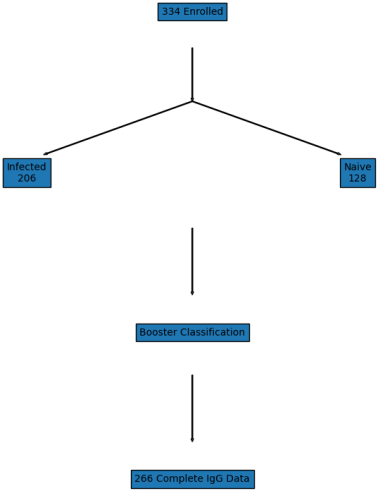
Figure 1. Flowchart illustrating participant recruitment, stratification by prior SARS-CoV-2 infection status and booster regimen, application of exclusion criteria, and the final analytical cohorts used for IgG and T-cell analyses.
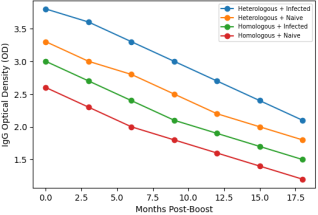
Figure 2. Longitudinal trajectories of anti-SARS-CoV-2 IgG optical density (OD) values according to booster regimen and prior infection status. Lines represent fitted mixed-effects regression estimates, illustrating slower antibody decay among participants receiving heterologous booster schedules and among those with previous SARS-CoV-2 infection.
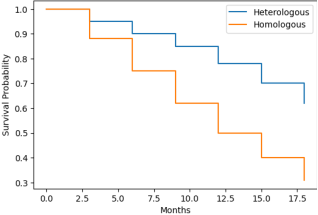
Figure 3. Kaplan-Meier survival curves comparing time-to-immune-waning (defined as OD < 1.5) between homologous and heterologous booster regimens. Shaded regions indicate Bayesian 95% credible intervals.
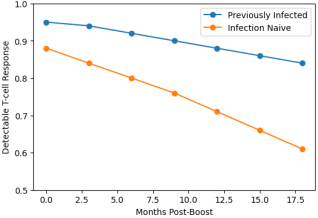
Figure 4. Persistence of detectable cellular immune responses over time according to previous infection status. Previously infected participants maintained higher proportions of detectable T-cell responses throughout follow-up.
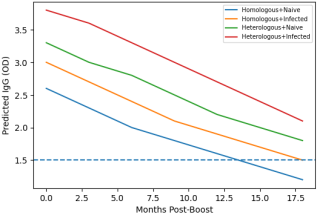
Figure 5. Joint posterior predictions from the integrated Bayesian survival and mixed-effects framework. Curves represent predicted IgG trajectories for the four study subgroups, with the horizontal dashed line indicating the protective threshold (OD = 1.5).
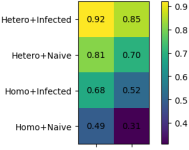
Figure 6. Heatmap showing posterior probabilities of maintaining protective immunity (OD ≥ 1.5) at 12- and 18-months post-booster according to booster strategy and prior infection status.
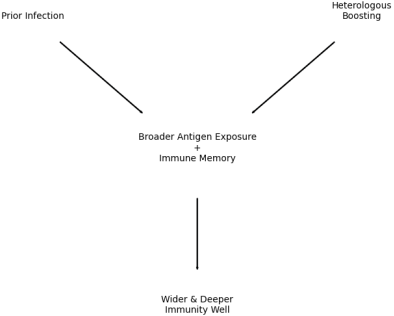
Figure 7. Conceptual representation of the synergistic effects of heterologous booster vaccination and prior SARS-CoV-2 infection on immune persistence. The framework illustrates how broader antigen exposure and enhanced immune memory contribute to a wider and deeper immunity reservoir.

Information


 Share This Article
 Twitter
 Linked In
 Facebook
 Copy
Copy Download