
150 swabs were taken from different burns of patients admitted to Medical City Hospital and Al-Kindi Teaching Hospital. 128 swabs showed morphological examinations. The isolates were confirmed at the species level using Vitek2 compact system for skin diseases. The isolates under study were tested for sensitivity using the drill diffusion method. Nanoparticles were prepared by two methods, chemical synthesis and green synthesis, Aloe vera and aqueous extract of saffron (Crocus sativus L.). Bacteria were isolated by 60 isolates of Pseudomonas aeruginosa, (46.87%), followed by Staphylococcus aureus, with 38 isolates (12.28%), Klebsiella spp. with 20 isolates (15.62%), and the rest of the isolates were Escherichia coli, Enterobacter cloacae, Acinetobacter baumannii, Stenotrophomonas maltophilia, with three isolates for each type, i.e. (1.56%). S. aureus and Ps. aeruginosa were the most resistant bacteria to antibiotics, and it was found that substance nanoparticle prepared by Artificial roads nanoparticle. The percentage of Staph. aureus bacteria was (28.12%), while Ps. aeruginosa bacteria was (46.87%). The solutions were at concentrations of (100, 75, 50, 25) M%. It is noted that the highest inhibition concentration was (100) M%. As for the is Staph. aureus and Ps. aeruginosa bacteria isolates zone (48, 45) mm, respectively. It was found that the saffron of (45) mm in inhibiting the isolates of Gram-positive bacteria Staph. aureus. The success of Staph. aureus with nickel oxide with saffron at a rate of MIC. Invivo test animals, and the MBC the conducted two methods tests were, ZETA POTENTIAL. Nanomaterials with a smaller size of 5-12nm called quantum dot were observed, and no agglomeration occurred in them. It was shown that the MTT toxicity assay for the solutions of the IC50 ratio for cancerous PC3, while for cellsand the substance is not toxic to the solution for treating S. aureus bacteria, and Ps. aeruginosa.
| Published in | International Journal of Clinical and Experimental Medical Sciences (Volume 12, Issue 3) |
| DOI | 10.11648/j.ijcems.20261203.11 |
| Page(s) | 39-56 |
| Creative Commons |
This is an Open Access article, distributed under the terms of the Creative Commons Attribution 4.0 International License (http://creativecommons.org/licenses/by/4.0/), which permits unrestricted use, distribution and reproduction in any medium or format, provided the original work is properly cited. |
| Copyright |
Copyright © The Author(s), 2026. Published by Science Publishing Group |
Aloe vera, Pseudomonas aeruginosa, Staphylococcus aureus, Crocus sativus L, Nanoparticles
The method | Concentrations | Average length diameter of inhibition zone mm | |
|---|---|---|---|
M% | Ps. aeruginosa | Staph. aureus | |
N1 | 25 | 0.0 | 0 |
50 | 0.0 | 25 | |
75 | 0.0 | 13 | |
100 | 14 | 11 | |
N2 Aleovera | 25 | 0.0 | 0 |
50 | 35 | 35 | |
75 | 37 | 35 | |
100 | 47 | 45 | |
Peak No. | Zeta Potential | Electrophoretic Mobility |
|---|---|---|
N1 | -57.3 mv | -0.000444 cm2/vs |
N2 | -28.5 mv | -0.000221 cm2/vs |
Type of discriminatory material | Average length diameter of inhibition zone mm | ||
|---|---|---|---|
Concentrations M% | Pseudomonas aeruginosa | Staphylococcus aureus | |
1 NT4 | 25 | 0.0 | 0.0 |
50 | 0.0 | 0.0 | |
75 | 0.0 | 0.0 | |
100 | 0.0 | 32 | |
2 NT5 (Crocus sativus L) | 25 | 0.0 | 0.0 |
50 | 0.0 | 0.0 | |
75 | 12 | 8 | |
100 | 23 | 30 | |
2 NT6 (Crocus sativus L. ) | 25 | 0.0 | 0.0 |
50 | 0.0 | 0.0 | |
75 | 0.0 | 0.0 | |
100 | 0.0 | 8 | |
Peak No. | Zeta Potential | Electrophoretic Mobility |
|---|---|---|
N4 | 0.9 mv | 0.000007 cm2/vs |
N6 | -17.8 mv | -0.000138 cm2/vs |
ماء مقطر | Staphylococcus aureusتركيز. M% | Pseudomonas aerogenos تركيز. M% | |||||||
|---|---|---|---|---|---|---|---|---|---|
0,0 | 0,1 | 0,01 | 0,05 | 0,07 | 0,1 | 0,01 | 0,05 | 0,07 | ت |
0 | 36 | 0 | 0 | 0 | 0 | 0 | 0 | 0 | 1 |
0 | 39 | 0 | 0 | 0 | 0 | 0 | 0 | 0 | 2 |
0 | 46 | 0 | 0 | 0 | 0 | 0 | 0 | 0 | 3 |
0 | 38 | 1 | 2 | 4 | 27 | 0 | 0 | 0 | 4 |
0 | 0 | 0 | 0 | 0 | 0 | 0 | 0 | 0 | 5 |
0 | 48 | 0 | 6 | 7 | 45 | 0 | 5 | 6 | 10 |
0 | 45 | 3 | 5 | 8 | 44 | 4 | 5 | 6 | 11 |
0 | 41 | 3 | 5 | 7 | 30 | 3 | 4 | 7 | 12 |
0 | 42 | 0 | 1 | 2 | 33 | 0 | 2 | 5 | 13 |
0 | 46 | 0 | 0 | 0 | 23 | 0 | 0 | 0 | 14 |
Peak No. | Zeta Potential | Electrophoretic Mobility |
|---|---|---|
11 | -36.7 mv | -0.000494 cm2/ vs |
Concen. | PC3 | HdFN | |||
|---|---|---|---|---|---|
Mean | SD | Mean | SD | ||
400.00 | 42.82 | 2.77 | 3.00 | 71.95 | 0.81 |
200.00 | 52.43 | 5.12 | 3.00 | 80.03 | 3.88 |
100.00 | 67.25 | 1.45 | 3.00 | 84.34 | 2.66 |
50.00 | 74.54 | 5.42 | 3.00 | 86.07 | 1.92 |
25.00 | 87.08 | 3.51 | 3.00 | 95.22 | 0.82 |
12.50 | 96.76 | 1.14 | 3.00 | 95.95 | 1.03 |
6.25 | 96.30 | 0.81 | 3.00 | 95.95 | 0.20 |
FT-ir | Fourier Transform Infrared Spectroscopy |
TEM | Transmission Electron Microscope |
MTT | metabolic Dye [3-(4,5 Dimethyl Thiazol-2-yl)- 2, 5-] Diphenylterazolium$Bromide |
MIC | Minimum Inhibitory Concentration |
MBC | Minimum Bactericidal Concentration |
UV | UV–visible Analysis |
XRD | X-ray Diffraction |
ZP | Zeta Potential |
| [1] | Cirnski, K., Coetzee, J., Herrmann, J., & Müller, R. Metabolic Profiling to Determine Bactericidal or Bacteriostatic Effects of New Natural Products using Isothermal Microcalorimetry. (2020). |
| [2] | Kamel, Hassan Majeed. The effect of cumin fruit extracts and black pepper seeds in controlling food-source bacteria Master’s thesis, College of Education, Al-Qadisiyah University. (2018). |
| [3] | Garcia-Espinoza, J. A., Aguilar-Aragon, V. B., Ortiz-Villalobos, E. H., Garcia-Manzano, R. A., & Antonio, B. A. Burns: definition, classification, pathophysiology and initial approach. Gen Med, (2020). 5(5), 1-5. |
| [4] | Cerceo, E., Deitelzweig, S. B., Sherman, B. M., & Amin, A. N. Multidrug- resistant gram-negative bacterial infections in the hospital setting: overview, implications for clinical practice, and emerging treatment options. Microbial Drug Resistance, 22(5), (2016). 412-431. |
| [5] | Ghazi, Riyam Thamer * Israa Ghanem Al-Samak. The synergistic effect of zinc nanoparticles and the antibiotic Erythromycin on methicillin-resistant Staphylococcus aureus bacteria isolated from different infections. Department of Life Sciences / College of Science / University of Mosul. (2020). |
| [6] | Khazal, Laila Asi, Najdat Bahjat Mahdi 1. Study of the efficiency of some antibiotics of different origins on S. aureus bacteria isolated from different clinical sources. University of Kirkuk / College of General Studies / Department of Life Sciences (2015). |
| [7] | Al-Rubaie, Abeer Fawzi Murad. Survey of the prevailing bacterial spores in Babylon Governorate, Master’s thesis, College of Science, University of Babylon. (2000). |
| [8] | Nakagawa, S., Hillebrand, G. G., & Nunez, G. Rosmarinus officinalis l.(rosemary) extracts containing carnosic acid and carnosol are potent quorum sensing inhibitors of staphylococcus aureus virulence. Antsibiotics, (2020). 9(4), 149. |
| [9] | Okuma, K., Iwakawa, K., Turnidge, J. D., Grubb, W. B., Bell, J. M., O'Brien, F. G., ... & Hiramatsu, K. Dissemination of new methicillin-resistant Staphylococcus aureus clones in the community. Journal of clinical microbiology, (2002). 40(11), 4289-4294. |
| [10] | Foster, T. J. Immune evasion by staphylococci. Nature reviews microbiology, (2005). 3(12), 948-958. |
| [11] | Weidenmaier, C., Kokai-Kun, J. F., Kristian, S. A., Chanturiya, T., Kalbacher, H., Gross, M., ... & Peschel, A. Role of teichoic acids in Staphylococcus aureus nasal colonization, a major risk factor in nosocomial infections. Nature medicine, (2004). 10(3), 243-245. |
| [12] | Radovanovic, M., Petrovic, M., Hanna, R. D., Nordstrom, C. W., Calvin, A. D., Barsoum, M. K., ... & Dumic, I. Clinical Presentation and Management of Methicillin-Resistant Staphylococcus aureus Pericarditis—Systematic Review. Journal of Cardiovascular Development and Disease, (2022). 9(4), 103. |
| [13] | Dinges, M. M., Orwin, P. M., & Schlievert, P. M. Exotoxins of Staphylococcus aureus. Clinical microbiology reviews, (2000). 13(1), 16-34. |
| [14] | Yousefi, M., Farshidi, M., Sani, M. A., Payahoo, L., & Ehsani, A. Investigation of the microbial quality and the occurrence of Shiga-like-toxin-producing Escherichia coli and methicillin resistant Staphylococcus aureus in traditional cheeses produced in northwest of Iran. Nutrition & Food Science. (2018). |
| [15] | AL-Hilli, F. A. Study of Antimicrobial effect of leaves extract from Callistemoncitrinuson Pseudomonas aeruginosa isolated from patients (Doctoral dissertation, M. Sc. Thesis, Coll. Sci., Univ. AL-Mustansiriya). (2000). |
| [16] | Payam, A. F., Biglarbeigi, P., Morelli, A., Lemoine, P., McLaughlin, J., & Finlay, D. Data acquisition and imaging using wavelet transform: a new path for high speed transient force microscopy. Nanoscale Advances, (2021). 3(2), 383-398. |
| [17] | Xavier, D. E., Picão, R. C., Girardello, R., Fehlberg, L. C., & Gales, A. C. Efflux pumps expression and its association with porin down-regulation and β-lactamase production among Pseudomonas aeruginosa causing bloodstream infections in Brazil. BMC microbiology, (2010). 10(1), 1-7. |
| [18] | Douglas, M. W., Mulholland, K., Denyer, V., & Gottlieb, T. Multi-drug resistant Pseudomonas aeruginosa outbreak in a burns (2001). |
| [19] | Diggle, S. P., & Whiteley, M. Microbe Profile: Pseudomonas aeruginosa: opportunistic pathogen and lab rat. Microbiology, (2020). 166(1), 30. |
| [20] | Nikaido, H. Multidrug resistance in bacteria. Annual review of biochemistry, (2009). 78, 119-146. |
| [21] | Chanishvili, N., Chanishvili, T., Tediashvili, M., & Barrow, P. A. Phages and their application against drug‐resistant bacteria. Journal of Chemical Technology & Biotechnology, (2001).76(7), 689-699. |
| [22] | (22). Langer, P. Mit schnellem Griff zu den Fakten: Taschenbuch Chemische Substanzen. (2002). Von A. Willmes. Harri Deutsch, Frankfurt aM 2001. 1195 Seiten, brosch. 29, 95 Euro, ISBN: 3‐8171‐1662‐4. |
| [23] | Sun, S. S., Chen, Y., Yang, J., Tian, T. F., Deng, H. X., Li, W. H., ... & Alici, G. The development of an adaptive tuned magnetorheological elastomer absorber working in squeeze mode. Smart Materials and Structures, (2014). 23(7), 075009. |
| [24] | Eftekhar, F., Rastegar, M., Golalipoor, M., & Mansoursamaei, N. Detection of Extended Spectrum B-Lactamases in Urinary Isolates of Klebsiella pneumoniae in Relation to blaSHV, blaTEM and blaCTX-M gene carriage. Iranian journal of public health, (2012). 41(3), 127. |
| [25] | Enders, A., North, N., Fensore, C., Velez-Alvarez, J., & Allen, H. Functional group identification for FTIR spectra using Figure-based machine learning models. (2021). |
| [26] | Malvern Instruments, L. Zeta Potential: An Introduction in 30 Minutes. Malvern Instruments. Report nr mrk, (2012). 654, 6. |
| [27] | Musa, M. M. A. Antimicrobial activity of Aloe Barbadensis millar (Aloe Vera) against Pseudomonas aeruginosa isolates in Khartoum state, Sudan (Doctoral dissertation, Sudan University of Science & Technology). (2019). |
| [28] | Srivastava, N., & Srivastava, P. C. Realizing NiO nanocrystals from a simple chemical method. Bulletin of Materials Science, (2010). 33(6), 653-656. |
| [29] | Pal, S. L., Jana, U., Manna, P. K., Mohanta, G. P., & Manavalan, R. Nanoparticle: An overview of preparation and characterization. Journal of applied pharmaceutical science, (2011).1(6), 228-234. |
| [30] | Jalill, R. D. A., Jawad, M. M. H. M., & Abd, A. N. Plants extracts as green synthesis of zirconium oxide nanoparticles. J. Genet. Environ. Res. Conserv, (2017). 5(1), 6-23. |
| [31] | Jalill, A., Raghad, D. H., Nuaman, R. S., & Abd, A. N. Biological synthesis of Titanium Dioxide nanoparticles by Curcuma longa plant extract and study its biological properties. World Scientific News, (2016). 49(2), 204-222. |
| [32] | Poole Jr, C. P., & Owens, F. J. Introduction to nanotechnology. John Wiley & Sons. (2003). |
| [33] | Abd, A., Ali, R., & Hussein, A. Fabrication and characterization of nickel oxide nanoparticles/silicon heterojunction. J Multidiscip Eng Sci Stud, (2016). 2, 434-40. |
| [34] | Hashim, A. A. (Ed.). Smart nanoparticles technology. BoD–Books on Demand. (2012). |
| [35] | Abdel-Aal, S. K., Beskrovnyi, A. I., Ionov, A. M., Mozhchil, R. N., & Abdel-Rahman, A. S. Structure Investigation by Neutron Diffraction and X‐Ray Diffraction of Graphene Nanocomposite CuO–rGO Prepared by Low‐Cost Method. physica status solidi (a), (2021). 2100138. |
| [36] | Kalyani, R., & Gurunathan, K. Intercalated network of graphene oxide (GO)–CuO–polythiophene (PTh) hybrid nanocomposite for photocatalytic applications. Journal of Materials Science: Materials in Electronics, (2016). 27(10), 10634-10641. |
| [37] | El Bachiri, A., Soussi, L., Karzazi, O., Louardi, A., Rmili, A., Erguig, H., & El Idrissi, B. Electrochromic and photoluminescence properties of cobalt oxide thin films prepared by spray pyrolysis. Spectroscopy Letters, (2019) 52(1), 66-73. |
APA Style
Sultan, A. A. H. (2026). Evaluation of the Inhibitory Effect and Cytotoxicity of Some Nanoparticles Against Bacterial Isolates from Burn Infections. International Journal of Clinical and Experimental Medical Sciences, 12(3), 39-56. https://doi.org/10.11648/j.ijcems.20261203.11
ACS Style
Sultan, A. A. H. Evaluation of the Inhibitory Effect and Cytotoxicity of Some Nanoparticles Against Bacterial Isolates from Burn Infections. Int. J. Clin. Exp. Med. Sci. 2026, 12(3), 39-56. doi: 10.11648/j.ijcems.20261203.11
@article{10.11648/j.ijcems.20261203.11,
  author = {Asmaa Ahmed Hatem Sultan},
  title = {Evaluation of the Inhibitory Effect and Cytotoxicity of Some Nanoparticles Against Bacterial Isolates from Burn Infections},
  journal = {International Journal of Clinical and Experimental Medical Sciences},
  volume = {12},
  number = {3},
  pages = {39-56},
  doi = {10.11648/j.ijcems.20261203.11},
  url = {https://doi.org/10.11648/j.ijcems.20261203.11},
  eprint = {https://article.sciencepublishinggroup.com/pdf/10.11648.j.ijcems.20261203.11},
  abstract = {150 swabs were taken from different burns of patients admitted to Medical City Hospital and Al-Kindi Teaching Hospital. 128 swabs showed morphological examinations. The isolates were confirmed at the species level using Vitek2 compact system for skin diseases. The isolates under study were tested for sensitivity using the drill diffusion method. Nanoparticles were prepared by two methods, chemical synthesis and green synthesis, Aloe vera and aqueous extract of saffron (Crocus sativus L.). Bacteria were isolated by 60 isolates of Pseudomonas aeruginosa, (46.87%), followed by Staphylococcus aureus, with 38 isolates (12.28%), Klebsiella spp. with 20 isolates (15.62%), and the rest of the isolates were Escherichia coli, Enterobacter cloacae, Acinetobacter baumannii, Stenotrophomonas maltophilia, with three isolates for each type, i.e. (1.56%). S. aureus and Ps. aeruginosa were the most resistant bacteria to antibiotics, and it was found that substance nanoparticle prepared by Artificial roads nanoparticle. The percentage of Staph. aureus bacteria was (28.12%), while Ps. aeruginosa bacteria was (46.87%). The solutions were at concentrations of (100, 75, 50, 25) M%. It is noted that the highest inhibition concentration was (100) M%. As for the is Staph. aureus and Ps. aeruginosa bacteria isolates zone (48, 45) mm, respectively. It was found that the saffron of (45) mm in inhibiting the isolates of Gram-positive bacteria Staph. aureus. The success of Staph. aureus with nickel oxide with saffron at a rate of MIC. Invivo test animals, and the MBC the conducted two methods tests were, ZETA POTENTIAL. Nanomaterials with a smaller size of 5-12nm called quantum dot were observed, and no agglomeration occurred in them. It was shown that the MTT toxicity assay for the solutions of the IC50 ratio for cancerous PC3, while for cellsand the substance is not toxic to the solution for treating S. aureus bacteria, and Ps. aeruginosa.},
 year = {2026}
}
TY  - JOUR
T1  - Evaluation of the Inhibitory Effect and Cytotoxicity of Some Nanoparticles Against Bacterial Isolates from Burn Infections
AU  - Asmaa Ahmed Hatem Sultan
Y1  - 2026/08/17
PY  - 2026
N1  - https://doi.org/10.11648/j.ijcems.20261203.11
DO  - 10.11648/j.ijcems.20261203.11
T2  - International Journal of Clinical and Experimental Medical Sciences
JF  - International Journal of Clinical and Experimental Medical Sciences
JO  - International Journal of Clinical and Experimental Medical Sciences
SP  - 39
EP  - 56
PB  - Science Publishing Group
SN  - 2469-8032
UR  - https://doi.org/10.11648/j.ijcems.20261203.11
AB  - 150 swabs were taken from different burns of patients admitted to Medical City Hospital and Al-Kindi Teaching Hospital. 128 swabs showed morphological examinations. The isolates were confirmed at the species level using Vitek2 compact system for skin diseases. The isolates under study were tested for sensitivity using the drill diffusion method. Nanoparticles were prepared by two methods, chemical synthesis and green synthesis, Aloe vera and aqueous extract of saffron (Crocus sativus L.). Bacteria were isolated by 60 isolates of Pseudomonas aeruginosa, (46.87%), followed by Staphylococcus aureus, with 38 isolates (12.28%), Klebsiella spp. with 20 isolates (15.62%), and the rest of the isolates were Escherichia coli, Enterobacter cloacae, Acinetobacter baumannii, Stenotrophomonas maltophilia, with three isolates for each type, i.e. (1.56%). S. aureus and Ps. aeruginosa were the most resistant bacteria to antibiotics, and it was found that substance nanoparticle prepared by Artificial roads nanoparticle. The percentage of Staph. aureus bacteria was (28.12%), while Ps. aeruginosa bacteria was (46.87%). The solutions were at concentrations of (100, 75, 50, 25) M%. It is noted that the highest inhibition concentration was (100) M%. As for the is Staph. aureus and Ps. aeruginosa bacteria isolates zone (48, 45) mm, respectively. It was found that the saffron of (45) mm in inhibiting the isolates of Gram-positive bacteria Staph. aureus. The success of Staph. aureus with nickel oxide with saffron at a rate of MIC. Invivo test animals, and the MBC the conducted two methods tests were, ZETA POTENTIAL. Nanomaterials with a smaller size of 5-12nm called quantum dot were observed, and no agglomeration occurred in them. It was shown that the MTT toxicity assay for the solutions of the IC50 ratio for cancerous PC3, while for cellsand the substance is not toxic to the solution for treating S. aureus bacteria, and Ps. aeruginosa.
VL  - 12
IS  - 3
ER  -
Technical Medical Institute, Middal Technical University, Baghdad, Iraq
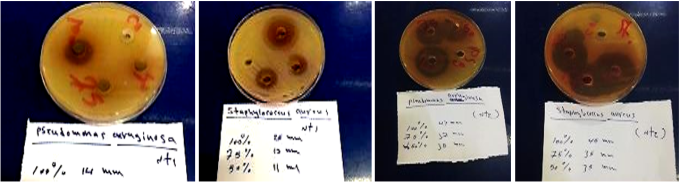
Figure 1. Aloe vera plant extracts with cobalt nitrate on bacterial growth. Zones of inhibition on culture media using NT1 and NT2.
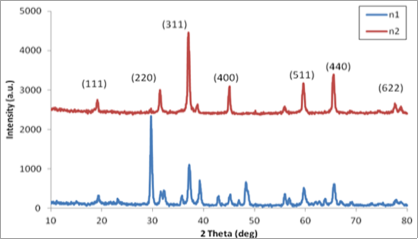
Figure 2. The XRD graph NT1, NT2.
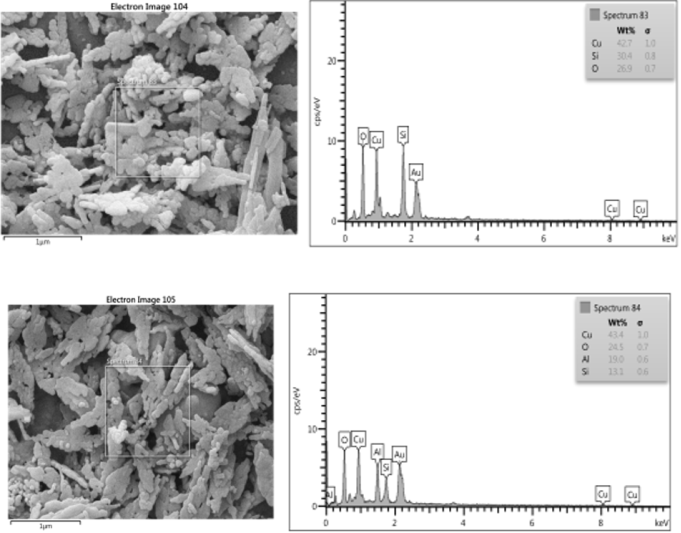
Figure 3. The graph showing the SEM, NT1, NT2.
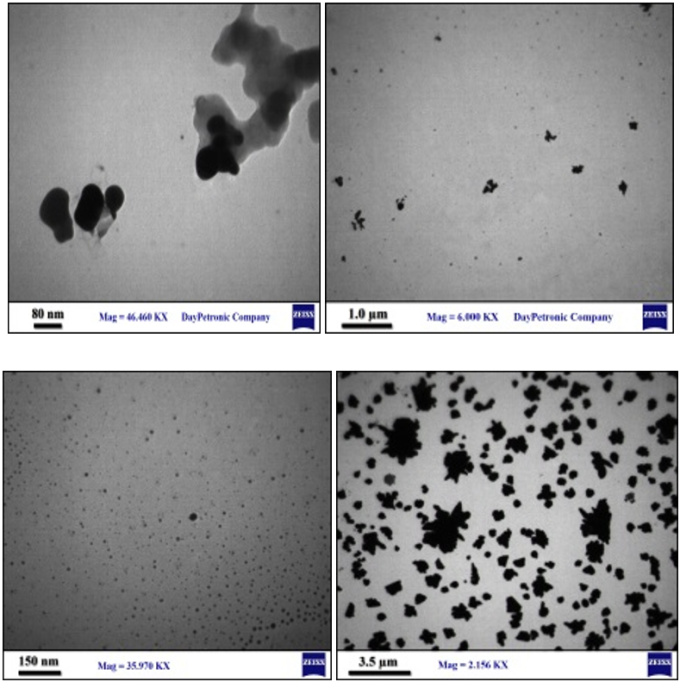
Figure 4. TEM Cobalt oxide solution NT1 Cobalt oxide solution NT2.
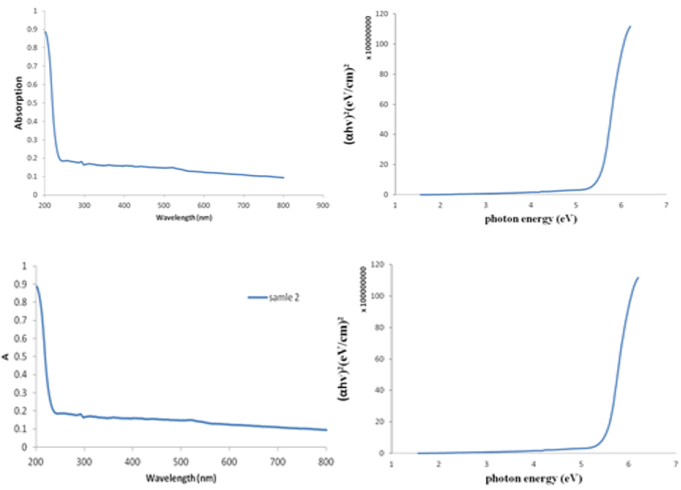
Figure 5. UV, gap, absorbance NT1, NT2.
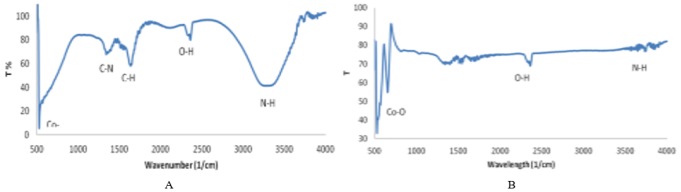
Figure 6. FT-IR, NT1, NT2.
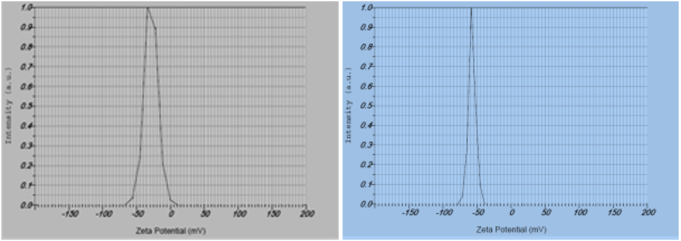
Figure 7. The graphs of the results of the zeta potential test for the nanocomposites samples and the samples of the two nanomaterials.
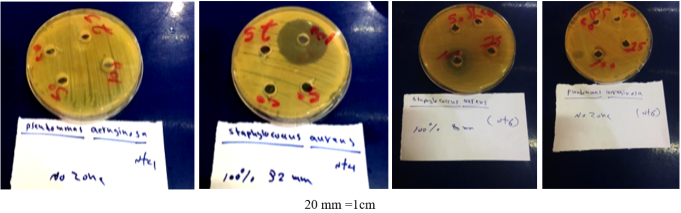
Figure 8. The inhibition zones on the culture media using extracts, N6, N4 for types of bacteria. The effect of nano-nickel oxide in saffron plant extracts with nickel chloride on bacterial growth measured in |--| mm. The numbers indicate the concentrations used.
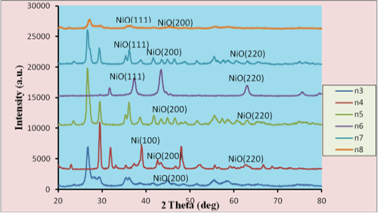
Figure 9. Graph of N4, N6.
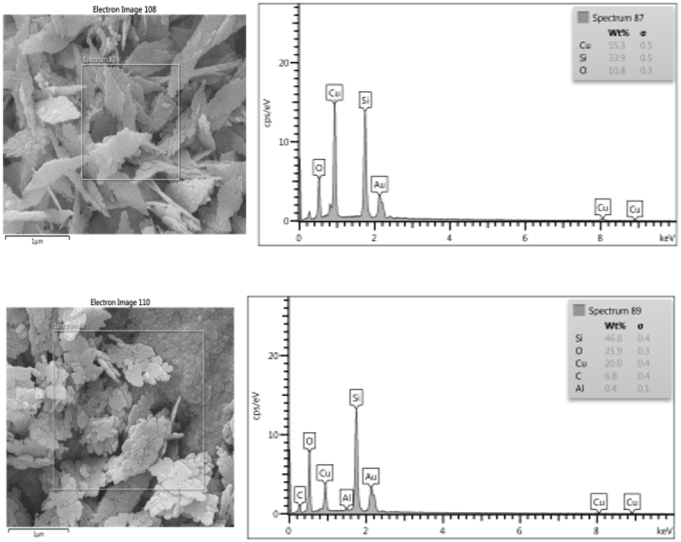
Figure 10. The graph showing the SEM results for the sample NT4 NT6.
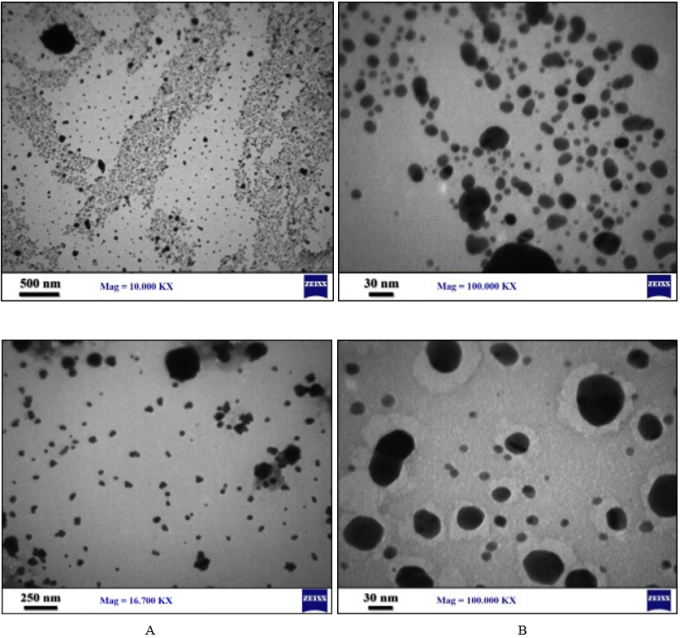
Figure 11. TEM of NT4, NT6.
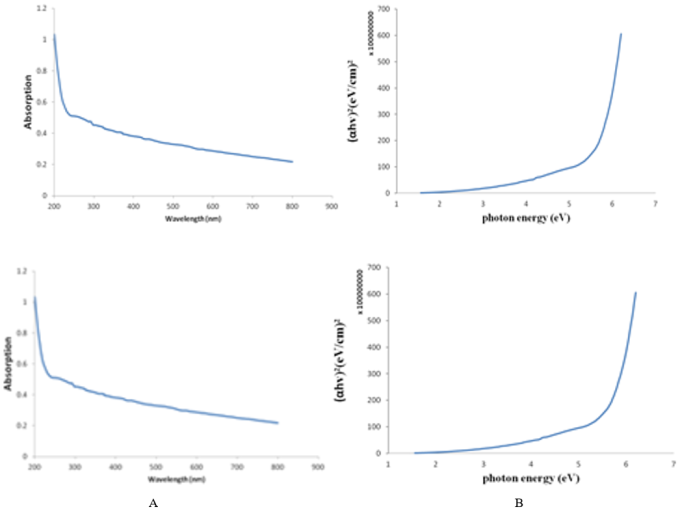
Figure 12. UV, energy gap and absorbance of nickel oxide solution NT4, NT6.
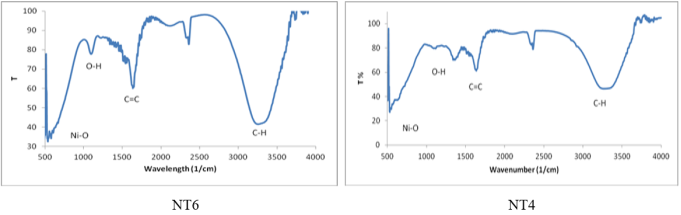
Figure 13. FT-IR NT4, NT6.
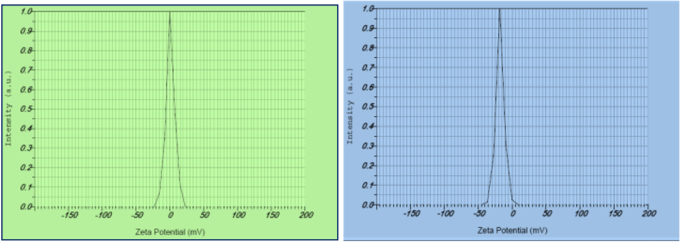
Figure 14. The graphs of the results of the zeta potential test for the NT4, NT6 nano samples.
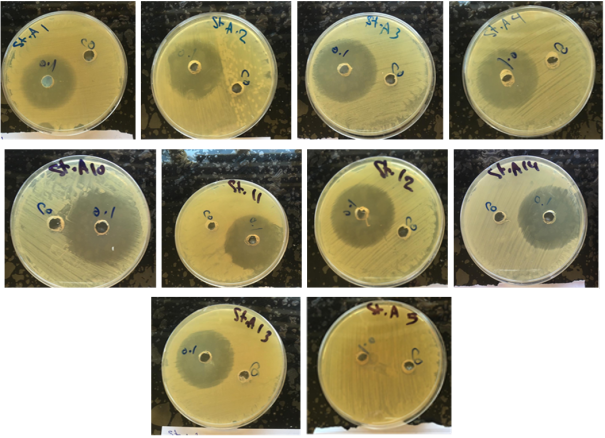
Figure 15. The diameters of inhibition of Staph. aureus growth using extracts of mixing two nanomaterials at ratios of 0.1 M%. Bacterial growth was observed in the solutions of mixing materials No. (1, 2, 3, 4, 5), and solutions (10, 11, 12, 13, 14).
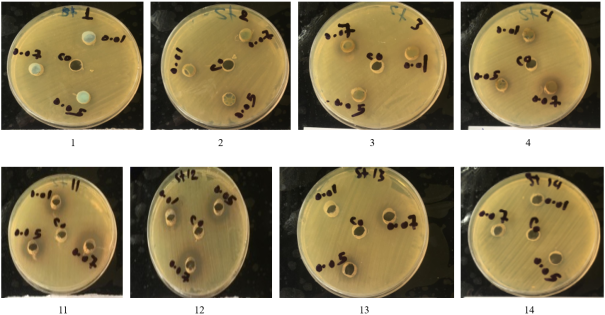
Figure 16. The diameters of inhibition of Staph. aureus growth using extracts of mixing two nanomaterials at ratios of (0.01, 0.05, 0.07) M%. Bacterial growth was observed in solutions No. (1, 2, 3, 4, 6), solutions of mixing the materials.
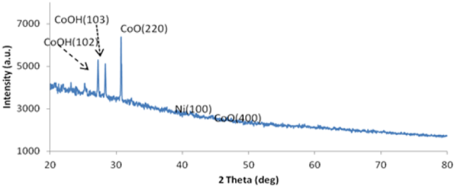
Figure 17. XRD examination CoO, NiO.
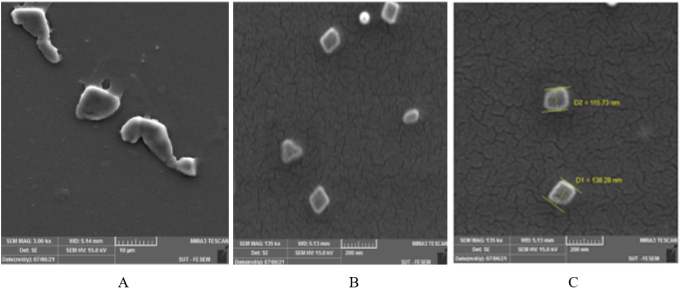
Figure 18. SEM examination result of the solution of the two nanomaterials.
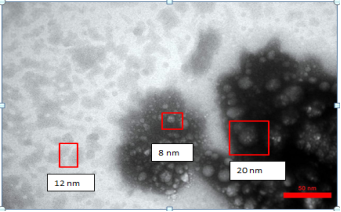
Figure 19. TEM examination result of the solution of the two nanomaterial.
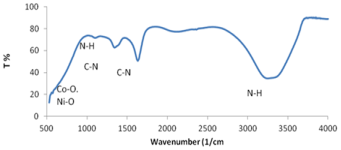
Figure 20. The FT-ir test (Quilt nitrate with aloe vera extract with nickel nitrate solution with saffron extract.
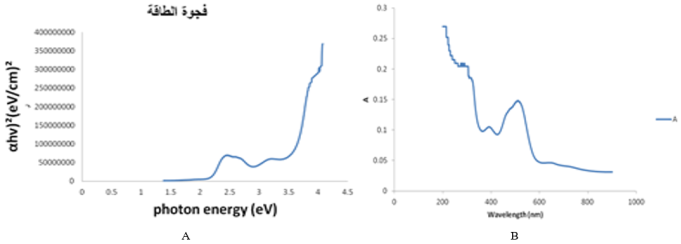
Figure 21. UV is test CoO and NiO.
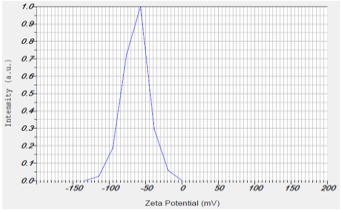
Figure 22. Zeta potential.
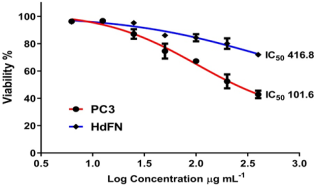
Figure 23. A result of MTT toxicity.

Information



 Share This Article
 Twitter
 Linked In
 Facebook
 Copy
Copy Download