Research Article | | Peer-Reviewed

Optimization of the Mechanical Performance of Bituminous Asphalt Mixtures Modified with CECABASE 300 Additive Using Impure and Friable Aggregates from Cameroon

Received: 11 May 2026     Accepted: 26 May 2026     Published: 15 June 2026
Views:       Downloads:
Abstract

This paper focuses on the dynamic analysis of bituminous pavements subjected to severe mechanical and climatic stresses leading to distresses such as rutting, thermal cracking, and structural fatigue. These phenomena are particularly pronounced in tropical environments, where the variability and often limited quality of local materials especially friable and impure aggregates compromise the durability of road infrastructures. In such contexts, improving the properties of the bituminous binder through additive modification represents a relevant approach for optimizing asphalt mixture performance. The present study aims to evaluate the influence of a specific additive, CECABASE 300, on the mechanical behavior and durability of bituminous mixtures produced using local materials. An experimental investigation was conducted by incorporating CECABASE 300 at dosages ranging from 0 to 0.6% by weight of bitumen. The resulting formulations were characterized using standardized mechanical tests, including the Marshall test, moisture susceptibility test (ITSR), rutting test, stiffness modulus determination, and the measurement of the real density of asphalt mixtures (MVRe). In addition, compactness assessments were performed on cores extracted from a trial pavement section under real field implementation conditions in order to verify the air void content. The results demonstrate a significant improvement in moisture damage resistance (ITSR), fatigue performance, and the overall durability of asphalt mixtures modified with 0.3% additive, providing an optimal balance between stiffness and flexibility. The incorporation of the additive also enabled full compliance with the specified performance requirements. Furthermore, these findings offer promising perspectives for enhancing the long-term durability of road infrastructures in general. An optimization of air void content and compactness was also observed, indicating improved internal cohesion of the material. This study therefore demonstrates the effectiveness of binder modification using CECABASE 300 in improving the performance of bituminous asphalt mixtures under Cameroonian conditions and contributes to the development of technical solutions adapted to the constraints associated with the use of local friable and impure aggregates.

Published in American Journal of Construction and Building Materials (Volume 10, Issue 1)
DOI 10.11648/j.ajcbm.20261001.13
Page(s) 20-39
Creative Commons

This is an Open Access article, distributed under the terms of the Creative Commons Attribution 4.0 International License (http://creativecommons.org/licenses/by/4.0/), which permits unrestricted use, distribution and reproduction in any medium or format, provided the original work is properly cited.

Copyright

Copyright © The Author(s), 2026. Published by Science Publishing Group

Keywords

Bituminous Pavements, Asphalt Mixtures, Binder Modification, CECABASE 300, Mechanical Performance, Durability, ITSR, Degradation

1. Introduction
Road infrastructure constitutes a key driver of economic and social development, particularly in developing countries where road transportation ensures the majority of passenger and freight mobility . In these contexts, flexible pavements, which are predominantly used, are subjected to combined climatic and mechanical loading conditions. In tropical regions, particularly in Africa, high temperatures and intense rainfall are aggravating factors that strongly influence the behavior of bituminous materials . Under these loading conditions, bituminous pavements develop various modes of deterioration, including rutting, fatigue cracking, and moisture-related distresses such as binder stripping (Corté ; Harvey ). These mechanisms, which have been extensively investigated, are now recognized as being highly dependent on the rheological properties of the binder, the quality of the aggregates, and the overall asphalt mixture design. Within this framework, numerous studies have highlighted the critical role of asphalt mixture design and laboratory characterization in predicting long-term pavement performance . Early empirical approaches, such as the Marshall method developed by Marshall , have progressively evolved toward more advanced methodologies. Research conducted by the LCPC introduced advanced mix design concepts based on compactness and the mechanical properties of asphalt mixtures . Furthermore, the Strategic Highway Research Program (SHRP) led to the development of the Superpave system, incorporating rheological binder classification and performance-based testing adapted to climatic and traffic conditions .
However, despite these significant advances, the implementation of these methodologies in developing countries remains constrained by specific challenges, particularly the variability and often inadequate quality of locally available materials. In Cameroon, aggregates obtained from local quarries frequently exhibit unfavorable characteristics such as high friability, the presence of impurities, and increased moisture susceptibility. As highlighted by several studies conducted in tropical environments , these characteristics negatively affect asphalt mixture performance and contribute to the premature development of pavement distresses. To address these limitations, several improvement strategies have been proposed, particularly through the use of additives and modified binders. The incorporation of chemical additives such as CECABASE 300 enhances the workability and compactability of asphalt mixtures while reducing production and compaction temperatures . In this context, the use of polymers or anti-rutting additives such as PR PLAST-S contributes to improving the mechanical performance of asphalt mixtures, particularly in terms of stiffness modulus, fatigue resistance, and rutting resistance . The study is based on French standards related to the testing and conformity of binders, aggregates and asphalt materials .
2. Literature Review
The continuous increase in road construction and maintenance has led to a growing demand for bituminous materials. Conventional bitumen often exhibits limitations such as low resistance to rutting at high temperatures, susceptibility to fatigue cracking, and aging-related degradation. To overcome these shortcomings, researchers have explored the modification of bitumen using polymer additives. In recent years, recycled polymers such as polyethylene terephthalate (PET), polyethylene (PE), polypropylene (PP), polyvinyl chloride (PVC), and crumb rubber from waste tires have been widely studied as modifiers in asphalt binders. These materials not only improve the mechanical performance of asphalt mixtures but also provide environmental benefits by recycling plastic and tire waste. The incorporation of recycled polymers in bitumen an additive content of binder doping with CECABASE 300 for enhancing the performance of bituminous asphalt mixtures in the Cameroonian context, has therefore become an important approach for developing sustainable and durable pavement materials. Several authors have worked on the doping of bituminous materials with polymers or other additives. The most relevant works on this topic are summarized in the following sections.
Lu and Isacsson studied the modification of road bitumens using thermoplastic polymers to improve mechanical and rheological performance. The results show that polymers such as SBS and EVA significantly increase elasticity, stiffness at high temperatures, and resistance to permanent deformation. The study also highlights that polymer–bitumen compatibility strongly influences morphology, where poor compatibility can lead to phase separation and unstable properties. Rheological testing indicates improved temperature susceptibility and enhanced viscoelastic behavior compared to unmodified bitumen. Overall, the authors conclude that thermoplastic polymer modification can substantially enhance pavement performance, provided proper blending and compatibility are achieved. Yildirim provides a comprehensive review of polymer-modified asphalt binders and their effects on pavement performance. The study reports that polymers such as SBS, EVA, and others improve rutting resistance, elasticity, and overall durability of asphalt binders. It highlights that polymer modification enhances high-temperature performance while also improving fatigue resistance under repeated loading. However, performance depends strongly on polymer type, dosage, and blending conditions, which influence storage stability and compatibility. Overall, the paper concludes that polymer-modified binders significantly improve pavement behavior, but proper material selection and processing are essential for consistent performance Kalantar et al. review the use of both waste and virgin polymers in asphalt pavement modification. The study finds that polymers (e.g, waste plastics, crumb rubber, SBS) improve rutting resistance, elasticity, and fatigue life of asphalt mixtures. Waste polymers are highlighted as a cost-effective and environmentally friendly alternative to virgin materials while still enhancing performance. However, variability in waste polymer composition and processing conditions can affect consistency and long-term durability. Overall, the paper concludes that polymer-modified asphalt, especially using recycled waste polymers, offers significant performance and sustainability benefits when properly engineered. Duarte and Faxina investigate asphalt concrete mixtures modified with polymeric waste using both wet and dry modification processes. The results show that incorporating polymeric waste improves rutting resistance and stiffness, especially at high service temperatures. The wet process generally provides better dispersion and more uniform performance, while the dry process is simpler and more economical. However, performance variability depends on waste type, processing method, and interaction between polymer and bitumen matrix. Overall, the study concludes that polymeric waste can effectively enhance asphalt performance and sustainability, with process selection strongly influencing final mixture behavior. Nisar et al. conducted a systematic literature review on waste plastic-modified asphalt focusing on blending ratios, mixing methods, and rheological performance. The results show that waste plastics generally improve rutting resistance, stiffness, and high-temperature performance of asphalt binders. However, challenges such as phase separation, poor low-temperature cracking resistance, and workability issues are frequently reported. The review highlights that additives, proper blending conditions, and optimized processing methods can improve compatibility and long-term stability. Overall, the study concludes that waste plastic asphalt is a promising sustainable pavement solution, but requires further optimization for field-scale consistency.
Rahman et al. present a comprehensive review of recycling various waste materials in asphalt concrete and bitumen for sustainable pavement construction. The study shows that materials such as plastics, rubber, glass, ceramics, fly ash, and fibers can improve rutting resistance, stiffness, and durability of asphalt mixtures. Results indicate that many waste materials can partially replace conventional aggregates or modify bitumen, enhancing both mechanical performance and environmental sustainability. However, performance depends on proper selection, processing methods, and compatibility between waste materials and asphalt binder, with variability in field behavior noted. Overall, the authors conclude that waste recycling in asphalt offers strong environmental and engineering benefits, but requires further optimization for large-scale application.
Anwar et al. review the recycling and utilization of waste polymers in road construction within a circular economy framework. The study emphasizes that waste plastics can effectively replace or modify bitumen, contributing to improved pavement performance and reduced environmental pollution. Results indicate that polymer-modified asphalt enhances rutting resistance, stiffness, and durability, making pavements more resistant to traffic and climate effects. However, challenges such as material variability, processing conditions, and long-term field performance consistency are highlighted as key limitations. Overall, the authors conclude that polymer recycling in asphalt construction is a promising sustainable strategy that supports both infrastructure performance and environmental sustainability. Lo Presti presents a comprehensive literature review on recycled tyre rubber modified bitumens (RTR-MBs) for asphalt pavement applications. The study shows that using crumb rubber through the wet process significantly improves rutting resistance, elasticity, and high-temperature performance of asphalt binders. Results indicate that RTR-MBs generally enhance pavement durability and resistance to deformation compared to conventional bitumen, especially under heavy traffic loading. However, challenges such as high viscosity, storage instability, and variability in processing conditions can limit field application and performance consistency. Overall, the paper concludes that recycled tyre rubber is a promising sustainable modifier for asphalt, offering both environmental benefits and improved pavement performance when properly engineered. Torres et al. investigate the use of polymer-modified binders as rejuvenators for aged asphalt materials in pavement recycling applications. The study finds that these modified binders can restore lost viscoelastic properties of aged asphalt, improving flexibility and cracking resistance. Results show enhanced fatigue performance and improved compatibility between aged binder and rejuvenating agents when polymers are incorporated. However, effectiveness depends on dosage, polymer type, and degree of aging, which influence long-term performance stability. Overall, the paper concludes that polymer-modified rejuvenators are a promising solution for sustainable pavement recycling, enhancing both performance recovery and durability. Javadi et al. investigate the storage stability of waste plastic-modified bitumen using fluorescence microscopy, image processing, and conventional tube tests. The results show that phase separation occurs due to incompatibility between plastics and bitumen, with polypropylene-based binders exhibiting the highest instability. Quantitative analysis indicates different levels of segregation depending on plastic type, while cross-contamination further worsens stability and dispersion. The study also finds that the standard softening point-based storage stability test is insufficient to accurately capture phase separation behavior in plastic-modified binders. Overall, the authors conclude that waste plastic modification can improve asphalt performance, but accurate evaluation of storage stability requires advanced morphological methods.
Yi et al. investigate the performance of recycled asphalt binder modified with epoxy polymers to enhance its mechanical and rheological properties. The results show that epoxy modification significantly improves stiffness, elasticity, and high-temperature rutting resistance of recycled binders. Fatigue resistance is also enhanced due to better stress distribution and stronger internal bonding within the asphalt matrix. However, the study notes that excessive epoxy content may reduce flexibility at low temperatures, requiring careful dosage optimization. Overall, the authors conclude that epoxy polymer modification is an effective method to upgrade recycled asphalt binder performance and support sustainable pavement materials. Lugeiyamu et al. study the incorporation of waste polyethylene terephthalate (PET) into stone mastic asphalt (SMA) mixtures to improve pavement performance and sustainability. The results show that PET modification enhances rutting resistance, Marshall stability, and stiffness of SMA mixtures, particularly at high service temperatures. The study also reports improved durability and reduced deformation under repeated loading compared to conventional SMA. However, performance depends on PET content and particle size, with excessive amounts potentially reducing workability and mixture cohesion. Overall, the authors conclude that waste PET is an effective modifier for SMA, offering both environmental benefits and improved mechanical performance when properly optimized. Heydari et al. reviews the effects of incorporating plastic waste into asphalt mixtures using Marshall mix design parameters. The results show that plastic modification generally increases Marshall stability and stiffness while reducing flow values, indicating improved load-bearing capacity. It also highlights that optimal plastic content improves durability and resistance to deformation, but excessive amounts can negatively affect workability and cohesion. The review emphasizes that performance varies depending on plastic type, size, and blending method, with inconsistencies reported across studies. Overall, the authors conclude that plastic waste can enhance Marshall properties of asphalt mixtures, but requires careful optimization for balanced mechanical performance. Audy et al. examines how different types of plastic waste perform when used in asphalt mixtures, focusing on environmental and engineering suitability. The results indicate that thermoplastics such as polyethylene and polypropylene generally provide better rutting resistance and stiffness improvements compared to other plastic types. However, not all plastics are suitable, as differences in melting behavior, compatibility, and degradation affect pavement performance and stability. The paper also highlights environmental trade-offs, emphasizing the importance of selecting plastics that minimize emissions and microplastic risks during production and service life. Overall, the authors conclude that careful plastic selection is essential to balance pavement performance improvement with environmental safety in sustainable road construction.
Masson provides a brief review of bitumen aging mechanisms and their impact on asphalt performance over time. The study explains that aging occurs through oxidation and volatilization, leading to increased stiffness and reduced ductility of bitumen. Results highlight that short-term aging mainly affects mixing and construction stages, while long-term aging influences in-service pavement deterioration. The paper emphasizes that aging alters rheological properties, contributing to cracking and reduced fatigue resistance in asphalt pavements. Overall, the author concludes that understanding bitumen aging mechanisms is essential for improving durability and designing more resistant asphalt materials. Williams et al. developed the time–temperature superposition principle to describe the viscoelastic behavior of polymers over a wide range of temperatures and time scales. The study introduced the Williams–Landel–Ferry (WLF) equation, which relates temperature changes to horizontal shifts in viscoelastic response curves. Results show that polymer behavior at different temperatures can be superimposed into a single master curve, enabling prediction of long-term mechanical properties. The model is particularly effective near the glass transition temperature, where polymer relaxation processes are highly temperature-sensitive. Overall, the authors conclude that time–temperature superposition provides a fundamental framework for analyzing and predicting viscoelastic behavior in polymer systems. Wang et al. study the rheological behavior of polymer-modified asphalt to evaluate its performance under different temperature and loading conditions. The results show that polymer addition significantly improves the elastic response, viscosity, and rutting resistance of asphalt binders. Dynamic shear rheometer tests indicate enhanced complex modulus and reduced phase angle, reflecting better viscoelastic performance. However, the degree of improvement depends on polymer type, concentration, and compatibility with the base bitumen. Overall, the authors conclude that polymer modification effectively enhances asphalt rheological properties, leading to improved pavement durability and performance. Huang et al. conduct a life cycle assessment (LCA) of asphalt pavements to evaluate their environmental impacts across production, construction, maintenance, and end-of-life stages. The results show that raw material production and hot mix asphalt manufacturing are the major contributors to energy consumption and greenhouse gas emissions. The study finds that maintenance activities significantly influence total environmental impact over the pavement’s service life. Recycling and reuse strategies are shown to reduce energy use and emissions, improving overall sustainability performance. Overall, the authors conclude that LCA is a valuable tool for optimizing asphalt pavement design and promoting environmentally sustainable road infrastructure. Anna et al. evaluate the environmental impacts of recycled plastic-modified (RPM) asphalt pavements using a cradle-to-grave life cycle assessment in Virginia, USA. The results show that incorporating recycled plastics (e.g., PET and polyethylene) can increase pavement surface layer lifespan by about 14%–65%, depending on design and traffic conditions. This improved durability reduces rehabilitation frequency and lowers environmental impacts during the use phase of the pavement life cycle. However, the benefits are partially offset by increased vehicle emissions linked to changes in roadway roughness, which can dominate total life-cycle emissions over time. Overall, the study concludes that recycled plastic asphalt can divert waste from landfills and improve pavement performance, but its full environmental benefit depends on balancing material gains with use-phase emissions.
Liliana et al. investigate recycled asphalt mixtures incorporating high percentages of waste materials, including reclaimed asphalt (RA), used motor oil, and high-density polyethylene (HDPE), to improve sustainability in pavement construction. The results show that used motor oil acts as a rejuvenating agent while HDPE improves mixture stability and resistance to deformation, especially in high RA-content mixtures. Penetration and conventional binder tests indicate that combining these waste materials helps recover and enhance asphalt binder performance. However, the study highlights that optimal performance depends strongly on correct dosage and proper blending of additives to avoid negative effects on mixture properties. Overall, the authors conclude that integrating multiple waste streams into recycled asphalt mixtures is feasible and improves performance, offering a sustainable alternative for road construction when carefully designed. Abu Abdo and Khater studied the effect of adding plastic waste powder (from ground plastic bottles) on the rheological properties of asphalt binders to mitigate rutting in hot climates. The results show that increasing plastic content significantly increases binder viscosity and the parameter G*/sin δ, indicating higher stiffness and improved resistance to permanent deformation. Modified binders were able to meet Superpave specifications for higher performance grades compared to unmodified binders, effectively upgrading binder grade at lower cost. However, very high plastic contents may exceed viscosity limits, suggesting an optimal dosage is necessary for practical application. Overall, the study concludes that plastic waste can effectively enhance rutting resistance and provide an economical and environmentally friendly alternative to conventional high-grade binders.
Nazki et al. investigate the rheological and thermal performance of asphalt binders modified with graphene nanoplatelets (GNPs) using dynamic shear rheometry and viscosity tests. The results show that adding graphene increases complex modulus and storage modulus, indicating improved stiffness and elastic response, especially at high temperatures. Graphene-modified binders exhibit lower phase angles, confirming enhanced elastic behavior and significantly improved rutting resistance under high-temperature conditions. However, higher graphene contents also increase binder viscosity, which can raise mixing and compaction temperatures and affect workability. Overall, the study concludes that graphene effectively enhances high-temperature rheological performance and rutting resistance of asphalt binders, but requires optimization of dosage for practical field application. Di Benedetto and Corté present a comprehensive analysis of pavement materials and their mechanical behavior under traffic loading conditions. The work emphasizes the viscoelastic nature of bituminous materials and their dependence on temperature and loading frequency. Results highlight that material performance is strongly influenced by traffic-induced stresses, requiring accurate characterization for pavement design. The authors discuss key laboratory and modeling approaches used to predict pavement response and long-term durability. Overall, the book concludes that understanding the coupling between material behavior and traffic loading is essential for designing durable and high-performance road structures. Harvey et al. examine the fatigue performance of asphalt concrete pavements using laboratory testing and field observations to better understand pavement cracking behavior under repeated loading. The results show that fatigue life is strongly influenced by asphalt binder properties, mixture stiffness, and strain levels experienced in service. The study highlights that mixtures with higher flexibility and optimal air voids demonstrate significantly improved resistance to fatigue cracking. It also notes that environmental conditions and traffic loading frequency play a key role in accelerating fatigue damage over time. Overall, the authors conclude that accurate fatigue prediction requires combining material characterization with mechanistic pavement response models for reliable pavement design. Anderson et al. present the development of the Superpave system based on improved understanding of the physical and rheological properties of asphalt cement. The study introduces performance-based specifications that relate binder properties to pavement distress mechanisms such as rutting, fatigue, and thermal cracking. Results show that parameters like complex shear modulus and phase angle are effective in characterizing high- and intermediate-temperature performance of asphalt binders. The work establishes temperature-graded binder classification to better match materials with climatic and traffic conditions. Overall, the authors conclude that the Superpave system significantly improves asphalt binder selection and pavement performance prediction through a mechanistic–empirical approach.
The SHRP 10] Final report summarizes the outcomes of the Strategic Highway Research Program aimed at improving highway performance and durability in the United States. The program developed new methods and materials, including the Superpave system for asphalt binder and mix design, to enhance pavement performance prediction. Results emphasize improved understanding of pavement materials, traffic loading effects, and environmental impacts on long-term road behavior. It also introduced advanced testing and performance-based specifications to reduce premature pavement failures. Overall, the report concludes that SHRP research significantly advanced highway engineering practice by linking material properties with field performance for more reliable pavement design. PIARC provides guidance on road materials and pavement design tailored for developing countries, focusing on cost-effective and durable infrastructure solutions. The report highlights the importance of selecting locally available materials to reduce construction costs while maintaining acceptable performance levels. Results emphasize that proper pavement design must account for traffic loading, climate conditions, and maintenance constraints common in developing regions. It also discusses the use of simplified design methods and improved material stabilization techniques to enhance road durability. Overall, the document concludes that sustainable pavement design in developing countries requires balancing technical performance with economic and environmental constraints. Harvey et al. investigate advanced asphalt pavement behavior and performance through experimental testing and mechanistic–empirical analysis at the University of California Pavement Research Center. The studies show that pavement performance is strongly governed by viscoelastic behavior of asphalt mixtures, especially under repeated traffic loading and varying temperatures. Results highlight the importance of strain-controlled fatigue, rutting resistance, and material stiffness in predicting long-term pavement deterioration. The work also emphasizes the role of improved laboratory testing methods to better correlate material properties with field performance. Overall, the research concludes that integrating mechanistic modeling with material characterization enhances the accuracy of pavement design and performance prediction. Arkema presents technical documentation on Cecabase RT, a chemical additive used to produce warm mix asphalt (WMA) at reduced production temperatures. The document reports that Cecabase RT lowers the viscosity of bitumen, allowing mixing and compaction at temperatures significantly lower than conventional hot mix asphalt. Results indicate reduced energy consumption and lower greenhouse gas and fume emissions during asphalt production and paving operations. It also shows that mechanical performance of WMA with Cecabase RT is comparable to conventional asphalt when properly designed and compacted. Overall, the report concludes that Cecabase RT is an effective WMA technology that improves environmental performance while maintaining pavement quality.
After this extensive literature related to the subject, the objective of this study is therefore to optimize the performance of bituminous asphalt mixtures produced from local materials by combining the use of CECABASE 300 and PR PLAST-S within a performance-based mix design approach. The study further aims to evaluate the influence of binder modification on the mechanical properties and durability of asphalt mixtures through an experimental investigation incorporating laboratory tests representative of in-service pavement conditions.
3. Materials and Methods
3.1. Materials
The study area is located in the city of Douala, within the framework of a 10-km new pavement construction project. To obtain reliable and applicable in situ results, all testing equipment and procedures complied with the recommended standards. Accordingly, particle separation, gradation control, aggregate classification, and the removal of fine or oversized particles were carried out in accordance with the following standards:
1) NF EN 13043: Aggregates for bituminous mixtures;
2) XP P 18-545: Compliance requirements for aggregates used in asphalt mixtures.
The materials used in this study are described as follows:
1) 35/50 penetration grade bitumen;
2) Crushed aggregates including 10/20 mm, 6/10 mm, and 4/6 mm crushed gravel, as well as 0/4 mm sand;
3) Modifying additives (dopants), namely PR PLAST-S and CECABASE 300.
Figure 1. The aggregates used in this investigation.
The aggregates used in this investigation (Figure 1) were sourced from a local granite quarry supplying road construction projects in southern Cameroon. They consisted of crushed aggregates with a continuous gradation suitable for asphalt mixtures used under tropical climatic conditions. The physical and mechanical properties of the aggregates—including particle size distribution, Los Angeles abrasion value, bulk density, water absorption, cleanliness, sand equivalent, and flakiness index—were determined in accordance with the relevant NF EN , NF EN , and LCPC standards.
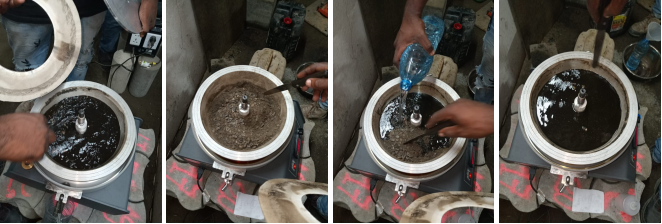
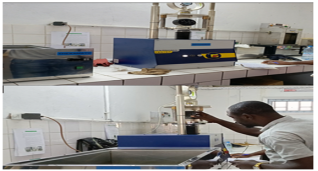
The main aggregate characteristics are summarized in Tables 1 and 2, confirming their compliance with the standard specifications for asphalt mixtures intended for flexible pavements. A neat bitumen with a 35/50 penetration grade was selected as the base binder. CECABASE 300 and the anti-rutting additive PR PLAST-S were used as the two modifying additives. Material characterization tests were carried out in accordance with applicable standards to ensure the reliability and reproducibility of the results. For the bitumen characterization, an oven and a thermostatic bath operating within a temperature range of 150–180°C, as well as a penetrometer in accordance with NF EN 1426, were used. For the aggregates, the required physical and mechanical characterization tests were performed according to the relevant standards. For the modified asphalt mixtures and hydrocarbon mixtures, a Marshall testing press (NF P 98-251-2) and a Duriez press (NF P 98-251-1) were employed. The binder content (Figure 2) of the asphalt mixtures was determined by centrifugal extraction in accordance with standard . The sand equivalent test was conducted according to standard in order to assess aggregate cleanliness. Additional cleanliness evaluations of the aggregates were also performed in compliance with standard .
Figure 2. Bituminous mixturer test in laboratory.
3.2. Methodology
Preparation of the Modified Binder and Mix Design Methodology
The bituminous binder was heated to a temperature ranging between 150°C and 190°C and pre-blended with PR PLAST-S, which was incorporated at a dosage of 0.4% by weight of the neat bitumen. CECABASE 300 was subsequently evaluated in the local laboratory. Since the asphalt mixture already contained PR PLAST-S, CECABASE 300 was introduced at several dosage levels ranging from 0 to 0.6% by weight of bitumen, with the upper limit retained because the mechanical performance of the asphalt mixture remained satisfactory. The modified binder was homogenized and supplied by ERES Cameroon through containerized delivery. The asphalt mixtures were designed according to the Marshall mix design method, in compliance with the requirements of the applicable standards. PR PLAST-S was incorporated using the dry process, consisting of adding the additive directly to the preheated aggregates prior to the introduction of the bituminous binder. The binder itself was modified beforehand through the incorporation of CECABASE 300 using the wet process.
A preliminary verification of the performance of the bituminous binder modified with CECABASE 300 was conducted to ensure that its intrinsic properties remained compliant with technical specifications. The CECABASE 300 contents investigated were 0%, 0.3%, 0.4%, 0.5%, and 0.6% by weight of bitumen, as presented in Tables 8 to 10. The preparation of the different asphalt mixtures began with the heating of both aggregates and modified binder to a constant temperature of 150°C, continuously monitored throughout the process. This temperature selection satisfies asphalt mixture production requirements, particularly the minimum manufacturing temperature of 150°C or higher, in accordance with standard . Furthermore, the aggregate gradation proportions and the dosage of the modified bituminous binder were determined according to a specific asphalt mixture design. In the present study, the selected mixture was a High Modulus Asphalt Concrete (HMAC/EME), corresponding to a Béton Bitumineux à Module Élevé (BBME), intended for T1 (in French pavement design method) traffic class conditions. The mix designs were established following the protocol illustrated in Figures 1 to 3 and in compliance with the relevant standards (, , ). The adopted formulation corresponded to the EB10–BBME3 mixture, consisting of:
1) 57% crushed sand 0/4 mm;
2) 15% crushed aggregate 4/6 mm;
3) 28% crushed aggregate 6/10 mm;
4) 5.5% neat 35/50 penetration grade bitumen;
5) 0.4% PR PLAST-S additive (Figure 2).
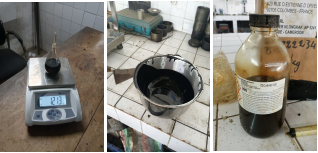
Figure 3. Binder and Cecabase 300 test.
The objective of asphalt mixture design is to determine the optimal combination of aggregates and binder in order to obtain a durable and high-performance material suitable for traffic conditions and pavement requirements. Asphalt mix design is therefore based on achieving an appropriate balance between mechanical performance, durability, and economic efficiency. The so-called “fundamental” mix design approach for bituminous asphalt mixtures includes tests whose results can be directly used as input data in pavement design models. In particular, these include dynamic modulus and fatigue resistance values (Figures 11 and 12). The European standardization of hot mix asphalts has formalized and synthesized the principles of this classification by distinguishing two approaches: the empirical approach and the fundamental performance-based approach .
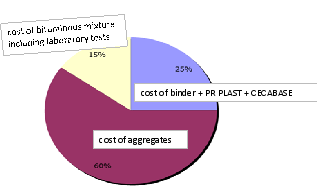
The mechanical performance of the asphalt mixtures was evaluated using tests carried out strictly in accordance with NF EN and LCPC standards, including: complete aggregate characterization, gyratory compaction (PCG), rutting resistance, optimal binder content determination, mixture extraction, Marshall test, Duriez test or ITSR (Indirect Tensile Strength Ratio), stiffness modulus, and fatigue testing. The results of the mechanical tests are presented and discussed, with comparative values summarized in Tables 7 and 8. The economic assessment is based on a unit cost breakdown including the cost of bitumen and PR PLAST-S, aggregate costs, CECABASE 300 cost, as well as the costs associated with production and testing of the improved BBME mixture. The CECABASE 300-modified binder, including PR PLAST-S, represents approximately 25–35% of the total material cost, while aggregates account for about 50–60%. The asphalt mixture production and performance testing costs represent approximately 15–20% of the total cost. A comparative economic analysis was conducted to assess the impact of incorporating CECABASE 300 on asphalt mixture production costs, focusing on material costs and local processing conditions. The estimated unit costs for conventional asphalt mixtures and CECABASE-modified mixtures are presented in Figure 4.
Figure 4. Percentage cost breakdown of the constituents of the EB10–BBME3 asphalt concrete mixture.
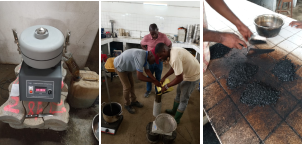
One of the primary tests for bitumen characterization is the penetration test at 25°C, which is used to determine the bitumen grade. This test was performed in accordance with NF EN 1426 . The softening point (Ring and Ball test, TBA) is an essential property of bitumen used to assess its resistance to heat and was determined according to NF EN 1427 . The viscosity test at 60°C, carried out in accordance with NF EN 12596, is essential for evaluating the flow resistance of the bitumen. Table 4 presents the results of the bitumen with and without CECABASE, providing a comparative overview. Laboratory-prepared mixtures with different binder contents (around the calculated optimum values) were subjected to various tests (Figure 5) in order to determine their mechanical performance according to the four levels of mix design assessment . In accordance with standards and , the aggregates were identified using a technical datasheet detailing the constituents of the asphalt mixture.
Figure 5. Laboratory-prepared mixtures with different binder contents.
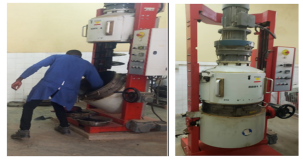
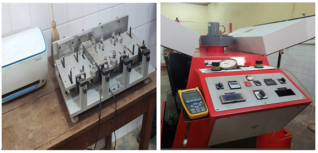
Figure 6. Testing the bituminous concrete specimen on the giratory shear press.
The laboratory-prepared asphalt mixture is placed in a cylindrical mold of 150 mm or 160 mm diameter at a loosened state and at the testing temperature (approximately 130°C to 160°C). A vertical pressure of 0.6 MPa is then applied on the top of the specimen. Simultaneously, the specimen is inclined at a small angle of approximately 1° (external) or 0.82° (internal) and subjected to a rotational motion (Figure 6). These combined actions induce kneading compaction. The increase in compactness (i.e., reduction in air void content) is observed as a function of the number of gyrations. Compaction of asphalt mixtures is a critical operation in pavement engineering, as it ensures pavement durability and significantly influences mechanical properties as well as resistance to external environmental effects. Impact compaction using the Marshall method is based on a different principle from field compaction. The resulting specimens develop a granular skeleton, which often becomes interlocked during compaction due to aggregate particle arching and internal friction mechanisms .
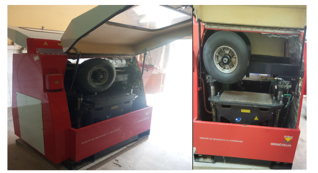
The parameters are determined using the least squares method applied to experimental data, for a gyration number greater than or equal to 20, using linear regression. For the EB10–BBME3 mixture, at 60 gyrations, the air void content ranges between 5% and 10%. The rutting test specimen consists of a parallelepiped slab with a thickness of either 5 cm or 10 cm, depending on whether the in-situ asphalt layer thickness is below or above 5 cm. This slab is subjected to repeated traffic loading using a wheel fitted with a pneumatic tire (frequency: 1 Hz, load: 5 kN, inflation pressure: 6 bar), under severe temperature conditions of 60°C (Figure 7).
Figure 7. Rutting test machine and tests on the bituminous slab.
In the assessment of the moisture susceptibility of the BBME mixture, the effect of incorporating CECABASE 300 was analyzed. A dosage of 0.3% by weight of bitumen was identified as optimal, based on the observed stability of the Indirect Tensile Strength Ratio (ITSR). The obtained ITSR values, exceeding 80%, comply with the relevant specifications and indicate a good resistance to moisture-induced damage, reflecting satisfactory adhesion between the modified binder and the aggregates. The determination of binder content is a key parameter for quality control of asphalt concrete. It was carried out through extraction testing in accordance with standard . The internal bituminous binder content in the mixture is given by Equation (1):
(1)
The mix design study is then validated through compliance with the theoretical gradation envelope (see above and Table 5).
Table 1. Gradation envelope of the mix design – sieves of the basic series plus series 2 (Extract from NF EN 13108-1).

D

4

6.3

8

10

12.5

14

16

20

31.5

Sieve (mm)

Passing of sieve% in mass

1.4D

100

100

100

100

100

100

100

100

100

D

90-100

90-100

90-100

90-100

90-100

90-100

90-100

90-100

90-100

2

50-85

15-72

10-72

10-60

10-55

10-50

10-50

10-50

10-50

0.063

5.0-17.0

2.0-15.0

2.0-13.0

2.0-12.0

2.0-12.0

0-12.0

0-12.0

0-11.0

0-11.0

The asphalt mixture must fall within the gradation envelope defined by standard . It is also required to establish a production envelope, derived from the reference mixture gradation, in order to ensure the reproducibility of performance during manufacturing and quality control phases. This specific envelope is defined in accordance with the requirements of standards (). It is obtained by applying tolerances to the percentage passing values, expressed in absolute terms around the mean gradation curve of the studied mixture. The allowable tolerances are as follows:
1) D and D/2 sieves: ± 4%
2) 2 mm sieve: ± 3%
3) 0.5 mm sieve: ± 2%
4) 0.063 mm sieve: ± 1%
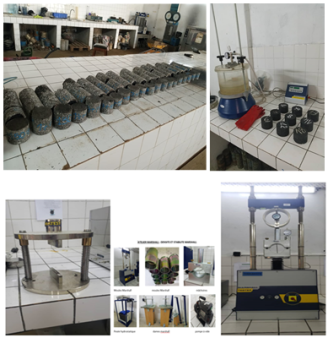
Consequently, it is essential to define the reference gradation curve of the mixture by including at least the following sieve sizes: 0.063 mm, 0.5 mm, 2 mm, 5 mm, 10 mm, and 14 mm. This curve serves as the basis for production monitoring and allows verification of compliance with standard requirements while ensuring consistency in the final product characteristics. The Marshall test is used (Figure 8) to determine the optimal binder content and to evaluate mechanical strength (Marshall stability), mixture cohesion and resistance to deformation (flow or creep) .
Figure 8. Bituminous specimens and Marshall test of BBEM3 with 0.3% CECABASE 300 Dosage.
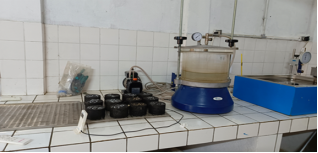
The ITSR test is used (Figures 9 and 10) to assess moisture resistance. However, it also provides an indication of the mechanical properties and the air void content under compaction. A Duriez ratio ≥ 80% is required (Method B). Moisture resistance is traditionally evaluated using the Duriez test within the French standardization framework. European standardization has retained two test approaches: indirect tensile (diametral compression) and uniaxial compression, the latter being derived from the Duriez test. Although both methods are expected to provide equivalent results, the repeatability and reproducibility of the uniaxial compression test (Duriez test) are nearly twice as high as those obtained with the diametral compression test .
Figure 9. ITSR Tests of BBEM3 with 0.3% CECABASE 300 Dosage.
The results of the test correspond to the uniaxial compressive strength at a temperature of 18°C, under both dry and water-conditioned (immersed) conditions. The strength is defined as the ratio of the maximum applied load to the cross-sectional area of the cylindrical specimens.
Figure 10. ITSR Stability Test of BBEM3 with 0.3% CECABASE 300 Dosage.
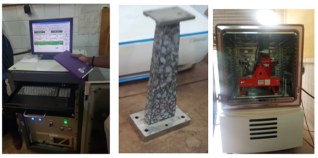
The stiffness of the mixture is then determined (Figure 11) either through a complex modulus test (sinusoidal loading applied to trapezoidal or parallelepiped specimens) or through a uniaxial tensile test (on parallelepiped specimens). The load is applied within the small strain domain, with controlled loading time or frequency, temperature, and loading–unloading law.
Figure 11. Stiffness test in the trapezoidal bituminous specimens in the laboratory.
The fatigue test was performed on trapezoidal specimens subjected to a controlled temperature and a fixed loading frequency under imposed strain conditions (Figure 12). When the stress required to maintain a constant strain decreases by half, the specimen is considered to have reached failure at the corresponding number of loading cycles.
Figure 12. Fatigue test performed on trapezoidal bituminous specimens.
The classical representation of fatigue test results is the fatigue curve, or Wöhler curve. This curve relates the service life of the material to the applied loading level, which may be either stress-controlled or strain-controlled.
4. Results and Discussion
4.1. Complete Identification of Aggregates
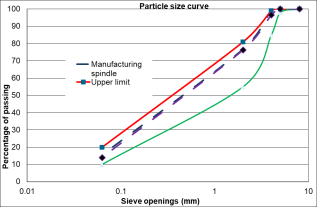
In accordance with standards and , the aggregates were identified using a technical datasheet describing the constituents of the asphalt mixture (Table 2 and Figure 13).
Table 2. Results of aggregate identification for BBEM3-Granular class 0/4.

2D

1.4D

D

D/2

d

VBS

SE

Friability

PS

8

5

4

2

0.063

Specification zone

Upper limit

100

100

99

81

20

10

50

25

Lower limit

100

98

85

55

10

Granularity GA85

8

5

4

2

0.063

VBS

SE

Fs

PS

Mean curve

Mean value Xf

100

100

98

77

15

14.70

48.20

36.00

2.69

Manufacturing spindle

Standard deviation sf

0

0

1

0

1

0.60

0.00

0.50

0.00

Xf + 1.25 sf

100

100

99

77

15

15.45

48.20

36.63

2.69

Xf – 1.25 sf

100

100

97

76

14

13.95

48.20

35.38

2.69

Maximum value

100

100

99

77

15

15.30

48.20

36.50

2.69

Minimum value

100

100

97

76

14

14.10

48.20

35.50

2.69

Number of values

2

2

2

2

2

2

1

2

1

Figure 13. Particle size curve Particle size curve
During the material characterization stage, it was observed that crushed sand sourced from quarries in the Littoral region of Cameroon significantly influences the mechanical performance of asphalt mixtures, mainly due to the presence of clayey fines affecting its cleanliness. To address this constraint, a specific quarry exploitation procedure was implemented. This procedure involves the pre-selection of sound rock materials, followed by a controlled crushing and grading process aimed at limiting the production of undesirable fines and improving the overall quality of the resulting aggregates. Within this performance improvement framework, the study focuses on the development of an optimized aggregate blend intended for the formulation of an additive-modified asphalt concrete, incorporating additives to enhance its mechanical properties and durability.
Table 3. Results of 35/50 penetration grade bitumen with 0% and 0.3% CECABASE 300 dosage.

PUR BITUMEN 35/50 WITH CECABASE 300

Laboratory test

Standards

Specification of Standard

Values at 0.3%

Values at 0%

Penetrability of binder at 25 oC

NF EN 1426

35-50

41

43

Ring ball softening point (TBA)

NF EN 1427

50 at 58 oC

53.2 oC

51.4 oC

TBA increase

NF EN 12593

8 oC

-8 oC

Viscosity at 135 oC

NF EN 12595

541 mm2/s

Viscosity at 60 oC

NF EN 12596

340 Pa. s

Solubility (m/m)

NF EN 12592

99.9%m

98.8%m

Flash point

NF EN ISO 2592

328 oC

334 oC

Point variation

NF EN 12607-1

0,5%

0.23%m

0.43%m

Penetrability at 25 o C in 1/10 mm

30 mm/10

Remaining permeability after RTFOT

53%

65%

70%

TBA remaining after RTFOT

52%

56%

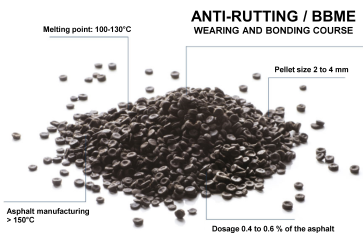
The results presented in Table 3 show that the incorporation of CECABASE 300 does not significantly alter the performance grade of the bitumen. Indeed, the measured penetration values remain very close, with 43 (0.1 mm) for the unmodified bitumen compared to 41 (0.1 mm) for the bitumen containing CECABASE 300. This slight decrease in penetration reflects a marginal increase in binder stiffness, indicating a minor reduction in its fluidity. However, this variation remains very limited and does not affect the compliance of the bitumen with the applicable specifications. It can therefore be considered negligible in terms of the overall binder performance. The PR PLAST dosage is presented in Table 4.
Table 4. PR PLAST results.

Qantity of PR Plast used

Tonnage of the asphalt obtained

Verified percentage PR Plast that was used

Specification of PR Plast

Conformity

1200 Kg

225.923T + 62 T

0.42%

Mix dosage 0.4 -0.6%

Compliant

The PR PLAST dosage (Figure 14), in accordance with the mix design formulation, is 0.4% of the asphalt mixture.
Figure 14. PR PLAST Product.
Regarding the extraction of the EB10–BBME3 mixture, Table 5 provides information on the aggregate gradation and binder content.
Table 5. Verification of the EB10–BBME3 asphalt mixture composition.

VERIFICATION OF BITUMINOUS MIXTURE EB10 - BBME3 at date of 19/02/2025

Sieve% passing

0.063

0.5

2

5

10

14

Binder content (%)

Percentage of material passing through each sieve

1

6

19.6

34

61.1

97.7

100

5.3

2

5.4

19.8

34.7

62.5

97.9

100

5.32

3

6.4

19.3

33.1

61

98

100

5.29

4

6.2

19.6

34.1

59.8

97.2

100

5.3

5

6.1

20.5

37.1

62.4

99.1

100

5.37

average

6.0

19.8

34.6

61.4

98.0

100

5.32

Lower production limit

4.8

18.5

33

55.8

92.5

100

5.2

Upper production limit

6.8

22.5

39

63.8

100

100

5.8

The EB10–BBME3 asphalt mixture investigated in this study showed satisfactory performance, with mechanical properties before the addition of CECABASE 300 presented in Tables 6 to 13.
Table 6. Results of tests conducted for the verification of EB10–BBME3 mix design without additive modification.

Tests

PCG NF EN 12697-31

DURIEZ NF EN 12697-12 Method B

RUTTING NF EN 12697-22 Big-model

E 15°C-10Hz NF EN 12697-26

E 28°C-10Hz NF EN 12697-26

FATIGE NF EN 126976-26 Annex A

Specifications

5% at 10% of voids after 60 Girations

≥80%

≤5% after 30 000 cycles at 60°C

≥11000 MPa

>100 µdef

Results

10.5%

58%

2.3%

11167

5396

106

Based on the results obtained in Table 6, it appears relevant to introduce a second additive into the EB 0/10–BBME3 mix design, in addition to the anti-rutting agent PR PLAST-S already incorporated. This approach aims to improve the compactness and impermeability of the mixture, while enhancing its mechanical performance and durability. Thus modified, the EB 0/10–BBME3 mixture is expected to exhibit satisfactory behavior during production, particularly in terms of moisture susceptibility, in order to achieve a nearly impermeable product.
The Marshall test results (Table 7) indicate that the BBME3 mixture exhibits satisfactory performance, with high stability values and flow results complying with the specified requirements. This reflects a good balance between stiffness and deformability. These results demonstrate good mixture cohesion and a strong ability to resist mechanical loading under service conditions.
Table 7. Marshall Test Results.

Designations

Standard

Values

Specifications

Marshall

MVa

NF P 98 251 - 2

2.377 T/m3

Compactness

93.2%

92 à 96%

% Void

6.8%

4% à 8%

Creep

3.37

2 à 4

Stability

1377 Kg

800 Kg

Table 8. ITSR results of BBME3 without CECABASE 300 additive as a function of age.

Designation

Percentage of the white mix from the BBEM3 conforming the the production range

57% 0/4 + 15% 4/6.3 + 28% 6.3/10 + 5.9% BITUMEN 35/50 + 0.4% PR PLAST

Dates

12/05/2025

31/05/2025

30/06/2025

01/07/2025

CECABASE 300 dosage

0.0%

0.0%

0.0%

0.0%

ITSR value per specimen

64%-66.3%-61.4%

78.6%-68.3%-65.4%-58.8%

62.1%-58.5%-57.4%

63.2%-68.2%-66.3%-63.7%

ITSR AVERAGE

63.9%

67.8%

59.3%

65.4%

Conformity

NC

NC

NC

NC

SPECIFICATION REQUIREMENT

≥80%

≥80%

≥80%

≥80%

4.2. Influence of CECABASE 300 modifications
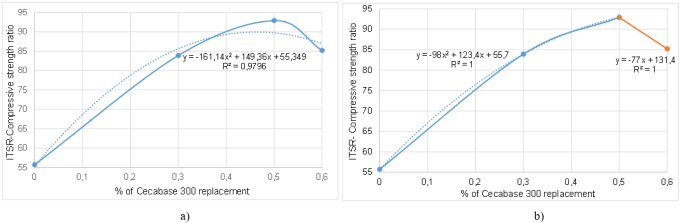
The results show that the addition of additives increases the stability of the asphalt mixtures. The mixture containing 0.3% additive exhibits the best performance from both an economic and technical standpoint. However, a dosage of 0.5% is identified as optimal (Table 9 and Figure 15). Figure 15a and b also presents the evolution of ITSR as a function of CECABASE 300 dosage. The optimal result is obtained at a dosage of 5%. This Figure further shows the Duriez curves as a function of additive content, and the regression equations of these curves exhibit correlation coefficients greater than 0.97, indicating a strong statistical reliability of the model.
Table 9. ITSR results of BBME3 at various CECABASE 300 dosages.

RESULTS OF THE ITSR ON THE EB10-BBEM3

Material class

Cement filler

Doping with cecabase 300 depends on the amount bitumen

0/4

4/6.3

6.3/10

Bitumem 35/50

Additive in PR Plast

ITSR ≥ 80

TOTAL WEIGHT (kg)

Formula N°1:

Percentage of the materials

0%

0%

57%

15%

28%

5.50%

0.40%

Conformity

105.9%

ITSR

55.7

NC

7 400.00

Formula N°2:

Percentage of the materials

0%

0.3%

57%

15%

28%

5.50%

0.40%

106.2%

ITSR

83.9

C

7 401.54

Formula N°3:

Percentage of the materials

0%

0.5%

57%

15%

28%

5.50%

0.40%

106.4%

ITSR

92.9

C

7 401.92

Formula N°4:

Percentage of the materials

0%

0.6%

57%

15%

28%

5.50%

0.40%

106.5%

ITSR

85.2

C

7 402.31

Formula N°2 revival

Percentage of the materials

0%

0.3%

57%

15%

28%

5.50%

0.40%

106.2%

ITSR

85.1

C

7 400.00

Figure 15. Regression curves and equations of the duriez test as a function of CECABASE dosage: single curve and optimized curves by dosage range.
A series of mix variants with different CECABASE 300 dosages, without cement fillers, was also carried out. The formulation containing 0% cement filler and 0.3% CECABASE 300 will be retained, as it not only satisfies the ITSR requirements but is also more economically advantageous compared to higher dosages.
4.3. Mechanical Performance of BBME3
The moisture susceptibility, assessed through the ITSR of the BBME3 formulation improved with CECABASE 300 addition, indicates that the mixture is currently waterproof. The verification of other performance parameters such as stiffness modulus and Duriez strength is currently being conducted in an external laboratory (“LABOTECH”) to ensure compliance with the targeted specifications. Nevertheless, the results obtained so far are presented in Table 10. Following several previous verifications carried out since December 2025 in the internal laboratory, the results are considered satisfactory, as all measured ITSR values are above 80% (Table 10). Table 11 consequently presents the overall results related to both the binder and the BBME3 asphalt material.
Table 10. Summary of ITSR Results with 0.3% CECABASE 300 Dosage.

Designations

Percentage of the white mix from the BBEM3 conforming the the production range

57% 0/4 + 15% 4/6.3 + 28% 6.3/10 + 5.5% BITUMEN 35/50 + 0.4% PR PLAST

Dates

12/12/2025

24/12/2025

26/12/2025

13/01/2026

CECABSE 300 dosage

0.3%

0.3%

0.3%

0.3%

Value of ITSR per sample

88% - 80.6% - 90.8%

84.2% - 86.6% - 85.8% - 86.6%

86.2% - 85.0% - 85.8

83.4% - 86.4% - 86.6% - 83.4%

Average ITSR

86.5%

85.8%

85.7%

85.0%

Conformity

C

C

C

C

TARGET SPECIFICATION

≥ 80%

≥ 80%

≥ 80%

≥ 80%

Table 11. Verification results (April 13, 2026).

DURIEZ CHARACTERISTICS

MIXTURE

SPECIFICATIONS CCTP/NF EN 13108-1

26%(6.3/10)+15%(4/6.3)+57%(0/4)+6.08% pure bitumen 35/50 doped at 0.4% with PR PLAST S

Formula

Binder content (%)

6.08

/

Modulus de richness k

3.8

≥3.5

7 days compressive strength at 18 oC in air RC (bar)

99.1

/

R’C/ RC

0.91

≥0.80

R’C

90.2

/

Hydrostatic density (MVA) T/m3

2.363

/

Actual density of asphalt mixes (MVRe)

2.515

/

Apparente density of aggregates (MVAG) T/m3

2.23

/

Compactness C (%)

94

92.94

Residual voids (VR) %

6.04

/

Voids occuped by air and binder V (%)

20.1

/

Voids filled by binder V1 (%)

69.9

/

Impregnation

4.90

/

Table 12. Marshall test results performed on the modified asphalt mixture.

Designations

Standards

Values

Specifications

Marshall

MVa

NF P 98 251 - 2

2.390 T/m3

Compactness

93.9%

92 à 96%

% Void

6.1%

4% à 8%

Creep

3.15

2 à 4

Stability

1577 Kg

800 Kg

The Marshall test results (Table 12) show that the BBME3 mixture implemented in the trial section exhibits satisfactory performance. The rutting test results obtained with the modified asphalt mixture, presented in Table 13, indicate that the stiffness modulus and fatigue resistance of the mixture are expected to be satisfactory. Thse results are current and comply with current technical requirements. They are consistent with the results of other authors . However, these parameters are currently undergoing further experimental verification in the laboratory. Moreover, in the context of the Littoral region of Cameroon, characterized by the presence of aggregates from quarries with friable materials, it is recommended that asphalt mix design studies ensure the use of clean and high-quality aggregates. The incorporation of additives also appears to be a relevant solution to improve mixture cohesion, reduce moisture-related effects, and ensure enhanced long-term durability.
Table 13. Rutting results after laboratory tests.

F: 28%(6.3/10) + 15%(4/6.3)+57%(0/4)+6.08% pure bitumen 35/50 doped at 0.4% with PR PLAST S

Right wheel

Number of cycles

1000

3000

10000

30000

Rutting (%)

1.9

2.3

2.6

3.2

Left wheel

Number of cycles

1000

3000

10000

30000

Rutting (%)

1.6

2.0

2.5

3.6

Averages values (%)

1.74

2.2

2.6

3.4

Specifications du CCTP

7.5% à 30000 cycles

5. Conclusion
This paper provides an integrated assessment of the mechanical and economic implications of incorporating the additive CECABASE 300 into asphalt mixtures under tropical conditions. By combining laboratory testing with simplified cost analyses, the results offer relevant evidence for both pavement engineering practice and infrastructure policy in developing regions. From both a technical and economic perspective, the findings consistently identify an optimal CECABASE 300 content of approximately 0.3% by weight of binder. At this dosage, the modified asphalt mixtures exhibit improved compactness, reduced moisture susceptibility, lower permanent deformation, and enhanced resistance to moisture-induced damage compared to conventional asphalt mixtures. The results made it possible to evaluate the influence of binder modification on the performance of asphalt mixtures. They further confirm that: binder modification improves the stability and stiffness of the mixtures, and that rutting resistance is satisfactory (Table 13). Thse results are current and comply with current technical requirements. They are consistent with the results of other authors . By balancing both technical and economic considerations, the optimal CECABASE 300 dosage is estimated at approximately 0.3%, allowing for an appropriate compromise between stiffness and flexibility. The incorporation of additives also ensured full compliance with the required specifications. Furthermore, these results open promising perspectives for improving the long-term durability of road infrastructure in general.
Abbreviations

PET

Polyethylene Terephthalate

PE

Polyethylene

PP

Polypropylene

PVC

Polyvinyl Chloride

RTR-MBs

Recycled Tyre Rubber Modified Bitumens

WLF

Williams–Landel–Ferry

RPM

Recycled Plastic-Modified

HDPE

High-Density Polyethylene

SHRP

Strategic Highway Research Program

WMA

Warm Mix Asphalt

Acknowledgments
The authors would like to thank the BEGS Laboratory in Douala for providing the materials, equipment, and technical staff used in this study. Special thanks are also extended for the availability of laboratory facilities and mechanical testing equipment provided by the MAG Company in Douala, Cameroon, through its CEO, whose support made this research possible. The authors further acknowledge the MAGIL project team, particularly the Project Director, for enabling cross-verification of results in two external laboratories, namely “LABOGENIE” and “LABOTECH”.
Author Contributions
Ngo Nyobe Jeanne Aurelie: Conceptualization, Data curation, Formal Analysis, Funding acquisition, Investigation, Methodology, Resources, Software, Validation, Visualization, Writing – original draft, Writing – review & editing
Zoa Ambassa: Data curation, Formal Analysis, Funding acquisition, Methodology, Software, Supervision, Validation, Visualization, Writing – review & editing, Projet administration
Amba Jean Chills: Funding acquisition, Software, Supervision, Validation, Visualization, Writing – review & editing, Projet administration
Data Availability Statement
The data and material used to support the findings of this study are included within the article.
Conflicts of Interest
The authors confirm that there are no conflicts of interest associated with this publication and there has been no significant financial support for this work that could have influenced its outcome.
References
[1] AFNOR-NF EN 1426, Bitumens and bituminous binders – Determination of needle penetration. Saint-Denis La Plaine: French Standardization Association, 2018.
[2] AFNOR-NF EN 1427, Bitumens and bituminous binders – Determination of the softening point – Ring and ball method. Saint-Denis La Plaine: French Standardization Association, 2018.
[3] World Bank, Roads and highways: Infrastructure for development. Washington, DC., 2019.
[4] H. Di Benedetto, J. F. Pavement materials and road traffic. Paris: Hermès Science Publications, 2004.
[5] J. F. Corté, Roadways and highways. Paris: Presses of the National School of Bridges and Roads, 2000.
[6] J. Harvey, J. Deacon, B. Tsai, C. Monismith, Fatigue performance of asphalt concrete pavements. University of California Pavement Research Center, 2001.
[7] B. Marshall, Design of asphalt paving mixtures. Mississippi State Highway Department, 1948.
[8] C. De La Roche, The formulation of bituminous mixtures. LCPC, Paris, 1996.
[9] D. A. Anderson, D. W. Christensen, H. U. Bahia, Physical properties of asphalt cement and the development of Superpave. SHRP-A-369, Strategic Highway Research Program, 1994.
[10] SHRP, Strategic Highway Research Program: Final Report. National Research Council, Washington, D. C., 1993.
[11] PIARC, Road materials and pavement design for developing countries. World Road Association, Paris, 2015.
[12] Arkema, Cecabase RT: Warm mix asphalt additive Technical documentation. Arkema Group, 2010.
[13] J. Read, D. Whiteoak, The Shell Bitumen Handbook (5th ed.). Thomas Telford Publishin, 2003.
[14] H. Di Benedetto, J. F. Corte, Rheological behavior of bituminous mixtures. LCPC -ENTPE, 1996.
[15] J. L. Delorme, C. De La Roche, Formulation and performance of bituminous mixes, LCPC, Paris, 2007.
[16] D. A. Anderson. Development of Superpave binder specifications. SHRP-A-369, 1994.
[17] J. Harvey, C. Monismith. Advanced asphalt pavement behavior and performance. University of California, 2021.
[18] LCPC. Technical guides, LCPC / LCPC-SETRA, NF P 98-130- NF P 98-141 NF P 98-250, 1990.
[19] PIARC. Proceedings of the 25th World Road Congress, 2015.
[20] NF EN 12697-1. Bitumen extraction using a centrifuge.
[21] NF EN 12697-2. Bituminous mixture.
[22] NF EN 12697-10. Marshall compaction test.
[23] NF EN 12697-12. Water sensitivity.
[24] NF EN 12697-31. PCG Test (compaction press with rotary) for the proportion of gravel in the asphalt.
[25] NF EN 12697-34. Marshall stability and flow test.
[26] NF EN 933-8. Sand equivalent.
[27] NF EN 18-591. Cleanliness of hydrocarbon aggregates.
[28] NF EN 13108-1. Bituminous coatings.
[29] NF P 98-150-1. Execution of the bituminous mixture.
[30] NF EN 13043. Aggregates for bituminous concrete and coatings.
[31] XP P 18-545. Characteristic of aggregates.
[32] NF P 98-256. Determination of the absorbing power of the asphalt fines.
[33] G. D. Airey, “Rheological properties of styrene butadiene styrene polymer modified road bitumens,” Fuel, vol. 82, no. 14, pp. 1709–1719, 2003.
[34] X. Lu and U. Isacsson, “Modification of road bitumens with thermoplastic polymers,” Polymer Testing, vol. 20, no. 1, pp. 77–86, 2000.
[35] Y. Yildirim, “Polymer modified asphalt binders,” Construction and Building Materials, vol. 21, no. 1, pp. 66–72, 2007.
[36] Z. N. Kalantar, M. R. Karim, and A. Mahrez, “A review of using waste and virgin polymer in pavement,” Construction and Building Materials, vol. 33, pp. 55–62, 2012.
[37] G. M. Duarte and A. L. Faxina, “Asphalt concrete mixtures modified with polymeric waste by wet and dry processes,” Construction and Building Materials, vol. 312, 125408, 2021.
[38] J. Nisar, M. S. Mir, N. Vivek, “Waste plastic-modified asphalt: systematic review,” Environmental Science and Pollution Research, vol. 31, pp. 11507–11528, 2024.
[39] M. T. Rahman, A. Mohajerani, and F. Giustozzi, “Recycling of waste materials for asphalt,” Materials, vol. 13, no. 7, 1495, 2020.
[40] M. K. Anwar, S. A. R. Shah, H. Alhazmi. “Recycling and utilization of polymers for road construction,” Polymers, vol. 13, no. 8, 1330, 2021.
[41] D. Lo Presti, “Recycled tyre rubber modified bitumens,” Construction and Building Materials, vol. 49, pp. 863–881, 2013.
[42] H. P. Torres, S. R. M. Fernandes, C. D. A. Loureiro, C. F. N. Moura, H. M. R. D. Silva, J. R. M. Oliveira. “Polymer-modified binders as rejuvenators,” International Journal of Pavement Research and Technology, 2021.
[43] N. H. S., A. Hajimohammadi, H. Khodadadi, A. R. Rahmanian, S. S. A. Shah, N. Khalili “Storage stability of waste plastic modified bitumen,” Construction and Building Materials, vol. 441, 137451, 2024.
[44] X. Yi, Y. D. Wong, H. Chen, Y. Fan, J. Yang, W. Huang, H. Wang, “Epoxy polymer modified recycled asphalt binder,” Construction and Building Materials, vol. 398, 132549, 2023.
[45] L. Lugeiyamu, M. Kunlin, E. S. K. Mensahn, A. Faraz, “PET modified stone mastic asphalt,” Construction and Building Materials, vol. 309, 125176, 2021.
[46] S. Heydari, A. Hajimohammadi, N. H. S. Javadi, N. Khalili. “The use of plastic waste in asphalt: A critical review on asphalt mix design and Marshall properties,” Construction and Building Materials, vol. 309, 125185, 2021.
[47] R. Audy, M. Enfrin, Y. Jia Boom, F. Giustozzi. “ Selection of recycled waste plastic for incorporation in sustainable asphalt pavements: A novel multi-criteria screening tool based on 31 sources of plastic,” Science of the Total Environment, vol. 829, 154604, 2022.
[48] J. F. Masson, “Brief review of bitumen aging,” Energy & Fuels, vol. 22, pp. 2637–2640, 2008.
[49] M. L. Williams, R. F. Landel, and J. D. Ferry, “Time-temperature superposition,” J. Am. Chem. Soc., 1955.
[50] H. Wang, J. C. Munera, E. A. Ossa. “Rheological behavior of polymer modified asphalt,” Materials & Design, vol. 62, pp. 91–97, 2014.
[51] Y. Huang, S. B. Moore and S. L. Manring. “Life cycle assessment of asphalt pavements,” Journal of Cleaner Production, vol. 17, pp. 283–296, 2009.
[52] Anna M. Abernathy, Lisa M. Colosi, Abdullah Al Samarae, Osman E. Ozbulut, Lewis N. Lloyd, Jhony Habbouche. “Life cycle assessment of recycled plastic asphalt,” Transportation Research Record, 2025.
[53] Liliana P. F. Abreu, Joel R. M. Oliveira, Hugo M. R. D. Silva, Paulo V. Fonseca. “Recycled asphalt mixtures with waste materials,” Constr. Build. Mater., vol. 84, pp. 230–238, 2015.
[54] M. Abu Abdo and M. Khater, “Enhancing rutting resistance with plastic waste,” Cogent Eng., 2018.
[55] M. Ahmad Nazki, T. Chopra, A. K. Chandrappa. “Graphene modified asphalt rheology,” Constr. Build. Mater, 2020.
[56] T. T. Odi Enyegue, M. M. Dairou, A. M. Ndzie Bidima II, E. Tchinzie, D. Bin-nga, A. S. Zogo Tsala, A. Abanda, E. Yamb, D. Fokwa. “Multi-criteria assessment of recycled polyethylene terephthalate (PET) incorporation in bituminous mixtures: application to the cameroonian context,” Journal of Transportation Research Interdisciplinary Perspectives 36. 2026.
[57] Z. Ambassa, F. Allou, C. Petit, R. Medjo. Top-down and bottom-up fatigue cracking of bituminous pavement subjected to tangential moving loads. Proceedings of the 7th RILEM International Conference on Cracking in Pavement. Vol. 4, The Netherlands, 2012. p. 675–85.
[58] Z. Ambassa, F. Allou, C. Petit, R. Medjo. “Fatigue Life prediction of an asphalt pavement subjected to multiple axle loadings with viscoelastic FEM” Int Journal. Construction and Building Materials. 2013; 43: 443–452.
Cite This Article
  • APA Style

    Aurelie, N. N. J., Ambassa, Z., Chills, A. J. (2026). Optimization of the Mechanical Performance of Bituminous Asphalt Mixtures Modified with CECABASE 300 Additive Using Impure and Friable Aggregates from Cameroon. American Journal of Construction and Building Materials, 10(1), 20-39. https://doi.org/10.11648/j.ajcbm.20261001.13

    Copy | Download

    ACS Style

    Aurelie, N. N. J.; Ambassa, Z.; Chills, A. J. Optimization of the Mechanical Performance of Bituminous Asphalt Mixtures Modified with CECABASE 300 Additive Using Impure and Friable Aggregates from Cameroon. Am. J. Constr. Build. Mater. 2026, 10(1), 20-39. doi: 10.11648/j.ajcbm.20261001.13

    Copy | Download

    AMA Style

    Aurelie NNJ, Ambassa Z, Chills AJ. Optimization of the Mechanical Performance of Bituminous Asphalt Mixtures Modified with CECABASE 300 Additive Using Impure and Friable Aggregates from Cameroon. Am J Constr Build Mater. 2026;10(1):20-39. doi: 10.11648/j.ajcbm.20261001.13

    Copy | Download

  • @article{10.11648/j.ajcbm.20261001.13,
      author = {Ngo Nyobe Jeanne Aurelie and Zoa Ambassa and Amba Jean Chills},
      title = {Optimization of the Mechanical Performance of Bituminous Asphalt Mixtures Modified with CECABASE 300 Additive Using Impure and Friable Aggregates from Cameroon},
      journal = {American Journal of Construction and Building Materials},
      volume = {10},
      number = {1},
      pages = {20-39},
      doi = {10.11648/j.ajcbm.20261001.13},
      url = {https://doi.org/10.11648/j.ajcbm.20261001.13},
      eprint = {https://article.sciencepublishinggroup.com/pdf/10.11648.j.ajcbm.20261001.13},
      abstract = {This paper focuses on the dynamic analysis of bituminous pavements subjected to severe mechanical and climatic stresses leading to distresses such as rutting, thermal cracking, and structural fatigue. These phenomena are particularly pronounced in tropical environments, where the variability and often limited quality of local materials especially friable and impure aggregates compromise the durability of road infrastructures. In such contexts, improving the properties of the bituminous binder through additive modification represents a relevant approach for optimizing asphalt mixture performance. The present study aims to evaluate the influence of a specific additive, CECABASE 300, on the mechanical behavior and durability of bituminous mixtures produced using local materials. An experimental investigation was conducted by incorporating CECABASE 300 at dosages ranging from 0 to 0.6% by weight of bitumen. The resulting formulations were characterized using standardized mechanical tests, including the Marshall test, moisture susceptibility test (ITSR), rutting test, stiffness modulus determination, and the measurement of the real density of asphalt mixtures (MVRe). In addition, compactness assessments were performed on cores extracted from a trial pavement section under real field implementation conditions in order to verify the air void content. The results demonstrate a significant improvement in moisture damage resistance (ITSR), fatigue performance, and the overall durability of asphalt mixtures modified with 0.3% additive, providing an optimal balance between stiffness and flexibility. The incorporation of the additive also enabled full compliance with the specified performance requirements. Furthermore, these findings offer promising perspectives for enhancing the long-term durability of road infrastructures in general. An optimization of air void content and compactness was also observed, indicating improved internal cohesion of the material. This study therefore demonstrates the effectiveness of binder modification using CECABASE 300 in improving the performance of bituminous asphalt mixtures under Cameroonian conditions and contributes to the development of technical solutions adapted to the constraints associated with the use of local friable and impure aggregates.},
     year = {2026}
    }
    

    Copy | Download

  • TY  - JOUR
    T1  - Optimization of the Mechanical Performance of Bituminous Asphalt Mixtures Modified with CECABASE 300 Additive Using Impure and Friable Aggregates from Cameroon
    AU  - Ngo Nyobe Jeanne Aurelie
    AU  - Zoa Ambassa
    AU  - Amba Jean Chills
    Y1  - 2026/06/15
    PY  - 2026
    N1  - https://doi.org/10.11648/j.ajcbm.20261001.13
    DO  - 10.11648/j.ajcbm.20261001.13
    T2  - American Journal of Construction and Building Materials
    JF  - American Journal of Construction and Building Materials
    JO  - American Journal of Construction and Building Materials
    SP  - 20
    EP  - 39
    PB  - Science Publishing Group
    SN  - 2640-0057
    UR  - https://doi.org/10.11648/j.ajcbm.20261001.13
    AB  - This paper focuses on the dynamic analysis of bituminous pavements subjected to severe mechanical and climatic stresses leading to distresses such as rutting, thermal cracking, and structural fatigue. These phenomena are particularly pronounced in tropical environments, where the variability and often limited quality of local materials especially friable and impure aggregates compromise the durability of road infrastructures. In such contexts, improving the properties of the bituminous binder through additive modification represents a relevant approach for optimizing asphalt mixture performance. The present study aims to evaluate the influence of a specific additive, CECABASE 300, on the mechanical behavior and durability of bituminous mixtures produced using local materials. An experimental investigation was conducted by incorporating CECABASE 300 at dosages ranging from 0 to 0.6% by weight of bitumen. The resulting formulations were characterized using standardized mechanical tests, including the Marshall test, moisture susceptibility test (ITSR), rutting test, stiffness modulus determination, and the measurement of the real density of asphalt mixtures (MVRe). In addition, compactness assessments were performed on cores extracted from a trial pavement section under real field implementation conditions in order to verify the air void content. The results demonstrate a significant improvement in moisture damage resistance (ITSR), fatigue performance, and the overall durability of asphalt mixtures modified with 0.3% additive, providing an optimal balance between stiffness and flexibility. The incorporation of the additive also enabled full compliance with the specified performance requirements. Furthermore, these findings offer promising perspectives for enhancing the long-term durability of road infrastructures in general. An optimization of air void content and compactness was also observed, indicating improved internal cohesion of the material. This study therefore demonstrates the effectiveness of binder modification using CECABASE 300 in improving the performance of bituminous asphalt mixtures under Cameroonian conditions and contributes to the development of technical solutions adapted to the constraints associated with the use of local friable and impure aggregates.
    VL  - 10
    IS  - 1
    ER  - 

    Copy | Download

Author Information
  • Laboratory of Mechanic and Materials (LMEMA)-Department of Civil Engineering, National Higher Polytechnic School of Douala-University of Douala, Douala, Cameroon;BEGS Laboratory, Douala, Cameroon

  • Laboratory of Mechanic and Materials (LMEMA)-Department of Civil Engineering, National Higher Polytechnic School of Douala-University of Douala, Douala, Cameroon;Department of Digital Sciences, Advanced School of Town Planning and Tourism - University of Bertoua, Abong-Mbang, Cameroon
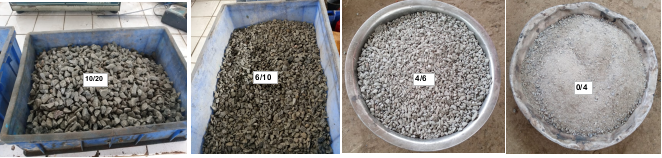
  • Laboratory of Mechanic and Materials (LMEMA)-Department of Civil Engineering, National Higher Polytechnic School of Douala-University of Douala, Douala, Cameroon;Department of Urban Engineering, Advanced School of Town Planning and Tourism-University of Bertoua, Abong-Mbang, Cameroon