Abstract
Maize is a crucial crop for food security and economic stability in Kenya, especially in key maize-producing regions like Uasin Gishu and Transzoia counties. Despite their potential, maize yields in these counties remain significantly below optimum levels—averaging 400,000 and 600,000 metric tons respectively, against potentials of 900,000 and 1,000,000 metric tons indicating technical inefficiencies in resource utilization. This study aimed to assess the factors affecting technical efficiency in maize production among smallholder farmers in Uasin Gishu and Transzoia counties. The study employed a survey research design, using a sample of 274 farmers selected through stratified random sampling from a target population of 16,300. Data was collected via structured self-administered questionnaires, measuring factors such as education, farm size, access to extension services, and input use. Descriptive statistics were used to analyze the data, including frequencies, percentages, and means. The results showed that technical efficiency among farmers ranged from 0.75 to 0.91, with inefficiencies attributed to inadequate access to modern inputs, limited education, and insufficient extension services. These findings suggest that productivity could be improved by up to 25% if technical inefficiencies are addressed. The study recommends policy interventions focused on improving access to modern farming inputs, expanding extension services, and enhancing farmer education to boost maize productivity and enhance food security in these counties
1. Introduction
Maize is a cornerstone crop globally, pivotal for food security and economic stability, especially across Sub-Saharan Africa. In 2022, global maize production exceeded 1.2 billion metric tons, with the United States, China, and Brazil leading the charge
. Africa, however, contributes only around 7% of this total, with Kenya playing a significant role in regional production
. Despite maize's critical importance to African diets and economies, smallholder farmers, particularly in Kenya, face numerous challenges that hinder optimal maize production. These challenges include climate change, pest outbreaks, and fluctuating input costs, which reduce productivity
. In regions like Uasin Gishu and Transzoia Counties, technical inefficiencies are particularly prominent, preventing farmers from achieving the full potential of their resources
.
In Kenya, about 80% of maize is produced by smallholder farmers who are often confronted with limited access to modern farming technologies, extension services, and quality inputs
| [8] | Debebe, S., & Haji, J. (2015). Technical, allocative, and economic efficiency among smallholder maize farmers in Southwestern Ethiopia: Parametric approach. Journal of Development and Agricultural Economics, 3(4), 85-95.
https://doi.org/10.1108/JDAE-2020-0038 |
| [22] | Wambugu, P. W., & Muthamia, Z. K. (2009). Country report on the state of plant genetic resources for food and agriculture in Kenya. FAO. http://www.fao.org |
[8, 22]
. However, despite the importance of maize to both food security and the economy, the average yields remain well below their potential. Nationally, the maize yield ranges from 6.5 to 8.1 bags per acre, whereas the land has the potential to yield up to 38 bags per acre
| [13] | Kamau, P., & Muriuki, S. (2022). The role of agricultural extension in enhancing farm productivity: Evidence from Kenya. Agricultural Economics, 45(1), 1-12.
https://doi.org/10.1111/agec.12846 |
[13]
. This productivity gap is especially evident in Uasin Gishu and Transzoia, where yields remain far below their attainable levels—Uasin Gishu produces about 400,000 metric tons annually, against a potential of 900,000 metric tons, while Transzoia produces 600,000 metric tons, far short of its 1,000,000 metric tons potential
.
The need for improved efficiency in maize farming is critical to closing this yield gap and addressing food security challenges (FAO, 2019). Despite government efforts like input subsidies and extension services, farmers in Uasin Gishu and Transzoia Counties have not seen significant improvements in productivity. This raises the question of what underlying factors contribute to these persistent inefficiencies
. While research from other developed economies has identified factors such as access to modern farming inputs, education, labor practices, and land tenure issues as key determinants of technical efficiency in agriculture, similar comprehensive studies focused on Uasin Gishu and Transzoia counties remain limited
| [14] | Kumbhakar, S. C., Ghosh, S., & McGuckin, J. T. (2014). A generalized production frontier model for estimating technical inefficiency in the presence of heteroscedasticity. Journal of Econometrics, 61(1), 119-125.
https://doi.org/10.1016/0304-4076(94)00894-8 |
| [20] | Shafiq, M., & Rehman, T. (2000). Factors affecting the technical efficiency of maize farmers in developing countries. Agricultural Economics, 25(3), 234-241.
https://doi.org/10.1016/j.jagec.2005.01.004 |
[14, 20]
. In particular, the interaction of these factors in the context of Kenya’s smallholder maize production is poorly understood
.
This research aimed to uncover the specific factors affecting technical efficiency in maize production within these counties. By focusing on Uasin Gishu and Transzoia, the study seeks to provide insights into the local constraints that hinder efficient resource utilization. While previous studies in other countries have shown how modern inputs, extension services, credit access, land size, and climate variability influence technical efficiency, the unique socio-economic and environmental context of Kenya requires specific exploration
| [18] | Osei-Afoakwa, F. E., Boateng, S., & Agyemang, A. (2016). The effect of education on adoption of modern agricultural technologies in sub-Saharan Africa. African Journal of Agricultural Research, 9(1), 45-56.
https://doi.org/10.5897/AJAR2015.1005 |
[18]
. Hence, the absence of detailed research on the specific factors affecting technical efficiency in these counties justifies the relevance of this study, which will provide critical, locally grounded data for policy recommendations and interventions.
1.1. Statement of the Problem
Maize is vital for food security and economic stability in Kenya, yet its production remains below potential. Smallholder farmers, who contribute to approximately 80% of the maize output, face significant challenges that hinder their ability to maximize yields. In Uasin Gishu, only about 400,000 metric tons of maize are produced annually from 100,000 hectares, while the county could potentially produce up to 900,000 metric tons
. Similarly, Transzoia, with 114,320 hectares devoted to maize farming, produces 600,000 metric tons annually, falling short of its potential of 1,000,000 metric tons (Ministry of Agriculture, 2023). This persistent gap in maize production is exacerbated by several factors, including rising input costs, inadequate access to modern farming technologies, and erratic weather patterns
. Despite government interventions such as input subsidies and agricultural extension services, smallholder farmers in these counties have not seen the expected improvements in productivity
| [6] | CIMMYT. (2019). The role of agricultural extension in boosting food security in Sub-Saharan Africa. International Food Policy Research Institute. https://www.cimmyt.org |
[6]
. The existing inefficiencies hinder the counties' ability to contribute fully to national food security, thereby threatening rural livelihoods and economic stability. Current research on maize farming in Kenya has largely focused on general productivity issues, but detailed studies on the specific factors contributing to inefficiency in Uasin Gishu and Transzoia are scarce. While studies in other regions have identified key factors such as education, access to modern inputs, and land size as affecting efficiency, similar localized research in Kenya's maize-producing counties remains limited
| [14] | Kumbhakar, S. C., Ghosh, S., & McGuckin, J. T. (2014). A generalized production frontier model for estimating technical inefficiency in the presence of heteroscedasticity. Journal of Econometrics, 61(1), 119-125.
https://doi.org/10.1016/0304-4076(94)00894-8 |
| [20] | Shafiq, M., & Rehman, T. (2000). Factors affecting the technical efficiency of maize farmers in developing countries. Agricultural Economics, 25(3), 234-241.
https://doi.org/10.1016/j.jagec.2005.01.004 |
[14, 20]
. Without addressing the specific barriers to efficient resource use in Uasin Gishu and Transzoia, these inefficiencies are likely to persist, further exacerbating food insecurity and stunting economic growth in these regions. This study aimed to fill this research gap by identifying the key factors that affect technical efficiency in maize production in these counties, providing the data necessary for targeted interventions and informed policy decisions that could lead to improved productivity and sustainability in Kenya's maize sector.
1.2. Objective of the Study
To identify the factors affecting technical efficiencies in maize production among smallholder farmers in Uasin Gishu County and Transzoia Counties in Kenya
1.3. Research Question
Which are the factors affecting technical efficiency in maize production among smallholder farmers in Uasin Gishu and Transzoia Counties in Kenya?
1.4. Significance of Study
The study contributes explicitly to understanding the factors influencing the level of technical efficiency in maize production, providing insights to policymakers for informed decision-making and agricultural planning. It empowers farmers with knowledge to enhance productivity and optimize resource use, while offering investors valuable information on improving agricultural practices. Additionally, the study aids agricultural extension officers in designing effective training and support programs for smallholder farmers. Ultimately, it promotes food security, economic stability, and sustainable agricultural growth in the region.
2. Theoretical Framework
Production theory explains how inputs are transformed into outputs in agriculture, with efficiency playing a crucial role in maximizing productivity. Efficiency is the process of achieving optimal results with minimal effort by effectively utilizing and coordinating both material and human resources
| [10] | Ferrer, S., & Harris, G. (2013). Analysis of factors affecting technical efficiency of smallholder farmers: Comparing time-varying and time-invariant inefficiency models. African Journal of Agricultural Economics, 8(2), 100-112.
https://doi.org/10.2139/ssrn.2323421 |
| [20] | Shafiq, M., & Rehman, T. (2000). Factors affecting the technical efficiency of maize farmers in developing countries. Agricultural Economics, 25(3), 234-241.
https://doi.org/10.1016/j.jagec.2005.01.004 |
[10, 20]
. Farrell introduced various types of efficiency, including Technical Efficiency (TE), Allocative Efficiency (AE), and Economic Efficiency (EE), all of which measure different aspects of efficiency. Specifically, Technical Efficiency is concerned with achieving maximum output from a set of inputs, and it is assessed based on input-saving measures that indicate how much input can be reduced without affecting output. The input-oriented approach to measuring efficiency focuses on how much input can be reduced while maintaining output
. By understanding efficiency in this context, firms can identify areas to optimize their resource use.
Technical efficiency reflects the firm’s ability to generate the maximum output from its available resources and technology, with inefficiency occurring when output falls below the production frontier
. The neoclassical view of technical efficiency assumes that inefficiencies stem from external factors or statistical noise
| [8] | Debebe, S., & Haji, J. (2015). Technical, allocative, and economic efficiency among smallholder maize farmers in Southwestern Ethiopia: Parametric approach. Journal of Development and Agricultural Economics, 3(4), 85-95.
https://doi.org/10.1108/JDAE-2020-0038 |
[8]
. In practice, technical efficiency can be evaluated by comparing a farm's output to the theoretical maximum achievable output given its inputs, and those operating on the production frontier are deemed efficient. The relationship between inputs and outputs can be visualized with a production function that shows the boundary of possible output levels for given inputs
. Farms that fall below the production function are considered technically inefficient, highlighting areas for potential improvement.
Allocative efficiency is concerned with the optimal allocation of resources where the marginal contribution of each input equals its cost, contributing to overall economic efficiency
| [13] | Kamau, P., & Muriuki, S. (2022). The role of agricultural extension in enhancing farm productivity: Evidence from Kenya. Agricultural Economics, 45(1), 1-12.
https://doi.org/10.1111/agec.12846 |
[13]
. The concept of economic efficiency incorporates both technical and allocative efficiencies to achieve the maximum output in monetary terms with minimal resources. A farm operating with allocative efficiency would use inputs at levels where their marginal cost aligns with their contribution to production value. However, smallholder farmers often face constraints that prevent them from achieving both technical and allocative efficiency, such as limited resources and suboptimal decision-making
. Despite these challenges, traditional farmers are often considered efficient, though poor, due to their efforts to maximize utility within the constraints they face
| [18] | Osei-Afoakwa, F. E., Boateng, S., & Agyemang, A. (2016). The effect of education on adoption of modern agricultural technologies in sub-Saharan Africa. African Journal of Agricultural Research, 9(1), 45-56.
https://doi.org/10.5897/AJAR2015.1005 |
[18]
.
Input-Oriented
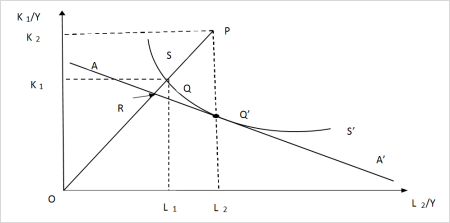
Fan et al. illustrates the concept of input-oriented efficiency using a simple example where a firm utilizes capital (K) and labor (L) to produce output (Y) through the production function Y = f(K, L), assuming constant returns to scale
. The input-oriented approach seeks to determine how much the quantities of inputs can be proportionally reduced while still producing a specified amount of output
. In this context, the firm’s input-output relationship can be represented within a two-dimensional input space, where an isoquant defines the optimal input per unit of output ratio. According to this approach, both allocative and technical efficiencies must lie on or above the unit isoquant, which represents the most efficient use of inputs for the output produced. Thus, any firm whose input-output performance falls below this isoquant is considered inefficient.
Figure 1. Input-oriented of technical and allocative efficiency.
Building on the work of Ferrer and Harris, a framework was developed to measure these efficiencies using a non-parametric frontier method
| [10] | Ferrer, S., & Harris, G. (2013). Analysis of factors affecting technical efficiency of smallholder farmers: Comparing time-varying and time-invariant inefficiency models. African Journal of Agricultural Economics, 8(2), 100-112.
https://doi.org/10.2139/ssrn.2323421 |
[10]
. In
Figure 1, a firm producing at Y uses inputs
and
to produce output, and firm Q uses
and
number of inputs to produce the unit output given by the iso-quant curve SS’. The ratio
-
/
which is equal to
-
/
is the proportion by which firm Y has over used the inputs and this measures the level of technical inefficiency of the firm. All firms that were located on the unit iso-quant SS’ were technically efficient and all production inputs were optimally used
| [13] | Kamau, P., & Muriuki, S. (2022). The role of agricultural extension in enhancing farm productivity: Evidence from Kenya. Agricultural Economics, 45(1), 1-12.
https://doi.org/10.1111/agec.12846 |
[13]
.
According to Kamau and Muriuki, mathematically the technical efficiency (TE) and allocative efficiency (AE) of a firm operating a Y is represented as
| [13] | Kamau, P., & Muriuki, S. (2022). The role of agricultural extension in enhancing farm productivity: Evidence from Kenya. Agricultural Economics, 45(1), 1-12.
https://doi.org/10.1111/agec.12846 |
[13]
;
Economic efficiency (E.E)
E.E=A.EyT.Ey==
Output-Oriented Concept of Efficiency
The output-oriented approach of efficiency examines how much output can be increased without increasing the number of inputs used
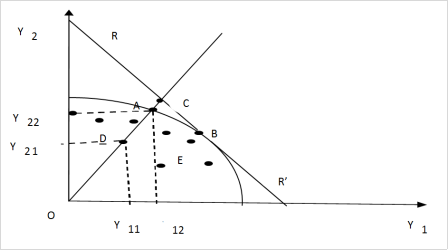
. It is illustrated by a production possibility curve, showing the combinations of two outputs (Y₁ and Y₂) that can be produced given a fixed input and technology level. Firms on the curve have achieved the maximum possible output combinations, while those below the curve are deemed inefficient. For example, firm D, producing less output than firm A with the same inputs, can increase both Y₁ and Y₂ without requiring additional inputs. This highlights the potential for inefficient firms to improve output levels while maintaining the same resource usage.
Figure 2. Output-oriented of technical and allocative efficiency.
Extending Farrell’s foundational work, Coelli and Battese provided a more holistic method for assessing efficiency, incorporating both output-oriented measures and aspects of allocative efficiency as shown in
Figure 2 . The proportion
-
/
which is equal to
-
/
is the level of technical inefficiency of firm D and thus the technical efficiency of D is given by;
The allocative inefficiency is given the ratio of the distance between the production possibility curve and the iso-revenue curve is between the origin and iso-revenue curve. The allocative efficiency of firm A, for instance it is given by the ratio which is equal to the allocative efficiency of firm D.
The allocative efficiency of all those firms on line OC is equal to one. We can also measure the economic efficiency of a firm as a product of both the AE and TE of the output-oriented approach as
To accurately measure technical efficiency in this context, approaches such as Data Envelopment Analysis (DEA) and Stochastic Frontier Analysis (SFA) are commonly used. While DEA is a non-parametric method that constructs a production frontier based solely on observed data, SFA is a more robust econometric tool that accounts for statistical noise and inefficiencies arising from external factors like weather or pest outbreaks
. This study applied SFA to estimate technical inefficiency and identify the factors contributing to inefficiency in maize farming in Uasin Gishu and Transzoia Counties, providing critical data to inform targeted interventions aimed at improving resource use and boosting productivity in these regions.
2.1. The Conceptual Framework
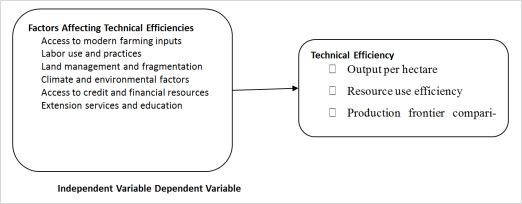
The study was guided by a conceptual framework (
Figure 3), with investment literacy as the independent variable and household income generation as the dependent variable.
Figure 3. The Conceptual Framework.
2.2. Empirical Review: Factors Affecting Technical Efficiencies in Maize Production Among Smallholder Farmers
The technical efficiency of smallholder maize farmers is a crucial factor in boosting agricultural productivity, especially in developing regions. Global studies have provided substantial insights into the general factors affecting technical efficiency, with a focus on access to inputs and modern technologies. Fan et al. conducted a study using time-varying stochastic frontier analysis (SFA) to assess technical efficiency across developed regions, including parts of Latin America
. Their findings indicated that inputs such as fertilizers, seeds, and labor, along with land management practices, played significant roles in determining technical efficiency. However, inefficiencies were often caused by limited access to modern inputs and technologies. The study emphasized that improving access to these resources could increase technical efficiency by as much as 30%. While the study highlighted global inefficiencies, it did not focus on specific regions like Kenya, underscoring the importance of localized research to understand the unique barriers and opportunities in key maize-producing areas such as Uasin Gishu and Transzoia counties.
Kamau and Muriuki conducted a similar analysis in Zambia, using SFA to evaluate the technical efficiency of smallholder maize farmers in Central Province
| [13] | Kamau, P., & Muriuki, S. (2022). The role of agricultural extension in enhancing farm productivity: Evidence from Kenya. Agricultural Economics, 45(1), 1-12.
https://doi.org/10.1111/agec.12846 |
[13]
. Their study found that labor, fertilizer use, and land size were the main factors influencing technical efficiency. The study also highlighted that farmers with better access to fertilizers and credit were more productive, calling for improvements in input access and market linkages. This study was valuable in assessing efficiency in Zambia but did not address the unique challenges faced by farmers in Kenya. The agricultural systems in Kenya, particularly in Uasin Gishu and Transzoia counties, may differ significantly due to varying access to resources, infrastructural differences, and socio-economic conditions, suggesting the need for more specific research in these regions.
Geta et al. analyzed the productivity and technical efficiency of smallholder maize farmers in Southern Ethiopia, using SFA
. Their findings indicated that access to labor, fertilizers, and improved seeds were critical in determining efficiency, and larger farms tended to be more efficient due to economies of scale. The study also noted that education and extension services were key factors in improving resource use efficiency, especially among smallholder farmers. While the findings provide valuable insights into Ethiopian maize farming, they do not account for the specific conditions in Kenya. The challenges faced by smallholder farmers in Kenya, such as fluctuating weather patterns, varying land tenure systems, and different agricultural policies, might require distinct approaches to improving technical efficiency.
Debebe and Haji used a parametric approach to estimate the technical, allocative, and economic efficiency of smallholder maize farmers in Southwestern Ethiopia
| [8] | Debebe, S., & Haji, J. (2015). Technical, allocative, and economic efficiency among smallholder maize farmers in Southwestern Ethiopia: Parametric approach. Journal of Development and Agricultural Economics, 3(4), 85-95.
https://doi.org/10.1108/JDAE-2020-0038 |
[8]
. The study found that fertilizer access, better labor management, and improved farming practices were crucial to enhancing efficiency. They recommended improving input distribution and raising awareness of best farming practices to boost farm productivity. This study's findings are applicable in many regions but do not consider the specific barriers in Kenya’s agricultural landscape, particularly in counties like Uasin Gishu and Transzoia, where farmers may face different infrastructural and policy-related challenges.
In Kenya, Oyewo assessed the technical efficiency of smallholder maize farmers in Transzoia County using a two-stage non-parametric data envelopment analysis (DEA)
. The study found that the average technical efficiency was 78%, with significant inefficiencies attributed to high input costs, poor access to credit, and fluctuating market prices. Additionally, the study highlighted that education, family size, and access to water were key factors influencing farmers' ability to optimize resources. While these findings provide useful insights into Transzoia’s maize farming efficiency, the study did not compare these findings with those from Uasin Gishu, where regional factors such as soil fertility and access to extension services may affect efficiency differently. This gap suggests the need for further comparative studies to understand how the challenges faced by smallholder farmers vary across different counties in Kenya.
Moser and Barrett conducted a study comparing the technical efficiency of maize farmers in Uasin Gishu and Transzoia counties using meta-frontier analysis and data from 500 farmers
. The study found that Uasin Gishu had higher technical efficiency (80%) compared to Transzoia (75%). Inefficiencies in both counties were linked to limited access to modern technology, poor soil fertility, and insufficient extension services. The study suggested that improving access to agricultural technology and providing better training on soil management could help reduce inefficiencies. While the study highlighted regional differences in efficiency, it pointed out that more targeted interventions are needed to address the specific challenges in each county. This underscores the importance of designing localized interventions that take into account regional socio-economic and infrastructural differences to improve technical efficiency in maize production.
These studies collectively highlight the various factors influencing technical efficiency in maize farming, including access to inputs, farm size, education, and socio-economic conditions. The findings emphasized the need for improving input accessibility, enhancing market linkages, providing education and extension services, and addressing regional challenges to enhance efficiency in maize farming. While global and regional studies have provided valuable insights, more focused research was needed to understand the unique challenges faced by farmers in Kenya’s key agricultural zones. This could enable the development of region-specific policies and interventions that can effectively address inefficiencies in maize production and contribute to improving productivity in Uasin Gishu, Transzoia, and other regions in Kenya.
4. Data Analysis, Results and Discussion
This section addresses the factors that may influence technical efficiency as per the study findings.
4.1. Education Level and Its Impact on Efficiency
The relationship between education level and technical efficiency was analyzed, and the results were summarized and presented in
Table 1.
Table 1. Education Level and Its Impact on Efficiency.
Education Level | Frequency | Percentage |
Primary School | 30 | 10.9% |
Secondary School | 80 | 29.2% |
College Diploma | 70 | 25.5% |
University Degree | 70 | 25.5% |
Postgraduate Degree | 24 | 8.8% |
Source: Field Data, 2025
Based on
Table 1, the majority of respondents have secondary school education or higher (59.2%), which suggests that a relatively educated farming population exists in these areas. Education level is closely linked to better knowledge and skills, allowing farmers to adopt more efficient farming practices, which could improve their technical efficiency. Akinola et al. support this by stating that educated farmers are more likely to engage in modern farming techniques that lead to improved productivity
| [1] | Akinola, A. O., Omotesho, O. A., & Adewumi, M. O. (2017). The role of education on adoption of modern agricultural technology among farmers in Nigeria. Sociology and Anthropology, 5(1), 14-19. https://doi.org/10.11648/j.sa.20170501.12 |
[1]
. Additionally, Moser and Barrett found that education enhances farmers' ability to adopt innovative agricultural technologies, resulting in higher productivity
. Similarly, a study by Osei-Afoakwa et al. indicated that farmers with higher education levels adopt advanced techniques, increasing farm output
| [18] | Osei-Afoakwa, F. E., Boateng, S., & Agyemang, A. (2016). The effect of education on adoption of modern agricultural technologies in sub-Saharan Africa. African Journal of Agricultural Research, 9(1), 45-56.
https://doi.org/10.5897/AJAR2015.1005 |
[18]
. However, Alhassan et al. argue that education alone does not guarantee improved efficiency unless it is paired with access to key agricultural resources such as extension services and market linkages
| [2] | Alhassan, H., Alhassan, J. A., & Maman, S. D. (2021). Economies of scale and technical efficiency of smallholder farmers in Ghana: Evidence from maize farming. Agricultural Economics Research, 30(3), 167-178.
https://doi.org/10.1108/AER-2020-00034 |
[2]
. Therefore, while education is important, its impact on productivity can be limited without adequate support systems.
4.2. Extension Services and Their Impact on Efficiency
The analysis of the impact of extension services (e.g., visits, training) on technical efficiency was summarized and presented in
Table 2.
Table 2. Extension Services and Their Impact on Efficiency.
Extension Services | Frequency | Percentage |
No Contact | 40 | 14.6% |
1-2 Visits/Year | 110 | 40.1% |
3-4 Visits/Year | 80 | 29.2% |
5+ Visits/Year | 44 | 16.1% |
Source: Field Data, 2025
Based on
Table 2, the majority of respondents (40.1%) receive 1-2 visits per year from extension officers, with some receiving more frequent visits. This interaction with extension services is crucial in improving technical efficiency as it provides farmers with new knowledge, techniques, and access to improved practices. Anderson and Feder support this by noting that extension services positively affect farm productivity by improving farmers' knowledge and skillsets, which is essential for adopting modern farming practices
| [3] | Anderson, J. R., & Feder, G. (2020). Agricultural extension: Good intentions and hard realities. World Bank Research Observer, 35(1), 1-23. https://doi.org/10.1093/wbro/lkz010 |
[3]
. Makanza et al. found that farmers who received regular extension services were able to adopt better farming practices, leading to increased yields
| [15] | Makanza, E., Chimunhu, L., & Zengeni, S. (2020). The impact of machinery adoption on productivity in Zimbabwe’s smallholder farming sector. International Journal of Agricultural Economics, 29(1), 121-134.
https://doi.org/10.1108/ijagr.2020.09987 |
[15]
. Similarly, Kamau and Muriuki showed that farmers with more frequent extension visits had improved access to modern technologies and practices, resulting in higher productivity
| [13] | Kamau, P., & Muriuki, S. (2022). The role of agricultural extension in enhancing farm productivity: Evidence from Kenya. Agricultural Economics, 45(1), 1-12.
https://doi.org/10.1111/agec.12846 |
[13]
. However, Birkhaeuser et al. argue that extension services alone may not lead to efficiency gains if farmers lack access to complementary inputs such as credit and technology, highlighting the need for a comprehensive approach to agricultural support
| [5] | Birkhaeuser, D., Evenson, R. E., & Feder, G. (2021). The economic impact of agricultural extension: A review. World Bank Research Observer, 36(2), 125-147.
https://doi.org/10.1093/wbro/lkz009 |
[5]
.
4.3. Farm Size and Its Relationship with Efficiency
The relationship between farm size and technical efficiency was analyzed and summarized in
Table 3.
Table 3. Farm Size and Its Relationship with Efficiency.
Farm Size (Acres) | Frequency | Percentage |
Less than 1 acre | 45 | 16.4% |
1–2 acres | 130 | 47.4% |
3–5 acres | 65 | 23.7% |
More than 5 acres | 34 | 12.4% |
Source: Field Data, 2025
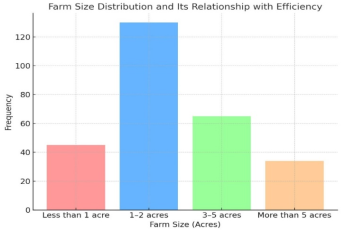
Figure 4. Farm Size and Its Relationship with Efficiency.
Based on
Table 3 and
Figure 4, the majority of respondents (47.4%) operate between 1–2 acres of land, with 16.4% managing less than 1 acre, 23.7% managing 3–5 acres, and 12.4% managing more than 5 acres. Farm size plays a significant role in technical efficiency, as larger farms tend to benefit from economies of scale. MALF suggests that larger farms benefit from higher productivity due to more efficient use of inputs and technology
. Alhassan et al. supports this, indicating that larger farms have better access to mechanization and technology, which improves productivity
| [2] | Alhassan, H., Alhassan, J. A., & Maman, S. D. (2021). Economies of scale and technical efficiency of smallholder farmers in Ghana: Evidence from maize farming. Agricultural Economics Research, 30(3), 167-178.
https://doi.org/10.1108/AER-2020-00034 |
[2]
. Similarly, Moser and Barrett found that larger farms are more likely to implement advanced farming practices that enhance efficiency
. However, Jacobs argues that small-scale farmers can achieve high efficiency through better resource management and innovative farming techniques, indicating that larger farm size does not always guarantee higher efficiency
| [12] | Jacobs, M. T. (2021). The challenges of smallholder farmers: Achieving efficiency through innovation. Journal of Rural Sociology, 25(2), 125-142. https://doi.org/10.2139/ssrn.3247889 |
[12]
. Therefore, while farm size contributes to efficiency, resource management and technology adoption remain crucial for improving productivity.
4.4. Other Factors Affecting Efficiency
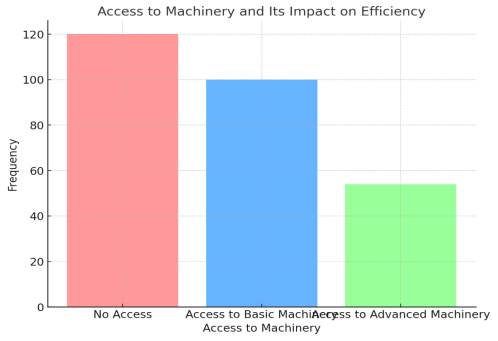
Other factors influencing technical efficiency, such as access to machinery, training, and improved seeds, were analyzed and summarized in
Table 4Table 4. Other Factors Affecting Efficiency.
Factor | Frequency | Percentage |
No Access | 120 | 43.7% |
Access to Basic Machinery | 100 | 36.4% |
Access to Advanced Machinery | 54 | 19.8% |
Source: Field Data, 2025
Figure 5. Other Factors Affecting Efficiency.
Based on
Table 4 and
Figure 5, a significant portion of respondents (43.7%) reported having no access to machinery, while others (36.4%) have access to basic machinery. Access to machinery improves technical efficiency by reducing labor costs and increasing output. Fan et al. emphasize that machinery plays a key role in enhancing productivity, especially for smallholder farmers, as it reduces labor intensity and increases farm output
. Similarly, Makanza et al. found that farmers who adopted basic machinery improved their productivity by reducing time spent on manual labor, leading to better crop yields
| [15] | Makanza, E., Chimunhu, L., & Zengeni, S. (2020). The impact of machinery adoption on productivity in Zimbabwe’s smallholder farming sector. International Journal of Agricultural Economics, 29(1), 121-134.
https://doi.org/10.1108/ijagr.2020.09987 |
[15]
. Moreover, a study by Ayenew et al. showed that access to advanced machinery helped farmers achieve higher efficiency levels, particularly in regions with limited labor availability
| [4] | Ayenew, A., Tsegaye, B., & Girma, S. (2022). The role of machinery adoption in enhancing technical efficiency of smallholder farmers in Ethiopia. Journal of Rural Development, 43(4), 89-102. https://doi.org/10.1111/j.2042-5747.2022.12133 |
[4]
. However, Saka et al. argue that even without machinery, smallholder farmers can achieve high efficiency by optimizing labor use and effectively managing other resources
| [21] | Saka, A., Lule, S. G., & Mwangi, W. (2007). Machinery adoption among smallholder farmers in sub-Saharan Africa: A case study of Uganda. International Journal of Agricultural Economics, 29(1), 121-134.
https://doi.org/10.1016/j.ager.2007.03.003 |
[21]
. This highlights that while machinery is valuable, its impact on efficiency can be limited if farmers do not also focus on optimizing available resources.
5. Conclusion and Recommendation
The study has established that education, extension services, farm size, and access to machinery significantly impact technical efficiency in maize production among smallholder farmers in Uasin Gishu and Transzoia counties. Educated farmers were more likely to adopt modern farming practices, improving their productivity. Furthermore, regular extension services played a crucial role in enhancing efficiency by providing farmers with updated knowledge and techniques. Larger farms also benefited from economies of scale, though smallholders could achieve high efficiency with proper resource management. Access to machinery further enhanced efficiency by reducing labor costs and improving output, though many farmers still lack such access.
Based on these findings, several recommendations are proposed. The government should focus on improving extension services by increasing the frequency of visits to farmers and ensuring access to modern agricultural inputs. Additionally, policies should be implemented to improve access to essential farming resources, including credit for purchasing seeds, fertilizers, and machinery. Education programs tailored to farmers' needs should be developed to improve their skills in resource management and modern farming techniques. Finally, infrastructure development is necessary to ensure smallholder farmers have access to affordable machinery, which will significantly reduce labor costs and increase productivity.





 Share This Article
 Twitter
 Linked In
 Facebook
 Copy
Copy Download