
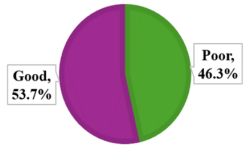
Persisting as a substantial global health burden for women, even though Cervical cancer is largely preventable through early screening, with HPV vaccination. Globally, cervical cancer stands as fourth most frequent malignancy affecting women. This study assesses the factors influencing awareness and practices of cervical cancer screening among women attending Butaro District Hospital in Burera District. A descriptive cross-sectional with quantitative method was used, with purposive sampling targeting women aged 21-65 years attending the hospital’s family planning department. The sample size involved 250 participants. Data was collected using structured, closed-ended questionnaires, and analyzed in SPSS Version 31.0.0. Descriptive statistics, Chi-square analysis, and Logistic regression, with p value < 0.05. Only 53.6% of women demonstrated good awareness, while 46.4% had poor awareness. Screening practice was reported by 63.1% (95% CI: 56.9-69.0) Awareness significantly influenced screening compared to poor awareness (OR = 2.601, 95% CI [1.524-4.439], p < 0.001). For Socio-demographic, higher income (AOR = 3.140, 95% CI [1.333-7.393], p = 0.009) increase the screening practice compared with lower income. Secondary education and above (AOR = 3.371, 95% CI [1.495-7.603], p = 0.003) compared to primary or no formal education. Being married increased the odds of screening AOR = 4.200, 95% CI [1.375-12.830], p = 0.012). Cervical cancer screening practices among women in Rwanda remain constrained by poor awareness, low education, poverty, and single marital status. Therefore, strengthening procedure-focused health education at facility level, and expanding outreach screening services is essential to increase cervical cancer screening uptake.
| Published in | World Journal of Health Services Research (Volume 1, Issue 2) |
| DOI | 10.11648/j.wjhsr.20260102.11 |
| Page(s) | 71-82 |
| Creative Commons |
This is an Open Access article, distributed under the terms of the Creative Commons Attribution 4.0 International License (http://creativecommons.org/licenses/by/4.0/), which permits unrestricted use, distribution and reproduction in any medium or format, provided the original work is properly cited. |
| Copyright |
Copyright © The Author(s), 2026. Published by Science Publishing Group |
Cervical Cancer, Cervical Cancer Screening Practice, Burera District
Awareness | The level of knowledge and understanding that women attending Butaro District Hospital have towards cervical cancer, possible risk factors, and the advantages of screening. Measured using structured questionnaires generating scores (21). |
|---|---|
Butaro District Hospital | A public referral hospital resides in Burera District, Butaro Sector. It serves as the Cancer Center of Excellence and provides outpatient, reproductive health, and oncology services [ 19]. |
Cervical Cancer | An impaired cell division disease of the cervix, mainly due to persistent infection with high-risk HPV strains. In this study, cervical cancer was considered in terms of prevention through screening rather than treatment outcomes among eligible adult women from LMI countries, [1, 21, 22]. |
Factors Influencing | Socio-demographic, cultural, and individual-level factors (e.g., education, age, marital status, occupation, household size, and income) that may affect women’s awareness and screening practices [23, 24] . |
Practice | The actual behaviours and actions taken by women in relation to cervical cancer screening, including whether they have ever been screened, frequency of screening, and adherence to recommended guidelines [25, 26] . |
Screening | The medical process of detecting cancerous or precancerous changes in the cervix before symptoms appear [26- 29]. In this study, screening refers specifically to methods available at Butaro District Hospital, such as Pap smears or VIA. |
Variable | Frequency (n) | Valid Percentage (%) | Mean ± SD |
|---|---|---|---|
Age (years) | 38.46 ± 7.94 years | ||
21-30 | 26 | 10.7 | |
31-40 | 142 | 58.2 | |
41-50 | 59 | 24.2 | |
51-65 | 17 | 7.0 | |
Marital Status | |||
Single | 15 | 6.1 | |
Divorced | 32 | 13.1 | |
Widowed | 11 | 4.5 | |
Married | 186 | 76.2 | |
Household Size | |||
Less than 4 | 97 | 39.8 | |
4 and above | 147 | 60.2 | |
Monthly Income (RWF) | 58,680 ± 46,690 RWF | ||
≤ 20,000 | 62 | 25.4 | |
20,000-50,000 | 72 | 29.5 | |
50,001-100,000 | 71 | 29.1 | |
Above 100,000 | 39 | 16.0 | |
Occupation | |||
Housewife | 26 | 10.7 | |
Farmer | 107 | 43.9 | |
Civil servant | 57 | 23.4 | |
Self-employed | 54 | 22.1 | |
Education Level | |||
None | 64 | 26.2 | |
Primary | 130 | 53.3 | |
Secondary education and above | 50 | 20.5 |
Variable | Frequency (n) | Valid Percentage (%) | 95% CI | |
|---|---|---|---|---|
Lower (%) | Upper (%) | |||
Screened for cervical cancer | ||||
Yes | 154 | 63.1 | 56.9 | 69.0 |
No | 90 | 36.9 | 31.0 | 43.1 |
Variable | Screening Status | OR | 95% CI | p-value | |
|---|---|---|---|---|---|
Yes n (%) | No n (%) | ||||
Awareness level | |||||
Poor | 58 (51.3) | 55 (48.7) | ref | ||
Good | 96 (73.3) | 35 (26.7) | 2.601 | 1.524-4.439 | <0.001 |
Variable | Screening Status | AOR | 95% CI | p-value | |
|---|---|---|---|---|---|
Yes n (%) | No n (%) | ||||
Age (years) | |||||
21-30 | 11 (42.3) | 15 (57.7) | ref | ||
31-40 | 99 (69.7) | 43 (30.3) | 2.560 | 1.019-6.434 | 0.046 |
41-50 | 32 (54.2) | 27 (45.8) | 1.564 | 0.574-4.255 | 0.382 |
51-65 | 12 (70.6) | 5 (29.4) | 2.005 | 0.505-7.957 | 0.323 |
Marital Status | |||||
Single | 5 (33.3) | 10 (66.7) | ref | ||
Divorced | 15 (46.9) | 17 (53.1) | 1.554 | 0.394-6.125 | 0.529 |
Widowed | 8 (72.7) | 3 (27.3) | 6.728 | 1.034-43.766 | 0.046 |
Married | 126 (67.7) | 60 (32.3) | 4.111 | 1.231-13.732 | 0.022 |
Monthly Income (RWF) | |||||
≤ 20,000 | 27 (43.5) | 35 (56.5) | ref | ||
20,000-50,000 | 48 (66.7) | 24 (33.3) | 2.476 | 1.168-5.246 | 0.018 |
50,001-100,000 | 52 (73.2) | 19 (26.8) | 3.140 | 1.447-6.816 | 0.004 |
Above 100,000 | 27 (69.2) | 12 (30.8) | 2.516 | 1.008-6.276 | 0.048 |
Education | |||||
None | 31 (48.4) | 33 (51.6) | ref | ||
Primary | 85 (65.4) | 45 (34.6) | 1.796 | 0.929-3.472 | 0.082 |
Secondary education and above | 38 (76.0) | 12 (24.0) | 2.601 | 1.062-6.367 | 0.036 |
AOR | Adjusted Odds Ratio |
ASR | Age-Standardized Incidence Rate |
CDC | Centers for Disease Control and Prevention |
CHW | Community Health Worker |
CI | Confidence Interval |
FP | Family Planning |
HPV | Human Papillomavirus |
OR | Odds Ratio |
PF | Planning Facility |
SPSS | Statistical Package for the Social Sciences |
SSA | Sub-Saharan Africa |
VIA | Visual Inspection with Acetic Acid |
WHO | World Health Organization |
| [1] | Habimana DS. Feasibility of Cervical Cancer Screening in Developing Countries: Editorial. Vol. 4. 2023; 4. |
| [2] |
WHO WHO. World Health Organization [Internet]. 2024 [cited 2025 Dec 2]. Cervical cancer. Available from:
https://www.who.int/news-room/fact-sheets/detail/cervical-cancer |
| [3] | Elsaid AM. Cervical Cancer Awareness and Screening Practices Among Women in Benghazi: A Cross-Sectional Study (2023). Libyan Int Med Univ J. 2025 Aug 26; s-0045-1811193. |
| [4] | Emagneneh T, Mulugeta C, Ejigu B, Alamrew A, Abebaw N, Yessuf A, et al. Uptake of cervical cancer screening and its associated factors in Africa: an umbrella review of systematic reviews and meta-analyses. BMC Public Health. 2025 Aug 30; 25: 2968. |
| [5] | Gafaranga JP, Manirakiza F, Ndagijimana E, Ulimubabo JC, Karenzi DI, Muhawenayo E, et al. Knowledge, Barriers, and Motivators to Cervical Cancer Screening in Rwanda: a Qualitative Study [Internet]. In Review; 2021 [cited 2025 Dec 2]. Available from: |
| [6] | CDC C for DC and P. Screening for Cervical Cancer | Cervical Cancer | CDC [Internet]. 2025 [cited 2025 Nov 30]. Available from: |
| [7] | Bruni L, Serrano B, Roura E, Alemany L, Cowan M, Herrero R, et al. Cervical cancer screening programmes and age-specific coverage estimates for 202 countries and territories worldwide: a review and synthetic analysis. Lancet Glob Health. 2022 Aug; 10(8): e1115–27. |
| [8] |
WHO WHO. Cervical Cancer Elimination Initiative [Internet]. 2023 [cited 2025 Dec 2]. Available from:
https://www.who.int/initiatives/cervical-cancer-elimination-initiative |
| [9] | Eun TJ, Perkins RB. Screening for Cervical Cancer. Med Clin North Am. 2020 Nov; 104(6): 1063–78. |
| [10] | Ba DM, Ssentongo P, Musa J, Agbese E, Diakite B, Traore CB, et al. Prevalence and determinants of cervical cancer screening in five sub-Saharan African countries: A population-based study. Cancer Epidemiol. 2021 Jun; 72: 101930. |
| [11] | Wu J, Jin Q, Zhang Y, Ji Y, Li J, Liu X, et al. Global burden of cervical cancer: current estimates, temporal trend and future projections based on the GLOBOCAN 2022. J Natl Cancer Cent. 2025 Jun 1; 5(3): 322–9. |
| [12] | Arab M, Noei Teymoordash S, Dehghan Manshadi HR, Ghahghaei-Nezamabadi A, Motamedinasab M, Nouri N. Cervical Cancer Screening Challenges. J Obstet Gynecol Cancer Res. 2025 Aug 3; 10(9): 660–6. |
| [13] | Mantula F, Toefy Y, Sewram V. Barriers to cervical cancer screening in Africa: a systematic review. BMC Public Health. 2024 Feb 20; 24(1): 525. |
| [14] | Dickson KS, Boateng ENK, Acquah E, Ayebeng C, Addo IY. Screening for cervical cancer among women in five countries in sub-saharan Africa: analysis of the role played by distance to health facility and socio-demographic factors. BMC Health Serv Res. 2023 Jan 20; 23(1): 61. |
| [15] | Kiboche JG, Ogutu PA, Mustami AN. Assessment of uptake of cervical cancer screening services among women of reproductive age in Khwisero sub-county, Kakamega County, Kenya. Int J Community Med Public Health. 2020 Dec 25; 8(1): 111. |
| [16] |
MOH R, RBC RBC. Rwanda National Cancer Control Plan (2020-2024) [Internet]. Rwanda; 2021. p. 65. Available from:
https://www.rbc.gov.rw/fileadmin/user_upload/result/Rwanda_NCCP_Final_Signed.pdf |
| [17] | MOH R. Accelerated Plan for Elimination of Cervical Cancer in Rwanda (2024-2027) [Internet]. Rwanda; 2025 Feb. p. 45. Available from: |
| [18] | MOH-Rwanda. RWANDA LAUNCHES NATIONAL STRATEGY FOR CERVICAL CANCER ELIMINATION BY 2027 [Internet]. 2025 [cited 2025 Dec 2]. Available from: |
| [19] |
Butaro Hospital. Oncology Department [Internet]. 2024 [cited 2025 Dec 2]. Available from:
https://www.butarohospital.gov.rw/1/clinical-department/oncology-services |
| [20] | Eastment MC, Wanje G, Richardson BA, Mwaringa E, Patta S, Sherr K, et al. A cross-sectional study of the prevalence, barriers, and facilitators of cervical cancer screening in family planning clinics in Mombasa County, Kenya. BMC Health Serv Res. 2022 Dec 23; 22(1): 1577. |
| [21] |
IARC IA for R on C. Cervical Cancer Awareness Month 2021 [Internet]. 2021 [cited 2025 Dec 6]. Available from:
https://www.iarc.who.int/faq/cervical-cancer-awareness-month-2021-qa |
| [22] | Taratula-Lyons M, Hill MC. Young women’s perceptions of cervical screening in the UK: a qualitative study. Prim Health Care Res Dev. 2024; 25: e49. |
| [23] | Jisa George T. Factors influencing utilization of cervical cancer screening services among women – A cross sectional survey. Clin Epidemiol Glob Health. 2021 Jul 1; 11. |
| [24] | Njeru KK, Gontier C, Atuwo I, Njoroge DK, Owino A, Mwaura P, et al. Sociocultural factors influencing cervical pre-cancer screening among women attending Mbagathi level four hospital, Nairobi, Kenya. Afr J Empir Res. 2025 Oct 4; 6(4): 97–110. |
| [25] | Abdelhamid A, Sanad A, Abdelwahab A, Shaheen K. Knowledge, Attitude &Practice on screening of cancer cervix among women in Minia Governorate. Minia J Med Res. 2023 Jan 14; 0(0): 0–0. |
| [26] | Zahid HM, Qarah AB, Alharbi AM, Alomar AE, Almubarak SA. Awareness and Practices Related to Cervical Cancer among Females in Saudi Arabia. Int J Environ Res Public Health. 2022 Jan; 19(3): 1455. |
| [27] | Bawuah A, Wang VQ, Adeleye K, Ameyaw EK, Yaya S. Mass Media Exposure and Cervical Cancer Screening in Rural Sub-Saharan Africa: A Multi-Country Cross-Sectional Analysis. Health Sci Rep. 2025; 8(4): e70663. |
| [28] | Usman IM, Chama N, Aigbogun Jr EO, Kabanyoro A, Kasozi KI, Usman CO, et al. Knowledge, Attitude, and Practice Toward Cervical Cancer Screening Among Female University Students in Ishaka Western Uganda. Int J Womens Health. 2023 Apr; Volume 15: 611–20. |
| [29] | Yang H, Li SP, Chen Q, Morgan C. Barriers to cervical cancer screening among rural women in eastern China: a qualitative study [Internet]. 2019 Mar 1. |
| [30] | Ghosh S, Mallya SD, Pattanshetty SM, Pandey D, Kamath VG, Kabekkodu SP, et al. Awareness, attitude, and practice towards cancer cervix prevention among rural women in southern India: A community-based study. Clin Epidemiol Glob Health. 2024 Mar 1; 26: 101546. |
| [31] | Agu PU, Dim CC, Nnagbo JE, Odoh GU, Eze MI, Okoro OS, et al. Awareness of cervical cancer prevention among rural dwellers in Enugu State, Nigeria: findings from Ituku outreach. Rural Remote Health. 2026 May 1; 26(2). |
| [32] | Gahongayire F, Hakizimana JP, Mukashyaka C, Ntivuguruzwa JDD. Taking Action, Saving Our Women: Reducing Cervical Cancer Incidence in Rwanda by Increased Screening and Treating. Rwanda Public Health Bull. 2023 Dec; 4(4). |
| [33] | World Health Organization RO for A. Rwanda steps up progress towards elimination of cervical cancer. 2025. |
| [34] | Rm Y, Ebuka O. Knowledge, attitude, and practice towards cervical cancer screening and hpv vaccination among women in passo community, abuja, nigeria. Asian J Hosp Pharm. 2025 Aug 26; 13–7. |
| [35] | Davey S, Mpanumusingo E, Fehr A, Butonzi J, Shyireambere C, Hategekimana V, et al. Characteristics and early outcomes of cervical cancer patients at Butaro District Hospital, Rwanda: a retrospective review. Lancet Glob Health. 2020 Apr; 5: S28. |
| [36] |
WHO. Rwanda steps up progress towards elimination of cervical cancer [Internet]. 2025 [cited 2026 Mar 14]. Available from:
https://www.afro.who.int/photo-story/rwanda-steps-progress-towards-elimination-cervical-cancer |
| [37] | Tezera H, Negash HK, Getnet M, Asefa T. Cervical cancer screening uptake in East Africa: a systematic review and meta-analysis of observational studies [Internet]. 2025 [cited 2026 Mar 14]. Available from: |
| [38] | Yeşilfidan D, Özkan M, Adana F. Comparison of cervical Cancer-Related knowledge, attitudes, and behaviors among women in urban and rural regions. BMC Public Health. 2025 Jul 28; 25: 2561. |
| [39] | Ndeke JM, Rosenberg M, Yeates KE, Landsittel D. The relationship between rural residence and cervical cancer screening in three sub-Saharan countries with different national screening policies. BMJ Glob Health. 2025 Aug 27; 10(8). |
| [40] | Ndakukamo EK, Mahalie R, van Dijk PH. Health system constraints in cervical cancer prevention in rural Namibia: A qualitative study. Afr J Prim Health Care Amp Fam Med. 2025; 17(1): 1–9. |
| [41] | Niyonsenga G, Gishoma D, Sego R, Uwayezu MG, Nikuze B, Fitch M, et al. Knowledge, utilization and barriers of cervical cancer screening among women attending selected district hospitals in Kigali - Rwanda. Can Oncol Nurs J. 2021 Jul 22; 31(3): 266–74. |
| [42] | Garg P, Krishnamoorthy Y, Halder P, Rajaa S, Verma M, Kankaria A, et al. Urban-rural disparities in cervical cancer screening among Indian women between 30–49 years: a geospatial and decomposition analysis using a nationally representative survey. BMC Cancer. 2025 Jan 11; 25: 67. |
| [43] | Appiah RS, Boakye K, Appiah G, Aidoo AA, Acquah-Hagan G, Singh B, et al. Rural-urban variations in cervical cancer screening uptake among women in Ghana: Evidence from the 2022 Ghana Demographic and Health Survey. BMC Womens Health. 2025 May 26; 25: 255. |
| [44] | Nwokedi VU, Nwajiugo GK, Okechukwu OC, Biose RI, Motilewa OO, Anosike WO, et al. Prevalence and Predictors of Cervical Cancer Screening Uptake in Sub-Saharan Africa: A Systematic Review and Meta-Analysis. Oncol Nucl Med Transplantology. 2025 Nov 24; 1(2): onmt009. |
| [45] | Gafaranga JP, Manirakiza F, Ndagijimana E, Urimubabo JC, Karenzi ID, Muhawenayo E, et al. Knowledge, Barriers and Motivators to Cervical Cancer Screening in Rwanda: A Qualitative Study. Int J Womens Health. 2022 Sep 1; 14: 1191–200. |
| [46] |
Ministry of Health Rwanda M. Accelerated Plan for Elimination of Cervical Cancer in Rwanda 2024-2027 [Internet]. Kigali, Rwanda; 2025 Feb [cited 2026 May 17]. Available from:
https://www.moh.gov.rw/index.php?t=f&f=117508&token=aa4f520402b85aed5c078c640c13d577f8886467 |
| [47] | Lee SJL, Jeremiah JP, Van Rens FECA. Effects of In-Exercise Carbohydrate Supplementation on Prolonged High-Intensity Exercise Performance in Oral Contraceptive Users [Internet]. 2024 [cited 2026 Mar 14]. Available from: |
| [48] | Bourne T, Kyriacou C, Shah H, Ceusters J. Experiences and well-being of healthcare professionals working in the field of ultrasound in obstetrics and gynaecology as the SARS-CoV-2 pandemic were evolving: a cross-sectional survey study - PMC [Internet]. 2022 [cited 2026 Mar 14]. Available from: |
| [49] | Tuli S. Reimagining rural cancer care - the Butaro Cancer Center of Excellence (BCCOE) in Rwanda. Rural Remote Health. 2023 Jan; 23(1): 8174. |
| [50] | WHO. Global strategy to accelerate the elimination of cervical cancer as a public health problem [Internet]. 2020 [cited 2026 Mar 14]. Available from: |
| [51] | Mupenzi C, Manirafasha EN, Gbadamosi MA. Factors Associated with Cervical Cancer Screening among Women at Selected District Hospital, Rwanda. Rwanda J Med Health Sci. 2025 Jul 31; 8(2): 208–20. |
| [52] | Manirakiza AVC, Rubagumya F, Ngendahayo L. Burundi Cancer Care Needs: A Call to Action [Internet]. 2020 [cited 2026 Mar 14]. Available from: |
| [53] | Dau H, Vidler M, AboMoslim M, Mutamba B, Nesbitt Z, Deodatha J, et al. The barriers to cervical cancer screening for urban and rural populations in Rwanda. BMC Glob Public Health. 2023 Jul 31; 1: 4. |
| [54] | Olubodun T, Luoga P, Adam J. Prevalence and Factors Associated with Cervical Cancer Screening Among Women Aged 30-49 years in Nigeria: A Nationwide Cross-Sectional Survey [Internet]. In Review; 2025 [cited 2026 Mar 14]. Available from: |
| [55] | Friedman NP, Robbins TW. The role of prefrontal cortex in cognitive control and executive function. Neuropsychopharmacology. 2022 Jan; 47(1): 72–89. |
| [56] | Verghese J, Chalmer R, Stimmel M, Weiss E, Zwerling J, Malik R, et al. Non-literacy biased, culturally fair cognitive detection tool in primary care patients with cognitive concerns: a randomized controlled trial. Nat Med. 2024 Aug; 30(8): 2356–61. |
| [57] | Myint WW, Aggad R, Fan Q, Mendez SE. Factors Influencing Cervical Cancer Screening Uptake among Reproductive-Aged Filipino Women: Findings from the 2022 Philippines National Demographic and Health Survey. Womens Health Rep. 2024 Jun 5; 5(1): 485–94. |
| [58] | Ekinu J, Ayikobua ET, Icodu E, Akurut H, Akot OO, Oder S, et al. Factors Associated with Cervical Cancer Screening Uptake Among Women Attending Outpatient Department in a Rural District Hospital in Uganda. A Cross-Sectional Study. Int J Womens Health. 2025 Aug 21; 17: 2603–11. |
| [59] | Tsekpetse P, Salu S, Otoo DM, Dushime JF, Shiuma J, Oloo B, et al. Rural-urban disparities in cervical cancer screening uptake and its predictors among women aged 30–49 years in Ghana: a multivariate decomposition analysis. BMC Womens Health. 2025 Aug 19; 25(1): 396. |
| [60] | Gram EG, Knudsen SW, Brodersen JB, Jønsson ABR. Women’s experiences of age‐related discontinuation from mammography screening: A qualitative interview study. Health Expect. 2023 Jun; 26(3): 1096–106. |
| [61] | Mairead O. New research reveals how different age groups in Ireland view cervical screening. HSE.ie [Internet]. 2024 Oct [cited 2026 May 17]. Available from: |
| [62] | Bitewa MD, Yewodiaw TK, Abneh AA, Molla MG, Simegn MB, Jemere TS, et al. Determinants of cervical cancer screening among women aged 30 to 49 years in 20 low- and middle-income countries: A multilevel analysis. PLOS ONE. 2026 Apr 24; 21(4): e0347837. |
| [63] | Baykemagn ND, Aweke MN, Mesfin A, Baffa LD, Agimas MC, Abuhay HW, et al. Identifying Predictors of Cervical Cancer Screening Uptake in Sub-Saharan Africa Using Machine Learning: Cross-Sectional Study. JMIR Public Health Surveill. 2025 Sep 17; 11(1): e71677. |
| [64] | Yosef T, Birhanu B, Shifera N, Bekele BB, Asefa A. Determinants of cervical cancer screening uptake among reproductive-age women in southwest Ethiopia: a case-control study. Front Oncol. 2024 Oct 23; 14. |
| [65] |
Dominique V de W, Marie AD. World Bank [Text/HTML, Internet]. Washington, DC, USA: World Bank Group; 2017 [cited 2026 May 17]. Divorce, Widowhood and Women’s Welfare in Africa. Available from:
https://www.worldbank.org/en/news/video/2017/11/30/divorce-widowhood-and-womens-welfare-in-africa |
| [66] | Seifu BL, Negussie YM, Asnake AA, Asebe HA, Fente BM, Asmare ZA, et al. Wealth-related inequalities of women’s cervical cancer screening in 11 Sub-Saharan African countries: evidence from a pooled decomposition analysis. Sci Rep. 2025 Apr 10; 15(1): 12289. |
| [67] | Im H, Li F, Stover S, Abel C, Farmer J, García CM, et al. Overcoming Transportation Barriers for Low-Income Individuals with Chronic Conditions: Identifying Barriers and Strategies in Access to Healthcare and Food as Medicine (FAM). Healthcare. 2025 Nov 11; 13(22): 2869. |
| [68] | Makadzange EE, Peeters A, Joore MA, Kimman ML. The effectiveness of health education interventions on cervical cancer prevention in Africa: A systematic review. Prev Med. 2022 Nov 1; 164: 107219. |
APA Style
Chadrack, N. R., Negera, T. T., Mugabo, E. (2026). Factors Influencing the Awareness of Cervical Cancer Screening and Practice Among Women Attending Butaro District Hospital, Burera District, Rwanda, 2025. World Journal of Health Services Research, 1(2), 71-82. https://doi.org/10.11648/j.wjhsr.20260102.11
ACS Style
Chadrack, N. R.; Negera, T. T.; Mugabo, E. Factors Influencing the Awareness of Cervical Cancer Screening and Practice Among Women Attending Butaro District Hospital, Burera District, Rwanda, 2025. World J. Health Serv. Res. 2026, 1(2), 71-82. doi: 10.11648/j.wjhsr.20260102.11
@article{10.11648/j.wjhsr.20260102.11,
  author = {Niyihoza Roger Chadrack and Tefera Tezera Negera and Eric Mugabo},
  title = {Factors Influencing the Awareness of Cervical Cancer Screening and Practice Among Women Attending Butaro District Hospital, Burera District, Rwanda, 2025},
  journal = {World Journal of Health Services Research},
  volume = {1},
  number = {2},
  pages = {71-82},
  doi = {10.11648/j.wjhsr.20260102.11},
  url = {https://doi.org/10.11648/j.wjhsr.20260102.11},
  eprint = {https://article.sciencepublishinggroup.com/pdf/10.11648.j.wjhsr.20260102.11},
  abstract = {Persisting as a substantial global health burden for women, even though Cervical cancer is largely preventable through early screening, with HPV vaccination. Globally, cervical cancer stands as fourth most frequent malignancy affecting women. This study assesses the factors influencing awareness and practices of cervical cancer screening among women attending Butaro District Hospital in Burera District. A descriptive cross-sectional with quantitative method was used, with purposive sampling targeting women aged 21-65 years attending the hospital’s family planning department. The sample size involved 250 participants. Data was collected using structured, closed-ended questionnaires, and analyzed in SPSS Version 31.0.0. Descriptive statistics, Chi-square analysis, and Logistic regression, with p value < 0.05. Only 53.6% of women demonstrated good awareness, while 46.4% had poor awareness. Screening practice was reported by 63.1% (95% CI: 56.9-69.0) Awareness significantly influenced screening compared to poor awareness (OR = 2.601, 95% CI [1.524-4.439], p < 0.001). For Socio-demographic, higher income (AOR = 3.140, 95% CI [1.333-7.393], p = 0.009) increase the screening practice compared with lower income. Secondary education and above (AOR = 3.371, 95% CI [1.495-7.603], p = 0.003) compared to primary or no formal education. Being married increased the odds of screening AOR = 4.200, 95% CI [1.375-12.830], p = 0.012). Cervical cancer screening practices among women in Rwanda remain constrained by poor awareness, low education, poverty, and single marital status. Therefore, strengthening procedure-focused health education at facility level, and expanding outreach screening services is essential to increase cervical cancer screening uptake.},
 year = {2026}
}
TY  - JOUR
T1  - Factors Influencing the Awareness of Cervical Cancer Screening and Practice Among Women Attending Butaro District Hospital, Burera District, Rwanda, 2025
AU  - Niyihoza Roger Chadrack
AU  - Tefera Tezera Negera
AU  - Eric Mugabo
Y1  - 2026/10/14
PY  - 2026
N1  - https://doi.org/10.11648/j.wjhsr.20260102.11
DO  - 10.11648/j.wjhsr.20260102.11
T2  - World Journal of Health Services Research
JF  - World Journal of Health Services Research
JO  - World Journal of Health Services Research
SP  - 71
EP  - 82
PB  - Science Publishing Group
UR  - https://doi.org/10.11648/j.wjhsr.20260102.11
AB  - Persisting as a substantial global health burden for women, even though Cervical cancer is largely preventable through early screening, with HPV vaccination. Globally, cervical cancer stands as fourth most frequent malignancy affecting women. This study assesses the factors influencing awareness and practices of cervical cancer screening among women attending Butaro District Hospital in Burera District. A descriptive cross-sectional with quantitative method was used, with purposive sampling targeting women aged 21-65 years attending the hospital’s family planning department. The sample size involved 250 participants. Data was collected using structured, closed-ended questionnaires, and analyzed in SPSS Version 31.0.0. Descriptive statistics, Chi-square analysis, and Logistic regression, with p value < 0.05. Only 53.6% of women demonstrated good awareness, while 46.4% had poor awareness. Screening practice was reported by 63.1% (95% CI: 56.9-69.0) Awareness significantly influenced screening compared to poor awareness (OR = 2.601, 95% CI [1.524-4.439], p < 0.001). For Socio-demographic, higher income (AOR = 3.140, 95% CI [1.333-7.393], p = 0.009) increase the screening practice compared with lower income. Secondary education and above (AOR = 3.371, 95% CI [1.495-7.603], p = 0.003) compared to primary or no formal education. Being married increased the odds of screening AOR = 4.200, 95% CI [1.375-12.830], p = 0.012). Cervical cancer screening practices among women in Rwanda remain constrained by poor awareness, low education, poverty, and single marital status. Therefore, strengthening procedure-focused health education at facility level, and expanding outreach screening services is essential to increase cervical cancer screening uptake.
VL  - 1
IS  - 2
ER  -
Epidemiology and Disease Control Option, Mount Kenya University, Kigali, Rwanda
Public Health, Mount of Kigali University, Kigali, Rwanda
Epidemiology and Disease Control Option, Mount Kenya University, Kigali, Rwanda

Information



 Share This Article
 Twitter
 Linked In
 Facebook
 Copy
Copy Download