
This study investigates a comparative assessment of two adsorbents, prepared activated carbon from Kennan's Sugarcane Bagasse, AC (KSCB)KOH and AC (KSCB)H3PO4 combined with natural zeolite samples for cadmium(II) ions removal. Maximum Cd(II)removal was observed at pH (6.0 – 8.0) when using KOH and H3PO4 respectively. The Langmuir and Freundlich isotherm models were applied to the adsorption data. The coefficients for determination of the two models were high with Langmuir model providing the best description for the experimental adsorption data. The fitting of the adsorption data into Freundlich model shows that the mode of adsorption of the metal ions by both adsorbents follows physisorption. Investigations into the maximum adsorption capacity showed that Cd(II) has an excellent adsorption on both adsorbents. Maximum adsorption capacities for Cd(II) metal ions corresponding to monolayer coverage, obtained from the Langmuir plots, were (714.29) mg/g and (270.27) mg/g onto the AC (KSCB)KOH and AC (KSCB)H3PO4 combined with natural zeolite respectively. The Langmuir adsorption coefficient, KL which is related to the affinity of the adsorbents were (150.00) and (34.33) for adsorption of Cd(II) ions onto AC (KSCB)KOH AC and (KSCB)H3PO4 combined with natural zeolite respectively, following the initial order. The carbonized AC (KSCB)KOH Combined with natural zeolite based - adsorbent was generally found to have an increased adsorption capacity for the metal ions than AC (KSCB)H3PO4 Combined with Natural Zeolite.
| Published in | Science Discovery Chemistry (Volume 1, Issue 1) |
| DOI | 10.11648/j.sdc.20260101.16 |
| Page(s) | 52-62 |
| Creative Commons |
This is an Open Access article, distributed under the terms of the Creative Commons Attribution 4.0 International License (http://creativecommons.org/licenses/by/4.0/), which permits unrestricted use, distribution and reproduction in any medium or format, provided the original work is properly cited. |
| Copyright |
Copyright © The Author(s), 2026. Published by Science Publishing Group |
Activated Carbon, Cadmium (II), Chemical Activation, Kennan's Sugarcane Baggase (KSB), Water Distribution System (WDS)
Sample no. | AC (KSCB) (H3PO4) + Natural Zeolite in (g) | AC (KSCB) (KOH) + Natural Zeolite in (g) | ||
|---|---|---|---|---|
AC (KSCB) (H3PO4) | Zeolite | AC (KSCB) (KOH) | Zeolite | |
1 | 0.1 | 0.9 | 0.9 | 0.1 |
2 | 0.2 | 0.8 | 0.8 | 0.2 |
3 | 0.3 | 0.7 | 0.7 | 03 |
4 | 0.4 | 0.6 | 0.6 | 0.4 |
5 | 0.5 | 0.5 | 0.5 | 0.5 |
6 | 0.6 | 0.4 | 0.4 | 0.6 |
7 | 0.7 | 0.3 | 0.3 | 0.7 |
8 | 0.8 | 0.2 | 0.2 | 0.8 |
9 | 0.9 | 0.1 | 0.1 | 0.9 |
Adsorbent | Cd(II) | Sources |
|---|---|---|
Unmodified rice husk and modified rice husk | 8.82 | [ 26] |
11.03 | ||
African white star apple shell | 10.59 | [ 27] |
Sphagnum moss peat | - | [ 28] |
Maple sawdust | - | [ 29] |
Activated carbon Sigma C-3014 | 1.51 | [ 30] |
AC (KSCB)KOH combined with natural zeolite | 714.29 | This Study |
AC (KSCB)H3PO4 combined with natural zeolite | 270.27 |
| [1] | WHO (World Health Organization) (2011) Guidelines for drinking-water quality. Fourth edn. World Health Organi-zation, Geneva. |
| [2] | USEPA (US Environmental Protection Agency) (2015) Reg-ulated drinking water contaminants. Online database. |
| [3] | Bryan GW, Langston WJ (1992) Bioavailability, accumula-tion and effects of heavy metals in sediments with special reference to United Kingdom estuaries: a review. Environ Pollut 76: 89-131. |
| [4] | Alabdula’aly AI, Khan MA (2009) Heavy metals in cooler waters in Riyadh, Saudi Arabia. Environ Monit Assess 157: 23-28. |
| [5] | ATSDR (Agency for Toxic Substances and Disease Registry) (2015) Toxicological Profiles, Toxic Substances Portal. |
| [6] | Das, N., Vimala, R. and Kartika, P. (2007). Biosorption of Heavy metals: An overview. Indian Journal of Biotechnology 7, 159-169. |
| [7] | P. C. Grevatt, Toxicological Review of Hexavalent Chromium. Support of Summary Information on the Integrated Risk Information System (IRIS), US Environmental Protection Agency, Washington DC, US 1998. |
| [8] | M. H. Dehghani, M. Mohammadtaher, A. K. Bajpai, B. Heibati, I. Tyagi, M. Asif, S. Agarwal, V. K. Gupta, Removal of Noxious Cr (VI) Ions Using Single-walled Carbon Nanotubes and Multi-walled Carb Nanotubes, 279 (2015) (2015) 344-352. |
| [9] | Z Asku, Application of biosorption for the removal of organic pollutants: a review, Process Biochemistry, 40, 2009, 997-10268. |
| [10] | C. A. Kozlowski, W. Walkowiak, Removal of chromium (VI) from aqueous solutions by polymer inclusion membranes, Water Res. 36 (19) (2002) 4870-4876. |
| [11] | F. Akbal, S. Camcı, Copper, chromium and nickel removal from metal plating wastewater by electro coagulation, Desalination 269 (1) (2011) 214-222. |
| [12] | A. Assadi, M. H. Dehghani, N. Rastkari, S. Nasseri, A. H. Mahvi, Photo catalytic reduction of hexavalent chromium in aqueous solution with zinc oxide nanoparticles and hydrogen peroxide, Environ. Prot. Eng. 38 (4) (2012) 5-16. |
| [13] | T. Mohammadi, et al., Modeling of metal ion removal from wastewater by electrodialysis, Sep. Purif. Technol. 41 (1) (2005) 73-82. |
| [14] | Gupta, S. and Babua, B. V. (2006) Adsorption of Cr (VI) by a Low-Cost Adsorbent Prepared from Neem Leaves. Proceeding of National Conference on Environmental Conservation, Pilani, 175-180. |
| [15] | Amboga, D. A., Onyari, J. M., Shiundu, P. M. and Gichuki, J. W. (2014) Equilibrium and Kinetics Studies for the Biosorption of Aqueous Cd (II) ions onto Eichhornia Crassipes Biomass. Journal of Applied Chemistry 7, (1); 29-3. |
| [16] | Thakur, L. S. and Parmar, M. (2013) Adsorption of Heavy Metal (Cu2+, Ni2+ and Zn2+) from Synthetic Waste Water by Tea Waste Adsorbent. International Journal of Chemical and Physical Sciences 2 (6); 2319 - 6602. Tokimoto. |
| [17] | ANIA, M. C. Purification of Industrial Effluents with Activated Carbon, Adsorption of Pollutants and Adsorbent RegenerationAustrias. 2003. |
| [18] | V. K. Garg), MoirangthemAmita, Rakesh Kumar, Renuka Gupta (2004) Basic dye (methylene blue) removal from simulated wastewater by adsorption using Indian Rosewood sawdust: a timber industry waste, Dyes and Pigments 63 (2004) 243-250. |
| [19] | Y. Onal, C. Akmil-Basar, DidemEren, CigdemSarıcı-O zdemir, TolgaDepci (2006). Adsorption kinetics of malachite green onto activated carbon prepared from Tunc¸bilek lignite, Journal of Hazardous Materials B128 (2006) 150-157. |
| [20] | Ahmad pour, A., Do, D. The preparation of activated carbon from macadamia nut shell by chemical activation. Carbon, 35, 1997, 1723-1732. |
| [21] | Youssef, A., Radwan, N., Abdel-Gawad, I., Singer, G. Texturalproperties of activated carbons from apricot stones. Colloids and Surfaces A, 252, 2005, 143-51. |
| [22] | AI-Duri, B. Introduction to adsorption. In: Use of adsorbents for theremoval of Pollutants from Wastewaters. Boca Raton, McKay, G. (Ed.)., FL: CRC Press, 1996, 1-6. |
| [23] | Xiao B, Sun XF, Sun RC, The chemical modification of lignins with succinic anhydride in aqueous systems, Polymer Degradation and Stability, 2001: 71; 223-231. |
| [24] | Ho YS, McKay GA, Two-stage batch sorption optimized design for dye removal to minimize contact time, Transactions of I Chem. E Part B, 1998: 76; 332-340. |
| [25] | Orlando US, Baes AU, Nishijima W, Okada M, A new procedure to produce lingo cellulosic anion exchangers from agricultural waste materials, Bioresource Technology, 2002: 83; 195-198. |
| [26] | Acharya, J., Sahu, J. N., Sahoo, B. K., Mohanty, C. R., Meikap, B. C. Removal of chromium (VI) from wastewater by activated carbon developed from Tamarind wood activated with zinc chloride. Chemical Engineering Journal, 150 (1), 2009, 9. |
| [27] | Arami-Niya, A., Daud, W. M. A. W., Mjalli, F. S. Comparative study of the textural characteristics of oil palm shell activated carbon produced by chemical and physical activation for methane adsorption. Chemical Engineering Research and Design, 89 (6), 2011, 657-664. |
| [28] | Ariyadejwanich, P., Tanthapanichakoon, W., Nakagawa, K., Mukai, S. R., Tamon, H. Preparation and characterization of microporous activated carbon from waste tires. Carbon, 41, 2003, 157-164. |
| [29] | Arriagada, R., Garcia, R., Molina-Sabio, M., Rodriguez-Reinoso, F. Effect of steam activation on the porosity and chemical nature of activated carbons from Eucalyptus globules and peach stones. Microporous Materials, 8 (3), 1997, 123-130. |
| [30] | Aworn, A., Thiravetyan, P., Nakbanpote, W. Preparation and characteristics of agricultural waste activated carbon by physical activation having micro and mesopores. Journal of Analytical and Applied Pyrolysis, 82 (2), 2008, 279-285. |
APA Style
Elhussien, M., Sulieman, S., Hassan, M., Hamid, G., Nimir, S. (2026). Removal of Cadmium (II) Metal Ions from Aqueous Solutions Using Modified Kennan’s Sugarcane Bagasse Activated Carbon with Natural Zeolite. Science Discovery Chemistry, 1(1), 52-62. https://doi.org/10.11648/j.sdc.20260101.16
ACS Style
Elhussien, M.; Sulieman, S.; Hassan, M.; Hamid, G.; Nimir, S. Removal of Cadmium (II) Metal Ions from Aqueous Solutions Using Modified Kennan’s Sugarcane Bagasse Activated Carbon with Natural Zeolite. Sci. Discov. Chem. 2026, 1(1), 52-62. doi: 10.11648/j.sdc.20260101.16
@article{10.11648/j.sdc.20260101.16,
  author = {Mutasim Elhussien and Safa Sulieman and Mawia Hassan and Gaafer Hamid and Sumia Nimir},
  title = {Removal of Cadmium (II) Metal Ions from Aqueous Solutions Using Modified Kennan’s Sugarcane Bagasse Activated Carbon with Natural Zeolite},
  journal = {Science Discovery Chemistry},
  volume = {1},
  number = {1},
  pages = {52-62},
  doi = {10.11648/j.sdc.20260101.16},
  url = {https://doi.org/10.11648/j.sdc.20260101.16},
  eprint = {https://article.sciencepublishinggroup.com/pdf/10.11648.j.sdc.20260101.16},
  abstract = {This study investigates a comparative assessment of two adsorbents, prepared activated carbon from Kennan's Sugarcane Bagasse, AC (KSCB)KOH and AC (KSCB)H3PO4 combined with natural zeolite samples for cadmium(II) ions removal. Maximum Cd(II)removal was observed at pH (6.0 – 8.0) when using KOH and H3PO4 respectively. The Langmuir and Freundlich isotherm models were applied to the adsorption data. The coefficients for determination of the two models were high with Langmuir model providing the best description for the experimental adsorption data. The fitting of the adsorption data into Freundlich model shows that the mode of adsorption of the metal ions by both adsorbents follows physisorption. Investigations into the maximum adsorption capacity showed that Cd(II) has an excellent adsorption on both adsorbents. Maximum adsorption capacities for Cd(II) metal ions corresponding to monolayer coverage, obtained from the Langmuir plots, were (714.29) mg/g and (270.27) mg/g onto the AC (KSCB)KOH and AC (KSCB)H3PO4 combined with natural zeolite respectively. The Langmuir adsorption coefficient, KL which is related to the affinity of the adsorbents were (150.00) and (34.33) for adsorption of Cd(II) ions onto AC (KSCB)KOH AC and (KSCB)H3PO4 combined with natural zeolite respectively, following the initial order. The carbonized AC (KSCB)KOH Combined with natural zeolite based - adsorbent was generally found to have an increased adsorption capacity for the metal ions than AC (KSCB)H3PO4 Combined with Natural Zeolite.},
 year = {2026}
}
TY  - JOUR
T1  - Removal of Cadmium (II) Metal Ions from Aqueous Solutions Using Modified Kennan’s Sugarcane Bagasse Activated Carbon with Natural Zeolite
AU  - Mutasim Elhussien
AU  - Safa Sulieman
AU  - Mawia Hassan
AU  - Gaafer Hamid
AU  - Sumia Nimir
Y1  - 2026/04/20
PY  - 2026
N1  - https://doi.org/10.11648/j.sdc.20260101.16
DO  - 10.11648/j.sdc.20260101.16
T2  - Science Discovery Chemistry
JF  - Science Discovery Chemistry
JO  - Science Discovery Chemistry
SP  - 52
EP  - 62
PB  - Science Publishing Group
UR  - https://doi.org/10.11648/j.sdc.20260101.16
AB  - This study investigates a comparative assessment of two adsorbents, prepared activated carbon from Kennan's Sugarcane Bagasse, AC (KSCB)KOH and AC (KSCB)H3PO4 combined with natural zeolite samples for cadmium(II) ions removal. Maximum Cd(II)removal was observed at pH (6.0 – 8.0) when using KOH and H3PO4 respectively. The Langmuir and Freundlich isotherm models were applied to the adsorption data. The coefficients for determination of the two models were high with Langmuir model providing the best description for the experimental adsorption data. The fitting of the adsorption data into Freundlich model shows that the mode of adsorption of the metal ions by both adsorbents follows physisorption. Investigations into the maximum adsorption capacity showed that Cd(II) has an excellent adsorption on both adsorbents. Maximum adsorption capacities for Cd(II) metal ions corresponding to monolayer coverage, obtained from the Langmuir plots, were (714.29) mg/g and (270.27) mg/g onto the AC (KSCB)KOH and AC (KSCB)H3PO4 combined with natural zeolite respectively. The Langmuir adsorption coefficient, KL which is related to the affinity of the adsorbents were (150.00) and (34.33) for adsorption of Cd(II) ions onto AC (KSCB)KOH AC and (KSCB)H3PO4 combined with natural zeolite respectively, following the initial order. The carbonized AC (KSCB)KOH Combined with natural zeolite based - adsorbent was generally found to have an increased adsorption capacity for the metal ions than AC (KSCB)H3PO4 Combined with Natural Zeolite.
VL  - 1
IS  - 1
ER  -
Department of Chemistry, Nile Valley University, Atbra, Sudan
Department of Chemistry, University of Merowe, Merow, Sudan
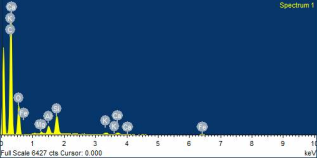
Figure 1. Sample No. (7) the best optimum one, when using KOH activator (0.85g. KSCB + 0.15g. Natural Zeolite).
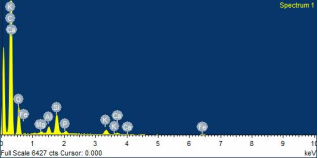
Figure 2. Sample No. (4) the best optimum one, when using H3PO4 activator (0.40g. KSCB + 0.60g. Natural Zeolite).
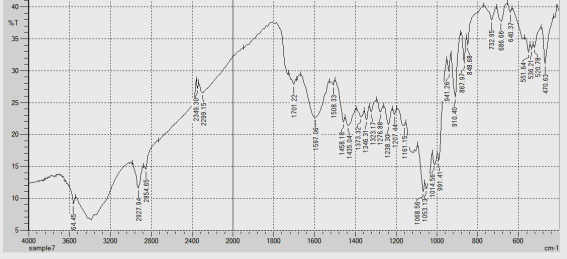
Figure 3. FTIR spectrum of AC (KSCB)KOH combined with Natural Zeolite.
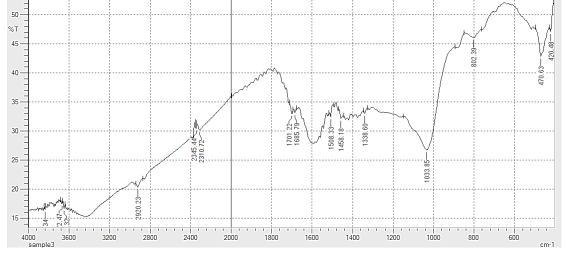
Figure 4. FTIR spectrum of AC (KSCB)H3PO4 combined with Natural Zeolite.
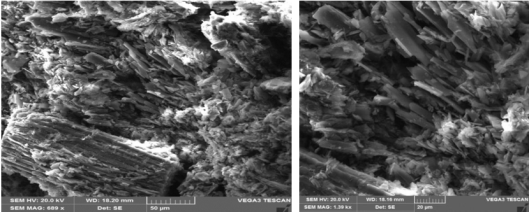
Figure 5. Sample No. (7) the best optimum one when, using KOH activator (0.85g. KSCB + 0.15g. Natural Zeolite).
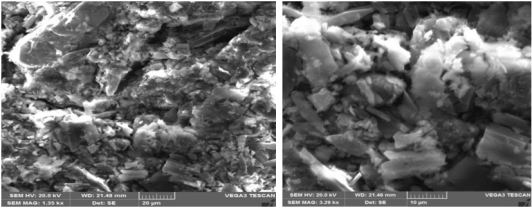
Figure 6. Sample No. 4 the best optimum one when using H3PO4 activator (0.40g. KSCB + 0.60g. Natural Zeolite).
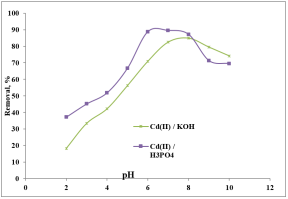
Figure 7. Effect of pH on Cd(II) removal by AC (KSCB) Activated Carbon with KOH/ H3PO4 Combined with Zeolite (CO = 75mg/ L, Dose = 0.25 g /ml, Contact Time = 60 min., T = 25 ± 0.50°C).
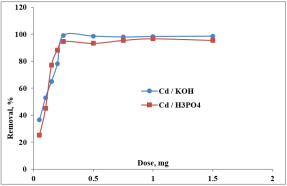
Figure 8. Effect ofadsorbent dose on Cd(II) removal by AC (KSCB) Activated Carbon with KOH/ H3PO4 Combined with Zeolite (CO=75mg/L, pH = {6 & 8}, Contact Time = 60 min., T = 25 ± 0.50°C).
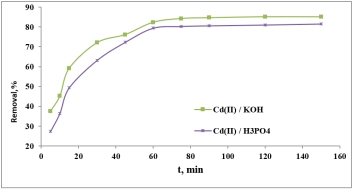
Figure 9. Effect of Contact Time on Cd(II) removal by AC (KSCB) Activated Carbon with KOH/ H3PO4 Combined with Zeolite,(CO = 75 mg/L, pH={6 & 8}, Dose = 0.25g/ml, T = 25 ± 0.50°C).
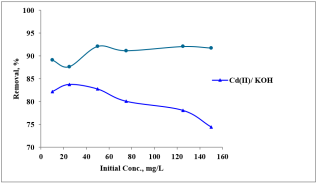
Figure 10. Effect of Initial concentration on Cd(II) removal by AC (KSCB) Activated Carbon with KOH/ H3PO4 Combined with Zeolite, pH = {6 & 8}Dose = 0.25g/ml, Contact Time = 60 min., T = 25± 0.50°C).
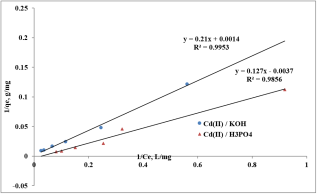
Figure 11. Langmuir isotherms of AC (KSCB) Activated Carbon with KOH/ H3PO4 Combined with Zeolite for Cd(II) removal 25 ± 0.50°C.
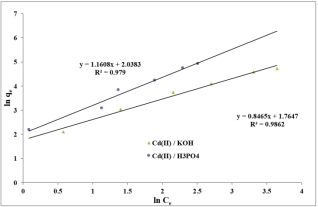
Figure 12. Freundlich isotherms of AC (KSCB) Activated Carbon with KOH/ H3PO4 Combined with Zeolite for Cd(II) removal at 25 ± 0.50°C.

Information


 Share This Article
 Twitter
 Linked In
 Facebook
 Copy
Copy Download