
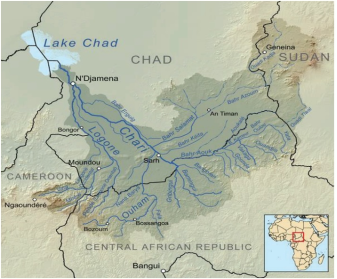
Water resources are a valuable asset for agricultural and industrial consumption, as well as for household needs. It is widely recognized that groundwater must be protected from all forms of pollution to maintain healthy biodiversity. The Logone River provides users with economic benefits: irrigated agriculture, fishing, groundwater, and recreational opportunities. Water property rights are complex to define, and a water market is difficult to establish. In the absence of property rights and a market, conflicts among users are inevitable. Although a market for property rights exists, we do not know how water resources are allocated among different users. In this sense, water resource management models must address these issues. This study therefore attempts, firstly, to examine the determinants of households' willingness to pay to preserve the water table in the Logone basin, and secondly, to estimate the value of households' willingness to pay (WTP). To achieve our objectives, we used the logit model, which allowed us to identify the variables that influence or do not influence household WTP. Subsequently, the Cameron and James method from 1987 guided us in estimating the average value of household WTP. We deduce from this study that the only decision-making variable is essentially income. All surveys indicate that their WTP would increase as long as their income remained high.
| Published in | Science Discovery (Volume 14, Issue 4) |
| DOI | 10.11648/j.sd.20261404.16 |
| Page(s) | 187-197 |
| Creative Commons |
This is an Open Access article, distributed under the terms of the Creative Commons Attribution 4.0 International License (http://creativecommons.org/licenses/by/4.0/), which permits unrestricted use, distribution and reproduction in any medium or format, provided the original work is properly cited. |
| Copyright |
Copyright © The Author(s), 2026. Published by Science Publishing Group |
WTP, Groundwater, Water Ressources, Logonr River Bassin
Variables | Variable names | Expected sign |
|---|---|---|
WTP | Willingness to pay | Dependant variable |
age | Age | + |
rev | Revenue | + |
edu | Education | + |
health | Health | + |
bill | bill | - |
aw | Alternative water | - |
poll | Pollution | - |
size | Size of household | + |
variables | WTP | |||
|---|---|---|---|---|
OLS regression | Signi. | Logistic regression | Signi. | |
age | .8071633 | (0.176) | .0487374 | (0.659) |
rev | .3414415 | (0.000)*** | .0845003 | (0.019)* |
edu | 7.497069 | (0.473) | 2.487366 | (0.583) |
health | 7.458818 | (0.489) | -2.246893 | (0.617) |
bill | -4.418739 | (0.615) | -5.860126 | (0.253) |
aw | -46.20426 | (0.000)*** | -1.482442 | (0.388) |
poll | -14.53996 | (0.322) | 1.836694 | (0.923) |
size | -5.34825 | (0.156) | -.3024576 | (0.680) |
cons | 474.8376 | (0.000)*** | -14.21579 | (0.472) |
R2 | 0.76 | 0.8627 | ||
Prob (F-STAT) | 0.0000 | - | ||
Prob (Chi2) | - | 0.0000 | ||
loglikelihood | - | -9.4459065 | ||
variables | WTP | |||
|---|---|---|---|---|
OLS regression | Signi. | Logistic regression | Signi. | |
age | .3073913 | (0.629) | -.018889 | (0.873) |
rev | .3053813 | (0.000)*** | .0803764 | (0.016)* |
edu | 8.249258 | (0.462) | 3.21325 | (0.553) |
health | 4.382551 | (0.703) | -3.163554 | (0.569) |
bill | -4.5167 | (0.630) | -8.349266 | (0.197) |
aw | -59.70845 | (0.000)*** | -1.120962 | (0.493) |
poll | -12.90302 | (0.409) | .54049 | (0.954) |
size | -.8215694 | (0.838) | .7922662 | (0.498) |
CONS | 389.6885 | (0.000)*** | -14.57333 | (0.169) |
R2 | 0.72 | 0.87 | - | |
Prob (F-STAT) | 0.0000 | - | ||
Prob (Chi2) | - | 0.0000 | ||
loglikelihood | - | -8.4775911 | ||
variables | WTP | |||
|---|---|---|---|---|
OLS regression | Signi. | Logistic regression | Signi. | |
age | -.5384373 | (0.155) | -.0890877 | (0.605) |
rev | .5346182 | (0.000)*** | .2116922 | (0.054)* |
edu | -20.82136 | (0.104) | - | - |
health | 34.44968 | (0.000)*** | 4.069616 | (0.032)** |
bill | -19.33976 | (0.001)*** | - | - |
aw | 1.524614 | (0.857) | .2305019 | (0.914) |
poll | -2.079283 | (0.873) | - | - |
size | 3.555956 | (0.177) | .1870341 | (0.849) |
CONS | 325.2294 | (0.000)*** | -39.6101 | (0.041)** |
R2 | 0.84 | 0.87 | ||
Prob (F-STAT) | 0.0000 | - | ||
Prob (Chi2) | - | - | 0.0000 | |
loglikelihood | - | - | -7.8512964 | |
variables | WTPLOG | |||
|---|---|---|---|---|
OLS regression | Signi. | Logistic regression | Signi. | |
age | .292972 | (0.598) | -.0439388 | (0.695) |
rev | .3959599 | (0.000)*** | .0928099 | (0.023)** |
edu | -.4628921 | (0.961) | 3.126102 | (0.607) |
health | 4.050013 | (0.679) | -.6797143 | (0.735) |
bill | -11.86095 | (0.140) | -5.969923 | (0.314) |
aw | -27.00697 | (0.003)*** | -2.160244 | (0.133) |
poll | -15.69269 | (0.239) | -.60585 | (0.954) |
size | -3.450751 | (0.302) | .1972832 | (0.755) |
CONS | 473.0369 | (0.000)*** | -11.92646 | (0.304) |
R2 | 0.73 | - | 0.85 | - |
Prob (F-STAT) | 0.0000 | - | - | - |
Prob (Chi2) | - | - | 0.0000 | - |
loglikelihood | - | - | -10,2331 | - |
Average WTP via the logit model | Average WTP via OLS model | |
|---|---|---|
NDJAMENA | 522 | 511 |
BONGOR | 490 | 501 |
KOUSSERI | 412 | 413 |
YAGOUA | 438 | 415 |
WTP | Willingness to Pay |
WTR | Willingness to Receive |
MPSPR | Model of Proportional Share of Pollution Reduction |
MCCRB | Model of Collective Cooperation and Reallocation of Benefits |
EKC | Environmental Kuznets Curve |
CVM | Contingent Valuation Method |
AFC | African Financial Community |
PES | Payment for Environmental Services |
| [1] | Amigues J.-P., Bonnieux F., LE Goffe P. et POINT P., 1995, Valorisation des usages de l’eau, Economica, 112 p. |
| [2] | Carson, R. (1999), "Contingent valuation: A users Guide ", Dec 23, 1999. |
| [3] | Carson, R. T. et R. C. Mitchell (1993). The Value of Clean Water: The Public's Willingness to Pay for Potable, Fishable, and Swimmable Quality Water. Water Resources Research. 29(7). 2445-2454. |
| [4] | China, Journal of Geochemical Exploration, Volume 110, Issue 1, July 2011, Pages 15-22. |
| [5] | Desaignes, B. et Point P. (1993), «Economie du patrimoine naturel: La valorisation des benefices de protection de l'environnement. » Economica. Paris. |
| [6] | Dowd, B. M., Press, D. and Huertos, M. L. (2008): Agricultural nonpoint source water pollution policy: The case of California's Central Coast, Agriculture, Ecosystems & Environment, Volume 128, Issue 3, November 2008, Pages 151-161. |
| [7] | Duncan, R. (2014): Regulating agricultural land use to manage water quality: The challenges for science and policy in enforcing limits on non-point source pollution in New Zealand, Land Use Policy, Volume 41, November 2014, Pages 378-387. |
| [8] | HANEMANN W. M. (1984), « Welfare evaluations in contingent valuation experiments with discret responses », American Journal of Agricultural Economics 66. |
| [9] | Haro, S. P., Albert, C. L., Velazquez, M. P. Velazquez, D. P. (2010): Fertilizer standards for controlling groundwater nitrate pollution from agriculture: El Salobral-Los Llanos case study, Spain, Journal of Hydrology, Volume 392, Issues 3–4, 15 October 2010, Pages 174-187. |
| [10] | Hu, Y. and Cheng, H. (2013): Water pollution during China's industrial transition, Environemental Development, Volume 8, October 2013, Pages 57-73. |
| [11] | Jessoe, K. (2013): Improved source, improved quality? Demand for drinking water quality in rural India, Journal of Environmental Economics and Management, Volume 66, Issue 3, November 2013, Pages 460-475. |
| [12] | Jiang, Y., Jin, L. and Lin, T. (2011): Higher water tariffs for less river pollution—Evidence from the Min River and Fuzhou City in China, China Economic Review, Volume 22, Issue 2, June 2011, Pages 183-195. |
| [13] | Jiang, L., Lin, C. and Lin, P. (2014): The determinants of pollution levels: Firm-level evidence from Chinese manufacturing, Journal of Comparative Economics, Volume 42, Issue 1, February 2014, Pages 118-142. |
| [14] | Kahneman, D. and J. L. Knetsch, 1992a. “Valuing Public Goods: The Purchase of Moral Satisfaction”, Journal of Environmental Economics and Management 22: 57-70. Kahneman, D. and J. L. Knetsch, 1992b. “Contingent Valuation and the Value of Public Goods: —Reply”, Journal of Environmental Economics and Management 22: 90-94. |
| [15] | Reddy, V. R. and Behera, B. (2006): Impact of water pollution on rural communities: An economic analysis, Ecological Economics, Volume 58, Issue 3, 25 June 2006, Pages 520-537. |
| [16] | Roebeling, P., Alves, H., Rocha, J., Brito, A., Almeida, P. and Mamede, J. (2014): Gains from trans-boundary water quality management in linked catchment and coastal socio-ecological systems: A case study for the Minho region, Water Resources and Economics, Volume 8, November 2014, Pages 32-42. |
| [17] | Villarreal, F. L., Barragán, L. F. L., Ramirez, V. R., Ortega, J. M. P. and ElHalwagi, M. (2014): An MFA optimization approach for pollution trading considering the sustainability of the surrounded watersheds, Computers & Chemical Engineering, Volume 63, 17 April 2014, Pages 140-151. |
| [18] | WILSON and HOWARTH. Ecological Economics, Discourse-based valuation of ecosystem services: establishing fair outcomes through group deliberation, mai 2002. |
| [19] | Zhao, L. (2009): Model of collective cooperation and reallocation of benefits related to conflicts over water pollution across regional boundaries in a Chinese. |
| [20] | Zhen, L., Li, F., Huang, H., Dilly, O., Liu, J., Wei, Y., Yang, L. and Cao, X. (2011): Households’ willingness to reduce pollution threats in the Poyang Lake region. |
| [21] | Wei, & Gnauck. (2007c). Simulating water conflicts using game theoretical models for water resources management (Vol. VI). (M. Tiezzi, Éd.) Southampton, Boston: WITT Press. |
| [22] | Wetzel, & Radif, A. (1999). Integrated water resources management: an apprroach to face the challenges of next century and to avert future crises. Desalination, 124 (1-3), 145-153. |
| [23] | Wang. (2005). Cooperative water resources allocation among competing users. PhD dissertation, University of Waterloo, Waterloo, Ontario, Canada. |
| [24] | UN-CSD. (1994). Review of sectoral clusters, first phase: human settlement and fresh water, fresh water resource. Report of the Secretary General ofthe UN, General Overview. |
| [25] | Wong, Y., & Lewis, L. (2013). The disappearing environmental Kuznets curve: a study of water quality in the lower Mekong basin. Journal of environmental management, 131, 415-442. |
| [26] | Pethig. (1992). Conflicts and cooperation in managing environmental resources. |
| [27] | Kilgour, Fang, D., & Hipel, K. (1992). Game-theortic analyses of enforcement of environmental laws and regulations. Water resources bulletin, 28 (1), 141-154. |
| [28] | Salvador, S., Pulido-Velazquez, M., & Sahuquillo, A. (2009). A hydro-economic modelling framework for optimal management of groundwater nitrate pollution from agriculture. Journal of Hydrology, 373, 193-203. |
APA Style
Ernest, M. (2026). Groundwater Preservation in the Logone River Basin. Science Discovery, 14(4), 187-197. https://doi.org/10.11648/j.sd.20261404.16
ACS Style
Ernest, M. Groundwater Preservation in the Logone River Basin. Sci. Discov. 2026, 14(4), 187-197. doi: 10.11648/j.sd.20261404.16
@article{10.11648/j.sd.20261404.16,
  author = {Maya Ernest},
  title = {Groundwater Preservation in the Logone River Basin},
  journal = {Science Discovery},
  volume = {14},
  number = {4},
  pages = {187-197},
  doi = {10.11648/j.sd.20261404.16},
  url = {https://doi.org/10.11648/j.sd.20261404.16},
  eprint = {https://article.sciencepublishinggroup.com/pdf/10.11648.j.sd.20261404.16},
  abstract = {Water resources are a valuable asset for agricultural and industrial consumption, as well as for household needs. It is widely recognized that groundwater must be protected from all forms of pollution to maintain healthy biodiversity. The Logone River provides users with economic benefits: irrigated agriculture, fishing, groundwater, and recreational opportunities. Water property rights are complex to define, and a water market is difficult to establish. In the absence of property rights and a market, conflicts among users are inevitable. Although a market for property rights exists, we do not know how water resources are allocated among different users. In this sense, water resource management models must address these issues. This study therefore attempts, firstly, to examine the determinants of households' willingness to pay to preserve the water table in the Logone basin, and secondly, to estimate the value of households' willingness to pay (WTP). To achieve our objectives, we used the logit model, which allowed us to identify the variables that influence or do not influence household WTP. Subsequently, the Cameron and James method from 1987 guided us in estimating the average value of household WTP. We deduce from this study that the only decision-making variable is essentially income. All surveys indicate that their WTP would increase as long as their income remained high.},
 year = {2026}
}
TY  - JOUR
T1  - Groundwater Preservation in the Logone River Basin
AU  - Maya Ernest
Y1  - 2026/06/12
PY  - 2026
N1  - https://doi.org/10.11648/j.sd.20261404.16
DO  - 10.11648/j.sd.20261404.16
T2  - Science Discovery
JF  - Science Discovery
JO  - Science Discovery
SP  - 187
EP  - 197
PB  - Science Publishing Group
SN  - 2331-0650
UR  - https://doi.org/10.11648/j.sd.20261404.16
AB  - Water resources are a valuable asset for agricultural and industrial consumption, as well as for household needs. It is widely recognized that groundwater must be protected from all forms of pollution to maintain healthy biodiversity. The Logone River provides users with economic benefits: irrigated agriculture, fishing, groundwater, and recreational opportunities. Water property rights are complex to define, and a water market is difficult to establish. In the absence of property rights and a market, conflicts among users are inevitable. Although a market for property rights exists, we do not know how water resources are allocated among different users. In this sense, water resource management models must address these issues. This study therefore attempts, firstly, to examine the determinants of households' willingness to pay to preserve the water table in the Logone basin, and secondly, to estimate the value of households' willingness to pay (WTP). To achieve our objectives, we used the logit model, which allowed us to identify the variables that influence or do not influence household WTP. Subsequently, the Cameron and James method from 1987 guided us in estimating the average value of household WTP. We deduce from this study that the only decision-making variable is essentially income. All surveys indicate that their WTP would increase as long as their income remained high.
VL  - 14
IS  - 4
ER  -
Department of Economics, Management and Legislation Mining, University of Maroua, Maroua, Cameroon

Information



 Share This Article
 Twitter
 Linked In
 Facebook
 Copy
Copy Download