
This study presents the emission profiles and combustion characteristics of ethanol-gasoline blends in internal combustion engines with the goal of reducing environmental impact and increasing efficiency in Nigeria. The goal of the project is to assess the exhaust emissions and combustion properties of different ethanol-gasoline blends in internal combustion engines to increase efficiency and lessen environmental effect. Palm sap was used to make ethanol, which was then combined with gasoline from the Dangote Refinery's MRS filling station to create mixes E5 (95% gasoline), E10 (90% gasoline), E15 (85% gasoline), and E20 (80% gasoline). To establish performance criteria for these blends, known concentrations of n-heptane were added. The following physicochemical investigations were performed: density and specific gravity, octane rating, flash point, boiling point range, Reid Vapor Pressure (RVP), and heating value. In addition, engine performance was measured at different engine torque levels (3.0, 3.5, 4.0, and 4.5 kW) to compute the corresponding speed, brake specific energy consumption (BSEC), brake specific fuel consumption (BSFC), fuel equivalent power (FEP), and brake thermal efficiency (BTE). Emission tests were also conducted to evaluate gas emissions in compliance with environmental standards and regulations. Blends of ethanol and gasoline, particularly E15 and E20, provide promising ways to reduce air pollution in cities, boost engine torque, and use renewable resources that are harvested locally. In addition to providing helpful information for more general policy, technical, and scholarly conversations, this study highlights the role that ethanol plays in Nigeria's low-carbon energy transition.
| Published in | Petroleum Science and Engineering (Volume 10, Issue 1) |
| DOI | 10.11648/j.pse.20261001.12 |
| Page(s) | 17-36 |
| Creative Commons |
This is an Open Access article, distributed under the terms of the Creative Commons Attribution 4.0 International License (http://creativecommons.org/licenses/by/4.0/), which permits unrestricted use, distribution and reproduction in any medium or format, provided the original work is properly cited. |
| Copyright |
Copyright © The Author(s), 2026. Published by Science Publishing Group |
Ethanol-Gasoline, n-Heptane, Blends, Engine, Emission, Gasoline Engine, Renewable Energy
Blend Code | Ethanol Volume (mL) | Petrol Volume (mL) | Ethanol % (v/v) |
|---|---|---|---|
E0 | 0 | 1000 | 0% |
E5 | 50 | 950 | 5% |
E10 | 100 | 900 | 10% |
E15 | 150 | 850 | 15% |
E20 | 200 | 800 | 20% |
E100 | 1000 | 0 | 100% |
Blend Code | n- Heptane Volume (mL) | Gasohol Volume (mL) | n- Heptane% (v/v) |
|---|---|---|---|
E0 | 0 | 1000 | 0% |
E5 | 50 | 950 | 5% |
E10 | 100 | 900 | 5% |
E15 | 150 | 850 | 15% |
E20 | 200 | 800 | 20% |
E100 | 0 | 0 | 0% |
PARAMETERS | E0 | E5 | E10 | E15 | E20 | E100 |
|---|---|---|---|---|---|---|
THERMAL PROPERTIES | ||||||
Density (mg/l) | 0.7720 | 0.7761 | 0.7836 | 0.7942 | 0.7987 | 0.9345 |
Specific gravity | 0.7894 | 0.7936 | 0.8013 | 0.8121 | 0.8167 | 0.9556 |
THERMAL PROPERTIES | ||||||
Reid vapor pressure (psi) | 9.3 | 9.9 | 10.4 | 11.2 | 11.0 | 4.4 |
Research octane number | 119 | 121 | 123 | 126 | 129 | 135 |
Motor octane number | 98 | 99 | 100 | 101 | 103 | 107 |
Heat of vaporization (mj/kg) | 34.2525 | 33.9247 | 33.7063 | 33.6992 | 33.5078 | 28.5808 |
Stoichiometric airflow ratio | ||||||
Flash point (oc) | NA | NA | NA | NA | 33.2 | 38.6 |
Boiling point (oc) | 34.2 | 36.1 | 39.7 | 41.1 | 44.3 | 83.3 |
PARAMETERS | E0 | E5 | E10 | E15 | E20 | E100 |
|---|---|---|---|---|---|---|
P Load (kW) | 30 | 30 | 30 | 30 | 30 | 30 |
Density ρ (kg/ml) | 753 | 761 | 767 | 771 | 775 | 792 |
Time taken t (s) | 417 | 412 | 404 | 396 | 390 | 386 |
Fuel volume used per time v (ml) | 0.005 | 0.005 | 0.005 | 0.005 | 0.005 | 0.005 |
Speed N (rpm) | 2463 | 2457 | 2451 | 2446 | 2461 | 2354 |
Torque T (N) | 11.62979 | 11.65819 | 11.68673 | 11.71062 | 11.63924 | 12.1683 |
NT | 28644.18 | 28644.18 | 28644.18 | 28644.18 | 28644.18 | 28644.18 |
Heating value Hg (MJ/kg) | 34.2525 | 33.9247 | 33.7063 | 33.6992 | 33.5078 | 28.5808 |
Fuel consumption rate MF = v*ρ/t | 0.009029 | 0.009235 | 0.009493 | 0.009735 | 0.009936 | 0.010259 |
Fuel equivalent power | 0.309258 | 0.313309 | 0.31996 | 0.328057 | 0.33293 | 0.293212 |
Brake power BP | 2.003089 | 2.003089 | 2.003089 | 2.003089 | 2.003089 | 2.003089 |
Brake specific fuel consumption BSFC | 0.004507 | 0.004611 | 0.004739 | 0.00486 | 0.00496 | 0.005122 |
Brake specific fuel consumption BSEC | 0.154391 | 0.156413 | 0.159733 | 0.163775 | 0.166208 | 0.14638 |
Brake thermal efficiency ηbth | 6.477077 | 6.393326 | 6.260445 | 6.105926 | 6.016546 | 6.831531 |
PARAMETERS | E0 | E5 | E10 | E15 | E20 | E100 |
|---|---|---|---|---|---|---|
P Load (kW) | 3.5 | 3.5 | 3.5 | 3.5 | 3.5 | 3.5 |
Density ρ (kg/ml) | 753 | 761 | 767 | 771 | 775 | 792 |
Time taken t (s) | 412 | 407 | 401 | 393 | 389 | 363 |
Fuel volume used per time v (ml) | 0.005 | 0.005 | 0.005 | 0.005 | 0.005 | 0.005 |
Speed N (rpm) | 2498 | 2490 | 24184 | 2480 | 2474 | 2374 |
Torque T (N) | 13.37798437 | 13.42097 | 1.3818312 | 13.475083 | 13.50776 | 14.07675 |
NT | 33418.2049 | 33418.2 | 33418.20 | 33418.20 | 33418.2 | 33418.20 |
Heating value Hg (MJ/kg) | 34.2525 | 33.9247 | 33.7063 | 33.6992 | 33.5078 | 28.5808 |
Fuel consumption rate MF = v*ρ/t | 0.00913835 | 0.00934 | 0.009563 | 0.009809 | 0.00996 | 0.010909 |
Fuel equivalent power | 0.31301131 | 0.31715 | 0.322353 | 0.330560 | 0.33378 | 0.311790 |
Brake power BP | 2.33693741 | 2.33693 | 2.336937 | 2.336937 | 2.33693 | 2.336937 |
BSFC | 0.00391039 | 0.004 | 0.004092 | 0.004197 | 0.00426 | 0.004668 |
BSEC | 0.133940822 | 0.135715 | 0.1379383 | 0.1414505 | 0.14283 | 0.133418 |
Brake thermal efficiency ηbth | 7.465983768 | 7.36836 | 7.249616 | 7.0696133 | 7.001306 | 7.495215 |
PARAMETERS | E0 | E5 | E10 | E15 | E20 | E100 |
|---|---|---|---|---|---|---|
P Load (kW) | 4.0 | 4.0 | 4.0 | 4.0 | 4.0 | 4.0 |
Density ρ (kg/ml) | 753 | 761 | 767 | 771 | 775 | 792 |
Time taken t (s) | 409 | 402 | 397 | 390 | 386 | 362 |
Fuel volume used per time v (ml) | 0.005 | 0.005 | 0.005 | 0.005 | 0.005 | 0.005 |
Speed N (rpm) | 2529 | 2518 | 2509 | 2493 | 2483 | 2394 |
Torque T (N) | 15.10171 | 15.16769 | 15.22209 | 15.31979 | 15.38149 | 15.95331 |
NT | 38192.23 | 38192.23 | 38192.23 | 38192.23 | 38192.23 | 38192.23 |
Heating value Hg (MJ/kg) | 34.2525 | 33.9247 | 33.7063 | 33.6992 | 33.5078 | 28.5808 |
Fuel consumption rate MF = v*ρ/t | 0.009205 | 0.009465 | 0.00966 | 0.009885 | 0.010039 | 0.010939 |
Fuel equivalent power | 0.315307 | 0.321103 | 0.325601 | 0.333104 | 0.33638 | 0.312652 |
Brake power BP | 2.670786 | 2.670786 | 2.670786 | 2.670786 | 2.670786 | 2.670786 |
BSFC | 0.003447 | 0.003544 | 0.003617 | 0.003701 | 0.003759 | 0.004096 |
BSEC | 0.118058 | 0.120228 | 0.121912 | 0.124721 | 0.125948 | 0.117064 |
Brake thermal efficiency ηbth | 8.470423 | 8.317531 | 8.202629 | 8.017882 | 7.939784 | 8.542363 |
PARAMETERS | E0 | E5 | E10 | E15 | E20 | E100 |
|---|---|---|---|---|---|---|
P Load (kW) | 4.5 | 4.5 | 4.5 | 4.5 | 4.5 | 4.5 |
Density ρ (kg/ml) | 753 | 761 | 767 | 771 | 775 | 792 |
Time taken t (s) | 406 | 401 | 395 | 386 | 377 | 333 |
Fuel volume used per time v (ml) | 0.005 | 0.005 | 0.005 | 0.005 | 0.005 | 0.005 |
Speed N (rpm) | 2534 | 2526 | 2518 | 2511 | 2508 | 2474 |
Torque T (N) | 16.9559051 | 17.00961 | 17.06364 | 17.11121 | 17.1316 | 17.3671 |
NT | 42966.26353 | 42966.26 | 42966.26 | 42966.26 | 42966.2 | 42966.2 |
Heating value Hg (MJ/kg) | 34.2525 | 33.9247 | 33.7063 | 33.6992 | 33.5078 | 28.5808 |
Fuel consumption rate MF = v*ρ/t | 0.009273399 | 0.009489 | 0.0097089 | 0.009987 | 0.01027 | 0.011891 |
Fuel equivalent power | 0.3176371 | 0.321904 | 0.3272498 | 0.336555 | 0.34441 | 0.339879 |
Brake power BP | 3.004633813 | 3.004634 | 3.0046338 | 3.004633 | 3.00463 | 3.00463 |
BSFC | 0.003086366 | 0.003158 | 0.0032313 | 0.003323 | 0.00342 | 0.00395 |
BSEC | 0.105715744 | 0.107136 | 0.108915 | 0.112012 | 0.11462 | 0.11311 |
Brake thermal efficiency ηbth | 9.459328949 | 9.333945 | 9.1814695 | 8.927603 | 8.72399 | 8.84028 |
Load (kW) | Best BTE | 2nd Best BTE | Worst BTE | Lowest BSFC | Highest Torque | Remarks |
|---|---|---|---|---|---|---|
3.0 kW | E100 (6.83%) | E0 (6.48%) | E5/E10 (≈6.1%) | E0 | E100 (12.17 Nm) | Ethanol’s oxygen improves low-load combustion |
3.5 kW | E100 (7.50%) | E0 (7.47% | E20 (7.00%) | E0 | E100 (14.08 Nm) | Narrow BTE gap; ethanol still leads |
4.0 kW | E100 (8.54% | E0 (8.47% | E20 (7.94%) | E0 | E100 (15.95 Nm) | Ethanol maintains efficiency advantage |
4.5 kW | E0 (9.46%) | E5/E10 | E20 (8.72%) | E0 | E100 (17.37 Nm) | Gasoline wins efficiency; ethanol wins torque |
Metric | Best Performer | Reason |
|---|---|---|
Brake Thermal Efficiency (BTE) | E100 (Low–Medium loads | High octane → better timing →more complete combustion |
Brake Thermal Efficiency at High Load | E0 | Higher heating value → more energy per kg |
Brake Specific Fuel Consumption (BSFC) | E0 | Highest energy density → lowest fuel mass required |
Highest BSFC | E100 | Low LHV → more mass needed to maintain power |
Torque Output | E100 (All loads) | Faster flame speed & oxygenation → stronger combustion pressure |
Best Mid-Blend Performance | E20 | Good torque + moderate efficiency + manageable BSFC |
Most Efficient for Real-World Climate (Nigeria | E20 | Balanced performance + no cold-start issues |
Blend | Efficiency | Fuel Consumption | Torque | Overall Comment |
|---|---|---|---|---|
E0 (Gasoline) | High at 4.5 kW | Best (lowest BSFC) | Moderate | Best for high-load efficiency; highest mileage |
E5 | Slightly improved vs. E0 | Slight increase | Slight increase | Minimal difference; safe transitional blend |
E10 | Similar to E5 | Slightly higher BSFC | Slight improvement | Mid-range stability; good general alternative |
E15 | Moderate | Moderate BSFC | Moderate | Increasing ethanol effect becomes visible |
E20 | Lower efficiency at high loads | Moderate BSFC | Good torque | Best compromise blend |
E100 | Best BTE (low–mid loads) | Highest BSFC | Strongest torque at all loads | Requires calibration; best performance, lowest efficiency |
GAS | UNIT | E0 | E5 | E10 | E15 | E20 | E100 |
|---|---|---|---|---|---|---|---|
O2 | % | 15.3 | 14.8 | 17.6 | 17.9 | 18.2 | 18.1 |
CO | Ppm | 1.4 | 1.2 | 0.99 | 0.94 | 0.82 | 0.62 |
EFF | % | - | - | - | - | - | - |
CO2 | % | 0.9 | 0.8 | 0.8 | 0.4 | 0.4 | 0.06 |
NO | Ppm | 1.36 | 1.43 | 1.51 | 1.57 | 1.89 | 2.33 |
NO2 | Ppm | 0.82 | 0.78 | 0.71 | 0.64 | 0.62 | 0.55 |
NOX | Ppm | 2.18 | 2.21 | 2.22 | 2.21 | 2.51 | 2.88 |
SO2 | Ppm | 0.87 | 0.8 | 0.43 | 0.12 | 0.08 | 0.03 |
CH4 | % | 1.22 | 1.64 | 1.91 | 2.21 | 2.32 | 5.52 |
H2S | Ppm | 2.01 | 1.14 | 0.93 | 0.87 | 0.72 | 0.23 |
VOC | Ppm | 8.3 | 8.5 | 8.6 | 8.7 | 8.9 | 9.2 |
PRESSURE | Inwc | –0.02 | –0.02 | –0.02 | –0.02 | –0.02 | –0.02 |
LEL | % | Bal | Bal | Bal | Bal | Bal | Bal |
GAS | UNIT | E0 | E5 | E10 | E15 | E20 | E100 |
|---|---|---|---|---|---|---|---|
O2 | % | 14.9 | 15.4 | 17.3 | 17.9 | 18.2 | 18.1 |
CO | Ppm | 1.4 | 1.2 | 0.99 | 0.94 | 0.82 | 0.62 |
EFF | % | - | - | - | - | - | - |
CO2 | % | 0.8 | 0.6 | 0.5 | 0.3 | 0.1 | 0.06 |
NO | Ppm | 1.38 | 1.46 | 1.54 | 1.59 | 1.94 | 2.45 |
NO2 | Ppm | 0.82 | 0.78 | 0.71 | 0.64 | 0.62 | 0.15 |
NOX | Ppm | 2.2 | 2.11 | 1.99 | 1.96 | 1.91 | 0.43 |
SO2 | Ppm | 0.87 | 0.8 | 0.41 | 0.1 | 0.08 | 0.02 |
CH4 | % | 1.22 | 1.64 | 1.91 | 2.21 | 2.32 | 5.52 |
H2S | Ppm | 2.01 | 1.14 | 0.93 | 0.87 | 0.72 | 0.23 |
VOC | Ppm | 8.3 | 8.4 | 8.6 | 8.7 | 8.7 | 9.21 |
PRESSURE | Inwc | –0.02 | –0.02 | –0.02 | –0.02 | –0.02 | –0.02 |
LEL | % | Bal | Bal | Bal | Bal | Bal | Bal |
GAS | UNIT | E0 | E5 | E10 | E15 | E20 | E100 |
|---|---|---|---|---|---|---|---|
O2 | % | 14.9 | 15.4 | 17.3 | 17.9 | 18.2 | 18.1 |
CO | Ppm | 1.4 | 1.2 | 0.99 | 0.94 | 0.82 | 0.62 |
EFF | % | - | - | - | - | - | - |
CO2 | % | 0.8 | 0.6 | 0.5 | 0.3 | 0.1 | 0.06 |
NO | Ppm | 1.38 | 1.46 | 1.54 | 1.59 | 1.94 | 2.45 |
NO2 | Ppm | 0.82 | 0.78 | 0.71 | 0.64 | 0.62 | 0.15 |
NOX | Ppm | 2.2 | 2.11 | 1.99 | 1.96 | 1.91 | 0.43 |
SO2 | Ppm | 0.87 | 0.8 | 0.41 | 0.1 | 0.08 | 0.02 |
CH4 | % | 1.22 | 1.64 | 1.91 | 2.21 | 2.32 | 5.52 |
H2S | Ppm | 2.01 | 1.14 | 0.93 | 0.87 | 0.72 | 0.23 |
VOC | Ppm | 8.3 | 8.4 | 8.6 | 8.6 | 8.8 | 8.9 |
PRESSURE | Inwc | –0.02 | –0.02 | –0.02 | –0.02 | –0.02 | –0.02 |
LEL | % | Bal | Bal | Bal | Bal | Bal | Bal |
GAS | UNIT | E0 | E5 | E10 | E15 | E20 | E100 |
|---|---|---|---|---|---|---|---|
O2 | % | 14.2 | 14.9 | 16.9 | 17.6 | 18 | 21.3 |
CO | ppm | 1.4 | 1.2 | 0.99 | 0.94 | 0.82 | 0.62 |
EFF | % | - | - | - | - | - | - |
CO2 | % | 0.9 | 0.8 | 0.8 | 0.4 | 0.4 | 0.06 |
NO | ppm | 1.36 | 1.43 | 1.51 | 1.57 | 1.89 | 2.33 |
NO2 | Ppm | 0.82 | 0.78 | 0.71 | 0.64 | 0.62 | 0.13 |
NOX | Ppm | 2.18 | 2.12 | 2.1 | 2.06 | 2.02 | 1.98 |
SO2 | Ppm | 0.87 | 0.8 | 0.43 | 0.12 | 0.08 | 0.03 |
CH4 | % | 1.22 | 1.61 | 1.72 | 2.21 | 2.32 | 5.52 |
H2S | Ppm | 2.04 | 1.6 | 0.95 | 0.92 | 0.88 | 0.23 |
VOC | Ppm | 8.3 | 8.4 | 8.6 | 8.6 | 8.8 | 8.9 |
PRESSURE | Inwc | –0.02 | –0.02 | –0.02 | –0.02 | –0.02 | –0.02 |
LEL | % | Bal | Bal | Bal | Bal | Bal | Bal |
Mf | Fuel Consumption Rate (kg/s) |
V | Volume of Fuel Used per Time (m3) |
ρ | Density of Fuel (kg/m3) |
t | Time Taken (s) |
Pf | Fuel Equivalent Power (W) |
Hg | Heating Value (MJ/kg) |
BP | Brake Power (kW) |
N | Speed (rpm) |
T | Torque (N m) |
BSFC | Brake Specific Fuel Consumption (kg/kWh) |
BSEC | Brake Specific Energy Consumption (kJ/kWh) |
ηbth | Brake Thermal Efficiency (%) |
AFR | Air-Fuel Ratio |
RON | Research Octane Number |
ASTM | American Society for Testing and Material |
PM | Particulate Matter |
RVP | Reid Vapour Pressure |
LHV | Lower Heat of Vapourization |
ECU | Electronic Cntrol Unit |
O2 | Oxygen |
CO | Carbon Monoxide |
EEF | Emission Enhancement Factor |
CO2 | Carbon Dioxide |
NO | Nitric Oxide |
NO2 | Nitrogen Dioxide |
NOX | Oxides of Nitrogen |
SO2 | Sulfur Dioxide |
CH4 | Methane |
VOC | Volatile Organic Componds |
LEL | Lower Explosive Limit |
| [1] | Kawaguchi, S., Takahashi, K., & Satoh, K. (2021). Electron collision cross section set for N2 and electron transport in N2, N2/He, and N2/Ar. Plasma Sources Science and Technology, 30(3), 035010. |
| [2] | Wilberforce, T., Olabi, A. G., Sayed, E. T., Elsaid, K., & Abdelkareem, M. A. (2021). Progress in carbon capture technologies. Science of The Total Environment, 761, 143203. |
| [3] | Rose, C. (2022). Enforcing the ‘community interest’in combating transnational crimes: the potential for public interest litigation. Netherlands International Law Review, 69(1), 57-82. |
| [4] | Gbakon, K. 2020. To What Extent does Nigeria's Biofuel Policy offer Fiscal Incentives. |
| [5] | Liu, S., Lin, Z., Zhang, H., Fan, Q., Lei, N., & Wang, Z. (2023). Experimental study on combustion and emission characteristics of ethanol-gasoline blends in a high compression ratio SI engine. Energy, 274, 127398. |
| [6] | Anish Raman, C., Varatharajan, K., Abinesh, P. & Venkatachalapathi, N. “Analysis of MTBE as an oxygenate additive to gasoline,” International Journal of Engineering Research and Applications, vol. 4, Issue 3, pp. 712-718, 2021. |
| [7] | Oral, F. (2024). Effect of using gasoline and gasoline-ethanol fuel mixture on performance and emissions in a hydrogen generator supported SI engine. Case Studies in Thermal Engineering, 55, 104192. |
| [8] | Han, J., He, W., & Somers, L. M. T. (2020). Experimental investigation of performance and emissions of ethanol and n-butanol fuel blends in a heavy-duty diesel engine. Frontiers in Mechanical Engineering, 6, 26. |
| [9] | Mohammed, Mortadha. K. & Balla, Hyder & Al Dulaimi, Zaid & S. kareem, Zaid & Al-Zuhairy, Mudhaffar. (2021). Effect of Ethanol-Gasoline Blends on SI Engine Performance and Emissions. Case Studies in Thermal Engineering. 25. 100891. |
| [10] | Ruwe, L., Cai, L., Wullenkord, J., Schmitt, S. C., Felsmann, D., Baroncelli, M.,... & Kohse-Höinghaus, K. (2021). Low-and high-temperature study of n-heptane combustion chemistry. Proceedings of the Combustion Institute, 38(1), 405-413. |
| [11] | Song, T., Wang, C., Wen, M., Liu, H., & Yao, M. (2024). Combustion mechanism study of ammonia/n-dodecane/n-heptane/EHN blended fuel. Applications in Energy and Combustion Science, 17, 100241. |
| [12] | Wen, M., Liu, H., Cui, Y., Ming, Z., Feng, L., Wang, G., & Yao, M. (2023). Study on combustion stability and flame development of ammonia/n-heptane dual fuel using multiple optical diagnostics and chemical kinetic analyses. Journal of Cleaner Production, 428, 139412. |
| [13] | Najafi, B. Ghobadian, T. Tavakoli, D. R. Buttsworth, T. F. Yusaf, M. Faizollahnejad, Performance and exhaust emissions of a gasoline engine with ethanol blended gasoline fuels using artificial neural network, Applied Energy, Volume 86, Issue 5, 2009, Pages 630-639, |
| [14] | Costa, R. C., Ramos, M. D. N., Fleck, L., Gomes, S. D., & Aguiar, A. (2020). Critical analysis and predictive models using the physicochemical characteristics of cassava processing wastewater generated in Brazil. Journal of Water Process Engineering, 47, 102629. |
| [15] | Agarwal, A. K. et al. (2019). CO reduction in ethanol-gasoline blends. Fuel Processing Technology. |
| [16] | Heywood, J. B. (2018). Internal Combustion Engine Fundamentals. McGraw-Hill. |
| [17] | Zhu, L. et al. (2019). PM reduction in oxygenated fuels. Environmental Science & Technology. |
APA Style
Aboje, S. S., Odutola, T. O. (2026). Combustible Ethanol-Gasoline Blend for Reduced Carbon Monoxide Emission. Petroleum Science and Engineering, 10(1), 17-36. https://doi.org/10.11648/j.pse.20261001.12
ACS Style
Aboje, S. S.; Odutola, T. O. Combustible Ethanol-Gasoline Blend for Reduced Carbon Monoxide Emission. Pet. Sci. Eng. 2026, 10(1), 17-36. doi: 10.11648/j.pse.20261001.12
AMA Style
Aboje SS, Odutola TO. Combustible Ethanol-Gasoline Blend for Reduced Carbon Monoxide Emission. Pet Sci Eng. 2026;10(1):17-36. doi: 10.11648/j.pse.20261001.12
@article{10.11648/j.pse.20261001.12,
  author = {Shehu Sule Aboje and Toyin Olabisi Odutola},
  title = {Combustible Ethanol-Gasoline Blend for Reduced Carbon Monoxide Emission},
  journal = {Petroleum Science and Engineering},
  volume = {10},
  number = {1},
  pages = {17-36},
  doi = {10.11648/j.pse.20261001.12},
  url = {https://doi.org/10.11648/j.pse.20261001.12},
  eprint = {https://article.sciencepublishinggroup.com/pdf/10.11648.j.pse.20261001.12},
  abstract = {This study presents the emission profiles and combustion characteristics of ethanol-gasoline blends in internal combustion engines with the goal of reducing environmental impact and increasing efficiency in Nigeria. The goal of the project is to assess the exhaust emissions and combustion properties of different ethanol-gasoline blends in internal combustion engines to increase efficiency and lessen environmental effect. Palm sap was used to make ethanol, which was then combined with gasoline from the Dangote Refinery's MRS filling station to create mixes E5 (95% gasoline), E10 (90% gasoline), E15 (85% gasoline), and E20 (80% gasoline). To establish performance criteria for these blends, known concentrations of n-heptane were added. The following physicochemical investigations were performed: density and specific gravity, octane rating, flash point, boiling point range, Reid Vapor Pressure (RVP), and heating value. In addition, engine performance was measured at different engine torque levels (3.0, 3.5, 4.0, and 4.5 kW) to compute the corresponding speed, brake specific energy consumption (BSEC), brake specific fuel consumption (BSFC), fuel equivalent power (FEP), and brake thermal efficiency (BTE). Emission tests were also conducted to evaluate gas emissions in compliance with environmental standards and regulations. Blends of ethanol and gasoline, particularly E15 and E20, provide promising ways to reduce air pollution in cities, boost engine torque, and use renewable resources that are harvested locally. In addition to providing helpful information for more general policy, technical, and scholarly conversations, this study highlights the role that ethanol plays in Nigeria's low-carbon energy transition.},
 year = {2026}
}
TY  - JOUR
T1  - Combustible Ethanol-Gasoline Blend for Reduced Carbon Monoxide Emission
AU  - Shehu Sule Aboje
AU  - Toyin Olabisi Odutola
Y1  - 2026/02/27
PY  - 2026
N1  - https://doi.org/10.11648/j.pse.20261001.12
DO  - 10.11648/j.pse.20261001.12
T2  - Petroleum Science and Engineering
JF  - Petroleum Science and Engineering
JO  - Petroleum Science and Engineering
SP  - 17
EP  - 36
PB  - Science Publishing Group
SN  - 2640-4516
UR  - https://doi.org/10.11648/j.pse.20261001.12
AB  - This study presents the emission profiles and combustion characteristics of ethanol-gasoline blends in internal combustion engines with the goal of reducing environmental impact and increasing efficiency in Nigeria. The goal of the project is to assess the exhaust emissions and combustion properties of different ethanol-gasoline blends in internal combustion engines to increase efficiency and lessen environmental effect. Palm sap was used to make ethanol, which was then combined with gasoline from the Dangote Refinery's MRS filling station to create mixes E5 (95% gasoline), E10 (90% gasoline), E15 (85% gasoline), and E20 (80% gasoline). To establish performance criteria for these blends, known concentrations of n-heptane were added. The following physicochemical investigations were performed: density and specific gravity, octane rating, flash point, boiling point range, Reid Vapor Pressure (RVP), and heating value. In addition, engine performance was measured at different engine torque levels (3.0, 3.5, 4.0, and 4.5 kW) to compute the corresponding speed, brake specific energy consumption (BSEC), brake specific fuel consumption (BSFC), fuel equivalent power (FEP), and brake thermal efficiency (BTE). Emission tests were also conducted to evaluate gas emissions in compliance with environmental standards and regulations. Blends of ethanol and gasoline, particularly E15 and E20, provide promising ways to reduce air pollution in cities, boost engine torque, and use renewable resources that are harvested locally. In addition to providing helpful information for more general policy, technical, and scholarly conversations, this study highlights the role that ethanol plays in Nigeria's low-carbon energy transition.
VL  - 10
IS  - 1
ER  -
Mechatronics and Automation Department, Industrial Training Fund-MSTC, Abuja, Nigeria
Department of Petroleum and Gas Engineering, University of Port Harcourt, Port Harcourt, Nigeria

Figure 1. Ethanol production.
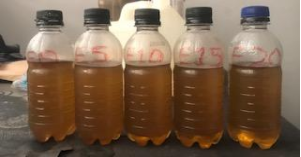
Figure 2. Ethanol-gasoline blends.
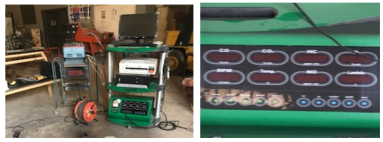
Figure 3. Gas Analyzer.
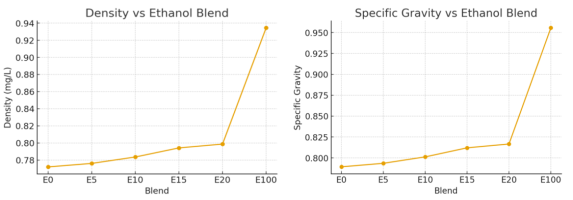
Figure 4. Thermal Analysis of Density and specific.
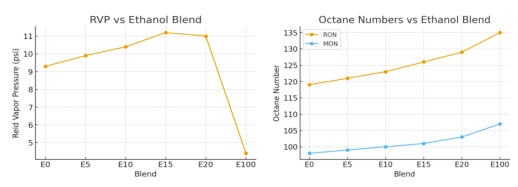
Figure 5. Thermal Analysis RVP, RON, MON and Calorific Value.
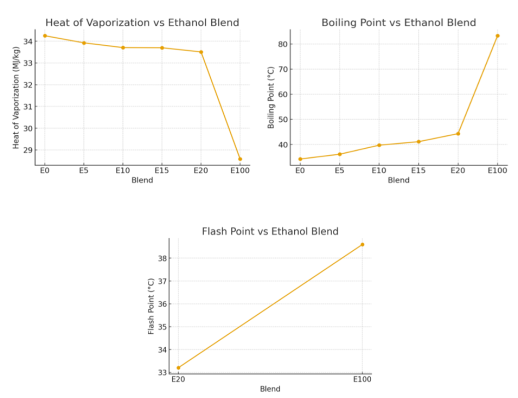
Figure 6. Thermal Analysis; Heat of Vaporization, Flash and Boiling Point.
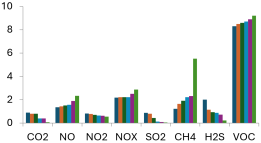
Figure 7. Emission profile at 3.0kW.
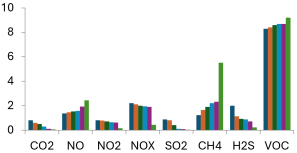
Figure 8. Emission profile at 3.5kW.
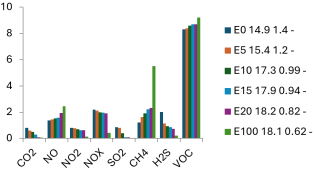
Figure 9. Emission profile at 4.0 kW.
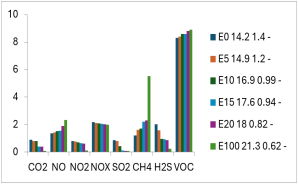
Figure 10. Emission profile at 4.5 kW.

Information



 Share This Article
 Twitter
 Linked In
 Facebook
 Copy
Copy Download