Research Article | | Peer-Reviewed

Farmer Management Practices and Cabbage Fungal Pathogens in Santa, Cameroon: Assessment of Local Cultivation Habits and Disease Characterization

Published in Plant (Volume 14, Issue 4)
Received: 9 September 2026     Accepted: 4 October 2026     Published: 29 October 2026
Views:       Downloads:
Abstract

Cabbage plays a crucial role in the livelihoods of small-scale farmers in Cameroon, contributing to both food security and household income. Nonetheless, its cultivation in the Santa area faces major setbacks due to fungal diseases that lead to substantial reductions in yield. To try to address these burdens, a comprehensive study was conducted involving a survey of 78 farmers to assess their socio-demographic characteristics and agricultural management practices. Concurrently, 160 symptomatic cabbage samples were collected from 10 different farms for diagnosis. Fungal pathogens were isolated from these samples and identified through morphological analysis, pathogenicity tests, and molecular sequencing of the internal transcribed spacer (ITS) region. The survey indicated widespread use of chemical fungicides such as Balear and Pencozeb, yet highlighted a notable absence of proper protective gear among growers. A total of 96 fungal isolates were obtained, with 11 showing strong pathogenicity. Molecular results identified Fusarium species, primarily Fusarium oxysporum as the most common causal agents. Other harmful fungi detected included Curvularia coatesiae, Colletotrichum kahawae, and Epicoccum nigrum. Disease incidence was found to be especially severe during the dry season. These results underscore the necessity for integrated disease control approaches, enhanced training for farmers on safe pesticide application, and ongoing monitoring of pathogens to support sustainable cabbage production in the region.

Published in Plant (Volume 14, Issue 4)
DOI 10.11648/j.plant.20261404.11
Page(s) 72-83
Creative Commons

This is an Open Access article, distributed under the terms of the Creative Commons Attribution 4.0 International License (http://creativecommons.org/licenses/by/4.0/), which permits unrestricted use, distribution and reproduction in any medium or format, provided the original work is properly cited.

Copyright

Copyright © The Author(s), 2026. Published by Science Publishing Group

Keywords

Cabbage, Fungal Pathogens, Pesticide Use, Fusarium Spp. Farmer Practices, Cameroon

1. Introduction
Vegetables represent vital sources of essential minerals and vitamins for human health and serve as a significant income-generating commodity for numerous smallholder farmers . Despite their nutritional importance, vegetable consumption in Cameroon remains markedly low, with an estimated per capital daily intake of only 46 grams, equivalent to 11.5% of the FAO/WHO recommended level, while the sector contends with systemic production inefficiencies and extensive, multifaceted losses . These constraints, coupled with the inherently short post-harvest shelf life of many vegetables, contribute substantially to price fluctuations in key commodities such as tomatoes and cabbage . Such volatility undermines both food security and economic stability in Cameroon, underscoring the necessity for a comprehensive analysis of underlying determinants to inform effective policy interventions .
Among cultivated vegetables, cabbage (Brassica oleracea var. capitata L.) is globally widespread and particularly favored by smallholder farmers across Africa Nutritionally, it is a rich source of dietary fiber, vitamins, and essential minerals. As a cash crop, cabbage plays a pivotal economic role for small-scale producers in Cameroon, mirroring its significance in countries such as Ethiopia and Kenya, where it supplies vital nutrients, including carbohydrates, protein, fiber, and vitamins C and K that support physiological development and metabolic health . Regular consumption has also been associated with reduced risk of degenerative conditions such as diabetes, cancer, and cardiovascular diseases, potentially mediated through enhanced hematopoiesis and immune system modulation .
Globally, annual cabbage production is estimated at approximately 75 million metric tons , positioning Cameroon at 64th worldwide and 12th within Africa in terms of output . However, domestic cultivation faces persistent impediments, most notably high vulnerability to pests and pathogens, which severely diminish yield potential . These biotic challenges, when combined with non-price-related structural constraints including deficient infrastructure and limited market access frequently result in considerable post-harvest losses and diminished farm-level profitability . Indeed, global agricultural systems experience yield reductions of 20% to 40% in major crops due to pest and disease pressures, highlighting an ongoing need for adaptive and evolving management strategies . Cabbage is especially susceptible to such threats owing to its vulnerability to a wide array of phytopathogens and insect infestations, which compromise plant vitality and reduce marketable output .
Including farmers’ experiential knowledge into disease management frameworks enhances the efficacy of plant protection attempts. Of note, smallholder farmers possess practical, context-specific insights that complement formal scientific research, rendering their participation indispensable for informed decision-making . By harnessing structured surveys and hands-on participatory techniques, researchers unlock a powerful way to map local disease trends and current control strategies-paving the way for smart, location-specific solutions. This dynamic collaboration doesn’t just boost stakeholder involvement; it fine-tunes disease management to match real-world farming environments, echoing the core ideals of precision agriculture and cutting-edge decision support systems .
Farmers are integral to disease monitoring, early symptom recognition, and implementation of mitigation measures . Yet, in many smallholder contexts, their understanding of plant health is derived primarily from informal experience and peer-based learning, often lacking access to technical diagnostics or expert advisory services . This may lead to misidentification of diseases, inappropriate application of fungicides, and overreliance on anecdotal recommendations, all of which impede effective management of cabbage and any other crop pathology. Additionally, socio-economic variables including gender, educational attainment, resource accessibility, and institutional support significantly affect farmers’ ability to adopt scientifically validated practices . On the other hand, the integration of cutting-edge diagnostic techniques not only refines disease control strategies but also reinforces agricultural productivity, positioning accurate identification as a cornerstone of food security in the face of increasing phytosanitary challenges. This study, therefore, assessed farmers’ knowledge and practices related to cabbage disease management, and characterized the principal causal agents constraining cabbage production.
2. Materials and Methods
2.1. Survey Study on Cabbage Cultivation in Santa
As a key agricultural hub in the Northwest Region, Santa contributes significantly to Cameroon’s status as a major food-producing country in Central Africa . The choice of Santa for this study is due to the fact that the market gardening in the area encompasses a variety of crops, notably carrots (Daucus carota), leeks (Allium porrum), celery (Apium graveolens), potatoes (Solanum tuberosum), tomatoes (Solanum lycopersicum), and cabbage (Brassica oleracea) . The survey was carried out from July to September 2023, during the rainy season, using a structured questionnaire adapted from . Before full implementation, the tool was pre-validated through a pilot study involving farming households in the target region. This preliminary phase evaluated the questionnaire’s clarity, relevance, and internal consistency, enabling refinements to improve its reliability and validity. Interviews were conducted individually at farmers’ homes or on their fields, scheduled according to their availability. Surveyors received training in ethical protocols to ensure voluntary participation and maintain confidentiality. The sample size was determined based on estimates of cabbage-producing households and logistical access to the study areas. 78 participants were randomly selected from the village. Only farmers cultivating at least 1 hectare of cabbage or another cruciferous crop were included. The questionnaire captured data on farmers’ socioeconomic backgrounds (including gender, educational level, and household size), farm attributes (such as land area and cabbage production systems), as well as their knowledge and perceptions regarding major cabbage diseases. It also examined the pest and disease management practices employed by smallholders, including cultural methods, chemical applications, and other control strategies.
2.2. Morphological and Molecular Characterization of Some Fungi Associated with the Growth of Cabbage in the Field
2.2.1. Study Area
The current study was carried out in the Santa subdivision, located within the Mezam division of the Northwest Region of Cameroon. It is geographically positioned between latitudes 5° 42´ and 5° 53´ N and longitudes 9° 58´ and 10° 18´ E . Situated in the Western Highlands geo-ecological zone, the area benefits from a temperate climate conducive to vegetable farming. Agricultural activities, including crop cultivation and livestock rearing, are practiced by approximately 90% of the local population. The region’s agricultural productivity is further supported by extensive arable land, reliable water sources, and access to inputs such as fertilizers and pesticides, all of which facilitate market gardening .
2.2.2. Morphological Characterization of Fungi Pathogen
Sample collection and pathogen isolation
Ten (10) farms, each at least one hectare in size, were chosen across the Santa Sub-division. These farms were meticulously inspected for signs of cabbage diseases. From each farm, five cabbage leaves showing symptoms were collected, placed in labeled sterile ziplock bags, and kept in coolers before being transported via public transport to the laboratory for analysis. Approximately 5 mm sections from the infected areas of the leaves were cut using sterile scissors. These segments were placed in a small flask and surface-sterilized by submersion in a 10% sodium hypochlorite solution for three minutes, then rinsed with distilled water, followed by a one-minute rinse in 70% alcohol, then rinsed with distilled water. Additional rinses were carried out using sterile distilled water. The thus disinfected tissues were transferred onto solidified PDA (potato dextrose agar) medium in labeled Petri dishes. The dishes were sealed with parafilm and incubated in the dark at room temperature (25°C) for seven days. Once colonies developed, after incubation, they were further sub-cultured on fresh PDA medium and incubated under the same conditions to obtain pure fungal cultures .
Pathogenicity test and morphological identification
Mycelial plugs (5 mm) taken from the margins of representative fungal colonies after 7 days of growth were transferred to freshly prepared PDA plates and incubated at 25 °C for 14 days. After incubation, conidia were collected by scraping the colony surfaces with a sterile glass spatula and passed through four layers of muslin cloth to remove hyphal debris. A locally susceptible cabbage cultivar was cultivated in a greenhouse under a 12-hour photoperiod. Leaflets were collected from seedlings at the five true-leaf stage, surface-sterilized with 75% ethanol for 30 seconds, and rinsed three times with sterile distilled water. Sterile needles were used to create small wounds on the leaf surfaces. Each leaflet was then sprayed with 10 mL of a conidial suspension (1 × 10⁶ conidia/mL) prepared in 0.01% Tween-80. Control treatments included spraying with sterile distilled water or 0.01% Tween-80 alone. Four leaflets were inoculated per isolate. Following inoculation, leaflets were placed in Petri disches trays covered with transparent polyethylene bags to maintain high humidity (approximately 90%) for four days. Development of necrotic lesions was monitored daily. Pathogenicity was confirmed via re-isolation of the fungus from infected tissue following Koch’s postulates, with comparison to the original isolates. Putative pathogenic and pure isolates were further identified based on key morphological characteristics, including conidiogenous cell morphology, colony color, texture, margin, and elevation, as outlined by and reference color charts . Microscopic examination of mycelial structures and spore morphology was obtained using a light microscope, with observations verified against established taxonomic descriptions.
2.2.3. Molecular Characterization of the Fungal Pathogens
The identification of these strains was performed based on a phylogenetic analysis of the internal transcribed spacer (ITS) gene of the 5.8S nuclear ribosomal genes. The fungal isolates were cultured in Potato Dextrose Broth (PDB) medium under constant shaking (160 rpm; 3 days) and the mycelial mats were collected by filtration. The mycelia were cultured with RNase and buffer to allow RNA degradation, and DNAs were extracted using the commercial kitRed Extract-N-Amp Plant PCR, Sigma Aldrich, as recommended by the manufacturer. The Internal Transcribed Spacer (ITS) of nuclear ribosomal DNA was used and the ITS1-5.8S rRNA-ITS2 region was amplified by PCR using primers ITS4 (5’-TCCTCCGCTTATTGATATGC-3’) and ITS5 (5’-GGAAGTAAAAGTCGTAACAAGG-3’) (White et al., 1990). The amplification conditions were a start step of 2 min at 94°C, followed by 40 cycles of 30 s at 94°C, 1 min at 58°C, and 1 min at 72°C, followed by a finishing step of 3 min at 72°C. PCR amplicons were sequenced at the DNA sequencing service of the University of Salamanca (Spain). Sequences generated were compared with reference sequences in the GenBank nucleotide database to determine the closest relatives for the phylogenetic studies. The DNA sequences obtained in this study together with those retrieved from GenBank were aligned using the ClustalW algorithm included in the MEGA X software package. For the maximum likelihood phylogenetic analysis, the best evolutionary model for each partition was determined using MEGA X and incorporated into the analyses. The maximum likelihood phylogenetic tree searches were performed in MEGA X with the tree Bisection/Reconnection (TBR) algorithm, where gaps were treated as missing data. The robustness of the topology was evaluated by 1000 bootstrap replications .
3. Results
3.1. Socio-Demographic Characteristics of Respondents
The survey sample was predominantly male, with men accounting for 55% of respondents, reflecting a notable gender disparity (Table 1). The largest demographic cohort, representing 31% of participants, fell within the 30 to 40 years’ age range, suggesting that young to middle-aged adults constituted a central segment of the respondents. Regarding educational attainment, 42% of respondents reported having completed only basic formal education, while 19% indicated no formal education, underscoring substantial heterogeneity in educational levels. A striking 95% of participants identified agriculture as their primary occupation, emphasizing its foundational role in the community’s economic framework. Furthermore, over 80% of respondents possessed five or more years of farming experience, highlighting a sustained engagement and a high degree of practical expertise in agricultural practices. Collectively, the surveyed population comprises primarily working-age males, whose livelihoods are centered on agriculture, exhibiting diverse educational profiles but demonstrating extensive hands-on knowledge in farming.
Table 1. Socio-demographic and Professional Characteristics of Cabbage Growers in Santa, Cameroon.

Characteristic

Respondents (n)

Frequency (%)

Age

< 20 years

1

1.3

20 - 30 years

23

29.5

30 - 40 years

31

31.0

40 - 50 years

19

24.4

> 50 years

4

5.1

Gender

Male

43

55.0

Female

35

45.0

Educational Level

No Formal Education

15

19.0

FSLC (Basic Education)

33

42.0

O-level

20

26.0

A-level

6

8.0

First Degree

4

5.0

Farming as Main Activity

Yes

74

94.9

No

4

5.1

Cabbage Farming Experience

0 - 5 years

13

16.7

5 - 10 years

32

41.0

10 - 15 years

17

21.8

> 15 years

16

20.5

3.2. Inventory of Fungal Diseases Identified in the Fields
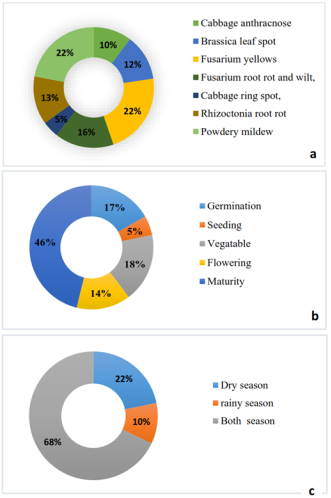
Direct observations and farmer reports identified seven fungal diseases affecting cabbage across the surveyed farms. Fusarium yellows and anthracnose were the most common, each accounting for 22% of cases (Figure 1a), and occurred throughout the year, with higher incidence during the dry season (68%) (Figure 1c). Severe outbreaks, whether from a single disease or combined infections, led some farmers to stop growing cabbage altogether. Pathogens can infect all parts of the plant at various growth stages-starting from seedling production in nurseries or hotbeds (5%), through flowering (14%) and vegetative growth (18%), up to fruiting and maturity, which saw the highest infection rate at 46% (Figure 1b).
Figure 1. Fungi diseases identified in the fields according to their frequency (a), part of plant infected (b) and season (c).
3.3. Pesticide Use and Safety Practices
Most farmers (90%) relied on synthetic pesticides such as Balear and Pencozeb to control fungal diseases. However, 84% do not wear gloves or goggles during application, and less than 32% used masks. Subsequently, Post-spray symptoms including skin irritation, headaches, and respiratory problems were frequently recorded. Disposal practices for pesticide containers were suboptimal, with 28% discarded in fields and 29.5% near stream. The correlation results indicated that Skin itching or burning has a p-value of 0.904, indicating no association. Similarly, other side effects such as cough (p = 0.859), runny nose (p = 0.895), and headache (p = 0.320) also showed no significant associations. While some side effects (toothaches and bone pains) have higher chi-square values (2.579 and 0.825, respectively), the p-values (0.275 and 0.662) still suggest no meaningful correlation between pesticide use and the occurrence of these symptoms (Table 2). The data collectively suggest that there is no statistically significant evidence to support a link between pesticide use and the variety of side effects analyzed. Therefore, it can be inferred that the side effects studied may not be directly influenced by pesticide exposure in the surveyed population.
Table 2. Post-spray toxicity symptoms recorded in surveyed farmers.

Toxicity symptoms

Chi Square

P-value

skin itchy or burning

Yes (64)

0.203

0.904a

No (6)

Don’t know (7)

Toothaches

Yes (3)

2.579

0.275a

No (53)

Don’t know (21)

Cough

Yes (59)

0.304

0.859a

No (16)

Don’t know (2)

Runny nose

Yes (63)

0.222

0.895a

No (13)

Don’t know (1)

Nose bleeding

Yes (5)

0.326

0.849a

No (58)

Don’t know (14)

Headache

Yes (5)

2.279

0.320a

No (49)

Don’t know (23)

constipation

Yes (1)

0.282

0.868a

No (60)

Don’t know (16)

Hair loss

Yes (1)

0.261

0.877a

No (61)

Don’t know (15)

Eye irritation

Yes (64)

0.203

0.904a

No (6)

Don’t know (7)

bone pains

Yes (4)

0.825

0.662

No (31)

Don’t know (42)

P-value superscripted with different alphabet are significantly different at P=0.05 Level of probability.
3.4. Isolation and Taxonomic Identification of Pathogenic Candidates
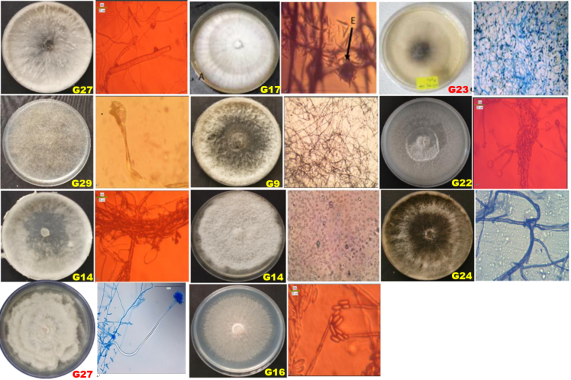
From 160 samples collected, 96 fungal isolates were obtained and a representative sample of 34 isolates was subjected to Pathogenicity tests. Results indicated that 11 isolates were highly pathogenic and their identities were confirmed through cultural, microscopic and sequencing of the ITS gene (Figure 2, Table 3).
Figure 2. Macroscopic and microscopic characteristics of Morphotypes (a1) and macroconidia.
G5 33; had rapid-growth fungus characterized by Cotton-candy like woolly texture. Microscopically, it presence broad, sparsely septate hyphae. G9 G23 is a dark-pigmented fungus, presenting macroscopically as fast-growing, greyish-green colonies. Microscopically, it is characterized by a septate thallus and fruiting body of conidiophores. G14, G16, G17, G22 showed characteristics of filamentous fungi characterized by rapid growth, cottony white-to-violet/pink aerial mycelium, with a banana shape multicellular macroconidia. Microscopically, it presents septate thallus septate hyphae, multicellular macroconidia with Fruiting bodyphialides. G24 was a fast-growing fungus characterized by rapid, initially white and fluffy colonies turning darken to grey-green or black. Microscopically it reveals irregular, and darkly pigmented septate hyphae. G27 fungi was characterized by white mycelium turning darker with age, producing irregularly shaped brown-to-black sclerotia. Microscopically, they septate thallus identified by right-angle hyphal branching, a slight constriction at the branch base, and multinucleate cells, with sterile mycelia. G29 was a filamentous fungus with cotton-like colonies turning from white to greyish-brown or black. Microscopically, they present aseptate hyphae, root-like structures called rhizoids, with unbranched sporangiophores.
Table 3. Cultural characteristics of fungal species recovered from cabbage tissues.

Isolate code

Colony appearance

Colony surface

Reverse color

G5

Fluffy

White

White-orange

G9

Cotonny

Black-grey

Black

G14

Pasty

White

White

G16

Cotonny

White

White

G17

Pasty

Pink

White

G22

Cotonny

White-rose

White

G23

Cotonny

Grey

Black

G24

Cotonny

Black -grey

Black

G27

Cotonny

white-rose

Pink

G29

Filamentous

Grey -White

White

G33

Cotonny

White

Pink

3.5. Phylogenetic Analysis
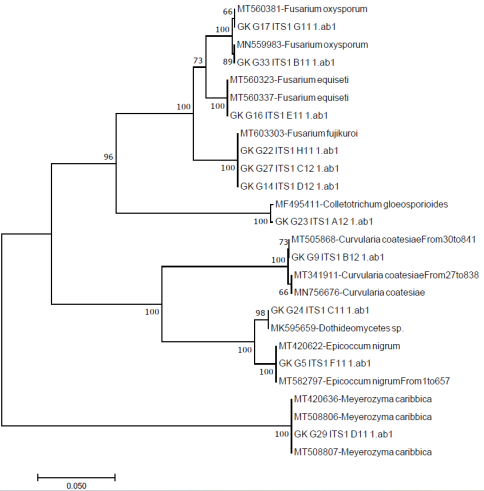
Figure 3. Phylogenetic tree of fungal species isolated from diseased cabbage based on ITS sequences.

Phylogenetic analysis grouped the isolates into eight clades, confirming species identities and evolutionary relationships (Figure 3). Strong bootstrap support reaching 100% was observed for F. oxysporum, F. equiseti, F. fujikuroi, F. Colletotrichum, F. gloeosporioides, C. coatesiae, E. nigrum, Meyerozyma carribica, and a species from the Dothideomycetes class. The G24 sequence, identified as Dothideomycetes sp., could not be assigned to a specific genus but clustered closely with E. nigrum in a clade supported by a 100% bootstrap value, indicating a close ancestral link (Table 4).
Table 4. Genbank characteristics of isolated fungi recovered from cabbage tissues.

Code

Scientific Name

Max Score

Total Score

Query Coverage (%)

E-value

Percent Identity (%)

Accession Number

G5

Epicoccum nigrum

1230

1916

86

0.0

97.25

KY318482.1

G9

Curvularia coatesiae

1031

1270

100

0.0

99.82

MT341911.1

G14

Fusarium asiaticum

909

909

100

0.0

100.00

KY466866.1

G16

Fusarium clavum

909

909

100

0.0

100.00

PQ782217.1

G17

Fusarium oxysporum

985

985

71

0.0

98.40

KY318502.1

G22

Fusarium graminearum

924

924

88

0.0

100.00

KY466811.1

G23

Colletotrichum kahawae

1046

1046

99

0.0

97.12

JN222974.1

G24

Epicoccum thailandicum

1188

1822

82

0.0

96.64

OP796488.1

G27

Fusarium asiaticum

917

917

79

0.0

99.80

KY272846.1

G29

Meyerozyma caribbica

1258

2336

97

0.0

96.95

OM523894.1

G33

Fusarium oxysporum

905

905

100

0.0

100.00

KX008382.1

4. Discussion
The predominance of farmers aged 30 to 40 in cabbage farming appears closely tied to the crop’s high labor demands. Individuals in this age group generally have the physical capacity needed for intensive tasks such as repeated pesticide applications, careful crop monitoring, and sustained manual work. They also tend to have accumulated practical farming experience that supports efficient management . Unlike cereal crops, which often allow for large-scale mechanization, cabbage cultivation requires continuous human involvement from transplanting and weeding to harvesting and frequent chemical treatments making it difficult to automate. The observed male dominance in these systems reflects global trends where men are more commonly assigned physically strenuous agricultural roles . This gender inequity can be justified not only from physical differences but also from long-standing social norms that assign men to field labor and women more often to post-harvest activities like processing and selling. Understanding these demographic dynamics is essential for designing effective, culturally appropriate extension services and support programs .
The increased occurrence and severity of diseases during dry seasons, aligns with existing knowledge that higher temperatures can accelerate pathogen development . Factually, warmer conditions often shorten the life cycles of fungal pathogens, speed up spore germination, and increase metabolic activity. As global temperatures increase and rainfall patterns grow more erratic due to climate change, the link between temperature and disease development is becoming a growing concern. Regions where cabbage is cultivated nowadays could experience serious disease risks even in seasons that were earlier thought to be safer. This situation highlights the importance of reevaluating conventional planting timelines and accelerating efforts to breed cabbage varieties capable of withstanding both higher temperatures and disease pressures .
The frequent application of synthetic pesticides in our study area-often carried out without adequate protective equipment-presents significant public health concerns. Symptoms such as headaches, gastrointestinal issues, dizziness, skin rashes, and respiratory difficulties have been commonly reported, aligning with observations from Cameroon and other agricultural zones globally . These symptoms are consistent with known acute and sub-acute effects of commonly used pesticides such as organophosphates, carbamates, and pyrethroids. Several factors contribute to the low use of personal protective equipment, including cost, lack of awareness about health risks, and habitual disregard. For smallholder farmers in developing countries, acquiring protective equipment such as chemical-resistant suits, gloves, boots, face shields, and respirators can represent an unforeseen expense . Statistical analyses indicated that symptoms like itchy skin (p = 0.904), cough (p = 0.859), runny nose (p = 0.895), and headache (p = 0.320) were not significantly associated to pesticide exposure, indicating limited empirical support for these associations. These results are in line with , who also found no significant relationship between pesticide exposure and recurring respiratory issues among farm workers. Although toothaches and bone pain showed slightly elevated chi-square values (2.579 and 0.825), their p-values (0.275 and 0.662, respectively) were too high to confirm meaningful links. Similar findings were reported by , who noted that self-reported symptoms in farming populations often lack statistical validation when compared with objective exposure data. Overall, the statistical evidence suggests that the symptoms studied are unlikely to be directly caused by pesticide exposure in the study population. This ties with the conclusions from , whose meta-analysis found weak and inconsistent links between pesticide exposure and non-specific health complaints in an epidemiological study.
Morphological and molecular analyses have confirmed the presence of multiple fungal species associated to cabbage cropping in Santa locality. Fusarium species were the most commonly identified, consistent with their known role in causing Fusarium wilt and root rot in brassica crops . Fusarium includes a complex group of closely related species, many of which produce toxic metabolites and resilient chlamydospores that enable long-term survival in soil.
Beyond Fusarium, the detection of Curvularia coatesiae, Epicoccum nigrum, and other fungal taxa adds new insight into the region’s disease landscape. Indeed, Curvularia species are increasingly seen as opportunistic pathogens capable of causing leaf spots and blights, especially under environmental stress. While Epicoccum nigrum is typically considered a harmless decomposer or weak pathogen, it can become more aggressive when plants are weakened by other factors. The recurrent presence of multiple pathogens coexisting within the same agricultural fields, and often within individual host plants, underscores the necessity of transitioning disease management approaches from single-pathogen frameworks to integrated strategies that explicitly consider multifaceted pathogen interactions.
Combining molecular tools such as DNA sequencing of the ITS region with traditional morphological analysis has proven essential for identifying cryptic species and verifying pathogenicity. As climate change alters the distribution and competitiveness of plant pathogens, ongoing surveillance becomes increasingly critical for anticipating emerging threats .
5. Conclusion
Collectively, these findings illustrate a cabbage production system under considerable pressure. Reliance on a predominantly young and male labor force for highly intensive, chemically dependent cultivation gives rise to a particularly vulnerable occupational cohort. Ongoing challenges posed by soil-borne pathogens, exacerbated by diminishing efficacy and availability of chemical control measures, undermine the long-term viability of prevailing farming methods. The ambiguity surrounding reported health symptoms warrants neither indifference nor inaction, but rather calls for enhanced surveillance systems and rigorous longitudinal research. Furthermore, the expanding spectrum of implicated pathogens necessitates sustained monitoring and the implementation of adaptive, evidence-driven management strategies.
Abbreviations

DNA

Deoxyribonucleic Acid

ITS

Internal Transcribed Spacer

MEGA

Molecular Evolutionary Genetics Analysis

mL

Milliliter

Mm

Millimeter

PCR

Polymerase Chain Reaction

PDA

Potato Dextrose Agar

PDB

Potato Dextrose Broth

RNA

Ribonucleic Acid

RNase

Ribonuclease

rpm

Revolutions Per Minute

rRNA

Ribosomal Ribonucleic Acid

sp

Species (Singular)

Acknowledgments
The authors would like to thank all lecturers from the Department of Biochemistry, Faculty of Science, The University of Bamenda, and Staff of the Laboratory of Biochemistry, Faculty of Science, University of Douala for the guardian and counselling toward the research initiation.
Author Contributions
Boubga Clifford: Conceptualization, Investigation, Methodology, Writing – original draft, Writing – review & editing
Tchameni Nguemezi Severin: Conceptualization
Totel Haman Katamssadan: Conceptualization
Chia Genevieve Kain: Investigation, Methodology
Dikongue Ndondoni Jeannette Fabiola: Investigation, Methodology
Mbouobda Hermann Desire: Conceptualization, Investigation, Methodology, Writing – original draft
Conflicts of Interest
The authors declare no conflicts of interest.
References
[1] Ojiewo, C., Keatinge, D. J., Hughes, J., Tenkouano, A., Nair, R., Varshney, R., Silim, S. The role of vegetables and legumes in assuring food, nutrition, and income security for vulnerable groups in Sub-Saharan Africa. World Medical and Health Policy. 2015, 7(3): 187-210.
[2] Djoufack, M. M. T., Kouam, E. B., Foko, E. M. K., Anoumaa, M., Meli, G. R. L., Kaktcham, P. M., Zambou, F. N. Determinants and constraints of carrot (Daucus carota L.) production and marketing in Cameroon. Plos One, 2024, 19(1): Article e0296418.
[3] Kujur, S. N., Behera, T. K., Singh, P. M. Post-harvest management and value addition in vegetable crops. Vegetable Science. 2024, 51: 1-15.
[4] Keubeng, I. G., Muluh, G. A., & Kemezang, V. C. Controlling agricultural product price volatility: An empirical analysis from Cameroon. Regional Sustainability. 2025, 6(2), 100215.
[5] Mondédji, A. D., Silvie, P., Nyamador, W. S., Martin, P., Agboyi, L. K., Amévoin, K., Ketoh, G. K., & Giltho, I. A. Cabbage production in West Africa and IPM with a focus on plant-based extracts and a complementary worldwide vision. Plants. 2021, 10(3): 529.
[6] Moreb, N., Murphy, A., Jaiswal, S., Jaiswal, A. K. Cabbage: Nutritional composition and antioxidant properties of fruits and vegetables. 2020, 33-54.
[7] Araya, H., Abreha, K., Girmay, S. Nutritional composition and health benefits of indigenous and exotic vegetable crops in East Africa: A focus on Ethiopia and Kenya. Journal of Food Science and Nutrition Research. 2023, 6(2): 112-125.
[8] Ali, S., Ullah, M. I., Sajjad, A., Shakeel, Q., Hussain, A. Environmental and health effects of pesticide residues. In Sustainable Agriculture Reviews: Pesticide Occurrence, Analysis and Remediation. 2021, 48: 311-336.
[9] FAO Stat, 2024, World Food and Agriculture - Statistical Yearbook. 2024.
[10] Food and Agriculture Organization (FAO) (MOPAN Assessment Report, 2024) 80P.
[11] Hamalwa, L. H., Awala, S. K., Togarepi, C. Determinants of cabbage production among smallholder farmers: A case of Omusati Region, North-Central Namibia. Discover Agriculture. 2025, 3: 208.
[12] Awa, S. T., Molua, E., Raoul Fani, D. C., Tabetando, R., Nkendah, R., Ndip, F. E. Exploring non-price factors shaping supply response: Insights from Cameroon's banana and pineapple horticultural industries. Frontiers in Environmental Economics. 2024, 3: 1305346.
[13] Djuikem, C. Modeling and analysis of agricultural pest and disease dynamics: Optimal control and management strategies. [Doctoral dissertation, University of Yaoundé I/ Université Côte d’Azur]. HAL Open Science. 2023.
[14] Kant, R. A. M. A. Innovative methods for management of black rot of cabbage (Brassica oleracea var. capitata L.) (Doctoral dissertation). UHF, NAUNI, 2018.
[15] Mulu, A. G., Girma, A., Tefera, M. Integrating smallholder farmers’ perceptions and scientific knowledge for sustainable land management in the highlands of Ethiopia. Scientific Reports. 2022, 12(1): 15432.
[16] Reddy, P. G., Kumar, S. S., Rathore, S. Scaling up participatory research in smallholder farming systems: Lessons from the field. Journal of Agricultural Education and Extension. 2024, 30(2): 145-163.
[17] Lebrini, A., Benos, L., Tagarakis, A. C., Kateris, D., Bochtis, D. Human-centric decision support systems in agriculture: A review of stakeholder engagement in precision farming. Smart Agricultural Technology. 2024, 7: 100392.
[18] Ouma, G. O., Awuor, F. M., Makiya, C. A framework for enhancing adoption of mobile-based surveillance for crop pest and disease management by farmers in Kenya. 2024, 15(1):
[19] Šūmane, S., Kunda, I., Knickel, K., Strauss, A., Tisenkopfs, T., des los Rios, I., Ashkenazy, A. Local and farmers’ knowledge matters! How integrating informal and formal knowledge enhances sustainable and resilient agriculture. Journal of Rural Studies. 2018, 59: 232-241.
[20] Adesope, O. M., Matthews-Njoku, E. C., Oguzor, N. S., Ugwuja, V. C. Effect of socioeconomic characteristics of farmers on their adoption of organic farming practices. Crop Production Technologies. 2012, 1: 210-220.
[21] Gur, M., Çelik, M. Y., & Taşdan, K. The impact of climate change on agricultural production: Evidence from panel data analysis. Procedia - Social and Behavioral Sciences. 2015, 195: 1599-1608.
[22] ERUDEF. The state of the environment in Cameroon: A focus on the North West Region. Bamenda, Cameroon. 2022.
[23] Muliele, T. M., Manzenza, C. M., Ekuke, L. W., Mutuba, M. K., Misamu, M. T. Use and management of pesticides in vegetable crops: Case of Nkolo area in the province of Kongo Central, Democratic Republic of Congo. Journal of Applied Biosciences. 2017, 119(1): 11846-11857.
[24] Jocien, M. T., Frederick, T. The effects of climate change on agricultural productivity and food security in Haiti. World Development Sustainability. 2022, 2: 100060.
[25] Njoya, H. M., Matavel, C. E., Msangi, H. A., Wouapi, H. A. N., Lohr, K., Sieber, S. Climate change vulnerability and smallholder farmers' adaptive responses in the semi-arid Far North Region of Cameroon. Discover Sustainability. 2022, 3(1).
[26] Moharram A. M., Abd El Haleem A. A., Refaie R. R. S. Mycological and Mycotoxins Analysis of Kareish and Soft Cheese in Assiut, Egypt. American Journal of Microbiological Research. 2018, 6(4): 165-172.
[27] Watanabe, T. Pictorial atlas of soil and seed fungi: Morphologies of cultured fungi and key to species (2nd ed.). CRC Press. 2002.
[28] Kornerup, A., Wanscher, J. H. Methuen handbook of colour (3rd ed.). Eyre Methuen. 1978.
[29] Tamura, K., Peterson, D., Peterson, N., Stecher, G., Nei, M., Kumar, S. MEGA5: Molecular evolutionary genetics analysis using maximum likelihood, evolutionary distance, and maximum parsimony methods. Molecular Biology and Evolution. 2011, 28: 2731-2739.
[30] Waichman, A. V., Eve, E., Nina, N. C. S. Do farmers understand the information displayed on pesticide product labels? A key question to reduce pesticides exposure and risk of poisoning in the Brazilian Amazon. Crop Protection. 2007, 26(4): 576-583.
[31] Olirk, J., Müller, A., & Schmidt, L. Socio-demographic dynamics in modern agriculture: Tailoring extension services for diverse farming populations. Journal of Agricultural Education and Extension. 2025, 31(2): 142-159.
[32] Nsobinenyui, D., Djeugap, F. J., Fontana, A. J. Influence of environmental factors on the development of fungal pathogens in agricultural systems. African Journal of Agricultural Research. 2019, 14(12): 654-662.
[33] Djomaha, B., Mwilambwe, J. M. Resilience of vegetable cropping systems: Evaluating cabbage (Brassica oleracea var. capitata) varieties under changing climatic conditions and pathogen stress. Journal of Applied Horticulture. 2022, 24(1): 45-53.
[34] Assokeng, R. N., Sonchieu, J., Ngassoum, M. B., Nantia, E. A. A pilot study in Cameroon to understand safe uses of pesticides in agriculture, risk factors for farmers' exposure and management of accidental cases. Toxicology Reports. 2017, 4: 352-359.
[35] Sonchieu, J., Bitsoga M. G., Ngassoum M. B. Characterization of personal clothing worn by pesticide sprayers in Foumbot agricultural area (Cameroon). Agricultural Sciences. 2019, 10(8) 1039-1055,
[36] James, O. M., Okoye, C. U., Mbah, E. N. Economic barriers to the adoption of safety technologies among smallholder vegetable farmers in Sub-Saharan Africa. Journal of Agricultural Safety and Health. 2023, 29(3): 185-202.
[37] Smith, J. D., Brown, R. E., Wilson, K. L. Colorimetric analysis of fungal pathogens: Implications for diagnosis. Mycology Today. 2020, 56(4): 201-210.
[38] Doe, J. R., Roe, P. S. Clinical implications of pesticide exposure in farming communities. Journal of Occupational and Environmental Medicine. 2022, 64(5): 392-399.
[39] Mamane, A., Baldi, I., Tessier, J. F., Raherison, C., & Bouvier, G. (2015). Occupational exposure to pesticides and respiratory health in agricultural workers: A systematic review. Global Health Action, 8(1), Article 27833.
[40] Yu, F., Zhang, W., Wang, S., Wang, H., Yu, L., Zeng, X., Li, J. Genome sequence of Fusarium oxysporum f. sp. conglutinans, the etiological agent of cabbage Fusarium wilt. Molecular Plant-Microbe Interactions. 2021, 34(2): 210-213.
[41] Shamuwa, T., Khumbanyiwa, S., Motsa, N. M. Climate-driven shifts in fungal pathogen dynamics: A framework for early warning systems in Afromontane agriculture. Global Change Biology. 2025, 31(1): e16824.
Cite This Article
  • APA Style

    Clifford, B., Severin, T. N., Katamssadan, T. H., Kain, C. G., Fabiola, D. N. J., et al. (2026). Farmer Management Practices and Cabbage Fungal Pathogens in Santa, Cameroon: Assessment of Local Cultivation Habits and Disease Characterization. Plant, 14(4), 72-83. https://doi.org/10.11648/j.plant.20261404.11

    Copy | Download

    ACS Style

    Clifford, B.; Severin, T. N.; Katamssadan, T. H.; Kain, C. G.; Fabiola, D. N. J., et al. Farmer Management Practices and Cabbage Fungal Pathogens in Santa, Cameroon: Assessment of Local Cultivation Habits and Disease Characterization. Plant. 2026, 14(4), 72-83. doi: 10.11648/j.plant.20261404.11

    Copy | Download

    AMA Style

    Clifford B, Severin TN, Katamssadan TH, Kain CG, Fabiola DNJ, et al. Farmer Management Practices and Cabbage Fungal Pathogens in Santa, Cameroon: Assessment of Local Cultivation Habits and Disease Characterization. Plant. 2026;14(4):72-83. doi: 10.11648/j.plant.20261404.11

    Copy | Download

  • @article{10.11648/j.plant.20261404.11,
      author = {Boubga Clifford and Tchameni Nguemezi Severin and Totel Haman Katamssadan and Chia Genevieve Kain and Dikongue Ndondoni Jeannette Fabiola and Mbouobda Hermann Desire},
      title = {Farmer Management Practices and Cabbage Fungal Pathogens in Santa, Cameroon: Assessment of Local Cultivation Habits and Disease Characterization},
      journal = {Plant},
      volume = {14},
      number = {4},
      pages = {72-83},
      doi = {10.11648/j.plant.20261404.11},
      url = {https://doi.org/10.11648/j.plant.20261404.11},
      eprint = {https://article.sciencepublishinggroup.com/pdf/10.11648.j.plant.20261404.11},
      abstract = {Cabbage plays a crucial role in the livelihoods of small-scale farmers in Cameroon, contributing to both food security and household income. Nonetheless, its cultivation in the Santa area faces major setbacks due to fungal diseases that lead to substantial reductions in yield. To try to address these burdens, a comprehensive study was conducted involving a survey of 78 farmers to assess their socio-demographic characteristics and agricultural management practices. Concurrently, 160 symptomatic cabbage samples were collected from 10 different farms for diagnosis. Fungal pathogens were isolated from these samples and identified through morphological analysis, pathogenicity tests, and molecular sequencing of the internal transcribed spacer (ITS) region. The survey indicated widespread use of chemical fungicides such as Balear and Pencozeb, yet highlighted a notable absence of proper protective gear among growers. A total of 96 fungal isolates were obtained, with 11 showing strong pathogenicity. Molecular results identified Fusarium species, primarily Fusarium oxysporum as the most common causal agents. Other harmful fungi detected included Curvularia coatesiae, Colletotrichum kahawae, and Epicoccum nigrum. Disease incidence was found to be especially severe during the dry season. These results underscore the necessity for integrated disease control approaches, enhanced training for farmers on safe pesticide application, and ongoing monitoring of pathogens to support sustainable cabbage production in the region.},
     year = {2026}
    }
    

    Copy | Download

  • TY  - JOUR
    T1  - Farmer Management Practices and Cabbage Fungal Pathogens in Santa, Cameroon: Assessment of Local Cultivation Habits and Disease Characterization
    AU  - Boubga Clifford
    AU  - Tchameni Nguemezi Severin
    AU  - Totel Haman Katamssadan
    AU  - Chia Genevieve Kain
    AU  - Dikongue Ndondoni Jeannette Fabiola
    AU  - Mbouobda Hermann Desire
    Y1  - 2026/10/29
    PY  - 2026
    N1  - https://doi.org/10.11648/j.plant.20261404.11
    DO  - 10.11648/j.plant.20261404.11
    T2  - Plant
    JF  - Plant
    JO  - Plant
    SP  - 72
    EP  - 83
    PB  - Science Publishing Group
    SN  - 2331-0677
    UR  - https://doi.org/10.11648/j.plant.20261404.11
    AB  - Cabbage plays a crucial role in the livelihoods of small-scale farmers in Cameroon, contributing to both food security and household income. Nonetheless, its cultivation in the Santa area faces major setbacks due to fungal diseases that lead to substantial reductions in yield. To try to address these burdens, a comprehensive study was conducted involving a survey of 78 farmers to assess their socio-demographic characteristics and agricultural management practices. Concurrently, 160 symptomatic cabbage samples were collected from 10 different farms for diagnosis. Fungal pathogens were isolated from these samples and identified through morphological analysis, pathogenicity tests, and molecular sequencing of the internal transcribed spacer (ITS) region. The survey indicated widespread use of chemical fungicides such as Balear and Pencozeb, yet highlighted a notable absence of proper protective gear among growers. A total of 96 fungal isolates were obtained, with 11 showing strong pathogenicity. Molecular results identified Fusarium species, primarily Fusarium oxysporum as the most common causal agents. Other harmful fungi detected included Curvularia coatesiae, Colletotrichum kahawae, and Epicoccum nigrum. Disease incidence was found to be especially severe during the dry season. These results underscore the necessity for integrated disease control approaches, enhanced training for farmers on safe pesticide application, and ongoing monitoring of pathogens to support sustainable cabbage production in the region.
    VL  - 14
    IS  - 4
    ER  - 

    Copy | Download

Author Information
  • Abstract
  • Keywords
  • Document Sections

    1. 1. Introduction
    2. 2. Materials and Methods
    3. 3. Results
    4. 4. Discussion
    5. 5. Conclusion
    Show Full Outline
  • Abbreviations
  • Acknowledgments
  • Author Contributions
  • Conflicts of Interest
  • References
  • Cite This Article
  • Author Information