Abstract
Bivalves represent a food source of growing interest for nutritional security in coastal regions, particularly in West Africa. However, the nutritional and sanitary quality of these products can be affected by species, processing practices, and the production environment. This study aims to evaluate the effects of processing methods on the nutritional composition, microbiological safety, and chemical contamination of Senilia senilis compared to Crassostrea tulipa. In total, 36 samples were collected from three Senegalese localities (Niodior, Dionewar, and Falia). Nutritional, biochemical, microbiological, and chemical analyses were performed on these samples. The data were compared with international food standards and the scientific literature. Processed bloody cockle and oysters, particularly those derived from improved processing methods, exhibit high nutritional density, with protein contents reaching 65 g/100 g dry matter for bloody cockle, and high zinc levels (up to 90 mg/100 g dry matter in oysters). In contrast, certain artisanal methods lead to excessive sodium concentrations (30 g/100 g dry matter). Microbiological analyses reveal high E. coli contamination at some sites, notably Niodior, including products processed using so-called “improved” methods. Heavy metal concentrations remain generally low and below regulatory thresholds. These results confirm the potential of processed bivalves as functional and nutraceutical foods, while highlighting the need for standardization of processing methods to ensure food safety and to sustainably enhance the value of these resources within local value chains.
|
Published in
|
Journal of Food and Nutrition Sciences (Volume 14, Issue 1)
|
|
DOI
|
10.11648/j.jfns.20261401.17
|
|
Page(s)
|
82-91 |
|
Creative Commons
|

This is an Open Access article, distributed under the terms of the Creative Commons Attribution 4.0 International License (http://creativecommons.org/licenses/by/4.0/), which permits unrestricted use, distribution and reproduction in any medium or format, provided the original work is properly cited.
|
|
Copyright
|
Copyright © The Author(s), 2026. Published by Science Publishing Group
|
Keywords
Senilia senilis, Crassostrea tulipa, Processing Methods, Quality Assessment, Microbiological Quality
1. Introduction
In a global context marked by the search for sustainable food sources, seafood products, and particularly bivalves, are attracting growing interest due to their high nutritional value and their potential as functional foods
| [1] | FAO. The State of World Fisheries and Aquaculture 2016. Food and Agriculture Organization of the United Nations; 2016. |
| [2] | Khan BM, Liu Y. Marine Mollusks: Food with Benefits. Comp Rev Food Sci Food Safe 2019; 18: 548–64.
https://doi.org/10.1111/1541-4337.12429 |
[1, 2]
. Species such as
Senilia senilis (bloody cockle) and
Crassostrea tulipa (oyster) are widely distributed along the West African coasts, where they play a central role in the food security and livelihoods of local coastal communities
| [1] | FAO. The State of World Fisheries and Aquaculture 2016. Food and Agriculture Organization of the United Nations; 2016. |
| [3] | Sané B, Diouf M, Jean F, Flye-Sainte-Marie J, Kerhervé M, Fabioux C, et al. Reproduction patterns of the bloody cockle Senilia senilis (Linnaeus 1758) in the Sine-Saloum inverse estuary. Aquat Living Resour 2023; 36: 33.
https://doi.org/10.1051/alr/2023029 |
| [4] | Sané B, Flye-Sainte-Marie J, Diouf M, Jean F, Poirier E, Thomas Y. Physiological and metabolic response of the bloody cockle (Senilia senilis) to salinity in the Sine Saloum estuary, Senegal. Regional Studies in Marine Science 2025; 92: 104636. https://doi.org/10.1016/j.rsma.2025.104636 |
[1, 3, 4]
.
Bloody cockles and oysters are known to be particularly rich in nutrients, especially proteins, essential fatty acids, vitamins, and trace elements, making them valuable components of balanced diets
. They constitute an important dietary source of high-quality proteins while remaining low in total lipid content, a characteristic that supports their classification as lean and nutritionally dense foods
| [6] | Sikorski ZE, Kołakowska A, Burt JR. Postharvest Biochemical and Microbial Changes. Seafood, CRC Press; 1990. |
| [7] | Domingo JL, Bocio A, Falco G, Llobet JM. Benefits and risks of fish consumption: Part I. Toxicology 2007; 230: 219–26.
https://doi.org/10.1016/j.tox.2006.11.054 |
[6, 7]
. Traditionally, the processing of these bivalves has been carried out using artisanal methods, relying on rudimentary equipment and sun drying. Over the past decade, however, the three villages of the municipality of Dionewar have benefited from bilateral cooperation initiatives that introduced modern processing facilities equipped with drying systems, shucking and packaging machines, and improved ovens. Despite these technological investments, artisanal practices remain predominant among women processors, largely due to socio-economic constraints and entrenched local know-how
| [8] | FAO. Improving small-scale fisheries post-harvest practices and markets. Food and Agriculture Organization of the United Nations; 2020. |
[8]
.
It is well established that the nutritional and sanitary quality of seafood products is strongly influenced by species, harvesting site, and the processing and preservation methods employed
| [6] | Sikorski ZE, Kołakowska A, Burt JR. Postharvest Biochemical and Microbial Changes. Seafood, CRC Press; 1990. |
| [9] | Bernard MA, Passafiume R, Garen P, others. Impact of improved smoking techniques on the nutritional and sanitary quality of fish products in West Africa. Food Control 2019; 106: 106684. https://doi.org/10.1016/j.foodcont.2019.106684 |
[6, 9]
. Artisanal processing methods, although widely used, often present limitations in terms of hygiene and control of critical parameters such as time, temperature, and humidity, which may compromise the microbiological quality of the final products
. In response to these challenges, so-called “improved” processing methods have been developed with the aim of standardizing practices, reducing nutritional losses, and enhancing food safety along seafood value chains
| [8] | FAO. Improving small-scale fisheries post-harvest practices and markets. Food and Agriculture Organization of the United Nations; 2020. |
| [12] | Amponsah NY, Quaye W, Addo A. Postharvest handling and improved processing techniques of mollusks in Ghana. African Journal of Food, Agriculture, Nutrition and Development 2020; 20: 16000–17. https://doi.org/10.18697/ajfand.91.18712 |
[8, 12]
.
Despite these advances, few studies have systematically assessed the combined effects of species, production site, and processing method on the overall nutritional, microbiological, and chemical quality of processed bivalves in West Africa. In addition, the potential bioaccumulation of metallic contaminants such as cadmium, lead, and mercury in bivalves, although generally low in lightly industrialized coastal environments, remains a public health concern that requires continuous monitoring
| [13] | Commission E. Commission Regulation (EC) No 1881/2006 of 19 December 2006 setting maximum levels for certain contaminants in foodstuffs (Text with EEA relevance). vol. 364. 2006. |
| [14] | Storelli MM, Barone G, Piscitelli G, Marcotrigiano GO. Mercury in fish: Concentration vs. fish size and estimates of mercury intake. Food Additives and Contaminants 2007; 24: 1353–7. https://doi.org/10.1080/02652030701387197 |
[13, 14]
.
In this context, the present study aimed to (i) assess the effect of processing methods (fresh, artisanal, improved) on the nutritional quality of Senilia senilis and Crassostrea tulipa; (ii) evaluate the microbiological and chemical safety of processed products across three production sites; and (iii) identify critical risks and opportunities for the sustainable valorization of bivalves within West African coastal value chains.
2. Manuscript Formatting
2.1. Equations
EV = (PCx4Kcal) + (LC + 9Kcal) + (CC + 4Kcal)(1)
EV= Energy value; PC= Protein Content; LC= Lipid Content; CC= Carbohydrate Content.
2.2. Figures
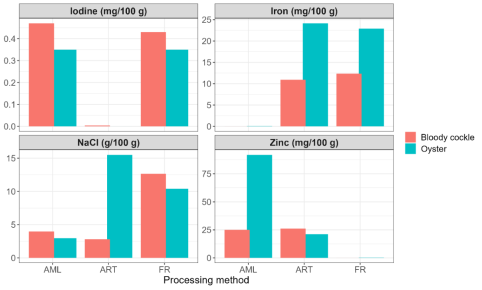
Figure 2. Micronutrient (mineral) contents of oyster and bloody cockle according to processing methods. Artisanal processing, (ART) Improved processing (AML), and Fresh products (FR).
Figure 3. Micronutrient (mineral) contents of oyster and bloody cockle according to processing methods. Artisanal processing, (B) Improved processing, and (C) Fresh products.
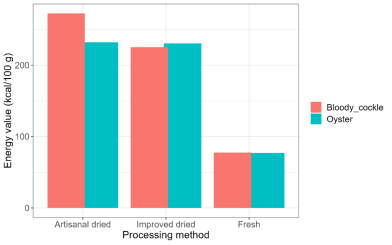
Figure 4. Energy value of oyster and bloody cockle according to processing method.
2.3. Tables
Table 1. Mean values (± standard deviation) of biochemical quality indicators (FFA, TVN, TBN, biogenic amines, collagen, cadaverine, and fatty acidity) in bloody cockle and oyster samples subjected to artisanal, improved, and fresh processing methods.
| Mean values, standard deviation, and grouping | Df |
|
Improved bloody cockle | Artisanal bloody cockle | Fresh bloody cockle | Improved Oystyr | Artisanal oyster | Fresh oyster | P_value |
|
FFA | 0.92±0.02b | 0.92b | 0.02±0.005c | 1.75±0.01a | 1.76±0.05a | 0.05±0.001 | <0,001*** | 2 |
TVN | 25.08±0.61b | 24.96b | 0.15±0.01c | 29.24±4.56ab | 34.85±0.26a | 0.08±0.001c | 0.0351 * | 2 |
TBN | 26.44±0.51b | 26.07b | 2.54±0.01c | 31.35±3.93ab | 36.07±0.47a | 1.35±0.01c | 0.006 ** | 2 |
Histamine | 26.82±0.41b | 27.41b | 0.01±0.001c | 39.18±7.33ab | 47.33±1.43a | 0.02±0.001c | 0.007** | 2 |
Putrescine | 10.53±0.15b | 10.61b | 1.56±0.01c | 19.58±2.93a | 17.43±0.24ab | 0.82±0.02c | 0.007 ** | 2 |
Collagène | 0.15±0.005b | 0.16b | 0.02±0.0005c | 0.31±0.02a | 0.24±0.01ab | 0.02±0.005c | <0,001*** | 2 |
Cadaverine | 6.06±0.64b | 5.72b | 1.12±0.01b | 11.83±1.31a | 12.54±0.25a | 0.94±0.02b | <0,001*** | 2 |
Fatty acidity | 0.09±0.11a | 0.02a | 0.03±0.01a | 0.03±0.008a | 0.04±0.006a | 0.005±0.001a | 0.652 | 2 |
Table 2. Heavy metal concentrations in bloody cockle and oyster samples subjected to artisanal, improved, and fresh processing methods.
Metal | Unit | Especies | Processing method | Niodior | Dionewar | Falia |
Mercury | (µg/kg) | Bloody cockle | All methods | <0,2 | <0,2 | <0,2 |
Oyster | All methods | <0,2 | <0,2 | <0,2 |
Lead | (mg/kg) | Bloody cockle | All methods | <11,2 | <11,2 | <11,2 |
Oyster | All methods | <11,2 | <11,2 | <11,2 |
Cadmium | (µg/kg) | Bloody cockle | All methods | <5 | <5 | <5 |
Oyster | All methods | <5 | <5 | <5 |
Aluminium | (mg/kg) | Bloody cockle | All methods | <11,2 | <11,2 | <11,2 |
Oyster | All methods | <11,2 | <11,2 | <11,2 |
Selenium | (mg/kg) | Bloody cockle | All methods | <11,2 | <11,2 | <11,2 |
Oyster | All methods | <11,2 | <11,2 | <11,2 |
Table 3. Microbiological Characterization of Oysters and Bloody Cockles According to Artisanal and Improved Processing Methods.
Target microorganisms | Reference values (CFU g-1) | Species | Processing method | Niodior | Dionewar | Falia |
E. coli | 10–100 | Bloody cockle | Artisanal | <10 | <40 | <10 |
Improved | 12,000 | <10 | <10 |
Oyster | 2 methods | <10 | <10 | <10 |
Salmonella spp. | ND | Bloody cockle | 2 methods | ND | ND | ND |
Oyster | 2 methods | ND | ND | ND |
Clostridium spp. | 10–100 | Bloody cockle | 2 methods | <10 | <10 | <10 |
Oyster | 2 methods | <10 | <10 | <10 |
Total coliforms | 100–1000 | Bloody cockle | Artisanal | <10 | <10 | <10 |
Improved | <10 | 460 | <10 |
Oyster | Artisanal | <10 | <10 | <10 |
Improved | 15,000 | <10 | 490 |
ASR | 10–100 | Bloody cockle | 2 methods | <40 | <10 | <10 |
Oyster | 2 methods | <40 | <10 | <10 |
Coagulase-positive staphylococci | <100 | Bloody cockle | 2 methods | <10 | <10 | <10 |
Oyster | Artisanal | <10 | <10 | 50 |
Improved | <10 | <10 | <10 |
3. Materials and Methods
3.1. Study Area
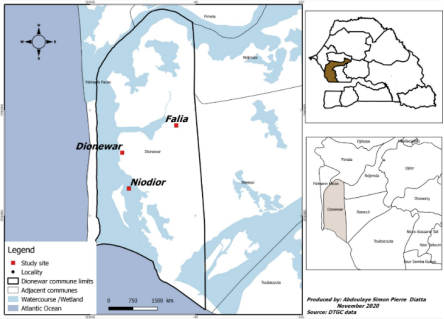
This study was conducted in the Saloum Islands, more specifically in the municipality of Dionewar, located between 13°52′60″ N and 16°43′60″ W (
Figure 1). The selection of the study villages was motivated by the coexistence of mixed processing methods (traditional and improved), as well as by the crucial role played by these bivalve mollusks in household food supply and in the economic empowerment of communities in the Saloum Islands.
3.2. Sample Selection and Preparation
A total of twelve 1-kg samples of fresh Senilia senilis (bloody cockle) and Crassostrea tulipa were harvested by women processors in each village, then depurated and immediately transported to the laboratory in a thoroughly cleaned and disinfected cooler containing seawater at ambient temperature. Upon arrival at the laboratory, the samples underwent an acceptability check (live shells, good condition, and sufficient quantity) and were subsequently labeled (species, registration number).
Dried bloody cockle and oyster samples obtained from artisanal processing (n = 12) and improved processing (n = 12) were then directly collected from the women’s economic interest groups (GIEs). All sampling of fresh and dried products was conducted between April and September 2022.
3.3. Biological and Biochemical Analyses
Analyses of nutritional quality, physicochemical parameters, and microbiological quality were performed on all bloody cockle and oyster samples (traditional, improved, and fresh). All analyses were conducted in accordance with the standards in force at the National Laboratory of Analysis of the Ministry of Trade (LANAC), which is certified under ISO/IEC 17025: 2017.
3.3.1. Determination of Nutritional Composition
In this study, particular emphasis was placed on proteins, carbohydrates, lipids, sodium chloride, iodine, iron, and zinc. Protein content was determined according to the NF EN ISO 16634-1 method. Carbohydrates were measured using a refractometer. Lipid content was assessed following the NF EN ISO 11085 method. Results for macronutrients are expressed in grams per 100 grams of sample.
Sodium chloride content was determined using the NF T90-020 method, while iodine was quantified according to the NS 03-038 method. Iron and zinc concentrations were analyzed following the NF EN 14084 method, and results are expressed in milligrams per 100 grams of sample.
The energy value was calculated based on the mean content of each macronutrient using the Atwater method (Merrill,
| [16] | Merrill AL, Watt BK. Energy Value of Foods: Basis and derivation. Handbook; Human Nutrition Research Branch, Agricultural Research Service, US Department of Agriculture, Maryland, 74 p. n. d. |
[16]
. The energy value was obtained by multiplying the actual nutritional values of proteins, lipids, and carbohydrates by the corresponding Atwater conversion factors.
EV = (PC * 4Kcal) + (LC + 9Kcal) + (CC+4Kcal)
EV = Energy value; PC= Protein Content; LC= Lipid Content; TC= Carbohydrate Content.
3.3.2. Evaluation of Chemical Quality
Free Fatty Acids (FFA) were determined using the UICPA-2.201 method, and the results are expressed as a percentage. Total Volatile Nitrogen (TVN) was assessed using ISO 5663, and Total Basic Nitrogen (TBN) using NF EN ISO 11732; their results are expressed in milligrams of nitrogen per 100 grams. Histamine was evaluated according to NF EN ISO 19343, and collagen was characterized using NF V04-415; their results are expressed in milligrams per 100 grams. Putrescine and cadaverine were estimated according to NF EN ISO 19344, and mercury was determined using NF EN 16277. Lead (Pb), cadmium (Cd), aluminum (Al), and selenium (Se) were assessed using NF EN 14084. Their results are expressed in milligrams per kilogram. Fatty acidity was estimated according to ISO 7305, and the result is expressed as a percentage.
3.3.3. Determination of Microbiological Contaminants
The analysis of contaminants in bloody cockle and oyster tissues was carried out following standard adopted methods. E. coli was evaluated according to NF ISO 16649-2. The NF ISO 6579-1 method was used for Salmonella. Clostridium was characterized following NF ISO 7937, and total coliforms according to NF ISO 4832. Sulfite-reducing anaerobes (SRA) were estimated according to NF V08-06, and coagulase-positive Staphylococcus according to NF EN ISO 6888-2. All results are expressed in CFU.
3.4. Statistical Analysis of Data
Data analysis was performed using R Studio software version 4.2.2
| [17] | R Core Team. R: A Language and Environment for Statistical Computing. Vienna, Austria: R Foundation for Statistical Computing; 2022. |
[17]
. A normality test was conducted to verify the dispersion of means. All results are expressed as mean values ± standard deviation (n = 3), except those for artisanal dried bloody cockles due to missing data resulting from the unavailability of analytical results. A factorial approach was considered; however, given the limited replication per treatment, a one-way ANOVA was applied to highlight significant differences between processing types within species. For all analyses, a p-value < 0.05 was considered statistically significant.
4. Results
4.1. Macronutrient Composition by Bivalve Species and Processing Method
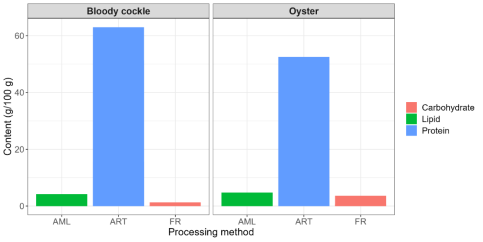
Figures 2a, 2b, and 2c compare macronutrient contents (proteins, lipids, and carbohydrates) between two bivalve species—the oyster (
Crassostrea sp.) and the bloody cockle (
Senilia senilis)—under three conditions: artisanal processing, improved processing, and fresh state.
Figure 2a shows that artisanal products have a high protein content, particularly in the bloody cockle (65 g/100 g), which is slightly higher than that of the oyster. Lipid and carbohydrate contents remain low in both species (<5 g/100 g). In contrast,
Figure 2b indicates a slight decrease in protein content in products processed using improved methods, although levels remain similar between species (45–50 g/100 g).
Figure 2c illustrates the nutritional profiles of fresh bivalves, in which protein contents are considerably lower (15–25 g/100 g), as expected due to the high-water content of fresh products. Lipid and carbohydrate contents are also very low.
4.2. Micronutrient Content of Artisanal-processed Bivalves
The contents of four essential minerals (sodium chloride, iodine, iron, and zinc) in artisanal-processed oysters and bloody cockles are presented. Sodium levels are significantly higher in the bloody cockle (>10 g/100 g), suggesting greater absorption or more saline preservation during processing. This high content could have public health implications (
Figure 3a). Iodine, although present at low concentrations (0.1 g/100 g), is a crucial micronutrient for thyroid function. Values are comparable between species, likely reflecting the marine nature of their habitat. Iron and zinc contents are also higher in the bloody cockle, indicating its superior nutritional potential as a source of these trace elements essential for blood formation (iron) and immune function (zinc).
In products processed using improved methods, NaCl concentrations are generally lower than in artisanal products (
Figure 3a), particularly in the bloody cockle. However, improved-processed oysters contain more sodium than the bloody cockle. Iodine contents remain low in both species, with slightly higher values in the bloody cockle. Iron is particularly abundant in oysters (20 mg/100 g), exceeding that of the bloody cockle in this case, while zinc shows an opposite trend, with slightly higher values also observed in oysters.
By contrast, mineral contents in fresh bivalves are markedly lower, with overall concentrations reduced by several orders of magnitude (
Figure 3c). Sodium levels remain higher in the bloody cockle (10 g/100 g), whereas iodine, iron, and zinc contents are lower and often close to detection limits. Iodine concentration in fresh products is extremely low, particularly in the bloody cockle.
4.3. Spoilage Indicators
The results show the presence of spoilage and intoxication indicators in fresh bloody cockles and oysters at different concentrations. When comparing the two fresh products, the fresh bloody cockle contains higher levels of total volatile nitrogen (0.15 mg N/100 g vs. 0.08 mg N/100 g), total basic nitrogen (2.54 mg N/100 g vs. 1.35 mg N/100 g), putrescine (1.56 mg/kg vs. 0.82 mg/kg), cadaverine (1.12 mg/kg vs. 0.94 mg/kg), and fatty acidity (0.03% vs. 0.005%). In contrast, it contains lower levels of free fatty acids (0.02% vs. 0.05%) and histamine (0.01 mg/100 g vs. 0.02 mg/100 g). Collagen content is the same in both products (0.02 mg/100 g) (
Table 1).
4.4. Chemical and Microbiological Contamination
4.4.1. Heavy Metal Contamination
The results indicate that both fresh and processed tissues of the two bivalves were analyzed for their overall heavy metal composition. Mercury concentrations were below 0.2 µg/kg regardless of product type or species. Lead, aluminum, and selenium were also detected but at very low levels, with concentrations below 11.2 mg/kg. Cadmium levels were below 5 µg/kg.
4.4.2. Microbiological Contamination
The analysis of microbiological results for
Escherichia coli shows that all samples were compliant except the improved bloody cockles. This contamination reached a maximum value of 1.2 × 10⁴ CFU/100 ml, exceeding the threshold set by NF ISO 16649-2 regulations (
Table 3). For
Salmonella, a complete absence was observed (not detected in 25 g) across all samples. Regarding
Clostridium perfringens, all values were compliant (less than 10 CFU/g) for all samples.
Concerning total coliforms, the detected values were compliant with the reference range (10²–10³ CFU/g) for all samples except improved oysters, for which non-compliance was observed. This contamination reached a maximum value of 1.5 × 10⁴ CFU/100 ml, which exceeds the threshold set by NF ISO 4832 regulations. For sulfite-reducing anaerobic bacteria (SRA) and coagulase-positive Staphylococcus, all detected values were compliant across all sample.
4.5. Energy Value According to Bivalve Species and Processing Method
The analysis of energy contents in processed bivalves highlights significant differences depending on the processing method and the species considered (
Figure 4). Dried products, whether produced using artisanal or improved processes, exhibit markedly higher energy contents than fresh products.
The bloody cockle, in its artisanal dried form, shows the highest energy value (270 kcal), exceeding that of the oyster (235 kcal) under the same processing method. In contrast, energy values for improved dried products are similar between the two species, suggesting a homogenization of energy density through this technological process. Regarding fresh products, energy contents are low (90–100 kcal) and comparable for both bivalves, reflecting their high water content.
5. Discussion
5.1. Effect of Processing Methods on Nutritional Density of Bivalves
The present study demonstrates that processing methods exert a strong influence on the nutritional density of
Senilia senilis and
Crassostrea tulipa, with dried products consistently exhibiting higher macronutrient concentrations than fresh specimens. This pattern is well documented for bivalves and other seafood products, where dehydration leads to a concentration of dry matter and associated nutrients rather than a true increase in nutritional content
| [15] | Diatta ASPD, Diouf A, Diatta CS, Diouf M. Bivalve mollusks (Senilia senilis and Crassostrea tulipa) exploited in the mangrove ecosystems of the Saloum Islands: diagnosis of a changing sector. RAMReS, New Series, Human Sciences, 2024. |
| [18] | Orban E, Di Lena G, Nevigato T, Casini I, Marzetti A, Caproni R. Seasonal changes in meat content, condition index and chemical composition of mussels (Mytilus galloprovincialis) cultured in two different Italian sites. Food Chemistry 2002; 77: 57–65. https://doi.org/10.1016/S0308-8146(01)00322-3 |
| [19] | Orban E, Di Lena G, Nevigato T, Casini I, Caproni R, Santaroni G, et al. Nutritional and commercial quality of the striped venus clam, Chamelea gallina, from the Adriatic Sea. Food Chemistry 2007; 101: 1063–70.
https://doi.org/10.1016/j.foodchem.2006.03.005 |
[15, 18, 19]
. Proteins constitute the dominant macronutrient across all processed products, confirming the high nutritional value of bivalves as alternative animal protein sources. Artisanal-processed
S. senilis displays particularly high protein levels (>60 g/100 g dry matter), exceeding those observed in oysters processed under comparable conditions. This difference likely reflects species-specific tissue composition, particularly the higher proportion of muscular tissue in
S. senilis, combined with intense moisture loss during traditional drying. Similar protein densities have been reported for dried mollusks and other lean animal products, highlighting the potential contribution of processed bivalves to dietary protein intake in coastal and low-income communities
| [2] | Khan BM, Liu Y. Marine Mollusks: Food with Benefits. Comp Rev Food Sci Food Safe 2019; 18: 548–64.
https://doi.org/10.1111/1541-4337.12429 |
| [6] | Sikorski ZE, Kołakowska A, Burt JR. Postharvest Biochemical and Microbial Changes. Seafood, CRC Press; 1990. |
[2, 6]
. In contrast, lipid contents remain consistently low (<5 g/100 g dry matter), regardless of species or processing method. This confirms the classification of bivalves as lean foods and supports their suitability for diets aimed at limiting fat intake and reducing the risk of diet-related chronic diseases
. Although improved processing methods appear to slightly reduce protein concentration compared to artisanal drying, possibly due to differences in thermal regimes or handling duration, overall nutritional levels remain high.
5.2. Mineral Enrichment and Public Health Implications
Processing markedly enhances the mineral content of bivalves compared to fresh products, particularly for sodium chloride, iron, zinc, and iodine. This enrichment is primarily attributable to water loss during drying, which concentrates mineral elements in the final product
. However, the magnitude of mineral concentration varies according to both species and processing method. Artisanal-processed
S. senilis exhibits extremely high sodium chloride concentrations, reaching approximately 30 g/100 g dry matter. Such levels far exceed recommended dietary sodium intake limits and may pose serious public health risks if these products are consumed frequently or in large quantities
| [21] | World Health Organization. Guideline: Sodium intake for adults and children. 2012. |
[21]
. Excessive sodium intake is strongly associated with hypertension and cardiovascular diseases, underscoring the need to regulate salting practices within artisanal processing chains. In contrast, oysters processed using improved methods show particularly high zinc concentrations, reaching up to 90 mg/100 g dry matter. Zinc is an essential micronutrient involved in immune function, growth, and reproductive health, and deficiencies remain prevalent in many developing regions
. The high zinc content of processed oysters therefore represents a valuable nutritional asset. Iron levels are also substantial in both species, supporting the potential role of these bivalves in addressing iron-deficiency anemia. Iodine concentrations, although relatively modest, are higher in processed products than in fresh ones, consistent with previous observations that processing and thermal treatments can improve iodine availability in seafood
.
5.3. Species-specific Spoilage Patterns and Biochemical Indicators
The analysis of spoilage and intoxication indicators reveals clear species-specific differences in the biochemical stability of fresh bivalves.
S. senilis exhibits higher levels of total volatile nitrogen and total basic nitrogen, suggesting more rapid protein degradation shortly after harvest. This pattern may reflect higher post-mortem enzymatic activity or a greater susceptibility to microbial proliferation in this species
| [6] | Sikorski ZE, Kołakowska A, Burt JR. Postharvest Biochemical and Microbial Changes. Seafood, CRC Press; 1990. |
| [23] | Ben-Gigirey B, Vieites J, Villa T, Barros-Velazquez J. Histamine and cadaverine production by bacteria isolated from fresh and frozen albacore. Journal of Food Protection 1999; 62: 933–9. |
[6, 23]
. Elevated concentrations of putrescine and cadaverine in fresh
S. senilis further indicate active amino acid decarboxylation, which can compromise product quality and increase intoxication risks if storage and handling conditions are inadequate
| [23] | Ben-Gigirey B, Vieites J, Villa T, Barros-Velazquez J. Histamine and cadaverine production by bacteria isolated from fresh and frozen albacore. Journal of Food Protection 1999; 62: 933–9. |
[23]
. In contrast, fresh oysters exhibit higher free fatty acid levels, suggesting greater lipid hydrolysis and sensitivity to oxidative processes, even though their overall lipid content remains low. These differences likely reflect inherent metabolic and physiological traits, as well as species-specific interactions with environmental conditions and microbial communities
| [14] | Storelli MM, Barone G, Piscitelli G, Marcotrigiano GO. Mercury in fish: Concentration vs. fish size and estimates of mercury intake. Food Additives and Contaminants 2007; 24: 1353–7. https://doi.org/10.1080/02652030701387197 |
[14]
. Despite these variations, histamine levels remain low in both species, indicating limited immediate risk, although continuous monitoring remains essential given its well-documented toxicity.
5.4. Microbiological Safety and Limitations of “Improved” Processing
Microbiological analyses reveal substantial variability in sanitary quality depending on processing method and production site. While most artisanal and improved products comply with regulatory standards, significant non-compliance is observed for
Escherichia coli in some improved-processed products, particularly those originating from Niodior.
E. coli concentrations reaching up to 1.2 × 10⁴ CFU/100 ml exceed recommended thresholds and indicate fecal contamination or inadequate hygienic control during processing
| [10] | Cabral JPS. Water Microbiology. Bacterial Pathogens and Water. IJERPH 2010; 7: 3657–703.
https://doi.org/10.3390/ijerph7103657 |
| [24] | Codex Alimentarius Commission. Code of hygienic practice for fresh fish and shellfish. 2003. |
[10, 24]
. These results demonstrate that improved processing technologies do not automatically guarantee food safety. Inadequate thermal treatment, cross-contamination during handling, or insufficient hygiene practices may offset the expected sanitary benefits of technological upgrades
. In contrast, samples from Falia exhibit better microbiological quality, suggesting that local practices, operator training, and strict adherence to critical parameters such as time, temperature, and hygiene play a decisive role in determining product safety. The term “improved” may therefore create a false sense of security if not supported by standardized protocols, effective monitoring, and continuous quality control.
5.5. Chemical Contamination and Implications for Sustainable Valorization
Heavy metal analyses indicate generally low concentrations of mercury, cadmium, lead, aluminum, and selenium in both fresh and processed bivalves, with levels remaining below international regulatory limits
| [13] | Commission E. Commission Regulation (EC) No 1881/2006 of 19 December 2006 setting maximum levels for certain contaminants in foodstuffs (Text with EEA relevance). vol. 364. 2006. |
| [24] | Codex Alimentarius Commission. Code of hygienic practice for fresh fish and shellfish. 2003. |
[13, 24]
. These findings suggest limited chemical contamination at the studied sites, consistent with conditions typically observed in lightly industrialized coastal environments. However, given the bioaccumulative nature of certain metals and increasing anthropogenic pressures on coastal ecosystems, regular monitoring remains essential to ensure long-term consumer safety
| [14] | Storelli MM, Barone G, Piscitelli G, Marcotrigiano GO. Mercury in fish: Concentration vs. fish size and estimates of mercury intake. Food Additives and Contaminants 2007; 24: 1353–7. https://doi.org/10.1080/02652030701387197 |
[14]
.
From a broader perspective, the high nutritional density combined with low chemical contamination underscores the strong potential of processed bivalves as affordable, locally available protein sources. When properly processed and monitored,
S. senilis and
C. tulipa can contribute meaningfully to food security and nutritional resilience in West African coastal communities
. Nevertheless, this potential can only be fully realized through the standardization of processing methods, regulation of salting practices, and strengthening of hygiene training and quality control throughout the value chain.
6. Conclusions
This study shows that processing methods strongly influence the nutritional quality and sanitary safety of Senilia senilis and Crassostrea tulipa from the Saloum Delta. Dried products, whether artisanal or improved, exhibit higher nutritional density than fresh bivalves, particularly in terms of protein and essential minerals, confirming their potential as valuable food resources. However, excessive sodium levels in artisanal products and microbiological non-compliance observed in some improved-processed samples highlight the need for better control of processing practices. Heavy metal concentrations remained below international regulatory limits, indicating low chemical risk. Overall, these findings emphasize the importance of standardizing processing methods and strengthening hygiene practices to sustainably enhance the nutritional and economic value of bivalves in West African coastal communities.
Abbreviations
ART | Artisanal Processing |
AML | Improved Processing |
FR | Fresh Products |
FFA | Free Fatty Acids |
TVN | Total Volatile Nitrogen |
TBN | Total Basic Nitrogen |
EV | Energy Value |
PC | Protein Content |
LC | Lipid Content |
CC | Carbohydrate Content |
CFU | Colony Forming Units |
SRA | Sulfite-Reducing Anaerobes |
Acknowledgments
This work was carried out as part of the APOCEB project (Adaptation of Coastal Populations and the Blue Economy), funded by Global Affairs Canada and implemented by Cégep de la Gaspésie et des Îles. he authors thank all the women processors from the villages of the municipality of Dionewar, as well as the presidents of the FELOGIE of Niodior and Dionewar and the Local Union of Falia. They also thank the National Laboratory of Analysis and Control (LANAC) for carrying out the analyses of the various samples. Finally, the authors express their gratitude to all individuals who contributed to the successful completion of this work.
Author Contributions
Abdoulaye Simon Pierre Diatta: Conceptualization, Methodology, Investigation, Data curation, Writing – original draft.
Babacar Sane: Methodology, Formal analysis, Visualization, Writing – review & editing.
Adama Diouf: Investigation, Writing – review & editing.
Moussa Dieng: Writing – review & editing.
Malick Diouf: Conceptualization, Supervision, Project administration, Funding acquisition, Writing – review & editing.
Conflicts of Interest
The authors declare no conflicts of interest.
References
| [1] |
FAO. The State of World Fisheries and Aquaculture 2016. Food and Agriculture Organization of the United Nations; 2016.
|
| [2] |
Khan BM, Liu Y. Marine Mollusks: Food with Benefits. Comp Rev Food Sci Food Safe 2019; 18: 548–64.
https://doi.org/10.1111/1541-4337.12429
|
| [3] |
Sané B, Diouf M, Jean F, Flye-Sainte-Marie J, Kerhervé M, Fabioux C, et al. Reproduction patterns of the bloody cockle Senilia senilis (Linnaeus 1758) in the Sine-Saloum inverse estuary. Aquat Living Resour 2023; 36: 33.
https://doi.org/10.1051/alr/2023029
|
| [4] |
Sané B, Flye-Sainte-Marie J, Diouf M, Jean F, Poirier E, Thomas Y. Physiological and metabolic response of the bloody cockle (Senilia senilis) to salinity in the Sine Saloum estuary, Senegal. Regional Studies in Marine Science 2025; 92: 104636.
https://doi.org/10.1016/j.rsma.2025.104636
|
| [5] |
Bourre J-M. Enrichment of animal diets with omega-3 fatty acids: impact on the nutritional value of their products for humans. Med Sci (Paris) 2005; 21: 773–9.
https://doi.org/10.1051/medsci/2005218-9773
|
| [6] |
Sikorski ZE, Kołakowska A, Burt JR. Postharvest Biochemical and Microbial Changes. Seafood, CRC Press; 1990.
|
| [7] |
Domingo JL, Bocio A, Falco G, Llobet JM. Benefits and risks of fish consumption: Part I. Toxicology 2007; 230: 219–26.
https://doi.org/10.1016/j.tox.2006.11.054
|
| [8] |
FAO. Improving small-scale fisheries post-harvest practices and markets. Food and Agriculture Organization of the United Nations; 2020.
|
| [9] |
Bernard MA, Passafiume R, Garen P, others. Impact of improved smoking techniques on the nutritional and sanitary quality of fish products in West Africa. Food Control 2019; 106: 106684.
https://doi.org/10.1016/j.foodcont.2019.106684
|
| [10] |
Cabral JPS. Water Microbiology. Bacterial Pathogens and Water. IJERPH 2010; 7: 3657–703.
https://doi.org/10.3390/ijerph7103657
|
| [11] |
Lunestad BT, Rosnes JT. Microbiological quality and safety of farmed fish. Improving Farmed Fish Quality and Safety, Elsevier; 2008, p. 399–427.
https://doi.org/10.1533/9781845694920.2.399
|
| [12] |
Amponsah NY, Quaye W, Addo A. Postharvest handling and improved processing techniques of mollusks in Ghana. African Journal of Food, Agriculture, Nutrition and Development 2020; 20: 16000–17.
https://doi.org/10.18697/ajfand.91.18712
|
| [13] |
Commission E. Commission Regulation (EC) No 1881/2006 of 19 December 2006 setting maximum levels for certain contaminants in foodstuffs (Text with EEA relevance). vol. 364. 2006.
|
| [14] |
Storelli MM, Barone G, Piscitelli G, Marcotrigiano GO. Mercury in fish: Concentration vs. fish size and estimates of mercury intake. Food Additives and Contaminants 2007; 24: 1353–7.
https://doi.org/10.1080/02652030701387197
|
| [15] |
Diatta ASPD, Diouf A, Diatta CS, Diouf M. Bivalve mollusks (Senilia senilis and Crassostrea tulipa) exploited in the mangrove ecosystems of the Saloum Islands: diagnosis of a changing sector. RAMReS, New Series, Human Sciences, 2024.
|
| [16] |
Merrill AL, Watt BK. Energy Value of Foods: Basis and derivation. Handbook; Human Nutrition Research Branch, Agricultural Research Service, US Department of Agriculture, Maryland, 74 p. n. d.
|
| [17] |
R Core Team. R: A Language and Environment for Statistical Computing. Vienna, Austria: R Foundation for Statistical Computing; 2022.
|
| [18] |
Orban E, Di Lena G, Nevigato T, Casini I, Marzetti A, Caproni R. Seasonal changes in meat content, condition index and chemical composition of mussels (Mytilus galloprovincialis) cultured in two different Italian sites. Food Chemistry 2002; 77: 57–65.
https://doi.org/10.1016/S0308-8146(01)00322-3
|
| [19] |
Orban E, Di Lena G, Nevigato T, Casini I, Caproni R, Santaroni G, et al. Nutritional and commercial quality of the striped venus clam, Chamelea gallina, from the Adriatic Sea. Food Chemistry 2007; 101: 1063–70.
https://doi.org/10.1016/j.foodchem.2006.03.005
|
| [20] |
Belitz H-D, Grosch W, Schieberle P. Food Chemistry. 4th ed. Springer; 2009.
https://doi.org/10.1007/978-3-540-69934-7
|
| [21] |
World Health Organization. Guideline: Sodium intake for adults and children. 2012.
|
| [22] |
Zimmermann MB. Iodine deficiency. Endocrine Reviews 2009; 30: 376–408.
https://doi.org/10.1210/er.2009-0011
|
| [23] |
Ben-Gigirey B, Vieites J, Villa T, Barros-Velazquez J. Histamine and cadaverine production by bacteria isolated from fresh and frozen albacore. Journal of Food Protection 1999; 62: 933–9.
|
| [24] |
Codex Alimentarius Commission. Code of hygienic practice for fresh fish and shellfish. 2003.
|
| [25] |
FAO R. Cultured Aquatic Species Information Programme Crassostrea gigas 2018.
http://www.fao.org/fishery/culturedspecies/Crassostrea_gigas/en
(accessed September 10, 2018).
|
| [26] |
FAO. World aquaculture production of fish, crustaceans, molluscs, etc., by principal species in 2005. 2005.
|
Cite This Article
-
APA Style
Diatta, A. S. P., Sane, B., Diouf, A., Dieng, M., Diouf, M. (2026). A Study to Analyze Nutritional, Chemical and Microbiological Properties of Senilia senilis and Crassostrea tulipa from the Saloum Delta (Senegal). Journal of Food and Nutrition Sciences, 14(1), 82-91. https://doi.org/10.11648/j.jfns.20261401.17
 Copy
|
Copy
|
 Download
ACS Style
Diatta, A. S. P.; Sane, B.; Diouf, A.; Dieng, M.; Diouf, M. A Study to Analyze Nutritional, Chemical and Microbiological Properties of Senilia senilis and Crassostrea tulipa from the Saloum Delta (Senegal). J. Food Nutr. Sci. 2026, 14(1), 82-91. doi: 10.11648/j.jfns.20261401.17
Copy
|
Download
AMA Style
Diatta ASP, Sane B, Diouf A, Dieng M, Diouf M. A Study to Analyze Nutritional, Chemical and Microbiological Properties of Senilia senilis and Crassostrea tulipa from the Saloum Delta (Senegal). J Food Nutr Sci. 2026;14(1):82-91. doi: 10.11648/j.jfns.20261401.17
Copy
|
Download
-
@article{10.11648/j.jfns.20261401.17,
  author = {Abdoulaye Simon Pierre Diatta and Babacar Sane and Adama Diouf and Moussa Dieng and Malick Diouf},
  title = {A Study to Analyze Nutritional, Chemical and Microbiological Properties of Senilia senilis and Crassostrea tulipa from the Saloum Delta (Senegal)},
  journal = {Journal of Food and Nutrition Sciences},
  volume = {14},
  number = {1},
  pages = {82-91},
  doi = {10.11648/j.jfns.20261401.17},
  url = {https://doi.org/10.11648/j.jfns.20261401.17},
  eprint = {https://article.sciencepublishinggroup.com/pdf/10.11648.j.jfns.20261401.17},
  abstract = {Bivalves represent a food source of growing interest for nutritional security in coastal regions, particularly in West Africa. However, the nutritional and sanitary quality of these products can be affected by species, processing practices, and the production environment. This study aims to evaluate the effects of processing methods on the nutritional composition, microbiological safety, and chemical contamination of Senilia senilis compared to Crassostrea tulipa. In total, 36 samples were collected from three Senegalese localities (Niodior, Dionewar, and Falia). Nutritional, biochemical, microbiological, and chemical analyses were performed on these samples. The data were compared with international food standards and the scientific literature. Processed bloody cockle and oysters, particularly those derived from improved processing methods, exhibit high nutritional density, with protein contents reaching 65 g/100 g dry matter for bloody cockle, and high zinc levels (up to 90 mg/100 g dry matter in oysters). In contrast, certain artisanal methods lead to excessive sodium concentrations (30 g/100 g dry matter). Microbiological analyses reveal high E. coli contamination at some sites, notably Niodior, including products processed using so-called “improved” methods. Heavy metal concentrations remain generally low and below regulatory thresholds. These results confirm the potential of processed bivalves as functional and nutraceutical foods, while highlighting the need for standardization of processing methods to ensure food safety and to sustainably enhance the value of these resources within local value chains.},
 year = {2026}
}
Copy
|
Download
-
TY  - JOUR
T1  - A Study to Analyze Nutritional, Chemical and Microbiological Properties of Senilia senilis and Crassostrea tulipa from the Saloum Delta (Senegal)
AU  - Abdoulaye Simon Pierre Diatta
AU  - Babacar Sane
AU  - Adama Diouf
AU  - Moussa Dieng
AU  - Malick Diouf
Y1  - 2026/02/06
PY  - 2026
N1  - https://doi.org/10.11648/j.jfns.20261401.17
DO  - 10.11648/j.jfns.20261401.17
T2  - Journal of Food and Nutrition Sciences
JF  - Journal of Food and Nutrition Sciences
JO  - Journal of Food and Nutrition Sciences
SP  - 82
EP  - 91
PB  - Science Publishing Group
SN  - 2330-7293
UR  - https://doi.org/10.11648/j.jfns.20261401.17
AB  - Bivalves represent a food source of growing interest for nutritional security in coastal regions, particularly in West Africa. However, the nutritional and sanitary quality of these products can be affected by species, processing practices, and the production environment. This study aims to evaluate the effects of processing methods on the nutritional composition, microbiological safety, and chemical contamination of Senilia senilis compared to Crassostrea tulipa. In total, 36 samples were collected from three Senegalese localities (Niodior, Dionewar, and Falia). Nutritional, biochemical, microbiological, and chemical analyses were performed on these samples. The data were compared with international food standards and the scientific literature. Processed bloody cockle and oysters, particularly those derived from improved processing methods, exhibit high nutritional density, with protein contents reaching 65 g/100 g dry matter for bloody cockle, and high zinc levels (up to 90 mg/100 g dry matter in oysters). In contrast, certain artisanal methods lead to excessive sodium concentrations (30 g/100 g dry matter). Microbiological analyses reveal high E. coli contamination at some sites, notably Niodior, including products processed using so-called “improved” methods. Heavy metal concentrations remain generally low and below regulatory thresholds. These results confirm the potential of processed bivalves as functional and nutraceutical foods, while highlighting the need for standardization of processing methods to ensure food safety and to sustainably enhance the value of these resources within local value chains.
VL  - 14
IS  - 1
ER  -
Copy
|
Download





 Share This Article
 Twitter
 Linked In
 Facebook