
Gout is a metabolic disorder characterized by hyperuricemia, which results in the deposition of monosodium urate crystals in joints, leading to recurrent episodes of inflammation, pain, and progressive joint damage. Xanthine oxidase (XO), the key enzyme involved in the final steps of uric acid biosynthesis, is an important therapeutic target for gout management. Although conventional XO inhibitors such as allopurinol are effective, their long-term use may be associated with adverse effects, highlighting the need for safer, plant-derived alternatives. The present study aimed to investigate the antigout potential of the phytochemicals eugenol and quercetin through phytochemical characterization, molecular docking, and in silico pharmacokinetic analysis.Methanolic extracts of clove (Syzygiumaromaticum), bitter melon (Momordicacharantia), and betel leaf (Piper betle) were subjected to preliminary phytochemical screening to identify the presence of bioactive secondary metabolites. Thin Layer Chromatography (TLC) was performed to separate and identify the major phytochemical constituents, while Attenuated Total Reflectance–Fourier Transform Infrared (ATR-FTIR) spectroscopy was employed to characterize functional groups and confirm the presence of eugenol and quercetin. Molecular docking studies were carried out using the SwissDock platform to evaluate the binding affinity and interaction patterns of these compounds with the xanthine oxidase enzyme. Furthermore, ADMETlab 2.0 was utilized to predict the absorption, distribution, metabolism, excretion, and toxicity (ADMET) profiles of the selected phytochemicals, thereby assessing their drug-likeness and safety.The molecular docking analysis demonstrated favorable binding interactions of both eugenol and quercetin with the active site of xanthine oxidase, indicating their potential inhibitory activity. ADMET predictions suggested acceptable pharmacokinetic properties and low toxicity, supporting their suitability as potential therapeutic candidates. Overall, the findings suggest that eugenol and quercetin possess promising antigout activity and may serve as natural xanthine oxidase inhibitors. This integrated experimental and computational approach provides a scientific basis for further in vitro and in vivo investigations to validate their efficacy and facilitate the development of safer, plant-based therapies for gout management.
| Published in | Journal of Drug Design and Medicinal Chemistry (Volume 12, Issue 2) |
| DOI | 10.11648/j.jddmc.20261202.12 |
| Page(s) | 46-62 |
| Creative Commons |
This is an Open Access article, distributed under the terms of the Creative Commons Attribution 4.0 International License (http://creativecommons.org/licenses/by/4.0/), which permits unrestricted use, distribution and reproduction in any medium or format, provided the original work is properly cited. |
| Copyright |
Copyright © The Author(s), 2026. Published by Science Publishing Group |
Gout, Clove, Bitter Melon, Betel Leaf, ADMET, Eugenol, Quercetin
TEST | EXPECTED RESULT | RESULT | EUGENOL | QUERCETIN |
|---|---|---|---|---|
Alkaloids (Mayer’s Test) | Creamy white precipitate | Pale Yellow colour | Negative | Negative |
Phenols (Ferric Chloride Test) | Blue/green/violet or blue-black colour | Blue-black colour | Positive | Positive |
Flavonoids (Alkaline Test) | Intense yellow colour, decolorizes with acid | Colourless | Negative | Positive |
Terpenoids/Steroid (Salkowski Test) | Reddish-brown precipitate or layer | Pale yellow | Negative | Negative |
Tannins | Blue-black or greenish | Blue-Black | Positive (Weak) | Positive (Weak) |
TEST | EXPECTED RESULT | RESULT | EUGENOL | QUERCETIN |
|---|---|---|---|---|
Alkaloids (Wagner’s Test) | Reddish-brown precipitate | Yellow colour | Negative | Negative |
Flavonoids (Shinoda Test) | Pink/red colour | Pink colour | Negative | Positive |
Phenols (Ferric Chloride Test) | Blue/green/violet or blue-black colour | Violet colour | Positive | Positive |
Terpenoids/Steroid (Salkowski Test) | Reddish-brown precipitate or layer | Pale yellow | Negative | Negative |
Tannins | Blue-black or greenish | Blue-Black | Positive (Weak) | Positive (Weak) |
TEST | EXPECTED RESULT | RESULT | EUGENOL | QUERCETIN |
|---|---|---|---|---|
Alkaloids (Wagner’s Test) | Reddish-brown precipitate | Yellow colour | Negative | Negative |
Phenols (Ferric Chloride Test) | Blue/green/violet or blue-black colour | Violet colour | Positive | Positive |
Tannins | Blue-black or greenish | Blue-Black | Positive (Weak) | Positive (Weak) |
Flavonoids (Alkaline Test) | Intense yellow colour, decolorizes with acid | Colourless | Negative | Positive |
Terpenoids/Steroid (Salkowski Test) | Reddish-brown precipitate or layer | Pale yellow | Negative | Negative |
SAMPLES | COMPONENTS | Rf VALUE |
|---|---|---|
(A) Clove | Eugenol | 0.7 |
Quercetin | 0.7 | |
(B) Bitter Melon | Eugenol | 0.8 |
Quercetin | 0.7 | |
(C) Betel Leaf | Eugenol | 0.7 |
Quercetin | 0.3 |
Plant Extract | Characteristics Peaks | Characteristics Functional Groups |
|---|---|---|
Clove | 2923.56 | C-H Stretching |
1687.41 | C=O Stretching | |
1605.45, 1511.92 | Aromatic C=C Stretching | |
1267 | C-O Stretching | |
1196.61-1032.69 | C-O and C-N Stretching | |
Bitter Melon | 3335.28 | O-H Stretching |
2916.81, 2848.35 | Aliphatic C-H Stretching | |
1702.84 | C=O Stretching | |
1514.81 | Aromatic C=C Stretching | |
1032.69 | C-O Stretching | |
720.28 | C-H Bending | |
Betel Leaf | 2923.56 | Aliphatic C-H Stretching |
1731.76 | C=O Stretching | |
1603.52, 1507.10 | Aromatic C=C Stretching | |
1433.82 | CH2 Bending | |
1369.21 | C-H Bending | |
911.20, 815.74 | Aromatic C-H Bending |
MODEL | CALCULATED AFFINITY (kcal/mol) |
|---|---|
1 | -6.018 |
2 | -5.957 |
3 | -5.861 |
4 | -5.668 |
5 | -5.554 |
6 | -5.497 |
7 | -5.449 |
8 | -5.445 |
9 | -5.440 |
10 | -5.306 |
11 | -5.297 |
12 | -5.227 |
13 | -5.160 |
14 | -5.061 |
15 | -4.801 |
16 | -4.639 |
17 | -4.565 |
18 | -4.451 |
19 | -4.376 |
MODEL | CALCULATED AFFINITY (kcal/mol) |
|---|---|
1 | -7.992 |
2 | -7.439 |
3 | -6.779 |
4 | -6.710 |
5 | -5.802 |
6 | -5.689 |
7 | -5.534 |
8 | -5.004 |
PROPEERTY | EUGENOL | QUERCETIN |
|---|---|---|
Molecular Weight | 164.08 | 302.04 |
nHA | 2 | 7 |
nHD | 1 | 5 |
nROT | 3 | 1 |
TPSA | 29.46 | 131.36 |
logS | -2.286 | -3.671 |
logP | 2.291 | 2.155 |
logD | 2.418 | 1.767 |
PROPERTY | EUGENOL | QUERCETIN |
|---|---|---|
QED | 0.693 | 0.434 |
SA score | 1.961 | 2.545 |
NP score | 1.053 | 1.701 |
Lipinski Rule | Accepted | Accepted |
PROPERTY | EUGENOL | QUERCERTIN |
|---|---|---|
Caco-2 Permeability | -4.373 | -5.204 |
HIA | 0.007 | 0.014 |
F20% | 0.732 | 0.93 |
F30% | 0.967 | 0.997 |
PROPERTY | EUGENOL | QUERCETIN |
|---|---|---|
PPB | 92.11% | 95.49% |
VD | 0.833 | 0.579 |
BBB Penetration | 0.188 | 0.008 |
Fu | 3.220% | 7.423% |
PROPERTY | EUGENOL | QUERCETIN |
|---|---|---|
CYP1A2 inhibitor | 0.901 | 0.943 |
CYP2C19 inhibitor | 0.716 | 0.053 |
CYP2C9 inhibitor | 0.313 | 0.598 |
CYP2D6 inhibitor | 0.85 | 0.411 |
CYP3A4 inhibitor | 0.288 | 0.348 |
PROPERTY | EUGENOL | QUERCETIN |
|---|---|---|
CL | 14.042 | 8.284 |
T1/2 | 0.887 | 0.929 |
PROPERTY | EUGENOL | QUERCETIN |
|---|---|---|
hERG Blockers | 0.017 | 0.099 |
H-HT | 0.036 | 0.1 |
DILI | 0.046 | 0.98 |
AMES Toxicity | 0.066 | 0.657 |
Skin Sensitization | 0.792 | 0.919 |
Carcinogencity | 0.814 | 0.05 |
Respiratory Toxicity | 0.51 | 0.072 |
NSAIDS | Non-Steroidal Anti-Inflammatory Drugs |
ADMET | Adsorption, Distribution, Metabolism, Excretion and Toxicity |
| [1] | Richette, P., Frazier, A., Bardin, T. Pharmacokinetics considerations for gout treatments. Expert Opinion on Drug Metabolism & Toxicology. 2014, 10(7), 949-957. |
| [2] | Waiz, M., Alvi, S. S., Khan, M. S. Potential dual inhibitors of PCSK-9 and HMG-R from natural sources in cardiovascular risk management. EXCLI Journal. 2022, 21, 47. |
| [3] | Pacher, P. A. L., Nivorozhkin, A., Szabó, C. Therapeutic effects of xanthine oxidase inhibitors: renaissance half a century after the discovery of allopurinol. Pharmacological Reviews. 2006, 58(1), 87-114. |
| [4] | Dehghan, A., Van Hoek, M., Sijbrands, E. J., Hofman, A., Witteman, J. C. High serum uric acid as a novel risk factor for type 2 diabetes. Diabetes Care. 2008, 31(2), 361-362. |
| [5] | Becker, M. A., Jolly, M. Hyperuricemia and associated diseases. Rheumatic Disease Clinics. 2006, 32(2), 275-293. |
| [6] | Li, Y., Lin, Z., Jin, H., Wei, F., Ma, S., Zhang, B. The anti-hyperuricemia potential of bioactive natural products and extracts derived from traditional Chinese medicines: A review and perspective. Journal of Pharmaceutical Analysis. 2025, 15(7), 101183. |
| [7] | Martinon, F., Pétrilli, V., Mayor, A., Tardivel, A., Tschopp, J. Gout-associated uric acid crystals activate the NALP3 inflammasome. Nature. 2006, 440(7081), 237-241. |
| [8] | Wang, S., Liu, W., Wei, B., Wang, A., Wang, Y., Wang, W., Yue, Q. Traditional herbal medicine: therapeutic potential in acute gouty arthritis. Journal of Ethnopharmacology. 2024, 330, 118182. |
| [9] | Kong, L. D., Yang, C., Ge, F., Wang, H. D., Guo, Y. S. A Chinese herbal medicine Ermiao wan reduces serum uric acid level and inhibits liver xanthine dehydrogenase and xanthine oxidase in mice. Journal of Ethnopharmacology. 2004, 93(2-3), 325-330. |
| [10] | Cos, P., Ying, L., Calomme, M., Hu, J. P., Cimanga, K., Van Poel, B., Van Berghe, D. Structure-activity relationship and classification of flavonoids as inhibitors of xanthine oxidase and superoxide scavengers. Journal of Natural Products. 1998, 61(1), 71-76. |
| [11] | Stamp, L. K., Dalbeth, N. Prevention and treatment of gout. Nature Reviews Rheumatology. 2019, 15(2), 68-70. |
| [12] | Qu, P., Wang, H., Wang, W., Hu, Q., Du, S., Peng, Z., Tang, X. Clinical efficacy evaluation and potential mechanism prediction on Guizhi-Shaoyao-Zhimu decoction in the treatment of gouty arthritis based on meta-analysis, network pharmacology analysis, and molecular docking. Medicine. 2023, 102(47), e35973. |
| [13] | Guo, J. W., Lin, G. Q., Tang, X. Y., Yao, J. Y., Feng, C. G., Zuo, J. P., He, S. J. Therapeutic potential and pharmacological mechanisms of Traditional Chinese Medicine in gout treatment. ActaPharmacologicaSinica. 2025, 46(5), 1156-1176. |
| [14] | Vijeesh, V., Jisha, N., Vysakh, A., Latha, M. S. Interaction of eugenol with xanthine oxidase: Multi spectroscopic and in silico modelling approach. SpectrochimicaActa Part A: Molecular and Biomolecular Spectroscopy. 2021, 258, 119843. |
| [15] | Murata, K., Nakao, K., Hirata, N., Namba, K., Nomi, T., Kitamura, Y., Matsuda, H. Hydroxychavicol: A potent xanthine oxidase inhibitor obtained from the leaves of betel, Piper betle. Journal of Natural Medicines. 2009, 63(3), 355-359. |
| [16] | Bortolotti, M., Mercatelli, D., Polito, L. Momordicacharantia, a nutraceutical approach for inflammatory related diseases. Frontiers in Pharmacology. 2019, 10, 486. |
| [17] | Lin, K. W., Yang, S. C., Lin, C. N. Antioxidant constituents from the stems and fruits of Momordicacharantia. Food Chemistry. 2011, 127(2), 609-614. |
| [18] | Chen, G. L., Wei, W., Xu, S. Y. Effect and mechanism of total saponin of Dioscorea on animal experimental hyperuricemia. The American Journal of Chinese Medicine. 2006, 34(1), 77-85. |
| [19] | Umamaheswari, M., Asokkumar, K., Sivashanmugam, A. T., Remyaraju, A., Subhadradevi, V., Ravi, T. K. In vitro xanthine oxidase inhibitory activity of the fractions of ErythrinastrictaRoxb. Journal of Ethnopharmacology. 2009, 124(3), 646-648. |
| [20] | Nguyen, M. T. T., Awale, S., Tezuka, Y., Le Tran, Q., Kadota, S. Xanthine oxidase inhibitors from the heartwood of Vietnamese Caesalpiniasappan. Chemical and Pharmaceutical Bulletin. 2005, 53(8), 984-988. |
| [21] | Saeed, S. A., Simjee, R. U., Shamim, G., Gilani, A. H. Eugenol: a dual inhibitor of platelet-activating factor and arachidonic acid metabolism. Phytomedicine. 1995, 2(1), 23-28. |
| [22] | Nielsen, S. M., Zobbe, K., Kristensen, L. E., Christensen, R. Nutritional recommendations for gout: An update from clinical epidemiology. Autoimmunity Reviews. 2018, 17(11), 1090-1096. |
| [23] | So, A., Thorens, B. Uric acid transport and disease. The Journal of Clinical Investigation. 2010, 120(6), 1791-1799. |
| [24] | Murugaiyah, V., Chan, K. L. Mechanisms of antihyperuricemiceffect of Phyllanthusniruri and its lignan constituents. Journal of Ethnopharmacology. 2009, 124(2), 233-239. |
| [25] | Muruganandam, L., Krishna, A., Reddy, J., Nirmala, G. S. Optimization studies on extraction of phytocomponents from betel leaves. Resource-Efficient Technologies. 2017, 3(4), 385-393. |
| [26] | Daina, A., Michielin, O., Zoete, V. SwissADME: a free web tool to evaluate pharmacokinetics, drug-likeness and medicinal chemistry friendliness of small molecules. Scientific Reports. 2017, 7(1), 42717. |
| [27] | Xiong, G., Wu, Z., Yi, J., Fu, L., Yang, Z., Hsieh, C., Cao, D. ADMETlab 2.0: an integrated online platform for accurate and comprehensive predictions of ADMET properties. Nucleic Acids Research. 2021, 49(W1), W5-W14. |
| [28] | CK, K. Purohit, A. P., Gokhale, S. B. A Text Book of Pharmacognosy. 50th ed. Pune: Nirali Publication. 2014, 15-32. |
| [29] | Lipinski, C. A., Lombardo, F., Dominy, B. W., Feeney, P. J. Experimental and computational approaches to estimate solubility and permeability in drug discovery and development settings. Advanced Drug Delivery Reviews. 2001, 46(1-3), 3-26. |
| [30] | Kumari, A., Kakkar, P. Screening of antioxidant potential of selected barks of Indian medicinal plants by multiple in vitro assays. Biomedical and Environmental Sciences. 2008, 21(1), 24-29. |
| [31] | Wagner, H., Bladt, S. Plant Drug Analysis: A Thin Layer Chromatography Atlas. Berlin, Heidelberg: Springer Berlin Heidelberg. 1996. |
| [32] | Lin, K. W., Yang, S. C., Lin, C. N. Antioxidant constituents from the stems and fruits of Momordicacharantia. Food Chemistry. 2011, 127(2), 609-614. |
| [33] | Bhosle, S., Kajbaje, R., Borawake, D., Ranade, A., Laddha, K., Pawar, K., Dhekale, P., Hol, K., Deshmukh, M., Tilak, P., Unveiling the Anticancer Mechanism of Myristicin: A Computational Study on DHODH Targeting in UV-Induced Melanoma. International Journal of Medical and Pharmaceutical Research. (2025), 6(6), 1311-1317. |
APA Style
Kondhare, S., Pawar, K., Pawar, S., Nalawade, M., Wagh, H., et al. (2026). Evaluation of Anti-gout Activity of Eugenol and Quercetin from Herbal Sources Using Computational and Analytical Approaches. Journal of Drug Design and Medicinal Chemistry, 12(2), 46-62. https://doi.org/10.11648/j.jddmc.20261202.12
ACS Style
Kondhare, S.; Pawar, K.; Pawar, S.; Nalawade, M.; Wagh, H., et al. Evaluation of Anti-gout Activity of Eugenol and Quercetin from Herbal Sources Using Computational and Analytical Approaches. J. Drug Des. Med. Chem. 2026, 12(2), 46-62. doi: 10.11648/j.jddmc.20261202.12
AMA Style
Kondhare S, Pawar K, Pawar S, Nalawade M, Wagh H, et al. Evaluation of Anti-gout Activity of Eugenol and Quercetin from Herbal Sources Using Computational and Analytical Approaches. J Drug Des Med Chem. 2026;12(2):46-62. doi: 10.11648/j.jddmc.20261202.12
@article{10.11648/j.jddmc.20261202.12,
  author = {Samiksha Kondhare and Kumudini Pawar and Sneha Pawar and Madhuri Nalawade and Hrutuja Wagh and Meera Deshmukh and Pranati Tilak},
  title = {Evaluation of Anti-gout Activity of Eugenol and Quercetin from Herbal Sources Using Computational and Analytical Approaches},
  journal = {Journal of Drug Design and Medicinal Chemistry},
  volume = {12},
  number = {2},
  pages = {46-62},
  doi = {10.11648/j.jddmc.20261202.12},
  url = {https://doi.org/10.11648/j.jddmc.20261202.12},
  eprint = {https://article.sciencepublishinggroup.com/pdf/10.11648.j.jddmc.20261202.12},
  abstract = {Gout is a metabolic disorder characterized by hyperuricemia, which results in the deposition of monosodium urate crystals in joints, leading to recurrent episodes of inflammation, pain, and progressive joint damage. Xanthine oxidase (XO), the key enzyme involved in the final steps of uric acid biosynthesis, is an important therapeutic target for gout management. Although conventional XO inhibitors such as allopurinol are effective, their long-term use may be associated with adverse effects, highlighting the need for safer, plant-derived alternatives. The present study aimed to investigate the antigout potential of the phytochemicals eugenol and quercetin through phytochemical characterization, molecular docking, and in silico pharmacokinetic analysis.Methanolic extracts of clove (Syzygiumaromaticum), bitter melon (Momordicacharantia), and betel leaf (Piper betle) were subjected to preliminary phytochemical screening to identify the presence of bioactive secondary metabolites. Thin Layer Chromatography (TLC) was performed to separate and identify the major phytochemical constituents, while Attenuated Total Reflectance–Fourier Transform Infrared (ATR-FTIR) spectroscopy was employed to characterize functional groups and confirm the presence of eugenol and quercetin. Molecular docking studies were carried out using the SwissDock platform to evaluate the binding affinity and interaction patterns of these compounds with the xanthine oxidase enzyme. Furthermore, ADMETlab 2.0 was utilized to predict the absorption, distribution, metabolism, excretion, and toxicity (ADMET) profiles of the selected phytochemicals, thereby assessing their drug-likeness and safety.The molecular docking analysis demonstrated favorable binding interactions of both eugenol and quercetin with the active site of xanthine oxidase, indicating their potential inhibitory activity. ADMET predictions suggested acceptable pharmacokinetic properties and low toxicity, supporting their suitability as potential therapeutic candidates. Overall, the findings suggest that eugenol and quercetin possess promising antigout activity and may serve as natural xanthine oxidase inhibitors. This integrated experimental and computational approach provides a scientific basis for further in vitro and in vivo investigations to validate their efficacy and facilitate the development of safer, plant-based therapies for gout management.},
 year = {2026}
}
TY  - JOUR
T1  - Evaluation of Anti-gout Activity of Eugenol and Quercetin from Herbal Sources Using Computational and Analytical Approaches
AU  - Samiksha Kondhare
AU  - Kumudini Pawar
AU  - Sneha Pawar
AU  - Madhuri Nalawade
AU  - Hrutuja Wagh
AU  - Meera Deshmukh
AU  - Pranati Tilak
Y1  - 2026/09/11
PY  - 2026
N1  - https://doi.org/10.11648/j.jddmc.20261202.12
DO  - 10.11648/j.jddmc.20261202.12
T2  - Journal of Drug Design and Medicinal Chemistry
JF  - Journal of Drug Design and Medicinal Chemistry
JO  - Journal of Drug Design and Medicinal Chemistry
SP  - 46
EP  - 62
PB  - Science Publishing Group
SN  - 2472-3576
UR  - https://doi.org/10.11648/j.jddmc.20261202.12
AB  - Gout is a metabolic disorder characterized by hyperuricemia, which results in the deposition of monosodium urate crystals in joints, leading to recurrent episodes of inflammation, pain, and progressive joint damage. Xanthine oxidase (XO), the key enzyme involved in the final steps of uric acid biosynthesis, is an important therapeutic target for gout management. Although conventional XO inhibitors such as allopurinol are effective, their long-term use may be associated with adverse effects, highlighting the need for safer, plant-derived alternatives. The present study aimed to investigate the antigout potential of the phytochemicals eugenol and quercetin through phytochemical characterization, molecular docking, and in silico pharmacokinetic analysis.Methanolic extracts of clove (Syzygiumaromaticum), bitter melon (Momordicacharantia), and betel leaf (Piper betle) were subjected to preliminary phytochemical screening to identify the presence of bioactive secondary metabolites. Thin Layer Chromatography (TLC) was performed to separate and identify the major phytochemical constituents, while Attenuated Total Reflectance–Fourier Transform Infrared (ATR-FTIR) spectroscopy was employed to characterize functional groups and confirm the presence of eugenol and quercetin. Molecular docking studies were carried out using the SwissDock platform to evaluate the binding affinity and interaction patterns of these compounds with the xanthine oxidase enzyme. Furthermore, ADMETlab 2.0 was utilized to predict the absorption, distribution, metabolism, excretion, and toxicity (ADMET) profiles of the selected phytochemicals, thereby assessing their drug-likeness and safety.The molecular docking analysis demonstrated favorable binding interactions of both eugenol and quercetin with the active site of xanthine oxidase, indicating their potential inhibitory activity. ADMET predictions suggested acceptable pharmacokinetic properties and low toxicity, supporting their suitability as potential therapeutic candidates. Overall, the findings suggest that eugenol and quercetin possess promising antigout activity and may serve as natural xanthine oxidase inhibitors. This integrated experimental and computational approach provides a scientific basis for further in vitro and in vivo investigations to validate their efficacy and facilitate the development of safer, plant-based therapies for gout management.
VL  - 12
IS  - 2
ER  -
Department of PharmacyTMV’s LokmanyaTilak Institute of Pharmaceutical Sciences, Pune, India
Department of PharmacyTMV’s LokmanyaTilak Institute of Pharmaceutical Sciences, Pune, India
Department of PharmacyTMV’s LokmanyaTilak Institute of Pharmaceutical Sciences, Pune, India
Department of PharmacyTMV’s LokmanyaTilak Institute of Pharmaceutical Sciences, Pune, India
Department of PharmacyTMV’s LokmanyaTilak Institute of Pharmaceutical Sciences, Pune, India
Department of PharmacyTMV’s LokmanyaTilak Institute of Pharmaceutical Sciences, Pune, India
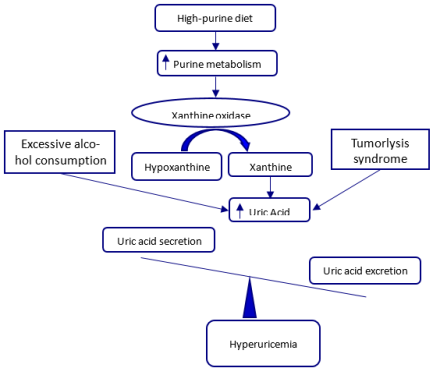
Figure 1. Uric acid Cycle.
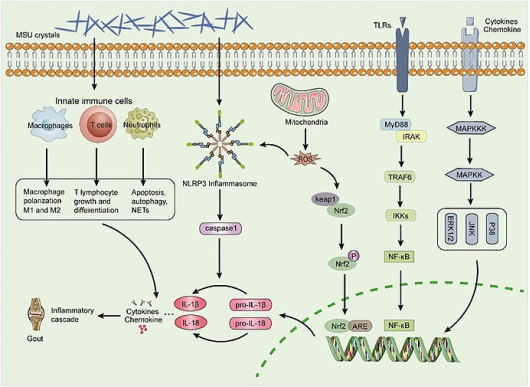
Figure 2. Molecular Pathogenesis of Gout and NLRP3 InflammasomeSignaling[8].
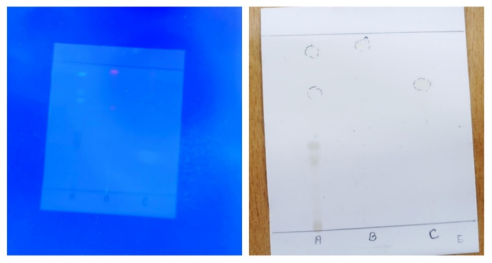
Figure 3. TLC of Eugenol.
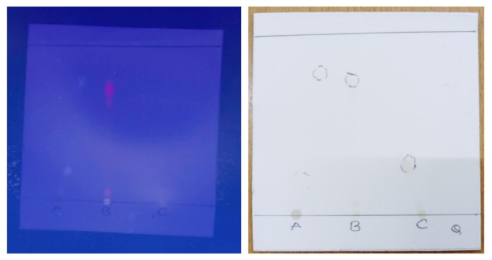
Figure 4. TLC of Quercetin.
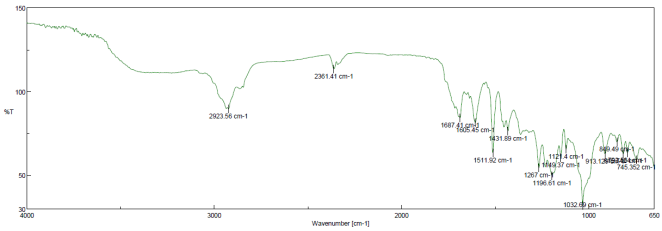
Figure 5. ATR-FTIR Result of CLOVE.
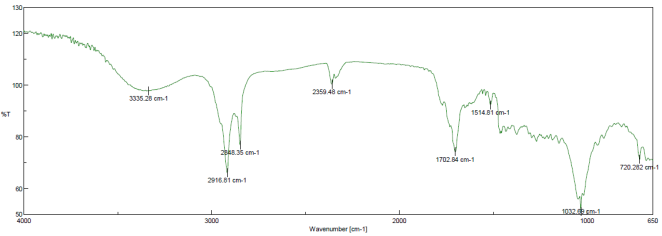
Figure 6. ATR-FRTIR Result of Bitter Melon.
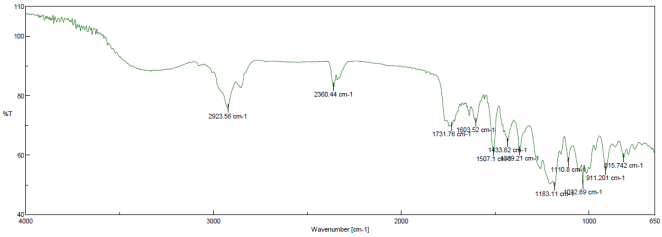
Figure 7. ATR-FTIR Result of Betel Leaf.
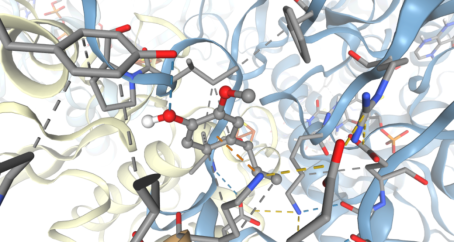
Figure 8. Molecular Docking of Eugenol (without protein surface).
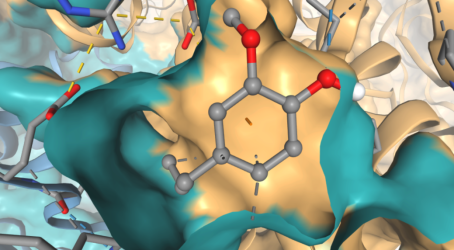
Figure 9. Molecular Docking of Eugenol (with protein surface).
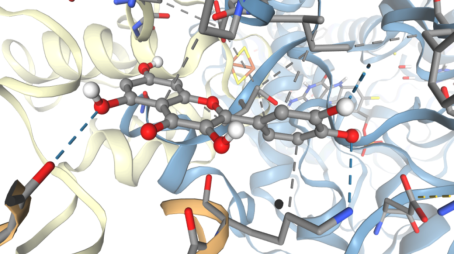
Figure 10. Molecular Docking of Quercetin (without protein surface).
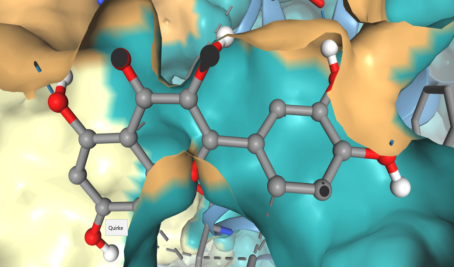
Figure 11. Molecular Docking of Quercetin (with protein surface).

Information



 Share This Article
 Twitter
 Linked In
 Facebook
 Copy
Copy Download