Review Article | | Peer-Reviewed

The Science and Innovation of Vulcanization: From Crosslinks to Anti-Reversion Chemistry

Received: 23 February 2026     Accepted: 25 March 2026     Published: 24 July 2026
Views:       Downloads:
Abstract

Vulcanization represents a cornerstone of modern rubber technology, transforming raw polymers into durable, high-performance materials essential across automotive, healthcare, and industrial applications. By introducing crosslinks between polymer chains, vulcanization imparts elasticity, resilience, and strength unattainable in natural rubber alone. Various curing methods—including sulfur, peroxide, radiation, metal oxide, and resin systems—offer distinct advantages, with sulfur vulcanization remaining the most widely adopted due to its cost-effectiveness and versatility. Within sulfur systems, conventional (CV), semi-efficient (SEV), and efficient (EV) formulations highlight how subtle changes in sulfur-to-accelerator ratios influence crosslink structure, thermal stability, and resistance to reversion. Reversion, the thermal breakdown of polysulfidic crosslinks, poses a critical challenge, particularly in natural rubber. Anti-reversion agents such as N,N’-dibenzylthiocarbamoyldithio-hexane (BDzTH) and 1,3-Bis(citraconimidomethyl)benzene represent significant innovations, stabilizing rubber networks by converting unstable long sulfur chains into thermally robust hybrid linkages. These agents suppress torque decline, preserve mechanical integrity, and enhance performance under prolonged heat exposure. Their application yields improved compression set, reduced heat build-up, extended tire mileage, and enhanced durability in demanding environments. The evolution from conventional curing systems to advanced anti-reversion chemistry underscores the industry’s pursuit of balancing flexibility, strength, and thermal stability. By leveraging molecular design, modern vulcanization not only mitigates reversion but also expands the performance envelope of rubber, ensuring safety, efficiency, and longevity in critical applications.

Published in International Journal of Materials Science and Applications (Volume 15, Issue 4)
DOI 10.11648/j.ijmsa.20261504.13
Page(s) 153-162
Creative Commons

This is an Open Access article, distributed under the terms of the Creative Commons Attribution 4.0 International License (http://creativecommons.org/licenses/by/4.0/), which permits unrestricted use, distribution and reproduction in any medium or format, provided the original work is properly cited.

Copyright

Copyright © The Author(s), 2026. Published by Science Publishing Group

Keywords

Vulcanization, Sulfur Curing, Crosslink, Reversion, Anti-reversion Agent, BDzTH

1. Introduction
1.1. Vulcanization
Vulcanization is one of the most transformative processes in rubber technology, turning raw, sticky polymers into durable materials that power industries ranging from automotive to healthcare. At its core, vulcanization creates cross-links between polymer chains, giving rubber the elasticity, resilience, and strength, that natural rubber alone cannot provide. Without this process, tires would lack endurance, seals would fail under stress, and medical tubing would not withstand sterilization.
1.2. Different Methods of Vulcanization
Different methods of vulcanization —Sulfur, Peroxide, Radiation, Metal Oxide, and Resin—each bring unique advantages to rubber processing and performance . Sulfur vulcanization remains the most widely applied technique, valued for its cost-effectiveness and versatility, making it indispensable in tires and general rubber goods, though it can be prone to reversion. Peroxide vulcanization forms stable carbon–carbon crosslinks, delivering superior heat and chemical resistance without odour, which is why it is often used in automotive, medical, and EPDM applications. Radiation vulcanization, employing gamma or electron beams, achieves clean curing without additives, offering precision and sterility that make it ideal for medical tubing and other sterilized products. Metal Oxide vulcanization with Zinc Oxide or Magnesium Oxide enhances flame and weather resistance, particularly in chloroprene-based rubbers, while Resin vulcanization using phenolic resins creates thermoset networks with high thermal stability, making it suitable for butyl rubber, seals, and gaskets. Collectively, these methods highlight how vulcanization can be tailored to meet diverse industrial demands, balancing flexibility, durability, resistance, and safety depending on the end-use requirements.
1.3. Sulfur Vulcanization
Sulfur vulcanization remains the cornerstone of industrial rubber processing, and its systems are classified into Conventional Vulcanization (CV), Semi-Efficient Vulcanization (SEV), and Efficient Vulcanization (EV). CV systems, with high sulfur and low accelerator levels, form long polysulfidic crosslinks that provide flexibility but are thermally unstable, making them prone to reversion under heat—well-suited for dynamic applications such as natural rubber tires . SEV systems balance sulfur and accelerator dosages, producing a mix of crosslink types that offer moderate resistance to reversion and aging, making them ideal for industrial rubber goods requiring durability. EV systems, characterized by low sulfur and high accelerator levels, generate short monosulfidic crosslinks that are thermally stable 1nd highly resistant to reversion, particularly effective for static, heat-resistant applications like EPDM and NR blends.
1.4. The Nature of the Crosslinks
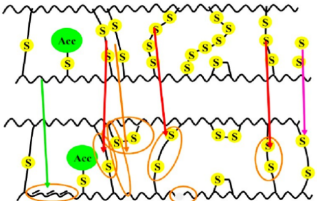
The nature of the crosslinks themselves determines the mechanical behaviour of vulcanized rubber. Short crosslinks, such as carbon–carbon or monosulfidic bonds, provide excellent resistance to reversion, superior heat stability, and good compression set performance at elevated temperatures, ensuring dimensional stability under prolonged stress. In contrast, longer polysulfidic crosslinks, though less thermally stable, contribute significantly to tensile strength, resilience, tear resistance, fatigue endurance, and dynamic damping—qualities essential for products subjected to continuous mechanical loading and dynamic stresses, such as tires (Figure 1). This classification highlights how subtle changes in sulfur-to-accelerator ratios and the resulting crosslink structures can dramatically alter performance, enabling rubber to excel either in static, heat-resistant environments or in dynamic, high-strength applications.
Figure 1. Changes In Network Structure During Reversion.
1.5. Cure Curve
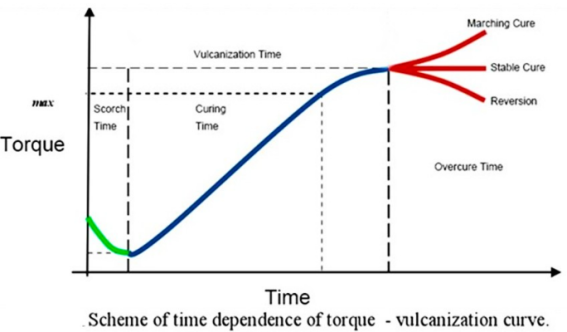
Cure curve behaviors provide valuable insight into the performance and stability of vulcanization systems. In a rubber rheological curve, a plateau indicates that torque has stabilized after curing, showing that crosslinking has reached equilibrium. This behavior reflects a well-balanced formulation with thermal stability, offering a clear optimum cure time and consistent mechanical properties—ideal for process control. In contrast, marching modulus behavior occurs when torque continues to rise without reaching a plateau, suggesting ongoing crosslinking, delayed network stabilization, or even the onset of degradation. This complicates the determination of optimum cure time and is often linked to over-accelerated cure systems, high filler loading, or insufficient scorch safety. Finally, reversion is marked by a peak in torque followed by a decline, caused by the thermal breakdown of polysulfidic crosslinks, particularly in natural rubber cured with conventional sulfur systems. Reversion leads to reduced elasticity and mechanical strength, underscoring the need for careful cure time control or the use of reversion-resistant systems. Together, these cure curve behaviors illustrate how rheological analysis not only guides processing decisions but also reveals the fundamental stability and durability of the crosslinked network (Figure 2).
Figure 2. Scheme of Time Dependence of Torque – Vulcanization Curve.
1.6. Reversion
Reversion is a critical challenge in rubber processing, particularly in natural rubber, which is highly unsaturated and prone to forming unstable polysulfidic crosslinks . Under prolonged heat, these bridges degrade into shorter or weaker linkages, reducing tensile strength, modulus, and hardness, while increasing elongation and tackiness. Synthetic rubbers such as EPDM or butyl rubber are less affected, thanks to their lower unsaturation and alternative curing systems. Still, for applications where natural rubber dominates, reversion remains a pressing concern. Reversion in Rubber Rheology is a critical phenomenon that directly impacts the performance and durability of vulcanized rubber. In a cure curve, torque normally rises as crosslinking progresses, peaks at the optimum cure point, and then should ideally stabilize. However, in natural rubber and certain sulfur-cured systems, torque begins to decline after the peak—this decline is known as reversion. It occurs because the crosslinked network, particularly polysulfidic bonds formed during conventional sulfur vulcanization, cannot withstand prolonged heat exposure. As these bonds break down or rearrange, the rubber loses its structural integrity. The process involves chain scission, rearrangement, cyclization, and even isomerization, all of which reduce the number and effectiveness of crosslinks. The result is a softer material with diminished elasticity, making reversion a key challenge in maintaining consistent mechanical properties during processing and service life. The cause and effect of reversion are rooted in the chemistry of sulfur crosslinks. Polysulfidic bridges (S–S–S or longer) are inherently unstable 1t elevated temperatures and degrade into shorter disulfidic (S–S) or monosulfidic (C–S–C) links or break entirely. This retrograde reaction, combined with oxidative chain scission of the polymer backbone, lowers crosslink density and reduces torque on the rheometer. The consequences are significant: tensile strength and tear resistance drop, modulus and hardness decrease, elongation at break increases, surfaces may become tacky, and aging resistance deteriorates. Natural rubber (NR), due to its high unsaturation and tendency to form unstable polysulfidic bonds, is most prone to reversion, whereas synthetic rubbers like EPDM or butyl rubber are far less affected because they rely on peroxide curing or efficient vulcanization systems that form more stable crosslinks. In fact, reversion is typically observed only in NR, IR, and IIR with conventional sulfur cures, while rubbers like SBR, CR, and NBR exhibit marching modulus behavior instead. Understanding reversion is therefore essential for tailoring cure systems, selecting appropriate accelerators, and designing reversion-resistant formulations to ensure long-term performance in demanding applications such as tires, seals, and industrial rubber goods.
1.7. Anti-reversion Agents
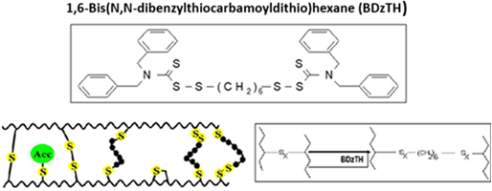
Anti-reversion agents represent a major advancement in rubber technology, and among them N,N’-dibenzylthiocarbamoyldithio-hexane (BDzTH) is particularly noteworthy for its chemistry and effectiveness. Structurally, BDzTH is a symmetrical organic molecule built on a hexane backbone, with dibenzylthiocarbamoyldithio groups at both ends. During vulcanization, this compound undergoes thermal activation, decomposing into highly reactive thiocarbamoyl radicals and disulfide fragments. These reactive species interact with unsaturated sites in the rubber backbone and with existing sulfur crosslinks, forming new C–S and S–S bonds, as well as reinforced C–C linkages. Unlike conventional polysulfidic bridges, which are prone to thermal breakdown, the crosslinks formed in the presence of BDzTH are shorter, more stable, and resistant to reversion. This hybrid network combines flexibility with heat resistance, ensuring that the rubber maintains its mechanical integrity even under prolonged curing or service conditions.
Figure 3. Structure of BDzTH and it’s Application Chemistry.
1.8. The Mechanism of BDzTH
The mechanism of BDzTH is elegant and highly effective. Normally, polysulfidic crosslinks degrade into weaker disulfidic or monosulfidic bonds when exposed to heat, leading to chain scission and a decline in torque on the cure curve. BDzTH interrupts this process by stabilizing the network: its radicals reinforce existing linkages and simultaneously scavenge free radicals and reactive sulfur species that would otherwise accelerate degradation. In doing so, BDzTH suppresses the torque decline associated with reversion , maintaining crosslink density and preventing the collapse of the network. This chemical intervention ensures that vulcanizates retain their strength, elasticity, and dimensional stability, even under conditions of over-curing or hot air aging.
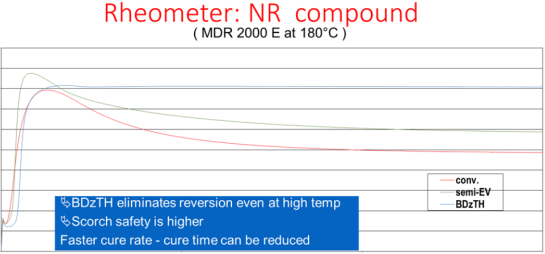
Figure 4. Cure curve comparison of NR compounds at 180°C (MDR 2000 E).
1.9. The Rheometer Curves
The rheometer curves illustrate the curing behavior of natural rubber under three systems: conventional sulfur vulcanization (red), semi-efficient vulcanization (green), and BDzTH-modified formulation (blue). The conventional system shows a torque peak followed by decline, characteristic of reversion due to polysulfidic crosslink breakdown, while the semi-efficient system demonstrates intermediate stability with reduced but noticeable torque loss. In contrast, the BDzTH-containing compound achieves the highest torque and maintains it throughout the test, confirming superior crosslink density and thermal stability. This performance arises from BDzTH chemistry: during vulcanization, BDzTH decomposes into reactive thiocarbamoyl radicals and disulfide fragments that reinforce existing sulfur bridges and generate shorter, more thermally stable hybrid linkages. By stabilizing the network and scavenging free radicals, BDzTH suppresses torque decline, enhances scorch safety, and accelerates cure rate without compromising mechanical integrity. The practical impact is substantial—rubber compounds with BDzTH exhibit improved compression set at high temperatures, higher tensile strength retention, reduced heat buildup, and lower rolling resistance, translating into longer mileage and service life in tire and retread applications. Adjusting the BDzTH-to-sulfur ratio further allows fine-tuning of hardness and modulus to match conventional systems while gaining the added benefit of thermal stability, making BDzTH a powerful tool for optimizing rubber formulations in demanding industrial environments.
2. Recipe
Table 1. Laboratory trial for PCTR compound based on NR:BR = 70:30].

LABORATORY TRIAL FOR PCTR COMPOUND BASEDON NR: BR = 70: 30 (PHR = PER HUNDRED RUBBER)

FORMULATION

CONTROL SAMPLE (PHR)

TESTSAMPLE (PHR)

FORMULATION

Natural Rubber (RSS IX) Masticated

70

70

Cissamer 1220 (BR)

30

30

Zinc Oxide WS

5

5

Stearic Acid

2

2

Carbon Black HAF (N330)

55

55

Elasto 710 (AROMATIC OIL)

12

12

Mernox 6C (6PPD)

1

1

Mernox TQ (TMQ / TDQ)

1

1

Antilux 654 (WAX)

0.8

0.8

Masterbatch Weight

176.8

176.8

ACCELERATOR SYSTEM

Mercure MBS

1.2

0.9

Sulphur

1.6

1.4

Meretard PVI

0.1

-

BDzTH

-

0.5

COMMENTS

With BDzTH in the recipe the reduction of Sulfur and / or accelerator dosages are necessary in order to maintain the modulus and hardness at same level as control.

3. Process
Rubber compound preparation in this study was carried out in a carefully controlled two-stage mixing process to ensure uniform dispersion of ingredients and optimum curing behaviour. In the first stage, all components except the curatives were blended in a laboratory Banbury mixer with a 2.0 liter volume capacity. This produced the master batch, which was then stored for 24 hours to allow proper homogenization and relaxation of internal stresses before further processing. The final batch was prepared on a two roll mill, where curatives were incorporated. Importantly, BDzTH was added together with the accelerator at 90°C, close to its melting point of 92°C, ensuring proper activation and integration into the rubber matrix.
Once the final batches were prepared, rheological testing was conducted using an Oscillating Disc Rheometer (ODR) at 150°C and 160°C to evaluate cure characteristics. Test samples were cured at 150°C for the optimum cure time (T90), and at 160°C for extended cure times (T90 × 8) to simulate over curing conditions. These longer cure cycles were deliberately chosen to replicate anaerobic aging effects that occur in rubber parts during prolonged service. The cured samples were then analyzed for both physical and dynamic mechanical properties, providing insights into how BDzTH influences reversion resistance, thermal stability, and overall performance under demanding conditions. This systematic approach highlights the importance of precise mixing, controlled addition of anti reversion agents, and rigorous testing in developing high performance rubber compounds.
4. Results
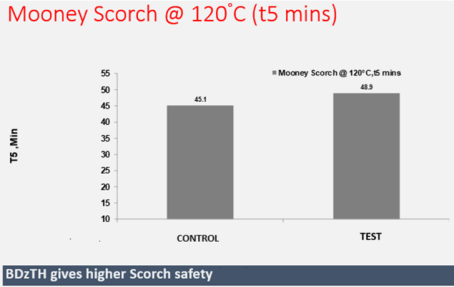
Figure 5. Mooney Scorch time (T5) at 120°C for NR compounds.
The control sample exhibits a scorch time of 45.1 min, while the BDzTH-modified formulation shows an extended scorch time of 48.9 min. This increase demonstrates that BDzTH enhances scorch safety by delaying premature crosslinking, thereby improving processing reliability and reducing the risk of early vulcanization during mixing and moulding operations.
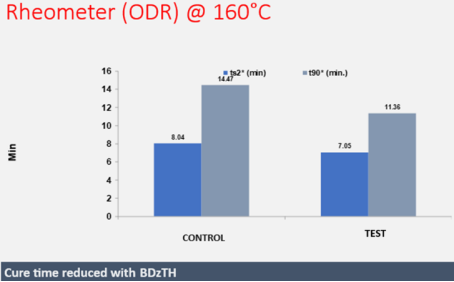
Figure 6. Cure characteristics of NR compounds at 160°C (ODR).
The control sample shows a scorch time (ts2) of 8.04 min and an optimum cure time (t90) of 14.47 min, whereas the BDzTH-modified formulation exhibits shorter values of 7.05 min and 11.36 min, respectively. This reduction in cure time demonstrates that BDzTH accelerates crosslink formation while maintaining network stability, enabling faster processing and improved efficiency without compromising mechanical integrity.
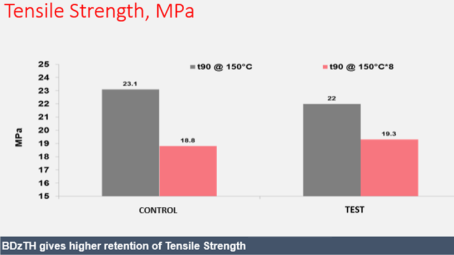
Figure 7. Tensile strength retention of NR compounds at 150°C.
At the optimum cure time (t90), the control sample records 23.1 MPa while the BDzTH-modified formulation shows 22.0 MPa. After extended curing (t90 × 8), the control drops to 18.8 MPa, whereas the BDzTH sample retains 19.3 MPa. This demonstrates that BDzTH improves thermal stability and provides higher retention of tensile strength under over cure conditions, confirming its effectiveness in suppressing reversion and preserving mechanical integrity.
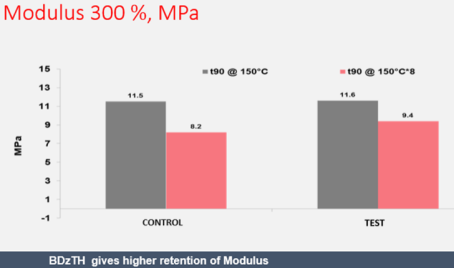
Figure 8. Modulus at 300% strain for NR compounds at 150°C.
At the optimum cure time (t90), the control sample records 11.5 MPa while the BDzTH-modified formulation shows 11.6 MPa. After extended curing (t90 × 8), the control drops to 8.2 MPa, whereas the BDzTH sample retains 9.4 MPa. This demonstrates that BDzTH improves thermal stability and provides higher retention of modulus under over cure conditions, confirming its effectiveness in suppressing reversion and maintaining dimensional integrity during prolonged service.
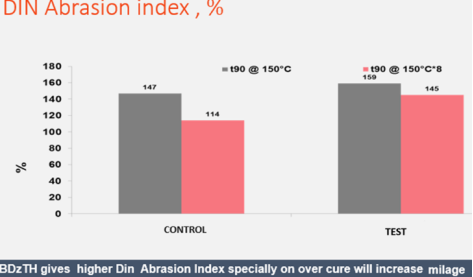
Figure 9. DIN abrasion index (%) of NR compounds at 150°C.
At the optimum cure time (t90), the control sample records 147%, while the BDzTH-modified formulation shows 159%. After extended curing (t90 × 8), the control drops to 114%, whereas the BDzTH sample retains a higher value of 145%. This demonstrates that BDzTH enhances abrasion resistance, particularly under over cure conditions, which translates into increased mileage potential and improved durability in tire and retread applications.
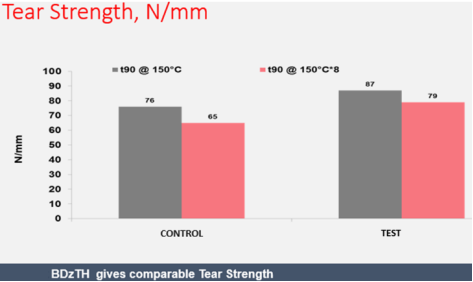
Figure 10. Tear strength of NR compounds at 150°C.

At the optimum cure time (t90), the control sample records 76 N/mm, while the BDzTH-modified formulation shows 87 N/mm. After extended curing (t90 × 8), the control decreases to 65 N/mm, whereas the BDzTH sample retains a higher value of 79 N/mm. This demonstrates that BDzTH provides comparable or superior tear strength and improves retention under over cure conditions, confirming its role in stabilizing the rubber network and enhancing durability in demanding applications.
5. Observations
1) From the observations recorded in Figures 5-10, it is clear that the incorporation of BDzTH into rubber compounds delivers significant improvements in both processing safety and performance. The presence of BDzTH enhances scorch safety, reduces cure time , and ensures higher retention of tensile strength and modulus even under over-cure conditions. Additionally, vulcanizates containing BDzTH demonstrate a higher DIN abrasion index, which directly translates into increased mileage potential , while maintaining comparable tear strength. These findings confirm that BDzTH effectively improves reversion resistance, stabilizing the crosslink network against thermal breakdown and preserving mechanical integrity during extended service.
2) Another important observation is that by carefully adjusting the BDzTH-to-sulfur ratio, manufacturers can achieve hardness and modulus levels equivalent to those of conventional cure systems, while gaining the added benefit of superior thermal stability. The compounds prepared with BDzTH consistently outperform controls in both static properties (modulus, tensile strength, elongation at break) and dynamic properties (heat buildup and permanent set). This balance of performance ensures that vulcanizates not only resist reversion but also deliver better service life, favorable performance-to-cost ratios, and enhanced durability. In practical applications such as retread or tire manufacturing, these improvements translate into higher mileage in field trials, reduced risk of blowouts, and optimized performance for demanding conditions. Overall, BDzTH emerges as a highly effective anti-reversion agent that elevates both the reliability and efficiency of rubber compounds.
6. Conclusion
In summary, vulcanization is not just a chemical process but a fine art of balancing flexibility, strength, and stability. The evolution from conventional sulfur systems to advanced anti-reversion technologies reflects the industry’s drive to meet ever-higher demands for performance and durability. N,N’-dibenzylthiocarbamoyldithio-hexane (BDzTH) exemplifies how molecular design can address long-standing challenges in vulcanization. By reinforcing the rubber network with stable hybrid crosslinks, it not only suppresses reversion but also extends the performance envelope of natural rubber. Similarly, another anti-reversion agent named, 1,3-bis(citraconimidomethyl)benzene provides superior reversion resistance by forming thermally stable crosslinks only under heat stress . It controls heat build-up, preserves adhesion in high-sulfur compounds, and enhances repairability and aging resistance, making it ideal for demanding rubber applications. These innovations reflect the ongoing evolution of rubber chemistry—where understanding the fine details of molecular reactivity leads to tangible improvements in durability , safety, and efficiency .
Abbreviations

NR

Natural Rubber

BR

Butadiene Rubber

RSS IX

Ribbed Smoked Sheet Grade IX

CV

Conventional Vulcanization

SEV

Semi-Efficient Vulcanization

EV

Efficient Vulcanization

BDzTH

N,N’-Dibenzylthiocarbamoyldithio-hexane

ODR

Oscillating Disc Rheometer

MDR

Moving Die Rheometer

T90

Optimum Cure Time (Time to Reach 90% of Maximum Torque)

ts2

Scorch Time (Time to 2 Units Rise in Torque)

DIN

Deutsches Institutfür Normung – Abrasion Index

MPa

Megapascal (Unit of Stress/Strength)

N/mm

Newton per Millimeter (unit of tear strength)

PCTR

Passenger Car Tire Rubber Compound

PHR

Parts per Hundred Rubber

6PPD

N-(1,3-dimethylbutyl)-N’-phenyl-p-phenylenediamine (antioxidant)

TMQ/TDQ

Polymerized 2,2,4-trimethyl-1,2-dihydroquinoline (antioxidant)

MBS

N-oxydiethylene-2-benzothiazole sulfenamide (accelerator)

PVI

N-(cyclohexylthio)phthalimide (pre-vulcanization inhibitor)

EPDM

Ethylene Propylene Diene Monomer Rubber

IIR

Isobutylene-Isoprene Rubber (Butyl Rubber)

SBR

Styrene-Butadiene Rubber

CR

Chloroprene Rubber

NBR

Nitrile Butadiene Rubber

Acknowledgments
The authors gratefully acknowledge the Rubber Application Laboratory, Technology Innovation Centre (TIC) of Finorchem Limited for their invaluable support. All experimental data presented in this study were generated and provided by TIC, whose laboratory facilities, technical expertise, and resources made this work possible. Their contribution in supplying rheological, mechanical, and performance testing data was essential to the successful completion of this research.
Author Contributions
Tamsuk Goswami: Conceptualization, Data curation, Formal Analysis, Supervision, Investigation, Validation, Visualization
Soumi Goswami: Writing – original draft, Writing – review & editing
Conflicts of Interest
The author declares no conflict of interest.
References
[1] Park, B. H., Choi, S. S., Kim, M. S., Han, M. H. Effects of 1,6-bis(N,N′-dibenzylthiocarbamoyldithio)-hexane on properties of filled natural rubber vulcanizates. Sejong University. Available at: sejong.elsevierpure.com
[2] LANXESS. Vulcuren® Technical Information. LANXESS AG. Available at:
[3] McKinn International. Specification of 1,6-bis(N,N-dibenzylthiocarbamoyldithio)-hexane. McKinn Chemicals. Available at:
[4] Kumar, N. R., Chandra, A. K., Mukhopadhyay, R. Effect of 1,3-bis(citraconimidomethyl)benzene on ageing of diene rubber vulcanizates. Journal of Materials Science. 1997, 32, 3717–3725.
[5] EmamiTajodin, S., Movahed, S. O. Effect of Perkalink 900 on EPDM reversion resistance. Journal of Rubber Research. 2024.
[6] FORU Chemtech. Rubber Anti-reversion agent: 1,3-Bis(citraconimidomethyl)benzene. FORU Chemtech. Available at:
[7] Tang, R. Impacts of sulfur curing systems on vulcanizations and mechanical performances of elastomers. IntechOpen. 2023.
[8] Lubura, J., Kojić, P., Pavličević, J., Ikonić, B., Bera, O. Simulation and optimization of rubber vulcanization. Polymers. 2023, 15(7), 1750.
[9] Pöschl, M., Sathi, S. G., Stoček, R. Chemical interpretation for post-reversion upturn in NR/sulfur systems. Polymer Bulletin. 2024, 81, 12521–12541.
[10] UzanKar, G., Ünügül, T., Karaağaç, B. Reducing marching cure in chloroprene rubber using anti-reversion agents. Macromolecular Symposia. 2025.
[11] Zhang, Y., Li, H., Chen, X., Wang, J. Enhancement of mechanical properties and thermal aging resistance of natural rubber vulcanizates using nano- and coated zinc oxide. Journal of Polymer Research. 2026.
[12] Kawahara, S., Nakajima, Y., Ito, M. Superhydrophobization of hydrophilic silica via solid phase reaction enhances dispersion in deproteinized natural rubber. Discover Chemistry. 2026.
[13] Liu, R., Zhang, T., Huang, P. Mechanochemical recycling of tire-derived styrene–butadiene rubber using a regeneration agent. Polymers. 2026, 18(2), 345.
[14] EmamiTajodin, S., Movahed, S. O. Exploring crosslink density in rubber vulcanisates: a comprehensive analysis using a dynamic mechanical analyser. Journal of Rubber Research. 2025.
[15] Hasell, T., Parker, D. J. Inverse vulcanisation: a new starter’s guide to an emerging field. RSC Applied Polymers. 2025.
Cite This Article
  • APA Style

    Goswami, T., Goswami, S. (2026). The Science and Innovation of Vulcanization: From Crosslinks to Anti-Reversion Chemistry. International Journal of Materials Science and Applications, 15(4), 153-162. https://doi.org/10.11648/j.ijmsa.20261504.13

    Copy | Download

    ACS Style

    Goswami, T.; Goswami, S. The Science and Innovation of Vulcanization: From Crosslinks to Anti-Reversion Chemistry. Int. J. Mater. Sci. Appl. 2026, 15(4), 153-162. doi: 10.11648/j.ijmsa.20261504.13

    Copy | Download

    AMA Style

    Goswami T, Goswami S. The Science and Innovation of Vulcanization: From Crosslinks to Anti-Reversion Chemistry. Int J Mater Sci Appl. 2026;15(4):153-162. doi: 10.11648/j.ijmsa.20261504.13

    Copy | Download

  • @article{10.11648/j.ijmsa.20261504.13,
      author = {Tamsuk Goswami and Soumi Goswami},
      title = {The Science and Innovation of Vulcanization: From Crosslinks to Anti-Reversion Chemistry},
      journal = {International Journal of Materials Science and Applications},
      volume = {15},
      number = {4},
      pages = {153-162},
      doi = {10.11648/j.ijmsa.20261504.13},
      url = {https://doi.org/10.11648/j.ijmsa.20261504.13},
      eprint = {https://article.sciencepublishinggroup.com/pdf/10.11648.j.ijmsa.20261504.13},
      abstract = {Vulcanization represents a cornerstone of modern rubber technology, transforming raw polymers into durable, high-performance materials essential across automotive, healthcare, and industrial applications. By introducing crosslinks between polymer chains, vulcanization imparts elasticity, resilience, and strength unattainable in natural rubber alone. Various curing methods—including sulfur, peroxide, radiation, metal oxide, and resin systems—offer distinct advantages, with sulfur vulcanization remaining the most widely adopted due to its cost-effectiveness and versatility. Within sulfur systems, conventional (CV), semi-efficient (SEV), and efficient (EV) formulations highlight how subtle changes in sulfur-to-accelerator ratios influence crosslink structure, thermal stability, and resistance to reversion. Reversion, the thermal breakdown of polysulfidic crosslinks, poses a critical challenge, particularly in natural rubber. Anti-reversion agents such as N,N’-dibenzylthiocarbamoyldithio-hexane (BDzTH) and 1,3-Bis(citraconimidomethyl)benzene represent significant innovations, stabilizing rubber networks by converting unstable long sulfur chains into thermally robust hybrid linkages. These agents suppress torque decline, preserve mechanical integrity, and enhance performance under prolonged heat exposure. Their application yields improved compression set, reduced heat build-up, extended tire mileage, and enhanced durability in demanding environments. The evolution from conventional curing systems to advanced anti-reversion chemistry underscores the industry’s pursuit of balancing flexibility, strength, and thermal stability. By leveraging molecular design, modern vulcanization not only mitigates reversion but also expands the performance envelope of rubber, ensuring safety, efficiency, and longevity in critical applications.},
     year = {2026}
    }
    

    Copy | Download

  • TY  - JOUR
    T1  - The Science and Innovation of Vulcanization: From Crosslinks to Anti-Reversion Chemistry
    AU  - Tamsuk Goswami
    AU  - Soumi Goswami
    Y1  - 2026/07/24
    PY  - 2026
    N1  - https://doi.org/10.11648/j.ijmsa.20261504.13
    DO  - 10.11648/j.ijmsa.20261504.13
    T2  - International Journal of Materials Science and Applications
    JF  - International Journal of Materials Science and Applications
    JO  - International Journal of Materials Science and Applications
    SP  - 153
    EP  - 162
    PB  - Science Publishing Group
    SN  - 2327-2643
    UR  - https://doi.org/10.11648/j.ijmsa.20261504.13
    AB  - Vulcanization represents a cornerstone of modern rubber technology, transforming raw polymers into durable, high-performance materials essential across automotive, healthcare, and industrial applications. By introducing crosslinks between polymer chains, vulcanization imparts elasticity, resilience, and strength unattainable in natural rubber alone. Various curing methods—including sulfur, peroxide, radiation, metal oxide, and resin systems—offer distinct advantages, with sulfur vulcanization remaining the most widely adopted due to its cost-effectiveness and versatility. Within sulfur systems, conventional (CV), semi-efficient (SEV), and efficient (EV) formulations highlight how subtle changes in sulfur-to-accelerator ratios influence crosslink structure, thermal stability, and resistance to reversion. Reversion, the thermal breakdown of polysulfidic crosslinks, poses a critical challenge, particularly in natural rubber. Anti-reversion agents such as N,N’-dibenzylthiocarbamoyldithio-hexane (BDzTH) and 1,3-Bis(citraconimidomethyl)benzene represent significant innovations, stabilizing rubber networks by converting unstable long sulfur chains into thermally robust hybrid linkages. These agents suppress torque decline, preserve mechanical integrity, and enhance performance under prolonged heat exposure. Their application yields improved compression set, reduced heat build-up, extended tire mileage, and enhanced durability in demanding environments. The evolution from conventional curing systems to advanced anti-reversion chemistry underscores the industry’s pursuit of balancing flexibility, strength, and thermal stability. By leveraging molecular design, modern vulcanization not only mitigates reversion but also expands the performance envelope of rubber, ensuring safety, efficiency, and longevity in critical applications.
    VL  - 15
    IS  - 4
    ER  - 

    Copy | Download

Author Information
  • Abstract
  • Keywords
  • Document Sections

    1. 1. Introduction
    2. 2. Recipe
    3. 3. Process
    4. 4. Results
    5. 5. Observations
    6. 6. Conclusion
    Show Full Outline
  • Abbreviations
  • Acknowledgments
  • Author Contributions
  • Conflicts of Interest
  • References
  • Cite This Article
  • Author Information