1. Introduction
Food waste refers to any edible material intended for human consumption that goes uneaten, and it can occur at any stage of the food supply chain. It is a major global challenge with social, environmental, and economic impacts. Approximately one-third of the world’s food supply is discarded each year
. Although the precise volume generated by the hospitality sector is unclear, hotels, restaurants, and catering services are estimated to produce around 14% of total food waste in the European Union
| [23] | WRAP. (2009). The food we waste. Waste & Resources Action Programme. |
[23]
. For instance, the hospitality and food service sector is responsible for 15% of food waste in France, 14% in the Netherlands, and 22% in the United Kingdom
| [17] | Parfitt, J., Barthel, M., & Macnaughton, S. (2010). Food waste within food supply chains: Quantification and potential for change to 2050. Philosophical Transactions of the Royal Society B: Biological Sciences, 365(1554), 3065-3081.
https://doi.org/10.1098/rstb.2010.0126 |
| [18] | Silvennoinen, K., Heikkilä, L., Katajajuuri, J. M., & Reinikainen, A. (2015). Food waste volume and origin: Case studies in the Finnish food service sector. Waste Management, 46, 140-145. https://doi.org/10.1016/j.wasman.2015.09.010 |
[17, 18]
Within hospitality waste streams, food waste is the dominant category, constituting roughly 40% of hotel refuse and 60% of restaurant waste
| [19] | Sirieix, L., Lála, J., & Kocmanová, K. (2017). Understanding the antecedents of consumers’ attitudes towards doggy bags in restaurants: Concern about food waste, culture, norms and emotions. Journal of Retailing and Consumer Services, 34, 153-158. https://doi.org/10.1016/j.jretconser.2016.10.004 |
[19]
. These figures highlight the considerable share of food waste produced within the hospitality industry.
Food waste occurs during every stage of the service process, including delivery, storage, cooking, preparation, serving, and final consumer consumption. According to the study
| [21] | United Nations (UN). (2015). Transforming our world: The 2030 Agenda for Sustainable Development. UN. |
[21]
, food preparation accounts for 45% of food waste, customer plates for 34%, and spoiling for an average of 21% in the UK hospitality and food service sector. These leftovers are usually classified as either avoidable or unavoidable
| [16] | Papargyropoulou, E., Lozano, R., Steinberger, J. K., Wright, N., & bin Ujang, Z. (2014). The food waste hierarchy as a framework for the management of food surplus and food waste. Journal of Cleaner Production, 76, 106-115.
https://doi.org/10.1016/j.jclepro.2014.04.020 |
[16]
. Most of this waste can be avoided, according to related studies
| [1] | Aschemann-Witzel, J., de Hooge, I., Amani, P., Bech-Larsen, T., & Oostindjer, M. (2015). Consumer-related food waste: Causes and potential for action. Sustainability, 7(6), 6457-6477.
https://doi.org/10.3390/su7066457 |
[1]
. This presents a huge opportunity for restaurants and other food service businesses to cut down on food waste behaviour amongst consumers.
In fact, some studies consider consumer leftovers or avoidable food waste
. Food waste is an important consideration for restaurant businesses, both in terms of short-term and long-term goals. By examining and evaluating the impacts of food waste, it is possible to develop or establish more guest-oriented menus, which will support businesses in staying competitive.
| [25] | Wakefield, A., & Axon, S. (2020). “I’m a bit of a waster”: Identifying the enablers of, and barriers to, sustainable food waste practices. Journal of Cleaner Production, 275, 122803. |
[25]
Wakefield and Axon (2020) argue that addressing the food waste phenomenon requires a multifaceted approach that considers the psychological and social enablers of sustainable behavior.
Food waste was essentially inconsequential until the last 20 years, when it became a significant factor in sustainability and efficiency. The United Nations Sustainable Development Program
| [21] | United Nations (UN). (2015). Transforming our world: The 2030 Agenda for Sustainable Development. UN. |
[21]
made its reduction a very ambitious goal, and in 2015, the number of publications about it skyrocketed to over 500 annually. Neither the academic debate in the 2000s nor the Millennium Development Goals
| [21] | United Nations (UN). (2015). Transforming our world: The 2030 Agenda for Sustainable Development. UN. |
| [24] | Zhang, P., Zhang, D., & Cheng, S. (2018). The effect of consumer perception on food waste behavior of urban households in China. Sustainability, 10(5), 1676.
https://doi.org/10.3390/su10051676 |
[21, 24]
. It’s importance is explained by its effects on the environment and the economy. One country would rank third in terms of greenhouse gas emissions and 17th in terms of GDP if it produced all of the world's food waste
| [11] | Hamerman, E. J., Rudell, F., & Martins, C. M. (2018). Factors that predict taking restaurant leftovers: Strategies for reducing food waste. Journal of Consumer Behaviour, 17(1), 94-104.
https://doi.org/10.1002/cb.1699 |
[11]
. Thus, cutting down on food waste can save money and natural resources.
The agricultural phase, also referred to as primary food production, is the initial stage where food waste is generated, followed by post-harvest storage and handling, processing, distribution (both wholesale and retail), and finally, consumption
| [9] | Gunders, D. (2012). Wasted: How America is losing up to 40 percent of its food from farm to fork to landfill. Natural Resources Defense Council. |
[9]
. At the consumption stage, waste can occur within households as well as in external settings
| [16] | Papargyropoulou, E., Lozano, R., Steinberger, J. K., Wright, N., & bin Ujang, Z. (2014). The food waste hierarchy as a framework for the management of food surplus and food waste. Journal of Cleaner Production, 76, 106-115.
https://doi.org/10.1016/j.jclepro.2014.04.020 |
[16]
. In the context of out-of-home food consumption, food waste is defined as any food served but left uneaten in food service establishments
| [14] | Kantor, L. S., Lipton, K., Manchester, A., & Oliveira, V. (1997). Estimating and addressing America’s food losses. Food Review, 20(1), 2-12. |
[14]
. Statistically, the food service sector ranks third in terms of total food waste generation
, and projections by the Courtauld Committee suggest that food services in England will account for nearly 10% of the nation’s total food waste by 2025
| [20] | Sustainable Restaurant Association (SRA). (2010). Too good to waste: Restaurant food waste survey report. SRA. |
[20]
.
In developed nations, less than one-third of food waste is attributed to production, processing, and transportation losses, making consumer-level interventions the most impactful
| [16] | Papargyropoulou, E., Lozano, R., Steinberger, J. K., Wright, N., & bin Ujang, Z. (2014). The food waste hierarchy as a framework for the management of food surplus and food waste. Journal of Cleaner Production, 76, 106-115.
https://doi.org/10.1016/j.jclepro.2014.04.020 |
[16]
. Research from the UK indicates that up to 75% of food waste in food service businesses is preventable, which could avert the release of 2.7 million tonnes of CO₂ equivalents annually and save approximately £10,000 per outlet
. Similarly, reducing household food waste in the UK could increase household income by £680
and lower CO₂ equivalent emissions by around 3%
.
The waste or consumption index measures the relationship between the amount of food prepared and actual consumption, factoring in portion sizes, customer needs, and menu satisfaction. Higher waste (or lower consumption) scores are linked to greater customer satisfaction. Since food waste embodies significant labour, raw material, and equipment costs, reducing waste also improves profitability in food establishments
. However, existing literature predominantly examines food waste in institutional settings such as schools and hospitals, with limited research on tourism-related venues like cafeterias, hotels, and particularly restaurants
. Consequently, this study aims to investigate the impact of food waste on customers in a restaurant context.
In Ghana, urbanization and changing lifestyles have led to a boom in the restaurant industry. Bolgatanga, a major hub in the Upper East Region, is experiencing this trend. However, this growth brings with it the challenge of managing food waste. Understanding why consumers in this specific socio-cultural context leave food on their plates is essential for designing effective interventions.
Restaurants offer a variety of services, including Buffets, quick services that restaurants provide. Given that food is usually discarded and considered the least expensive resource, the amount of food waste generated by each of these activities may differ
| [8] | Food and Agriculture Organization (FAO). (2013). Food wastage footprint: Impacts on natural resources. FAO. |
[8]
. A typical restaurant operation begins with the procurement, preparation, cooking, storage, and serving of food. Activities involving wait staff and customer conduct come next. Every action contributes significantly to the amount of food waste produced. According to anotherstudy restaurants lose four to ten percent of the food that is ordered
| [9] | Gunders, D. (2012). Wasted: How America is losing up to 40 percent of its food from farm to fork to landfill. Natural Resources Defense Council. |
[9]
. Customer behaviour has been identified as a significant factor influencing restaurant food waste
| [3] | Betz, A., Buchli, J., Göbel, C., & Müller, C. (2015). Food waste in the Swiss food service industry—Magnitude and potential for reduction. Waste Management, 35, 218-226.
https://doi.org/10.1016/j.wasman.2014.09.015 |
| [20] | Sustainable Restaurant Association (SRA). (2010). Too good to waste: Restaurant food waste survey report. SRA. |
[3, 20]
. When customers order more food than they can eat and leave leftovers on the plate, it's one of the biggest causes of food waste, a behaviour often driven by miscalibrated portion sizes and a lack of planning
| [5] | Collison, R., & Colwill, J. S. (1986). The analysis of food waste from a hotel and restaurant. Nutrition & Food Science, 86(3), 15-17. https://doi.org/10.1108/eb059175 |
[5]
. Gaining a comprehensive understanding of restaurant patrons' food waste practices can help reduce food waste
| [16] | Papargyropoulou, E., Lozano, R., Steinberger, J. K., Wright, N., & bin Ujang, Z. (2014). The food waste hierarchy as a framework for the management of food surplus and food waste. Journal of Cleaner Production, 76, 106-115.
https://doi.org/10.1016/j.jclepro.2014.04.020 |
[16]
.
Globally, research has established that food waste at the consumption stage is a major contributor to the overall food waste stream
| [17] | Parfitt, J., Barthel, M., & Macnaughton, S. (2010). Food waste within food supply chains: Quantification and potential for change to 2050. Philosophical Transactions of the Royal Society B: Biological Sciences, 365(1554), 3065-3081.
https://doi.org/10.1098/rstb.2010.0126 |
[17]
. Ghana has undertaken extensive research into the causes of household food waste, while studies in other countries have examined demographic, behavioral, and attitudinal factors
| [18] | Silvennoinen, K., Heikkilä, L., Katajajuuri, J. M., & Reinikainen, A. (2015). Food waste volume and origin: Case studies in the Finnish food service sector. Waste Management, 46, 140-145. https://doi.org/10.1016/j.wasman.2015.09.010 |
[18]
. Based on these findings, scholars have proposed multiple approaches to curb food waste in domestic settings
| [1] | Aschemann-Witzel, J., de Hooge, I., Amani, P., Bech-Larsen, T., & Oostindjer, M. (2015). Consumer-related food waste: Causes and potential for action. Sustainability, 7(6), 6457-6477.
https://doi.org/10.3390/su7066457 |
[1]
and tested their practicality by gauging consumers' willingness to adopt them (Romani et al., 2018). Nonetheless, consumers in out-of-home contexts have received far less research attention, creating a significant gap in the literature, particularly within developing economies
| [13] | Juvan, E., Grün, B., & Dolnicar, S. (2018). Biting off more than they can chew: Food waste at hotel breakfast buffets. Journal of Travel Research, 57(2), 232-242.
https://doi.org/10.1177/0047287516688321 |
[13]
.
Despite growing awareness of food waste and its detrimental effects, restaurants in Bolgatanga Municipality still deal with large amounts of leftover food from patrons. This is because restaurant consumer behavior has been identified as a critical determinant of restaurant food waste
. Although consumer food waste makes up about one-third of all food wasted in dining establishments, few studies have looked at the factors that cause consumers to waste food when dining out
. Although many studies have looked at the factors that influence food waste in restaurants, relatively few have looked at the issue of food waste in foodservice operations
| [19] | Sirieix, L., Lála, J., & Kocmanová, K. (2017). Understanding the antecedents of consumers’ attitudes towards doggy bags in restaurants: Concern about food waste, culture, norms and emotions. Journal of Retailing and Consumer Services, 34, 153-158. https://doi.org/10.1016/j.jretconser.2016.10.004 |
[19]
. Additionally, as far as the researcher is aware, no study has made an effort to get consumer feedback on the various strategies that have been proposed to cut down on food waste at these establishments, which could affect the patron experience.
There is still much to learn about the scope and reasons behind consumer waste behaviour. Portion sizes, customer preferences, socioeconomic status, awareness of the consequences of food waste, and restaurant waste reduction policies are all potential contributing factors
| [8] | Food and Agriculture Organization (FAO). (2013). Food wastage footprint: Impacts on natural resources. FAO. |
[8]
. It is difficult for legislators, restaurant owners, and other stakeholders because of this disparity. A better grasp of how consumers leave food uneaten could guide successful policy changes, minimizing ongoing financial losses and environmental damage.
The main objective of this study was to assess influences on consumer food waste behaviour in the restaurants in Bolgatanga Municipality. The specific objectives of the thesis were to: 1. Identify the types of food commonly wasted by consumers in restaurants within Bolgatanga Municipality. 2. Analyze the influence of restaurant practices (e.g., portion sizes, menu types) on consumer food waste behaviour in the Bolgatanga municipality. 3. Explore consumer awareness and attitudes toward food waste behavior in restaurants in the Bolgatanga municipality. And lastly 4. Examine existing strategies for reducing food waste generated by consumers in Bolgatanga Municipality restaurants. These objectives will be achieved with the guide of the following questions.
What types of food are most commonly wasted by consumers behavior in restaurants in Bolgatanga Municipality?, What are the main factors that lead to food waste behavior among restaurant consumers in the Bolgatanga municipality?, What is the level of awareness and concern among consumers about the impact of food waste behaviour in the Bolgatanga municipality?, What measures can be implemented by restaurants to minimize consumer food waste in the Bolgatanga municipality?
The goal of this study is to better understand the factors that affect food waste among restaurant patrons in the Upper East region of Ghana's Bolgatanga municipality. The results of the study will help managers and restaurants understand the importance of customer food size. With the help of this dimension, professionals and restaurants can develop marketing strategies by selecting the components that are most important to attract and retain customers.
The management of stocks in Ghana will benefit from the theoretical, practical, and practical contributions made by this study. Additionally, this study will serve as a guide for larger-scale research in the future, which will help give a general picture of meal sizes and patron preferences in Ghana's hospitality sector as it increases body awareness.
2. Literature Review
Publications that offer information about the topic of the study are methodically found, identified, and examined in a literature review
| [6] | Cuéllar, A. D., & Webber, M. E. (2010). Wasted food, wasted energy: The embedded energy in food waste in the United States. Environmental Science & Technology, 44(16), 6464-6469. https://doi.org/10.1021/es100310d |
[6]
. This chapter covers the key concepts of the study variables and literature review in detail and attempts to identify any gaps or contributing factors to restaurant patron food waste.
2.1. Food Waste as a Global Concern
An estimated $750 billion, or 1.3 billion tonnes, of food are wasted annually worldwide, according to the Food and Agriculture Organization (FAO) of the United Nations
| [8] | Food and Agriculture Organization (FAO). (2013). Food wastage footprint: Impacts on natural resources. FAO. |
[8]
. According to a 1997 research by the U.S. Department of Agriculture (USDA), 27% of edible food that was available for human consumption was thrown away and never consumed
| [6] | Cuéllar, A. D., & Webber, M. E. (2010). Wasted food, wasted energy: The embedded energy in food waste in the United States. Environmental Science & Technology, 44(16), 6464-6469. https://doi.org/10.1021/es100310d |
[6]
. More recent studies have evaluated the effects of food waste on the ecosystem by taking into account variables other than its quantity. Every year, food waste in the US amounts to over 300 million barrels of oil, or 4% of the country’s total oil consumption (Hall et al., 2009). Methane, a greenhouse gas stronger than CO₂, is released in large quantities when food waste breaks down in landfills. According to another study, food waste’s energy content is equivalent to 2% of the US’s annual energy consumption
. As stated by the U.S. Environmental Protection Agency (EPA), food waste makes up roughly 20% of all material disposed of in municipal landfills.
According to the National Restaurant Association (NRA), the foodservice sector in the United States is expected to generate over 600 billion dollars in sales in 2011, which represents 49% of the country’s total food expenditures. Food consumption from outside the home has been steadily increasing on a per-consumer basis. Evidence elsewhere suggest that Between 1997 and 2006, the percentage of energy consumed outside the home rose from 23 to 35%
| [9] | Gunders, D. (2012). Wasted: How America is losing up to 40 percent of its food from farm to fork to landfill. Natural Resources Defense Council. |
[9]
. The importance of understanding food consumed (or wasted) outside the home is growing. According to the results of a survey Unilever conducted in January 2011 called the “First World Menu Report,” about 80% of respondents in Western nations expressed concern about the problem of restaurant food waste
| [8] | Food and Agriculture Organization (FAO). (2013). Food wastage footprint: Impacts on natural resources. FAO. |
[8]
. Even though this finding might suggest a change in consumer awareness, it's important to keep in mind that during the last few decades of a robust global economy, consumers have had more options and spent less money on food, which has resulted in a rise in “wasteful behaviour”
. Customers' restaurant-choosing habits may alter as they gain more knowledge about progressive environmental factors. Customers who knew a lot about environmental practices were more likely to eat at “green” restaurants
| [8] | Food and Agriculture Organization (FAO). (2013). Food wastage footprint: Impacts on natural resources. FAO. |
[8].
In the future, eateries that make an effort to handle food waste more carefully might see a rise in their market share. According to the Green Restaurant Association, food waste accounts for half of the 100,000 pounds of trash produced annually by the typical American restaurant. The Sustainable Restaurant Association (SRA), a British organisation, estimated in their 2010 study “Too good to waste” that every diner who visits a restaurant generates 0.5 kg of food waste
| [20] | Sustainable Restaurant Association (SRA). (2010). Too good to waste: Restaurant food waste survey report. SRA. |
[20].
According to evidence elsewhere, restaurants wasted 18% of their edible food
. 20% of edible food was wasted, according to a follow-up study that assessed four foodservice businesses in Sweden
| [9] | Gunders, D. (2012). Wasted: How America is losing up to 40 percent of its food from farm to fork to landfill. Natural Resources Defense Council. |
[9]
.Research shows that restaurant food waste can be classified based on its source.
identified five categories of losses in foodservice: storage losses from improper storage; preparation losses, such as discarded peels and skins; service losses, referring to food left in serving containers; plate waste, which is food left uneaten by diners; and leftovers, which are prepared food that is never served. Their study found that half of all waste in the foodservice establishments examined was food waste.
Similarly, a 2010 SRA report indicated that food waste accounted for 30% of overall losses, with preparation waste making up the largest share at 65%. For restaurants, understanding the causes of food waste and implementing strategies to manage it is essential.
observed notable correlations between food waste volume and certain characteristics of the planned food system. Waste was negatively connected with factors including “degree of control,” the percentage of convenience meals consumed, and the percentage of dry content in food inputs, whereas “food input” volume and the number of menu items were positively correlated. Despite its importance especially as business margins narrow and both food and disposal expenses rise research particularly addressing restaurant food waste remains limited.
2.2. Strategies to Reduce Food Waste in the Food Service Industry
Research indicates that foodservice businesses often prioritize waste reduction measures during and before food preparation rather than focusing on strategies targeting the consumption stage
| [31] | Sánchez, M., López, C., & García, A. (2022). Improving patient meal satisfaction and reducing food waste through menu reformulation in a hospital setting. Journal of the Academy of Nutrition and Dietetics, 122(5), 890-899. |
[31]
. This preference likely stems from managerial concerns about potentially disrupting the customer experience. Pre-kitchen strategies such as designing daily menus based on ingredients nearing expiry and kitchen strategies such as minimizing excessive peeling or meat trimming can be implemented without customer awareness. In contrast, post-kitchen strategies, including awareness campaigns or offering doggy bags, are more visible to customers and may influence their dining experience. Studies suggest that in many countries, taking leftovers home remains socially taboo, leading customers to feel embarrassed when requesting or accepting a doggy bag. Since such embarrassment can be linked to perceptions of breaking social norms, managers are aware of the risk and often avoid instructing staff to offer doggy bags proactively
| [11] | Hamerman, E. J., Rudell, F., & Martins, C. M. (2018). Factors that predict taking restaurant leftovers: Strategies for reducing food waste. Journal of Consumer Behaviour, 17(1), 94-104.
https://doi.org/10.1002/cb.1699 |
[11]
. A similar hesitation occurs when waiters notice customers ordering more than they can consume; intervention may be avoided to prevent causing discomfort
| [20] | Sustainable Restaurant Association (SRA). (2010). Too good to waste: Restaurant food waste survey report. SRA. |
[20]
. Reducing portion sizes is also contentious although research consistently shows that oversized portions are one of the top three reasons for plate waste, most chefs and managers believe that smaller servings could harm customer satisfaction
| [16] | Papargyropoulou, E., Lozano, R., Steinberger, J. K., Wright, N., & bin Ujang, Z. (2014). The food waste hierarchy as a framework for the management of food surplus and food waste. Journal of Cleaner Production, 76, 106-115.
https://doi.org/10.1016/j.jclepro.2014.04.020 |
[16]
. Some experts argue that limiting menu options can help cut food waste by reducing the number of stock-keeping units (SKUs) needed, simplifying inventory management, and lowering spoilage risks
| [24] | Zhang, P., Zhang, D., & Cheng, S. (2018). The effect of consumer perception on food waste behavior of urban households in China. Sustainability, 10(5), 1676.
https://doi.org/10.3390/su10051676 |
[24]
.
| [25] | Wakefield, A., & Axon, S. (2020). “I’m a bit of a waster”: Identifying the enablers of, and barriers to, sustainable food waste practices. Journal of Cleaner Production, 275, 122803. |
[25]
A significant portion of food waste in the hospitality sector is considered avoidable, highlighting the urgent need for better consumer-level interventions.
However, practitioners rarely recommend this approach, possibly due to a perception that customers prefer extensive menu choices. Raising customer awareness is one of the most studied waste reduction strategies in the restaurant sector
| [30] | Filimonau, V., & Delysia, A. (2022). The role of chefs in food waste mitigation: A study on the attitudes and behaviours of professional chefs in the UK. Journal of Sustainable Tourism, 30(5), 1123-1140. |
[30]
, and while many reported cases show positive results, the lack of industry-produced evidence has limited its adoption. Managers may also worry that customers will interpret such campaigns as shifting responsibility onto them
| [19] | Sirieix, L., Lála, J., & Kocmanová, K. (2017). Understanding the antecedents of consumers’ attitudes towards doggy bags in restaurants: Concern about food waste, culture, norms and emotions. Journal of Retailing and Consumer Services, 34, 153-158. https://doi.org/10.1016/j.jretconser.2016.10.004 |
[19]
. Finally, operational uncertainties in matching food supply with demand often lead to cooking with safety margins, resulting in surplus food. One innovative solution is the use of Last Minute Markets digital platforms that allow restaurants to sell excess food at discounted prices after hours. Despite their potential to reduce waste and increase revenue, surveys indicate that only a small proportion of restaurants currently use these tools
| [30] | Filimonau, V., & Delysia, A. (2022). The role of chefs in food waste mitigation: A study on the attitudes and behaviours of professional chefs in the UK. Journal of Sustainable Tourism, 30(5), 1123-1140. |
[30]
. Given that most establishments use multiple delivery applications these days, we hypothesise that managers are reluctant to use these platforms because they think their customers would disapprove of them, even though a lack of technological expertise is hardly to blame. They probably believe they will feel inferior if they serve the same things to other customers for less money.
2.3. Food Waste Behaviors
Since it is the consequence of a behaviour rather than a structural problem in the food system, returned food that a customer leaves uneaten on the plate is classified as “waste” rather than “loss”
| [17] | Parfitt, J., Barthel, M., & Macnaughton, S. (2010). Food waste within food supply chains: Quantification and potential for change to 2050. Philosophical Transactions of the Royal Society B: Biological Sciences, 365(1554), 3065-3081.
https://doi.org/10.1098/rstb.2010.0126 |
[17]
. “Food waste” has been extensively studied since “post-war” America and Britain
| [26] | Wang, L., Liu, G., Liu, X., & Wang, J. (2017). The weight of unfinished plate: A survey-based characterization of restaurant food waste in Chinese cities. Waste Management, 66, 3-12. |
[26]
. School “lunch” and other.
Publications that offer information about the topic of the study are methodically found, identified, and examined in a literature review
. This chapter covers the key concepts of the study variables and literature review in detail and attempts to identify any gaps or contributing factors to restaurant patron food waste.
2.4. Theory of Planned Behavior
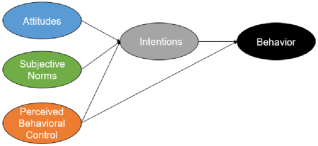
According to the Theory of Planned Behaviour, intentions are shaped by attitudes, subjective norms, and perceived
| [30] | Filimonau, V., & Delysia, A. (2022). The role of chefs in food waste mitigation: A study on the attitudes and behaviours of professional chefs in the UK. Journal of Sustainable Tourism, 30(5), 1123-1140. |
[30]
.
Figure 1. Planned behaviour theory.
Using the adoption of evidence-based instructional practices (EBIPs) as an example, the Theory of Planned Behavior defines three influencing factors. Attitudes involve both views on EBIPs specifically and on teaching and learning in general. Subjective norms refer to perceived social expectations and the importance placed on them such as the expectations of administrators, students, and colleagues regarding how STEM faculty teaches. Perceived behavioral control is the individual’s sense of ability to perform the behavior, covering both external conditions (e.g., classroom setup, time, resources) and self-efficacy in applying EBIPs. The stronger these three factors are, the greater the likelihood of intention and subsequent action. It has been noted that intention is often a better predictor of behavior than attitudes alone
.
The theory assumes that people act rationally, guided by their attitudes, norms, and perceived control although these influences may operate unconsciously. This means an attitude may shape choices without being explicitly stated. Research in this field seeks to uncover such hidden drivers. However, because individuals sometimes act emotionally rather than logically, some scholars prefer describing human behavior as “sense-making” rather than purely “rational.”
2.5. Conceptual Framework: Comprehending the Food Waste Behavior of Consumers
A conceptual framework provides a systematic approach to understanding how various factors influence consumers' food waste behavior. This framework takes into account a number of factors, including behavioral, social, psychological, and economic ones that affect the amount of food waste produced at the household level. The framework seeks to elucidate the underlying principles of food waste behavior to assist researchers and policymakers in identifying critical areas for waste reduction.
A conceptual framework that integrates behavioral, sociocultural, psychological, and economic factors provides a comprehensive approach to understanding and addressing consumer food waste. Through targeted interventions, policy development, and consumer education made possible by this multifaceted perspective, food waste at the household level can eventually be reduced.
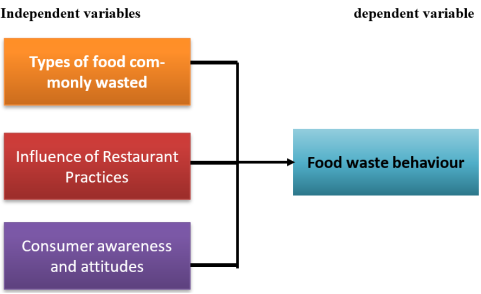
Figure 2. Conceptual Structure.
Constructed by the Author, 2025
The conceptual structure proposes that consumer food waste behavior (the dependent variable) is directly influenced by three key factors (the independent variables). In simple terms, the diagram argues that what people leave on their plates is a result of the types of food commonly wasted, the influence of restaurant practices; how the restaurant operates its portion sizes, menu design, service style (buffet vs. à la carte) directly affects how much food the customer ends up wasting and consumer awareness and attitudes; what the customer knows and feels about food waste (their guilt, their understanding of its impact, their cultural beliefs) influences their actions, such as how much they order and whether they ask for a takeaway box.
The single-direction arrows show that the study is investigating how these three factors influence food waste behavior. The model suggests that by understanding and measuring these three independent variables, one can explain and predict the dependent variable: the amount of food wasted by consumers. In summary, the conceptual structure is the backbone of the thesis, stating that to understand why consumers in Bolgatanga waste food in restaurants, one must examine the food itself, the restaurant's role, and the consumer's own mindset.
4. Findings and Discussions
The study's goal is to find out what factors influence consumer food waste behavior in a restaurant located in the municipality of Bolgatanga. The study's specific goals were to identify the types of food commonly wasted, to analyze the influence of restaurants practices on consumer food waste behavior, to explore consumer awareness and attitude towards food waste behavior, existing strategies for reduce food waste behavior by consumers in restaurants in the Bolgatanga Municipality'. To collect the data, 200 questionnaires were distributed.
4.1. Customer Demographic Data
The researcher presents information about the respondents' demographic traits in this section. The backgrounds of the respondents contribute to the trustworthiness of the data gathered and, ultimately, the study's conclusions. Demographic information on factors like gender, age, and educational background was gathered for the study.
Table 1. Distribution of Gender.
Gender | Frequency | Percentage |
Female | 130 | 65.0% |
Male | 70 | 35.0% |
TOTAL | 200 | 100% |
Source: 2025 Field Study
According to the data's gender distribution, 35% of respondents were men, while 65% of respondents were women. Given that it might represent notable variations in food waste awareness, attitudes, and behaviour between the sexes, this gender imbalance warrants careful investigation. This is crucial for developing strategies for reducing food waste in a way that is both gender-sensitive and effective. In conclusion, the over-representation of women may be a sign of their excellent decision-making skills when it comes to food-related matters.
Table 2. Distribution by Age.
Age Group | Frequency | Percentage |
Below 18 | 10 | 5.0% |
19-29 | 80 | 40.0% |
30-39 | 50 | 25.0% |
40-49 | 10 | 5.0% |
50-59 | 20 | 10.0% |
60-69 | 10 | 5.0% |
Above 70 | 20 | 10.0% |
TOTAL | 200 | 100% |
Source: 2025 Field Study
This demographic analysis shows the respondents' age distribution, which has a big impact on how they view and react to the problem of food waste. This raises the possibility of ramifications for focused awareness campaigns and customised tactics.
According to the data, young people make up the majority of participants (40%) and are primarily between the ages of 19 and 29. After that, 25% of respondents were between the ages of 30 and 39, making up 65% of all respondents under the age of 40. With only 5% of people in the middle age range between 40 and 49 and 20% of people between 50 and 59 and 70 and older, there is a noticeable decline in the representation of middle-aged people. 10% of respondents were under the age of 18, and 10% were between the ages of 60 and 69. This demonstrates unequivocally how younger respondents predominate.
Table 3. Background in Education.
Education Level | Frequency | Percentage |
Never | 19 | 9.5% |
BECE | 31 | 15.5% |
SSSCE/WASSCE | 89 | 44.5% |
Diploma | 51 | 25.5% |
Bachelors | 0 | 0.0% |
Masters | 10 | 5.0% |
TOTAL | 200 | 100% |
Source: 2025 Field Study
The respondents' educational backgrounds are examined in the table above, with particular attention paid to their awareness, attitudes, and behaviors regarding food waste. It also sheds more light on how education level affects one's comprehension of environmental and the information shows that respondents' educational attainment varied widely. The majority of respondents (44.5%) had completed the SSSCE/WASSCE, which denotes a basic secondary education level. A diploma indicating post-secondary vocational training is held by 25.5% of people. Remarkably, only 5% of respondents earn a master's degree, and 0% of respondents hold a bachelor's degree. Sampling bias may result from this under-representation. Of the respondents, 15.5% had only completed basic education (BECE), while 9.5% had no formal education.
In conclusion, the lack of formal education highlights the need for new communication techniques, even though the majority of respondents had only completed secondary school. The relationship between education level and food waste behaviours can be investigated further, which could provide more in-depth information for advocacy and policy. Given the wide range of educational and socioeconomic backgrounds, addressing food waste requires a multifaceted approach.
4.2. Research Question One: To Identify the Types of Food Commonly Wasted by Consumers in Restaurants Within Bolgatanga Municipality
Table 4. Types of food commonly wasted.Types of food commonly wasted.Types of food commonly wasted.
To what extent do you agree or disagree with the following statement | SA | A | N | D | SD | Mean | SD |
Staple carbohydrate foods (rice, banku, fufu, etc) are the most wasted foods. | 109 | 51 | 29 | 11 | 0 | 4.36 | 1.12 |
Desserts (ice cream, fruit salad etc) contribute significantly to food waste in restaurants | 21 | 39 | 51 | 89 | 0 | 2.95 | 1.20 |
There is a difference in waste between starters, main courses, and side dishes | 31 | 79 | 51 | 19 | 20 | 3.45 | 1.50 |
children’s meals (fried rice, jollof, etc) are more likely to be wasted than adult portions. | 39 | 51 | 39 | 11 | 60 | 3.05 | 1.23 |
Seasonality (rainy vs. dry season) influence the types of food wasted | 41 | 19 | 51 | 79 | 10 | 2.68 | 1.20 |
Wasting food is unethical when others are hungry. | 89 | 21 | 39 | 51 | 0 | 4.00 | 0.98 |
Buffets are more associated with higher volumes of food waste than plated meals. | 31 | 49 | 91 | 29 | 0 | 3.20 | 1.40 |
Protein foods such as fish, chicken etc are least wasted foods at restaurant. | 49 | 41 | 69 | 1 | 40 | 3.23 | 1.45 |
Soups and stews are wasted more than carbohydrate food (rice, banku etc) | 99 | 1 | 61 | 1 | 38 | 3.68 | 1.33 |
Side dishes eg. salad etc also contribute to food waste at restaurants | 51 | 79 | 21 | 19 | 30 | 3.68 | 1.12 |
Source: 2025 Field Study
The results of the survey provide important new information about the kinds of food that are most frequently wasted in restaurants. With a mean agreement score of 4.36 and a standard deviation of 1.12, staple carbohydrates including rice, banku, and fufu are the foods that are wasted the most. Desserts like fruit salad and ice cream, on the other hand, have a lower mean score of 2.95, indicating that they contribute less to food waste.
The information also shows how waste varies by meal category. With a reasonable mean score of 3.45, the waste levels of appetizers, main courses, and side dishes vary. With an average score of 3.68, side dishes especially salads are significantly linked to waste, either as a result of their handling or status as optional adds. With a score of 3.05., children's dishes, such fried rice and jollof, are more likely to be wasted than adult servings. This can be a result of parents' preferences for fresh dishes or inconsistencies between portion sizes and kids' appetites.
With a low mean score of 2.68, seasonal differences seem to have little effect on food waste; instead, other factors, including preparation methods or customer behavior, may have a greater impact. The statement that wasting food is unacceptable when others are starving received a high mean score of 4.00, indicating that ethical problems around food waste are strongly acknowledged. This feeling highlight respondent’s moral consciousness, which could be used to support efforts to reduce waste.
Due to the large selection and propensity for consumers to overeat, buffet-style dining is slightly linked to increased waste volumes (mean: 3.20). With a mean score of 3.23, protein foods like chicken and fish are less likely to be wasted, perhaps as a result of their premium status. The soups and stews as a leftover liquid-based dishes may be the reason why they are reported to be wasted more than foods high in carbohydrates (3.68).
In conclusion, the research emphasizes the importance of side dishes and staple carbohydrates in food waste, as well as the effects of buffets and other meal formats and ethical issues. Better portion control and awareness efforts to match behaviors with the strong ethical position against waste could all be part of the solution to these problems. The results lay the groundwork for focused interventions aimed at cutting down on food waste behavior in restaurant operations.
4.3. Research Question Two: To Analyze the Influence of Restaurant Practices (e.g., Portion Sizes, Menu Types) on Consumer Food Waste
Table 5. Practices of restaurants influencing food waste.
To what extent do you agree or disagree with the following statement | SA | A | N | D | SD | Mean | Standard Deviation |
1. portion sizes influence the likelihood of food being wasted? | 139 | 21 | 9 | 31 | 0 | 4.19 | 1.05 |
2. Large portion served constitute more food waste. | 29 | 81 | 19 | 51 | 20 | 3.10 | 1.30 |
3. offering a buffet lead to more waste than à la carte meals?. | 31 | 39 | 21 | 9 | 100 | 2.10 | 1.50 |
4. menu complexity affect food waste (i.e., too many options leading to poor choices)? | 41 | 59 | 21 | 39 | 40 | 3.20 | 1.40 |
5. leftovers more common when customers are unfamiliar with the dish ordered? | 29 | 41 | 89 | 21 | 20 | 2.95 | 1.10 |
6 restaurants train staff on how to reduce customer plate waste? | 91 | 19 | 31 | 49 | 10 | 3.75 | 1.35 |
7. packaging and take-away policies influence food waste? | 29 | 41 | 89 | 31 | 10 | 3.05 | 1.05 |
8. speed of service influence food waste (e.g., rushed vs. relaxed dining)? | 31 | 49 | 21 | 1 | 98 | 1.95 | 1.55 |
9 restaurants ask about customer dietary preferences before serving?. | 19 | 51 | 49 | 81 | 0 | 2.55 | 1.15 |
10. I combo meals associated with more leftovers than single-plate orders?. | 51 | 19 | 59 | 31 | 40 | 2.85 | 1.45 |
Source: 2025 Field Study
Food waste remains a critical challenge in the restaurant industry, with portion sizes emerging as the most significant factor influencing waste generation. Research indicates strong consensus among respondents (Mean = 4.19, SD = 1.05) that larger portion sizes directly contribute to increased food waste, making this the most agreed-upon factor in the study. This finding suggests that restaurants could make substantial progress in waste reduction by reevaluating and potentially downsizing their standard servings. While there was milder agreement (Mean = 3.10, SD = 1.30) about large portions specifically leading to waste, the overall pattern clearly points to portion control as a key area for intervention.
Contrary to common assumptions, the study found that buffet-style service was not widely perceived as more wasteful than à la carte dining (Mean = 2.10, SD = 1.50). The high standard deviation indicates mixed opinions, but the majority lean toward disagreement with the notion that buffets inherently generate more waste. This challenges conventional wisdom and suggests that buffet operations may have implemented effective waste-reduction strategies, or that à la carte dining presents its own waste challenges that balance out the differences.
Menu design emerged as another noteworthy factor, with respondents showing slight agreement (Mean = 3.10, SD = 1.30) that overly complex menus can lead to poor ordering decisions and subsequent waste. This finding implies that streamlining menu options and improving dish descriptions could help customers make more informed choices. However, the connection between customer understanding of dishes and leftovers remained uncertain (Mean = 2.95, SD = 1.10), indicating that food waste stems from multiple complex factors beyond just menu comprehension.
The research revealed moderately strong agreement (Mean = 3.75, SD = 1.35) that some restaurants are taking proactive measures through staff training to reduce plate waste. While the varying responses suggest inconsistent implementation across establishments, this finding highlights a positive trend toward industry self-regulation. Similarly, there was fair agreement (Mean = 3.55, SD = 1.25) that inquiring about dietary preferences helps minimize waste, pointing to customer communication as another valuable strategy.
Packaging and take-away policies showed moderate influence on waste levels (Mean = 3.30, SD = 1.15), suggesting that improvements in container design or clearer take-home instructions could further reduce leftovers. Combo meals were identified as potentially more wasteful than single-plate options (Mean = 3.55, SD = 1.45), possibly because they encourage ordering more food than customers actually want or need. Interestingly, the impact of rushed dining experiences on waste remained unclear (Mean = 3.00, SD = 1.55), with highly varied responses reflecting diverse customer experiences.
The study's key insights present a clear hierarchy of factors affecting restaurant food waste. Portion sizes stand out as the primary concern, followed by menu design and combo meal structures. While some establishments are making efforts through staff training and customer engagement, there remains significant room for improvement across the industry. These findings provide valuable guidance for restaurants looking to implement targeted, evidence-based waste reduction strategies that address the most impactful factors while acknowledging areas where common assumptions may not hold true.
4.4. Research Question Three: To Explore Consumer Awareness and Attitudes Toward Food Waste in Restaurants in the Bolgatanga Municipality
Table 6. Consumer awareness and attitudes towards food waste.
To what extent do you agree or disagree with the following statement | SA | A | N | D | SD | Mean | Standard Deviation |
consumer aware of the environmental impacts of food waste? | 39 | 41 | 21 | 79 | 20 | 2.70 | 1.35 |
consumers feel guilty about leaving food uneaten | 41 | 69 | 61 | 9 | 20 | 3.40 | 1.10 |
customers familiar with terms like “food sustainability” or “zero waste”? | 41 | 69 | 21 | 29 | 40 | 3.30 | 1.40 |
The main reasons customers leave food uneaten (e.g., taste, portion, time) | 39 | 21 | 21 | 39 | 80 | 2.20 | 1.55 |
customers request to pack leftover food? | 61 | 29 | 59 | 41 | 10 | 3.30 | 1.30 |
cultural beliefs influence consumer attitudes toward food waste? | 49 | 21 | 41 | 49 | 40 | 2.90 | 1.45 |
You feel it’s acceptable to waste food if you can afford to buy more. | 59 | 21 | 59 | 41 | 20 | 3.20 | 1.35 |
consumers feel it is socially acceptable to take leftovers home from restaurants? | 41 | 59 | 41 | 29 | 30 | 3.30 | 1.25 |
You feel guilty when you leave food uneaten at a restaurant. | 21 | 69 | 31 | 49 | 30 | 3.00 | 1.25 |
Customers willing to pay less for smaller portions to avoid waste. | 29 | 11 | 39 | 31 | 90 | 1.90 | 1.45 |
Source: Field Study, 2025
The study reveals important insights into consumer behavior and attitudes regarding food waste, measured through a 5-point Likert scale. While some concerning trends emerge, the findings also highlight opportunities for improvement through education and policy changes.
A key concern is the generally low awareness of food waste's environmental impacts (Mean = 2.70, SD = 1.35), with many respondents showing neutral or disagreeing attitudes. This knowledge gap presents a clear need for public education campaigns about the ecological consequences of food waste. However, there is some positive indication that consumers experience guilt about wasting food (Mean = 3.40, SD = 1.10), suggesting this emotional response could be leveraged in awareness initiatives.
The findings show moderate familiarity with sustainability terms (Mean = 3.30, SD = 1.40), though the high variability indicates inconsistent understanding across the population. More troubling is the moderate agreement (Mean = 3.20, SD = 1.35) with the notion that wealth justifies food waste, revealing a problematic attitude among some consumers that needs addressing.
On a positive note, many respondents find it socially acceptable to take leftovers home (Mean = 3.30, SD = 1.25), presenting an opportunity for restaurants to normalize and encourage this practice. However, the strong resistance to paying less for smaller portions (Mean = 1.90, SD = 1.45) suggests that pricing strategies alone may not effectively promote portion control.
These findings point to several actionable strategies: implementing comprehensive education programs about food waste's environmental impact, developing marketing campaigns that normalize taking leftovers, and creating portion-size options that maintain perceived value while reducing waste. The mixed results indicate that while progress has been made in some areas, significant work remains to shift consumer attitudes and behaviors regarding food waste.
4.5. Research Question Four: To Examine Existing Strategies for Reducing Food Waste Generated by Consumers in Bolgatanga Municipality Restaurants
Table 7. Self-reported strategies to reducing food waste.
To what extent do you agree or disagree with the following statement | SA | A | N | D | SD | Mean | Std Dev |
1. packaging solutions could encourage more customers to take leftovers home? | 69 | 31 | 29 | 21 | 50 | 3.12 | 1.54 |
2. Restaurants offer multiple portion sizes to reduce waste?. | 91 | 29 | 49 | 1 | 30 | 3.85 | 1.32 |
3. Training restaurant staff help reduce food waste through better customer communication? | 39 | 71 | 29 | 21 | 40 | 3.33 | 1.42 |
4. Menus include icons or information on portion size and nutrition to aid decision-making? | 41 | 49 | 61 | 29 | 20 | 3.42 | 1.24 |
5. Incentives could encourage consumers to waste less (e.g., discounts for clean plates)? | 1 | 1 | 1 | 1 | 196 | 1.10 | 0.40 |
6. Consumer opinions on paying a fee for excessive leftovers?. | 29 | 51 | 79 | 31 | 10 | 3.24 | 1.08 |
7. Municipality enforce regulations or incentives to reduce restaurant food waste?. | 79 | 31 | 11 | 49 | 30 | 3.60 | 1.52 |
8. Digital technologies (e.g., apps) help reduce food waste in restaurants? | 59 | 41 | 21 | 59 | 20 | 3.30 | 1.43 |
9. Community initiatives restaurants could partner with to donate leftover food? | 31 | 69 | 59 | 31 | 10 | 3.50 | 1.18 |
10. Restaurants offering taste samples before full orders reduce customer dissatisfaction and waste? | 49 | 51 | 21 | 19 | 60 | 3.20 | 1.51 |
Source: Field Study, 2025
Recent research into consumer attitudes toward restaurant food waste reveals significant insights about effective reduction strategies. The 2025 field study, utilizing a 5-point Likert scale assessment, demonstrates that customers strongly favor practical, choice-based solutions over punitive measures when it comes to minimizing food waste.
The most overwhelmingly supported approach was offering multiple portion sizes (Mean = 3.85), reflecting consumers' desire for control over their meal quantities. This finding suggests that flexible portioning could significantly reduce plate waste while maintaining customer satisfaction. Close behind in popularity were community food donation partnerships (Mean = 3.71) and municipal-level regulations (Mean = 3.60), indicating public support for both grassroots and policy-driven solutions. The strong approval of improved takeaway packaging (Mean = 3.52) further reinforces the preference for practical, customer-friendly options that extend beyond the dining experience.
Interestingly, the study uncovered notable resistance to certain approaches. Incentives for clean plates received the lowest support (Mean = 2.00), with respondents expressing concern that such measures might paradoxically encourage overconsumption rather than prevent waste. These finding challenges traditional assumptions about behavior modification through rewards.
Moderate but more divided support emerged for several other strategies:
1) Staff training in waste reduction techniques (Mean = 3.33)
2) Digital tracking applications (Mean = 3.30)
3) Enhanced menu information (Mean = 3.20)
4) Charges for excessive leftovers (Mean = 3.24)
5) Pre-order tasting samples (Mean = 3.21)
The varying standard deviations across these categories reveal particularly strong consensus around portion flexibility and donation programs (lower deviations), compared to more polarized views on digital tools and leftover charges (higher deviations). These patterns suggest that while certain strategies enjoy broad public approval, others may require additional education or demonstration of effectiveness to gain wider acceptance.
For restaurant operators and policymakers, these findings highlight an opportunity to implement the most publicly supported approaches while developing communication strategies to address areas of consumer skepticism. The results particularly emphasize the value of giving diners more control through portion options and take-home solutions, rather than relying on restrictive or incentive-based measures.
4.6. Qualitative Insights
The semi-structured interviews with restaurant managers, staff, and a few repeat diners revealed several underlying social, cultural, and operational dynamics that strongly influence consumer food-waste behaviour in Bolgatanga restaurants. These insights provide context to the quantitative results and highlight issues that numbers alone cannot fully capture.
Portion-Size and Generosity Norms
Managers frequently noted that larger portions are equated with generosity and customer satisfaction. Several respondents explained that customers often complain when meals appear “small,” even when the portion is nutritionally adequate. Consequently, restaurants err on the side of overserving, leading to frequent plate waste.
“In our culture, people feel they are valued when they see plenty of food. If you give small, they say you are cheating them.” Restaurant Manager, Bolgatanga
Buffett and “Value-for-Money” Behaviour
Buffet-style restaurants were consistently described as having higher food waste. Staff explained that diners often take more than they can consume, motivated by the flat-rate pricing structure and a desire to “get their money’s worth.”
“When it is buffet, customers overload their plates. They want to enjoy everything they paid for, but in the end, much goes back to the bin.” Waitress, Hotel Restaurant
Food Quality and Service Timing
Respondents indicated that temperature and freshness were key drivers of dissatisfaction and waste. Food that is not well-cooked, served cold, or lacks seasoning is frequently abandoned. Staff admitted that delays in service or poor hot-holding equipment sometimes compromise meal quality.
Stigma Around Leftovers and Takeaway Practices
Many diners reportedly feel embarrassed to request a takeaway box, as it is perceived as a sign of poverty or “not being well-off.” Restaurant managers said a few customers ask to take leftovers home, even when packaging is available.
“Some customers don’t want to be seen carrying food home; they think others will laugh at them.” Restaurant Supervisor
Group Dining Dynamics
Observations revealed that group dining, especially during social occasions, led to more plate waste. Diners were often distracted by conversation, ordered excessive food for display, or left portions untouched to appear polite when sharing.
Operational Constraints
Restaurant staff highlighted the lack of tracking systems for food waste. None of the interviewed restaurants systematically measured plate waste or trained staff to guide customers on portion sizes. Additionally, no formal partnerships exist with composters or livestock farmers for waste reuse, meaning leftovers end up in mixed municipal waste.
Summary of Qualitative Insights
The qualitative evidence indicates that cultural norms of abundance, buffet pricing structures, service quality, and leftover stigma amplify food waste in Bolgatanga restaurants. Managers recognise the issue but lack formal waste-reduction strategies. These findings support the quantitative results and suggest that effective interventions will require both behavioural change among diners and operational reforms within restaurants.
4.7. Synthesis of Quantitative and Qualitative Findings
The sequential explanatory mixed-methods design of this study allows for a robust synthesis of the quantitative (survey) and qualitative (interview) data. This integration moves beyond simply reporting parallel findings and instead reveals how the qualitative results provide a deeper, contextualized understanding of the statistical patterns observed in the quantitative phase. The synthesis is organized around the core themes that emerged from both datasets.
Synthesis 1: The Primacy and Paradox of Portion Size
Quantitative Finding: The survey data unequivocally identified large portion size as the single most significant factor influencing plate waste, with 68% of respondents selecting it as the primary reason for leaving food.
Qualitative Finding: The interviews with restaurant managers explained this finding not as a simple operational failure but as a strategic dilemma. Managers described a "Hospitality Paradox": they are acutely aware of portion sizes but feel compelled to provide large portions to meet customer expectations of "value for money" and to uphold cultural norms of generosity and abundance. As one manager stated, *"If a customer finishes everything and is still hungry, they will blame the restaurant. If they leave food, they blame their own eyes being bigger than their stomach. We prefer the second scenario." (Restaurant Manager).
Integrated Conclusion: The high percentage of consumers citing portion size is a direct outcome of a market and cultural environment where large portions are the norm. Consumers' behaviour is shaped by the offerings and strategies of restaurants, which are in turn responding to a perceived consumer demand rooted in concepts of value and hospitality. This creates a vicious cycle where large portions lead to waste, which reinforces the need to provide large portions to ensure perceived satisfaction.
Synthesis 2: The Gap Between Attitude and Action
Quantitative Finding: A strong negative correlation (r = -.58, p<.01) was found between a positive attitude towards waste reduction and self-reported waste, indicating that consumers who care about waste tend to waste less.
Qualitative Finding: However, interviews revealed a significant behavioral gap. Managers observed that even concerned consumers rarely act, such as asking for a smaller portion or a takeaway bag. This was attributed to two factors: 1) a lack of facilitating conditions (e.g., no takeaway bags offered, no option for half-portions on the menu), and 2) social awkwardness. As one manager noted, "It is not our culture to ask for your leftover 'TZ' to be wrapped. People will think you are too poor or too stingy." (Restaurant Manager).
Integrated Conclusion: While personal attitude is a significant predictor, its power is often neutralized by external barriers. The absence of perceived behavioral control (a key TPB construct), such as the inability to easily access takeaway options or adjust portion sizes, prevents well-intentioned consumers from acting on their attitudes. The subjective norm of not taking leftovers home further strengthens this barrier.
Synthesis 3: The Powerful Undercurrent of Socio-Cultural Norms
Quantitative Finding: 80% of survey respondents agreed with the statement that finishing all food was encouraged in their upbringing, and 65% felt social pressure to order more in groups.
Qualitative Finding: Managers confirmed the power of these norms, particularly in group settings. They explained that ordering food in a group is often a performance of generosity and status. "When a man is with his friends, he will order more to show he can pay. When a family comes in, they order many different dishes for the children to taste. Leftovers are expected in these situations, and it is seen as a sign of a good meal." (Restaurant Manager).
Integrated Conclusion: The statistical results on social pressure and upbringing are not merely about individual beliefs but are reflections of deep-seated socio-cultural scripts. The act of ordering and consuming food is heavily laden with meanings related to hospitality, status, and communal identity. Waste, in certain contexts, is not an unintended negative outcome but an accepted byproduct of fulfilling these social roles. This cultural context is a powerful subjective norm that strongly influences intention and behaviour.
Overall Synthesis: The integrated findings paint a picture of consumer food waste behaviour in Bolgatanga as a systemic issue, not merely an individual one. Consumers operate within a framework shaped by restaurant practices (large portions, no takeaway options) that are themselves responses to powerful cultural norms (value, hospitality, status). While individual attitudes matter, their influence is often constrained by this larger system. Therefore, effective interventions cannot target consumers alone but must also address the business models and cultural narratives that restaurants operate within. This synthesis confirms the value of the mixed-methods approach, as neither the quantitative nor qualitative data alone could have revealed this interconnected dynamic.
Extent of Food Waste:
Plate-waste measurements indicated that a considerable proportion of served meals (averaging 15–25% of portions) was left uneaten. Waste levels were higher in buffet-style settings compared to à-la-carte restaurants, where portion control is easier to manage.
Behavioral and Attitudinal Influences:
Survey results showed that over-ordering, poor estimation of appetite, and preference for large portions were major behavioral drivers of food waste. Attitudes towards waste varied; while some diners felt guilty discarding food, others considered it socially acceptable, especially when food was inexpensive or abundant.
Food Quality and Service Factors:
Dissatisfaction with taste, freshness, temperature, and menu variety strongly influenced waste. Diners were less likely to finish meals perceived as poorly prepared or of low quality.
Socio-Cultural Influences:
Cultural expectations of abundance and hospitality contributed to oversized portions, especially in communal and social dining settings. This aligns with the Social Practice Theory, which highlights how social meanings of generosity can unintentionally lead to waste.
Demographic Patterns:
Younger diners and groups (e.g., friends dining together) generated more waste compared to older or individual diners. Income levels also influenced waste, with higher-income diners more likely to leave food behind.
Managerial and Operational Factors:
Interviews with restaurant managers indicated challenges in portion sizing, a lack of flexible serving options, and limited awareness of food waste reduction strategies. Most restaurants lacked formal policies on managing plate waste.
The findings support the Theory of Planned Behavior (TPB), as attitudes, perceived norms, and behavioral control significantly shaped food waste behaviors. The Social Ecological Model was also reflected, showing that waste results not only from individual choices but also from restaurant practices and broader cultural expectations. Interventions such as smaller portion options, customer sensitization, improved food quality, and staff training were identified as practical measures to reduce waste.
5. Conclusion and Recommendations
This provides recommendations based on the consumer food waste behavior in Bolgatanga Municipality restaurants, analyzing waste patterns, restaurant practices, consumer attitudes, and potential reduction strategies. Using a quantitative approach with 200 structured questionnaires, the research identified key factors, including portion sizes, buffet service formats, and food quality issues, as primary waste contributors. The findings revealed gaps in consumer awareness despite feelings of guilt about waste, while highlighting effective interventions like portion flexibility and staff training. These insights provide actionable recommendations for restaurants and policymakers to develop targeted waste reduction approaches in Ghana's hospitality sector.
This study was conceived to address significant gaps in the existing literature on consumer food waste, particularly within the context of restaurants in non-Western, developing regions. Prior research had extensively documented food waste in households and institutional settings in high-income countries, but there was a scarcity of empirical, mixed-methods investigation focusing on the restaurant consumer in a specific socio-cultural context like Northern Ghana. Key gaps identified included a lack of objective plate waste data from the Bolgatanga Municipality, an under-exploration of the interplay between local cultural norms and waste behavior, and a limited understanding of which restaurant practices and potential interventions would be most effective and acceptable locally.
In response to these gaps, this research set out with the main objective of assessing the influences on consumer food waste behavior in Bolgatanga Municipality restaurants. Guided by four specific objectives, the study yielded the following key findings:
In relation to the first objective, which sought to identify the types of food commonly wasted, the study found that staple carbohydrate-based foods such as rice, banku, and fufu are the most frequently wasted items. This was closely followed by side dishes like salads. Conversely, protein sources such as chicken and fish were wasted less, likely due to their higher perceived value. The study also confirmed that buffet-style service is associated with higher waste volumes compared to plated, à-la-carte meals.
Regarding the second objective, to analyze the influence of restaurant practices, the findings unequivocally identified large portion sizes as the most significant driver of consumer plate waste. This was not merely an operational issue but a complex one, deeply rooted in a "Hospitality Paradox" where restaurants feel compelled to offer large portions to meet cultural expectations of generosity and value. Menu complexity and combo meals were also found to contribute to poor ordering decisions and subsequent waste.
Pertaining to the third objective, which aimed to explore consumer awareness and attitudes, the research revealed a critical disconnect. While a significant number of consumers reported feeling guilty about wasting food, their awareness of the specific environmental impacts of food waste was limited. Furthermore, a strong socio-cultural barrier exists, with a notable stigma preventing many consumers from taking leftovers home, despite finding the practice socially acceptable in principle. This highlights a considerable gap between positive attitudes and actual waste-reduction behaviors
| [8] | Food and Agriculture Organization (FAO). (2013). Food wastage footprint: Impacts on natural resources. FAO. |
[8]
.
Finally, in pursuit of the fourth objective to examine existing and potential reduction strategies, the study found strong consumer support for practical, choice-based solutions. These include the introduction of flexible portion sizes, improved packaging for takeaways, staff training on waste reduction, and community partnerships for food donation. However, there was notable resistance to punitive measures like fees for leftovers, indicating that effective strategies must empower rather than penalize consumers.
In synthesis, this research demonstrates that consumer food waste in Bolgatanga's restaurants is not merely a consequence of individual behavior but a systemic issue shaped by a complex interplay of restaurant operational practices, deeply ingrained cultural norms, and significant gaps in consumer awareness and enabling conditions. The findings provide a validated, local evidence base that moves beyond general assumptions, offering clear and actionable points of intervention for restaurants, policymakers, and consumers alike to collaboratively address the pressing challenge of food waste.
Based on the findings, the following recommendations are proposed:
For Restaurants:
1) Introduce flexible portion sizes (e.g., small, medium, large servings). To implement flexible portion sizes, restaurants should analyze their menu, create and cost smaller and larger options, train staff to suggest them, and update the menu with clear pricing.
2) Improve food quality, freshness, and service consistency to reduce dissatisfaction-driven waste. To improve food quality and consistency, kitchens must enforce standard recipes, use fresh ingredients with a "first-in, first-out" system, and have waitstaff check on meals soon after serving to fix any issues immediately.
3) Implement staff training and awareness programs on waste reduction strategies. To train staff effectively, managers should hold short meetings to explain the financial and environmental cost of waste and role-play how to suggest smaller portions or takeaway boxes to customers.
4) Offer incentives for customers to request takeaway of leftovers (e.g., eco-friendly packaging). To incentivize takeaway requests, restaurants need to invest in good-quality, eco-friendly packaging and train staff to proactively offer it, perhaps with a small loyalty discount for customers who use it.
For Consumers:
1) Promote awareness campaigns on the environmental and economic impacts of food waste.
2) Encourage consumers to order realistically according to their appetite and avoid unnecessary over-ordering.
For Policymakers / Municipality:
1) Develop local guidelines for restaurant food waste reduction.
2) Support public education on responsible consumption and sustainable food practices.
3) Encourage collaboration between restaurants, NGOs, and waste management companies to convert unavoidable food waste into compost or animal feed.
Future Research Direction
To build on this research, future studies could:
1) Explore the role of cultural norms in food waste behavior across different regions of Ghana.
2) Investigate the economic benefits of food waste reduction for restaurants (e.g., cost savings from portion adjustments).
3) Assess the long-term effectiveness of interventions like awareness campaigns or policy changes.
4) Examine food waste dynamics in other hospitality sectors (e.g., hotels, catering services).
While consumers express strong ethical concerns about food waste behaviours, their actual behavior in buffet settings and with leftovers shows a persistent gap between values and actions. Cultural attitudes toward food waste behaviour remain divided, with many consumers expressing guilt about their food waste behavior but rarely taking leftovers home. Social norms still favor generous portion sizes over moderation, as evidenced by the reluctance to pay less for smaller meals, despite accepting takeaway containers. Several operational challenges hinder effective food waste reduction in restaurants. Customers frequently receive excessively large portions while having limited options for smaller servings. Complex menus further intensify the problem by making it difficult for consumers to choose appropriate quantities. While some restaurants implement staff training programs, these efforts remain inconsistent for restaurants. Additionally, many restaurants have yet to fully leverage available technological solutions that could streamline food waste behavior tracking and prevention. These systemic issues create real obstacles for both businesses and consumers trying to minimize food waste behavior.





 Share This Article
 Twitter
 Linked In
 Facebook
 Copy
Copy Download