
Forest-edge communities intrinsically depend on and relate to nearby forests in patterned ways, wherein forest-related knowledge matters because it is both a heritage and valuable asset for healthcare, livelihoods, and meeting wider community needs. Equally, how a forest is understood shapes how it is perceived, valued, and cared for. This study examined the forest-related knowledge and transfer strategies among forest-edge communities in South-eastern Sierra Leone, utilizing a mixed-methods design, incorporating both qualitative and quantitative strategies. Data were collected from adults/household heads, chiefdom/community leaders, and agency staff across the four districts. The study targeted 1,280 respondents (786 male and 494 female), who were interviewed through surveys, Focus Group Discussions (FGDs), and Key Informant Interviews (KIIs). Data were summarised as counts, percentages and words. A chi-square test of independence and logistic regression analyses were used to test the associations between respondent characteristics and outcomes. The study communities demonstrated significant knowledge of their forests, with both formal and informal strategies for knowledge transfer. For local knowledge transfer, the guidance of elders was found to be critical, as they encourage children to “learn by doing” (85.7%), storytelling and proverbs (70.6%), wider cultural practices (62.8), or formal awareness raising (17%). Communities enjoy diverse benefits like shade, food, income, building and craft material, medicinal plants, etc. Change in forest ecosystem was read from the forest itself, with the productivity of wild fruits, and the health and density of trees being the most widely used signs. While some practices by forest-edge communities may degrade forests, the irony for forest-related knowledge is that sustaining it is synonymous with sustaining forest-related practices. Therefore, environment-focused practitioners and institutions should urgently agree on common grounds for local forest-related knowledge and scientific knowledge to be harmonized to sustain the knowledge and ensure long-term forest management strategies.
| Published in | International Journal of Environmental Protection and Policy (Volume 14, Issue 6) |
| DOI | 10.11648/j.ijepp.20261406.11 |
| Page(s) | 131-147 |
| Creative Commons |
This is an Open Access article, distributed under the terms of the Creative Commons Attribution 4.0 International License (http://creativecommons.org/licenses/by/4.0/), which permits unrestricted use, distribution and reproduction in any medium or format, provided the original work is properly cited. |
| Copyright |
Copyright © The Author(s), 2026. Published by Science Publishing Group |
Forests, Forest-related Knowledge, Forest-edge Communities, Sacred Groves, Sierra Leone
Definition of a forest | East n | East % | South n | South % | Diff (pp) | p | Sig |
|---|---|---|---|---|---|---|---|
An area with tall trees | 558 | 99.5 | 539 | 99.4 | 0.0 | 1.000 | ns |
An area with thick canopy | 538 | 95.9 | 534 | 98.5 | -2.6 | 0.0141 | * |
An area with large animals | 535 | 95.4 | 530 | 97.8 | -2.4 | 0.0415 | * |
Forest for burial sites | 204 | 36.4 | 228 | 42.1 | -5.7 | 0.0604 | ns |
A cool and dark bush | 27 | 4.8 | 1 | 0.2 | 4.6 | <0.001 | *** |
An area with thick bush and fresh air | 7 | 1.2 | 0 | 0.0 | 1.2 | 0.0258 | * |
A protected thick bush | 7 | 1.2 | 0 | 0.0 | 1.2 | 0.0258 | * |
A reserved thick bush | 6 | 1.1 | 0 | 0.0 | 1.1 | 0.0450 | * |
A bush with different types of big trees | 2 | 0.4 | 0 | 0.0 | 0.4 | 0.4943 | ns |
Named forest type | East n | East % | South n | South % | Diff (pp) | p | Sig |
|---|---|---|---|---|---|---|---|
Reserved forest | 544 | 97.0 | 508 | 93.7 | 3.2 | 0.0155 | * |
Protected forest | 452 | 80.6 | 308 | 56.8 | 23.7 | <0.001 | *** |
Forest with cash crops | 259 | 46.2 | 210 | 38.7 | 7.4 | 0.0150 | * |
Forest for traditional rights | 174 | 31.0 | 165 | 30.4 | 0.6 | 0.8879 | ns |
Forest for burial sites | 160 | 28.5 | 206 | 38.0 | -9.5 | 0.0010 | ** |
Secret-society forests | 125 | 22.3 | 259 | 47.8 | -25.5 | <0.001 | *** |
Community forest | 51 | 9.1 | 24 | 4.4 | 4.7 | 0.0031 | ** |
Variable | OR | 95% CI (lower) | 95% CI (upper) | p | Sig |
|---|---|---|---|---|---|
Eastern province (vs Southern) | 0.688 | 0.525 | 0.903 | 0.007 | ** |
Male (vs female) | 0.676 | 0.451 | 1.015 | 0.059 | ns |
Age (per 10 years) | 1.114 | 0.981 | 1.266 | 0.097 | ns |
Education level (0–4) | 1.432 | 1.295 | 1.584 | <0.001 | *** |
Indigene (vs settler) | 0.907 | 0.608 | 1.353 | 0.632 | ns |
Household head (vs not) | 1.186 | 0.784 | 1.794 | 0.418 | ns |
Log monthly income | 1.179 | 1.032 | 1.346 | 0.015 | * |
Muslim (vs Christian) | 1.135 | 0.845 | 1.523 | 0.401 | ns |
Benefits | n | Percent |
|---|---|---|
Provides shade | 942 | 85.4 |
Provides food and income | 926 | 84.0 |
Reduces erosion and maintains soil fertility | 660 | 59.8 |
Provides medicinal plants | 511 | 46.3 |
Provides wood for construction, furniture and energy | 488 | 44.2 |
Serves as sacred places for traditional practices and ceremonies | 310 | 28.1 |
Serves as homes for many plants and animals | 268 | 24.3 |
Provides scholarship opportunities and income | 7 | 0.6 |
Provides safe drinking water | 3 | 0.3 |
Sign used to detect change | East n | East % | South n | South % | Diff (pp) | p | Sig |
|---|---|---|---|---|---|---|---|
Monitor the productivity of wild fruits | 425 | 75.8 | 413 | 76.2 | -0.4 | 0.9194 | ns |
Monitor the health and density of trees | 339 | 60.4 | 368 | 67.9 | -7.5 | 0.0117 | * |
Monitor water-level changes in nearby wetlands | 316 | 56.3 | 238 | 43.9 | 12.4 | <0.001 | *** |
Observe availability of certain animals | 269 | 48.0 | 281 | 51.8 | -3.9 | 0.2175 | ns |
Observe soil colour and moisture | 239 | 42.6 | 330 | 60.9 | -18.3 | <0.001 | *** |
Level of forest protection | 10 | 1.8 | 0 | 0.0 | 1.8 | <0.001 | *** |
Loss of forest thickness | 5 | 0.9 | 2 | 0.4 | 0.5 | 0.033 | * |
Loss of natural resources | 2 | 0.4 | 0 | 0.0 | 0.4 | <0.001 | *** |
FGDs | Focus Group Discussions |
KIIs | Key Informant Interviews |
NGO | Non-Governmental Organization |
| [1] | Chanza, N., & Musakwa, W. (2021). “Trees are our relatives”: local perceptions on forestry resources and implications for climate change mitigation. Sustainability, 13(11), 5885. |
| [2] | Ayaa, D. D., & Waswa, F. (2016). Role of indigenous knowledge systems in the conservation of the bio-physical environment among the Teso community in Busia County, Kenya. African Journal of Environmental Science and Technology, 10(12), 467–475. |
| [3] | Egbe, A. R., Ebu, V. T., & Ekpoto, D. F. (2022). Indigenous Knowledge of Rural Women in Forest Resources Utilization and Conservation in Agoi-Ibami and Agoi-Ekpo, Yakurr Local Government Area, Cross River State, Nigeria. Riscuri Şi Catastrofe, 30(1). |
| [4] | Begum, F., de Bruyn, L. L., Kristiansen, P., & Islam, M. A. (2022). Forest co-management in the Sundarban mangrove forest: Impacts of women's participation on their livelihoods and sustainable forest resource conservation. Environmental Development, 43, 100731. |
| [5] | Di Sacco, A., Hardwick, K. A., Blakesley, D., Brancalion, P. H., Breman, E., Cecilio Rebola, L.,... & Antonelli, A. (2021). Ten golden rules for reforestation to optimize carbon sequestration, biodiversity recovery and livelihood benefits. Global Change Biology, 27(7), 1328-1348. |
| [6] | Cao, Y., Li, R., Zhou, S., Song, L., Quan, R., & Hu, H. (2020). Ethnobotanical study on wild edible plants used by three trans-boundary ethnic groups in Jiangcheng County, Pu’er, Southwest China. Journal of Ethnobiology and Ethnomedicine, 16(1), 66. |
| [7] | Sesay, A., Kabba, V. T. S., Lebbie, A. R., & Wadsworth, R. A. (2026). Drivers and Impacts of Forest Loss in Forest-edge Communities: Evidence from Southern and Eastern Sierra Leone. Current Journal of Applied Science and Technology, 45(10), 208–224. |
| [8] | Adeyemi, A. A & Oyinloye. T. H. (2020). Effectiveness of Alternative Conservation Means in Protecting the Osun-osogbo Sacred Grove in South-West, Nigeria. Plant. Vol. 8, No. 1, 2020, pp. 1-9. |
| [9] | Lebbie, A. R. and Guries, R. P., (1995). Ethnobotanical value and conservation of sacred groves of the Kpaa Mende in Sierra Leone. Economic botany, 49(3), pp.297-308. |
| [10] | Ahmad, S., Xu, H., & Ekanayake, E. M. B. P. (2024). Impact of community-based forest restoration on stand structural attributes, aboveground biomass and carbon stock compared to state-managed forests in tropical ecosystems of Sri Lanka. PeerJ, 12, e18176. |
| [11] | Andong, S., Dupuits, E., Enriquez, D., Melchiade, L., Ongolo, S., & Robles, Á. S. (2025). Unshaping Model Forests in the Global South: Trans-local Politics and Community Forestry Knowledge Circulation in Ecuador and Cameroon. International Journal of the Commons, 19(1), 138-157. |
| [12] | Agrawal, A., & Gibson, C. C. (1999). Enchantment and disenchantment: the role of community in natural resource conservation. World development, 27(4), 629-649. |
| [13] | Jackson, E. A. (2018). Political economy of forest ecology in Sierra Leone: a focus on the Western area peninsular Forest (WAPFoR). Postmodern Openings, 9(1), 63-90. |
| [14] | Wadsworth, R. A., & Lebbie, A. R. (2019). What happened to the forests of Sierra Leone? Land, 8(5), 80. |
| [15] | Jordan, C. A., Urquhart, G. R., & Kramer, D. B. (2013). On using mental model interviews to improve camera trapping: adapting research to Costeño Environmental Knowledge. Conservation and Society, 11(2), 159-175. |
| [16] | Fayiah, M., Moseray, F. J., & Bebeley, S. J. (2018). The contribution of forest products to rural livelihood. Van Sangyan, 5(9), 1–15. |
| [17] | Angarita-Baéz, J. A., Pérez-Miñana, E., Beltrán Vargas, J. E., Ruiz Agudelo, C. A., Paez Ortiz, A., Palacios, E., & Willcock, S. (2017). Assessing and mapping cultural ecosystem services at community level in the Colombian Amazon. International Journal of Biodiversity Science, Ecosystem Services & Management, 13(1), 280-296. |
| [18] | Wickramasinghe, A. (1998). CULTURAL AND SOCIO· ECONOMIC DIMENSIONS IN THE CONSERVATION OF BIODIVERSITY. In Proceedings of the second annual Forestry Symposium (Vol. 6, pp. 1-16). |
| [19] | Haq, S. M., Pieroni, A., Bussmann, R. W., Abd-ElGawad, A. M., & El-Ansary, H. O. (2023). Integrating traditional ecological knowledge into habitat restoration: implications for meeting forest restoration challenges. Journal of Ethnobiology and Ethnomedicine, 19(1), 33. |
| [20] | Padmaningrum, D., Julian Santosa, F., Widiyanto, Roro Ilma Kusuma Wardani, R., Purwanto, D., & Fathinah Maharani, R. (2024, March). Local knowledge in forest management: a case study in java forest, indonesia. In IOP Conference Series: Earth and Environmental Science (Vol. 1317, No. 1, p. 012015). IOP Publishing. |
| [21] |
Lebbie, A. R., & Freudenberger, M. S. (1996). Sacred groves in Africa: forest patches in transition.
https://www.cabidigitallibrary.org/doi/full/10.5555/19970611622 |
| [22] | David, M. S., Pinto, M., Iileka, T., Andreas, A., Lendelvo, S. (2026). Assessing the role of tacit knowledge in the management of state forest reserves of Namibia. |
| [23] | Lebbie, A., & Guries, R. P. (2008). The role of sacred groves in biodiversity conservation in Sierra Leone. African sacred groves: Ecological dynamics and social change, 42-61. |
| [24] | Hughes, C. & Conteh, J. M. (2026). Examining the connection between Environmental Conservation and Sustainable Development Objectives in Sierra Leone. European Journal of Economic and Financial Research. |
| [25] | Eisah, J. S., Nyumah, F., Johnny, J., & Charles, J. F. (2021). Ethnobotanical studies on the use of medicinal plants among forest fringe communities around the Kasewe Forest in Moyamba District, Southern Sierra Leone. American Journal of Plant Sciences, 12(12), 1963-1989. |
| [26] | Johnny, J., Lebbie, A., & Wadsworth, R. (2022). Ethnobotanical survey of medicinal plants utilized by forest edge communities in southern Sierra Leone. Journal of Medicinal Plants Research, 16(1), 11-25. |
| [27] | Westwood, A. R., Hutchen, J., Kapoor, T., Klenk, K., Saturno, J., Wang, J.,... & Nguyen, V. M. (2021). A systematic mapping protocol for understanding knowledge exchange in forest science. Ecological Solutions and Evidence, 2(3), e12096. |
| [28] | Comber A. J., Fisher P. F. & Wadsworth R. A. 2005b. You know what land cover is but does anyone else?…an investigation into semantic and ontological confusion. International Journal of Remote Sensing 26 (1). 223–228. |
| [29] | Comber A., Fisher P. F. & Wadsworth R. A. 2005c. Comparing the consistency of expert land cover knowledge. Int Jo of Applied Earth Observation and Geoinformation. 7(3) 189-201. |
| [30] | Comber A. J., Fisher P. F. & Wadsworth R. A. 2005a. What is land cover? Environment and Planning B: Planning and Design, 32(2) 199 – 209. |
| [31] | Kembo, T. R., & Utete, B. (2025). Local ecological knowledge (LEK) reveals the drivers and barriers for sustainable conservation of protected forest biodiversity. Sustainable Environment, 11(1), 2505338. |
| [32] | Joa, B., Winkel, G., & Primmer, E. (2018). The unknown known–A review of local ecological knowledge in relation to forest biodiversity conservation. Land use policy, 79, 520-530. |
| [33] | Raza, S. A. (2024): Balancing Forest Preservation and Human Livelihoods: A Holistic Approach to Sustainable Development in Forest-Dependent Communities. |
| [34] | N’tambwe Nghonda, D.-d., Khoji Muteya, H., Mpanda Mukenza, M., Cabala Kaleba, S., Malaisse, F., Koy, J. K., Masengo Kalenga, W., Bogaert, J., & Useni Sikuzani, Y. (2025). Exploring the Role of Traditional Ecological Knowledge in Restoring and Managing Miombo Woodlands: A Case Study from the Lubumbashi Region, Democratic Republic of the Congo. Forests, 16(3), 435. |
| [35] | Kassa Z, Asfaw Z & Demissew S (2020) Ethno-ecological study of medicinal and wild edible plants in Sheka Zone, Southern Nations, Nationalities and Peoples Regional State, Ethiopia. Tropical Plant Research 7(1): 65–75. |
| [36] | Awoke, A., Siyum, Y., Gudesho, G., Akmel, F., & Abate, K. S. (2025). Ethnobotanical study of wild and semi-wild edible plants in Yeki district, Sheka Zone, Southwest Ethiopia. Journal of Ethnobiology and Ethnomedicine, 21(1), 54. |
| [37] | Tadesse, D., Masresha, G., Lulekal, E., & Alemu, A. (2025). Ethnobotanical study of wild edible plants in Metema and Quara districts, Northwestern Ethiopia. Journal of Ethnobiology and Ethnomedicine, 21(1), 7. |
| [38] | Heyman, W. D., & Stronza, A. (2011). South-South exchanges enhance resource management and biodiversity conservation at various scales. Conservation and Society, 9(2), 146-158. |
| [39] | Wang, T., Radani, Y., Dai, T., Hou, W., & Yang, L. (2025). Professional Degree Graduate Education in Forestry: Comparative Insights Across Developing and Developed Countries. Forests, 16(12), 1875. |
| [40] | O’Brien, L., Karlsdóttir, B., Ambrose-Oji, B., Urquhart, J., Edwards, D., Amboage, R., & Jones, G. (2021). How can local and regional knowledge networks contribute to landscape level action for tree health?. Forests, 12(10), 1394. |
| [41] | Cockburn, J., Cundill, G., Shackleton, S., Cele, A., Cornelius, S. F., Koopman, V.,... & Zwinkels, M. (2020). Relational hubs for collaborative landscape stewardship. Society & Natural Resources, 33(5), 681-693. |
| [42] | Santika, T., Meijaard, E., Budiharta, S., Law, E. A., Kusworo, A., Hutabarat, J. A.,... & Wilson, K. A. (2017). Community forest management in Indonesia: Avoided deforestation in the context of anthropogenic and climate complexities. Global Environmental Change, 46, 60-71. |
| [43] | Stevens, C. M. B., Bojang, O. A., Amara, E., & Msuya, A. S. (2025). Comprehensive overview of deforestation dynamics and sustainable forest management in Sierra Leone. European Journal of Ecology, Biology and Agriculture, 2(2), 18-29. |
| [44] | Conway, A. L. (2013). Conservation of the pygmy hippopotamus (Choeropsis liberiensis) in Sierra Leone, West Africa. Available at |
| [45] | Mandeville, C. P., & Finstad, A. G. (2021). Community science supports research on protected area resilience. Conservation Science and Practice, 3(7). |
| [46] | Lebbie, A., Kouamé, F., & Kouassi, E. (2017). Specialization in ethnomedicinal plant knowledge among herbalists in the forest region of Rivercess County, Liberia. Journal of Medicinal Plants Research, 11(14), 264-274. |
| [47] | Wadsworth, R., Jalloh, A., & Lebbie, A. (2019). Changes in rainfall in Sierra Leone: 1981–2018. Climate, 7(12), 144. |
| [48] |
Statistics Sierra Leone. (2022). 2021 mid-term population and housing census: Preliminary report. Statistics Sierra Leone official report. Available at
https://www.statistics.sl/in dex.php/census/mid-term-population-census.html |
| [49] | Creswell, J. W., & Creswell, J. D. (2018). Research design: Qualitative, quantitative, and mixed methods approaches (5th ed.). SAGE Publications. Available at |
| [50] | McKim, C. A. (2017). The value of mixed methods research: A mixed methods study. Journal of Mixed Methods Research, 11(2), 202–222. |
| [51] | Yamane, T. (1967). Statistics: An introductory analysis (2nd ed.). Harper & Row. |
| [52] | Louangrath, P. I. (2017). Minimum sample size method based on survey scales. International Journal of Research & Methodology in Social Science, 3(3), 44–52. |
| [53] | Grey, S. (2006). Indigenous Peoples' Contributions to COP-8 of the Convention on Biological Diversity. |
| [54] | Thompson, K. L., Lantz, T., & Ban, N. C. (2020). A review of Indigenous knowledge and participation in environmental monitoring. Ecology and Society, 25(2), 10. |
| [55] | Birch, J. C., Thapa, I., Balmford, A., Bradbury, R. B., Brown, C., Butchart, S. H.,... & Thomas, D. H. (2014). What benefits do community forests provide, and to whom? A rapid assessment of ecosystem services from a Himalayan forest, Nepal. Ecosystem Services, 8, 118-127. |
| [56] | Takeuchi, Y., Soda, R., Diway, B., Kuda, T. A., Nakagawa, M., Nagamasu, H., & Nakashizuka, T. (2017). Biodiversity conservation values of fragmented communally reserved forests, managed by indigenous people, in a human-modified landscape in Borneo. PLoS One, 12(11), e0187273. |
| [57] | Chukwuone, N. A., Adeosun, K. P., & Chukwuone, C. A. (2020). Socioeconomic factors affecting households' use of indigenous forest management practices in managing non-wood forest products: evidence from forest communities in Nigeria derived savannah. Heliyon, 6(10). |
| [58] | Owolabi, B. A., Adewumi, A. A., Akinsorotan, O. A., & Sanuade, A. O. (2024). Perception on the conservation of Phataginus tricuspis, reflections on OECM sites in Osun State, Nigeria. Discover Animals, 1, Article 30. |
| [59] | Wekesa, C., Roos, A., Gitonga, D., Popoola, L., Mutta, D., Avana-Tientcheu, M.-L., Mark-Herbert, C., Babalola, F., Cheboiwo, J., & Mbile, P. (2026). Youth knowledge, engagement, and challenges in forest management and governance in Africa: A literature review. International Forestry Review, 28(1), 85–101. |
| [60] | Langat, D. K., Maranga, E. K., Aboud, A. A., & Cheboiwo, J. K. (2016). Role of forest resources to local livelihoods: The case of East Mau forest ecosystem, Kenya. International Journal of Forestry Research, 2016. |
| [61] | Worku, A., & Ayalew, S. (2024). Review on drivers of deforestation and associated socio-economic and ecological impacts. Vegetable Crops of Russia, (3), 112–119. |
| [62] | Thakadu, O. T., Garekae, H., & Lepetub, J. (2020). Forest resource utilisation and rural livelihoods: Insights from Chobe enclave, Botswana. South African Geographical Journal= Suid-Afrikaanse Geografiese Tydskrif, 102(1), 22-40. |
| [63] | Bala, P., Ramaiyer, N. K., & Harris, R. W. (2020). From the margins to the mainstream: Indigenised development in Borneo with information and communication technologies and its contribution to global sustainable development. Journal of Borneo-Kalimantan, 6(2), 19–35. |
| [64] | Basri, Ferdinan, A., Powatu, H., Chalid, A., Sakakibara, M., & Ayumar, A. (2024, September). Traditional ecological knowledge of the Moronene tribe: insights into forest conservation practice in Bombana Area, Southeast Sulawesi. In IOP Conference Series: Earth and Environmental Science (Vol. 1388, No. 1, p. 012008). IOP Publishing. |
APA Style
Sesay, A., Kabba, V. T. S., Lebbie, A., Wadsworth, R. A. (2026). Forest-related Knowledge and Transfer Strategies Among Forest-edge Communities in South-Eastern Sierra Leone. International Journal of Environmental Protection and Policy, 14(6), 131-147. https://doi.org/10.11648/j.ijepp.20261406.11
ACS Style
Sesay, A.; Kabba, V. T. S.; Lebbie, A.; Wadsworth, R. A. Forest-related Knowledge and Transfer Strategies Among Forest-edge Communities in South-Eastern Sierra Leone. Int. J. Environ. Prot. Policy 2026, 14(6), 131-147. doi: 10.11648/j.ijepp.20261406.11
@article{10.11648/j.ijepp.20261406.11,
  author = {Alpha Sesay and Victor Tamba Simbay Kabba and Aiah Lebbie and Richard Allen Wadsworth},
  title = {Forest-related Knowledge and Transfer Strategies Among Forest-edge Communities in South-Eastern Sierra Leone},
  journal = {International Journal of Environmental Protection and Policy},
  volume = {14},
  number = {6},
  pages = {131-147},
  doi = {10.11648/j.ijepp.20261406.11},
  url = {https://doi.org/10.11648/j.ijepp.20261406.11},
  eprint = {https://article.sciencepublishinggroup.com/pdf/10.11648.j.ijepp.20261406.11},
  abstract = {Forest-edge communities intrinsically depend on and relate to nearby forests in patterned ways, wherein forest-related knowledge matters because it is both a heritage and valuable asset for healthcare, livelihoods, and meeting wider community needs. Equally, how a forest is understood shapes how it is perceived, valued, and cared for. This study examined the forest-related knowledge and transfer strategies among forest-edge communities in South-eastern Sierra Leone, utilizing a mixed-methods design, incorporating both qualitative and quantitative strategies. Data were collected from adults/household heads, chiefdom/community leaders, and agency staff across the four districts. The study targeted 1,280 respondents (786 male and 494 female), who were interviewed through surveys, Focus Group Discussions (FGDs), and Key Informant Interviews (KIIs). Data were summarised as counts, percentages and words. A chi-square test of independence and logistic regression analyses were used to test the associations between respondent characteristics and outcomes. The study communities demonstrated significant knowledge of their forests, with both formal and informal strategies for knowledge transfer. For local knowledge transfer, the guidance of elders was found to be critical, as they encourage children to “learn by doing” (85.7%), storytelling and proverbs (70.6%), wider cultural practices (62.8), or formal awareness raising (17%). Communities enjoy diverse benefits like shade, food, income, building and craft material, medicinal plants, etc. Change in forest ecosystem was read from the forest itself, with the productivity of wild fruits, and the health and density of trees being the most widely used signs. While some practices by forest-edge communities may degrade forests, the irony for forest-related knowledge is that sustaining it is synonymous with sustaining forest-related practices. Therefore, environment-focused practitioners and institutions should urgently agree on common grounds for local forest-related knowledge and scientific knowledge to be harmonized to sustain the knowledge and ensure long-term forest management strategies.},
 year = {2026}
}
TY  - JOUR
T1  - Forest-related Knowledge and Transfer Strategies Among Forest-edge Communities in South-Eastern Sierra Leone
AU  - Alpha Sesay
AU  - Victor Tamba Simbay Kabba
AU  - Aiah Lebbie
AU  - Richard Allen Wadsworth
Y1  - 2026/11/23
PY  - 2026
N1  - https://doi.org/10.11648/j.ijepp.20261406.11
DO  - 10.11648/j.ijepp.20261406.11
T2  - International Journal of Environmental Protection and Policy
JF  - International Journal of Environmental Protection and Policy
JO  - International Journal of Environmental Protection and Policy
SP  - 131
EP  - 147
PB  - Science Publishing Group
SN  - 2330-7536
UR  - https://doi.org/10.11648/j.ijepp.20261406.11
AB  - Forest-edge communities intrinsically depend on and relate to nearby forests in patterned ways, wherein forest-related knowledge matters because it is both a heritage and valuable asset for healthcare, livelihoods, and meeting wider community needs. Equally, how a forest is understood shapes how it is perceived, valued, and cared for. This study examined the forest-related knowledge and transfer strategies among forest-edge communities in South-eastern Sierra Leone, utilizing a mixed-methods design, incorporating both qualitative and quantitative strategies. Data were collected from adults/household heads, chiefdom/community leaders, and agency staff across the four districts. The study targeted 1,280 respondents (786 male and 494 female), who were interviewed through surveys, Focus Group Discussions (FGDs), and Key Informant Interviews (KIIs). Data were summarised as counts, percentages and words. A chi-square test of independence and logistic regression analyses were used to test the associations between respondent characteristics and outcomes. The study communities demonstrated significant knowledge of their forests, with both formal and informal strategies for knowledge transfer. For local knowledge transfer, the guidance of elders was found to be critical, as they encourage children to “learn by doing” (85.7%), storytelling and proverbs (70.6%), wider cultural practices (62.8), or formal awareness raising (17%). Communities enjoy diverse benefits like shade, food, income, building and craft material, medicinal plants, etc. Change in forest ecosystem was read from the forest itself, with the productivity of wild fruits, and the health and density of trees being the most widely used signs. While some practices by forest-edge communities may degrade forests, the irony for forest-related knowledge is that sustaining it is synonymous with sustaining forest-related practices. Therefore, environment-focused practitioners and institutions should urgently agree on common grounds for local forest-related knowledge and scientific knowledge to be harmonized to sustain the knowledge and ensure long-term forest management strategies.
VL  - 14
IS  - 6
ER  -
Institute of Geography and Development Studies, Njala University, Njala, Sierra Leone
Institute of Geography and Development Studies, Njala University, Njala, Sierra Leone
Department of Biological Sciences, Njala University, Njala, Sierra Leone;Office of the Vice-Chancellor & Principal, University of Sierra Leone, Freetown, Sierra Leone
Department of Biological Sciences, Njala University, Njala, Sierra Leone
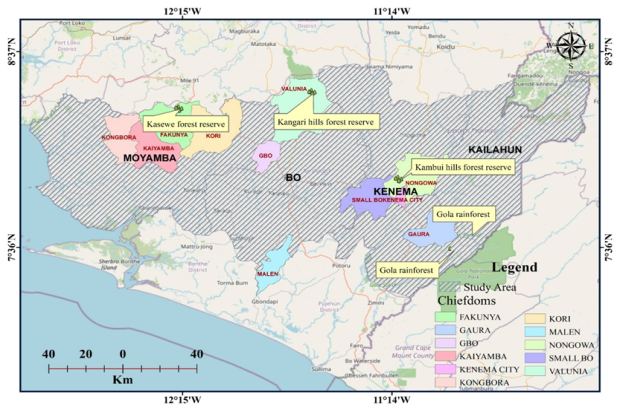
Figure 1. Location of Chiefdoms containing “forest edge” communities in Southern and Eastern regions of Sierra Leone.
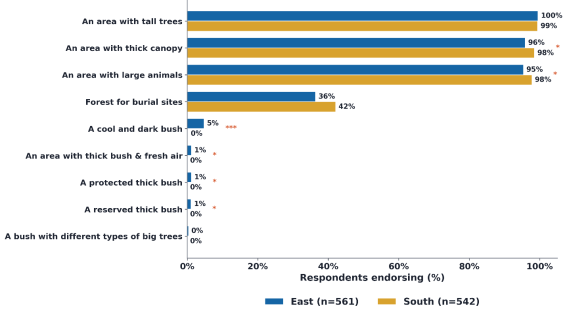
Figure 2. Definition of "forest" in Southern and Eastern Districts.
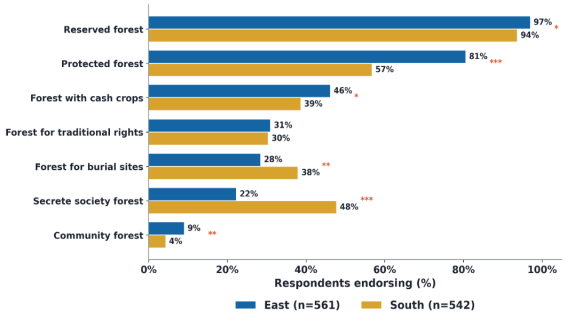
Figure 3. How communities classify forest types in the two regions (East vs South).
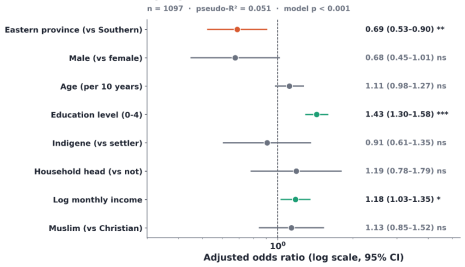
Figure 4. Adjusted predictors of forest classification.
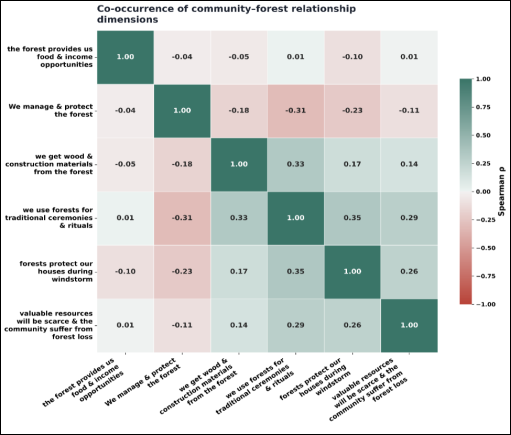
Figure 5. Co-occurrence (correlation) between community-forest relationships.
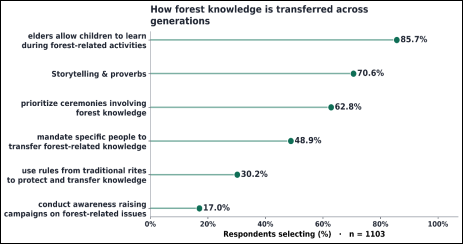
Figure 6. How forest-related knowledge is transferred across generations.

Information



 Share This Article
 Twitter
 Linked In
 Facebook

 Copy
 Download