Abstract
Background: The ideal intrathecal adjuvant in elderly patients should prolong postoperative analgesia while maintaining hemodynamic stability and facilitating smooth recovery. This study compared three doses of intrathecal dexmedetomidine combined with low-dose hyperbaric levobupivacaine in geriatric patients undergoing elective urological surgery. Methods: In this prospective, randomized, double-blind study, 66 ASA I-II patients aged 60-82 years were allocated into three groups (n=22 each). All patients received 2.2 ml of 0.5% hyperbaric levobupivacaine with dexmedetomidine 5 µg (Group A), 7.5 µg (Group B), or 10 µg (Group C). The primary outcome was duration of postoperative analgesia. Secondary outcomes included onset and duration of sensory and motor blockade, Visual Analogue Scale (VAS) scores, rescue analgesic consumption, sedation scores, hemodynamic parameters, and adverse events. Preoperative geriatric assessment included Activities of Daily Living, Mini-Mental State Examination, and Clinical Frailty Scale. Results: Baseline demographic and geriatric assessment parameters were comparable among groups. Group C demonstrated significantly faster sensory block onset (1.08±0.42 min) and longer postoperative analgesia (181.37±9.79 min) than Groups A and B (p < 0.001). Postoperative VAS scores and rescue analgesic requirements were significantly lower in Group C. Sedation scores were slightly higher in the early postoperative period in Group C; however, hemodynamic and respiratory parameters remained stable, with no significant increase in adverse effects. Conclusion: Intrathecal dexmedetomidine improved spinal anaesthesia quality in a dose-dependent manner. A 10 µg dose provided superior postoperative analgesia with reduced analgesic requirement and acceptable safety in elderly patients undergoing urological surgery.
Keywords
Dexmedetomidine, Levobupivacaine, Visual Analogue Scale, MMSE, Clinical Frailty Scale, Geriatric Anaesthesia,
Cognitive Outcomes
1. Introduction
The International Association for the Study of Pain (IASP) defines pain as an unpleasant sensory and emotional experience associated with actual or potential tissue damage
| [1] | Raja SN, Carr DB, Cohen M, Finnerup NB, Flor H, Gibson S, Keefe FJ, Mogil JS, Ringkamp M, Sluka KA, Song XJ, Stevens B, Sullivan MD, Tutelman PR, Ushida T, Vader K. The revised International Association for the Study of Pain definition of pain: concepts, challenges, and compromises. Pain. 2020; 161(9): 1976-1982.
https://doi.org/10.1097/j.pain.0000000000001939 |
[1].
In the perioperative period, pain is a complex biopsychosocial phenomenon; in geriatric patients, inadequate analgesia is particularly deleterious. It exacerbates the neuroendocrine stress response and increases myocardial oxygen demand, which coupled with age-related reductions in physiological reserve leads to delayed mobilization, prolonged hospitalization, and increased mortality
| [2] | Shellito AD, Dworsky JQ, Kirkland PJ, Rosenthal RA, Sarkisian CA, Ko CY, Russell MM. Perioperative Pain Management Issues Unique to Older Adults Undergoing Surgery: A Narrative Review. Ann Surg Open. 2021; 2(3): e072. https://doi.org/10.1097/AS9.0000000000000072 |
[2]
.
Spinal anaesthesia is the gold standard for infraumbilical urologic procedures, yet the geriatric population presents unique challenges. Outcomes are increasingly dictated by frailty status and baseline cognitive function rather than chronological age alone
. Tools such as the Clinical Frailty Scale (CFS) and Mini-Mental State Examination (MMSE) are vital, as frail elderly patients are highly susceptible to hemodynamic instability and postoperative delirium (POD). While conventional intrathecal doses ensure dense blockade, they often trigger profound sympathetic inhibition, compromising vital organ perfusion
| [4] | Pienta M, He C, Clark MJ, Fanning JS, Azoury FM, Grelecki L, Alnajjar RM, Pruitt AL, Pagani FD; Michigan Society of Thoracic and Cardiovascular Surgeons Quality Collaborative. Clinical Frailty Scale Assessment Before Cardiac Surgery. Ann Thorac Surg. 2026; 121(3): 696-703.
https://doi.org/10.1016/j.athoracsur.2025.10.028 |
[4]
.
Levobupivacaine, the S(−) enantiomer of bupivacaine, offers a safer alternative due to its reduced affinity for cardiac and central nervous system sodium channels. However, low-dose levobupivacaine protocols—intended to preserve hemodynamic stability—often result in early sensory regression and inadequate postoperative analgesia. To bridge this gap without the respiratory depression and cognitive clouding associated with opioids, α
2-adrenergic agonists like dexmedetomidine have gained prominence. By acting on the spinal dorsal horn, dexmedetomidine inhibits nociceptive transmission, providing a potent opioid-sparing effect that is critical for Enhanced Recovery After Surgery (ERAS) in the elderly
| [5] | Basuni AS, Ezz HA. Dexmedetomidine as supplement to low-dose levobupivacaine spinal anesthesia for knee arthroscopy. Egyptian Journal of Anaesthesia. 2014; 30(2): 149-53.
https://doi.org/10.1016/j.egja.2013.11.003 |
[5]
.
A primary concern in geriatric regional anaesthesia is differential analgesia: the clinical window between motor recovery and the first request for rescue analgesia. Optimizing this interval is essential for early mobilization while maintaining patient comfort. However, dexmedetomidine exhibits strict dose-dependency; doses of 3-5µg may provide insufficient analgesia, while 10 µg ensures prolonged anaesthesia but requires careful monitoring for cardiovascular depression
| [6] | Al Harbi MK, Alshaghroud SM, Aljahdali MM, Ghorab FA, Baba F, Al Dosary R, Bahadeq M. Regional anesthesia for geriatric population. Saudi J Anaesth. 2023; 17(4): 523-532.
https://doi.org/10.4103/sja.sja_424_23 |
[6]
.
There is currently no consensus on the optimal dose that balances dense, prolonged analgesia with cognitive and hemodynamic safety in geriatric urology. This study investigates three graded intrathecal doses of dexmedetomidine (5µg, 7.5 µg, and 10µg) added to low-dose hyperbaric levobupivacaine. Our objective is to determine the efficacy-safety threshold that ensures superior block characteristics and prolonged postoperative analgesia while preserving hemodynamic stability and early postoperative orientation.
2. Materials and Methods
2.1. Study Design and Ethical Approval
This prospective, randomized, double-blind interventional study was conducted in the Department of Anaesthesiology and Critical Care at a tertiary care teaching hospital between July 2024 and December 2025. Institutional Ethics Committee approval was obtained before initiation of the study (IEC/SGRD/2024-317), and the trial was prospectively registered with the Clinical Trials Registry-India (CTRI/2024/11/076475). The study adhered to the ethical principles outlined in the Declaration of Helsinki. Written informed consent was obtained from all participants in their native language after detailed explanation of the study protocol.
2.2. Sample Size Estimation
Sample size calculation was performed using G*Power software version 3.1.9.7. Based on previously published data regarding duration of postoperative analgesia,
| [7] | Talebi G, Moayeri H, Rahmani K, Nasseri K. Comparison of Three Different Doses of Dexmedetomidine Added to Bupivacaine in Ultrasound-Guided Transversus Abdominis Plane Block; A Randomized Clinical Trial. Anesth Pain Med. 2021; 11(2): e113778. https://doi.org/10.5812/aapm.113778 |
[7]
the calculated effect size corresponded to a study power of 80% with a two-sided alpha error of 0.05. The minimum required sample size was estimated to be 66 patients. To maintain equal allocation and account for study feasibility, patients were divided equally into three groups comprising 22 participants each.
2.3. Patient Selection
Patients aged 60-82 years, belonging to American Society of Anesthesiologists (ASA) physical status I or II, and scheduled for elective urological procedures under spinal anaesthesia, including transurethral resection of prostate (TURP), ureteroscopic lithotripsy (URSL), and cystoscopy, were included in the study.
Patients with hypersensitivity to local anaesthetics or α2-adrenergic agonists, coagulation abnormalities, ongoing anticoagulant therapy, infection at the puncture site, spinal deformity, severe hepatic, renal, or cardiovascular disease, marked cognitive impairment (MMSE <18), or severe frailty (Clinical Frailty Scale ≥7) were excluded.
2.4. Randomization and Blinding
Participants were randomly allocated into three groups using a computer-generated randomization sequence. Allocation concealment was ensured with sequentially numbered opaque sealed envelopes. An anaesthesiologist who was not involved in patient management or data collection prepared the study medications in identical unlabeled syringes, each standardized to a total volume of 2.4 mL. Both the patients and the investigators involved in intraoperative and postoperative assessment remained blinded to group allocation throughout the study.
Study Groups
All patients received 2.2 mL of 0.5% hyperbaric levobupivacaine combined with dexmedetomidine according to the assigned group:
1) Group A (n = 22): Dexmedetomidine 5 µg
2) Group B (n = 22): Dexmedetomidine 7.5 µg
3) Group C (n = 22): Dexmedetomidine 10 µg
Normal saline was added to achieve a final injectate volume of 2.4 mL in all groups.
2.5. Anaesthetic Technique
All patients underwent detailed pre-anaesthetic evaluation prior to surgery. Premedication included oral alprazolam 0.25 mg administered on the night before surgery and again on the morning of the procedure. Standard fasting guidelines were followed.
After arrival in the operating room, standard monitoring comprising electrocardiography, non-invasive blood pressure measurement, and pulse oximetry was instituted. Intravenous access was secured and baseline hemodynamic variables were recorded. Spinal anaesthesia was administered in the sitting position at the L3-L4 intervertebral space using a 25-gauge Quincke spinal needle through a midline approach. After confirmation of free flow of cerebrospinal fluid, the study drug was injected intrathecally and patients were positioned supine immediately thereafter.
2.6. Outcome Measures
2.6.1. Primary Outcome
The primary outcome was duration of postoperative analgesia, defined as the interval between intrathecal drug administration and the first request for rescue analgesia.
2.6.2. Secondary Outcomes
Secondary outcomes included onset and duration of sensory and motor blockade, postoperative pain scores, rescue analgesic consumption, sedation profile, hemodynamic stability, adverse events, cognitive recovery, and functional recovery parameters.
Sensory block onset was defined as the time taken to achieve loss of pinprick sensation at the T10 dermatome. Maximum sensory level attained and time to two-segment regression were recorded. Motor blockade was assessed using the Modified Bromage Scale. Duration of motor block was defined as the time from onset of motor blockade until complete recovery to Bromage score 0.
Postoperative pain intensity was evaluated using a 10-cm Visual Analogue Scale (VAS) at 15-minute intervals during the first postoperative hour, hourly for the subsequent 4 hours, and later at 8, 12, and 24 hours postoperatively. Rescue analgesia consisting of intravenous diclofenac sodium 75 mg diluted in 100 mL normal saline was administered when VAS score was ≥4. Time to first rescue analgesia and total analgesic consumption during the first 24 postoperative hours were documented.
Sedation was assessed using the Ramsay Sedation Score (RSS) at 0, 1, 2, 4, 8, 12, and 24 postoperative hours. Hemodynamic parameters including heart rate, systolic blood pressure, respiratory rate, and oxygen saturation were recorded at baseline, 1, 5, 10, and 15 minutes after spinal anaesthesia, and subsequently at 15-minute intervals throughout surgery. Hypotension, defined as a reduction in systolic blood pressure greater than 20% from baseline, was managed with intravenous fluids and mephentermine 6 mg. Bradycardia, defined as a reduction in heart rate greater than 20% from baseline, was treated with intravenous atropine 0.6 mg.
2.7. Geriatric and Cognitive Assessment
Baseline geriatric evaluation included assessment of Activities of Daily Living (ADL), Mini-Mental State Examination (MMSE), and frailty scoring using the 9-point Clinical Frailty Scale (CFS). Cognitive assessments were performed by a trained anaesthesia resident blinded to group allocation. Whenever feasible, postoperative evaluations were conducted by the same investigator to minimize interobserver variability. Patients with severe visual, auditory, or communication difficulties interfering with cognitive assessment were excluded.
MMSE scoring was performed preoperatively and repeated at 24 postoperative hours to assess early cognitive recovery. Delirium screening was conducted using the Confusion Assessment Method (CAM) at 2, 6, 12, and 24 hours postoperatively. Assessment included evaluation for acute or fluctuating mental status changes, inattention, disorganized thinking, altered consciousness, and orientation. All assessments were conducted in the patient’s native language (Punjabi or Hindi) to minimize language-related bias.
Additional recovery parameters evaluated during the first postoperative day included postoperative confusion, agitation, cooperative sedation profile, time to ambulation, return of spontaneous bladder function in non-catheterized patients, and patient satisfaction.
2.8. Statistical Analysis
Statistical analysis was performed using SPSS software (IBM Corp., Armonk, NY, USA). Normality of data distribution was assessed using the Shapiro-Wilk test. Continuous variables were expressed as mean ± standard deviation and analyzed using one-way analysis of variance (ANOVA) followed by Tukey’s post-hoc test where appropriate. Repeated-measures ANOVA was used for serial comparisons of VAS scores and perioperative hemodynamic parameters. Categorical variables were analyzed using Chi-square test or Fisher’s exact test as appropriate. A p-value <0.05 was considered statistically significant.
3. Results
The CONSORT flow diagram (
Figure 1) illustrates patient screening, randomization, allocation, follow-up, and analysis. Of the 74 patients assessed for eligibility, 66 met the inclusion criteria and were randomized equally into three groups. All enrolled patients completed the study and were included in the final analysis. Baseline demographic characteristics were comparable among the groups (
Table 1).
Figure 1. Consolidated Standards of Reporting Trials (CONSORT) Flow Diagram.
3.1. Demographic and Baseline Characteristics
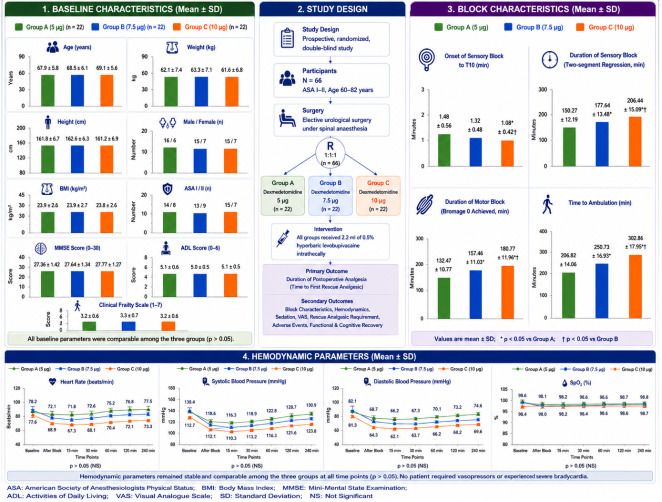
A total of 66 patients were allocated equally into three study groups (n = 22 each). There were no statistically significant differences among the groups with respect to age, body weight, gender distribution, ASA physical status, MMSE score, ADL score, or Clinical Frailty Scale score (p > 0.05), indicating comparable baseline demographic, cognitive, and frailty characteristics.
Peak sensory block levels achieved were similar in all groups. However, significant dose-dependent differences were observed in block characteristics. Group C (dexmedetomidine 10 µg) demonstrated the most rapid onset of sensory blockade (1.08 ± 0.42 min), longest duration of two-segment regression (162.83 ± 9.97 min), prolonged motor blockade duration (170.00 ± 8.60 min), and longest duration of postoperative analgesia (181.37 ± 9.79 min) compared with Groups A and B (p < 0.001 for all comparisons). Postoperative pain scores were lower in Group C, which was also associated with reduced rescue analgesic requirement during the first 24 postoperative hours. Despite prolonged sensory and motor blockade, hemodynamic and respiratory variables remained stable across all groups, with no episodes of respiratory depression or major adverse events observed. These findings suggest that higher-dose intrathecal dexmedetomidine improved perioperative analgesic efficacy without compromising safety in elderly patients undergoing urological procedures (
Table 1).
Table 1. Comparison of Patient Demographics and Perioperative Block. Characteristics Across Study Groups.
Parameter | Group A (5µg) (n=22) | Group B (7.5 µg) (n=22) | Group C (10µg) (n=22) |
Age (Years) | 67.80 ± 6.12 | 68.95 ± 5.84 | 69.43 ± 5.76 |
Weight (kg) | 78.37±7.43 | 74.60±8.51 | 77.03±8.90 |
Gender (M/F) | 15/7 | 14/8 | 14/8 |
ASA Grade (I/II) | 13/9 | 12/10 | 11/11 |
MMSE Score | 27.18 ± 1.42 | 26.95 ± 1.51 | 27.04 ± 1.36 |
ADL Score | 5.72 ± 0.45 | 5.68 ± 0.48 | 5.77 ± 0.43 |
Clinical Frailty Scale (CFS) | 3.04 ± 0.72 | 3.18 ± 0.66 | 3.09 ± 0.61 |
Comparison of Anesthetic Block Characteristics |
Parameter (minutes) | Group A | Group B | Group C |
Peak Sensory (T6/T7/T8) | 11/ 1 / 10 | 13 / 0 / 9 | 16 / 0 / 6 |
Onset of Sensory Block | 11.00±1.21 | 4.47±1.26 | 1.08±0.42 |
Time to peak sensory block | 12.94±1.07 | 5.43±1.29 | 2.72±0.48 |
One Segment Regression | 68.77±9.20 | 107.03±9.28 | 123.67±7.14 |
Two Segment Regression | 86.37±7.69 | 129.73±9.13 | 162.83±9.97 |
Motor Block Duration | 89.37±8.91 | 135.17± 14.67 | 170.00±8.60 |
Duration of Analgesia | 110.87±10.00 | 153.30±10.49 | 181.37±9.79 |
3.2. Hemodynamic and Respiratory Parameters
Perioperative hemodynamic and respiratory parameters remained clinically stable across all study groups throughout the intraoperative and postoperative observation period. Although Group C demonstrated lower intraoperative heart rate and systolic blood pressure values, these changes were transient and clinically manageable. Bradycardia and hypotension showed a mild dose-related increase with higher dexmedetomidine doses; however, the incidence was not statistically significant, and no patient required vasopressor infusion or advanced hemodynamic support. Respiratory rate and oxygen saturation remained comparable among groups, with no episodes of respiratory depression or clinically significant desaturation observed during the study period (
Table 2;
Figure 2).
Figure 2. Comparative Overview of Study Design, Baseline Characteristics, Block Characteristics, and Hemodynamic Parameters Among Three Intrathecal Dexmedetomidine Dose Groups in Geriatric Patients Undergoing Urological Surgery.
Table 2. Perioperative Hemodynamic and Respiratory Parameters.
Parameter | Group A (5 µg) (n=22) | Group B (7.5 µg) (n=22) | Group C (10 µg) (n=22) | p-value |
Baseline Heart Rate (bpm) | 84.2 ± 8.4 | 82.7 ± 7.9 | 83.1 ± 8.2 | 0.81 |
Lowest Intraoperative HR (bpm) | 71.4 ± 6.2 | 69.8 ± 5.9 | 66.2 ± 6.1 | 0.048 |
Bradycardia Requiring Atropine, n (%) | 1 (4.5%) | 2 (9.1%) | 3 (13.6%) | 0.41 |
Baseline SBP (mmHg) | 132.4 ± 10.1 | 130.7 ± 9.8 | 131.6 ± 10.4 | 0.87 |
Lowest Intraoperative SBP (mmHg) | 108.6 ± 8.9 | 105.8 ± 8.4 | 101.2 ± 9.1 | 0.062 |
Hypotension Requiring Mephentermine, n (%) | 1 (4.5%) | 2 (9.1%) | 3 (13.6%) | 0.41 |
Vasopressor Infusion Requirement | 0 | 0 | 0 | _ |
Mean Postoperative HR (bpm | 78.2 ± 6.1 | 75.4 ± 5.8 | 73.6 ± 5.5 | 0.09 |
Mean Postoperative SBP (mmHg) | 124.8 ± 8.2 | 122.4 ± 8.0 | 119.6 ± 7.8 | 0.11 |
Mean Respiratory Rate (per min) | 14.1 ± 1.2 | 13.8 ± 1.1 | 13.6 ± 1.0 | 0.36 |
Mean SpO2 (%) | 97.8 ± 0.9 | 97.4 ± 1.0 | 97.2 ± 0.8 | 0.28 |
Values are expressed as mean ± standard deviation (SD) or number (%). HR denotes heart rate, SBP denotes systolic blood pressure, and SpO2 denotes peripheral oxygen saturation. Bradycardia was defined as a heart rate below 50 beats/min requiring atropine administration, while hypotension was defined as a fall in systolic blood pressure greater than 20% from baseline requiring mephentermine administration. Continuous variables were analyzed using one-way ANOVA, whereas categorical variables were compared using Chi-square test or Fisher’s exact test as appropriate. A p-value <0.05 was considered statistically significant. None of the patients required vasopressor infusion or advanced hemodynamic intervention during the perioperative period.
3.3. Postoperative Analgesia and Rescue Analgesic Requirement
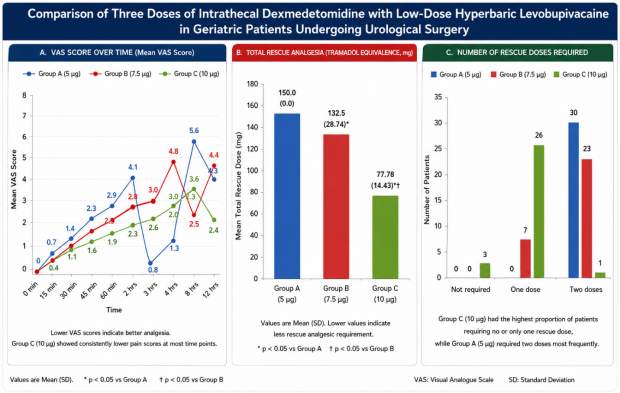
Postoperative pain assessment revealed a clear dose-related improvement in analgesic quality with increasing doses of intrathecal dexmedetomidine. Patients in Group C demonstrated consistently lower VAS scores throughout the postoperative observation period compared with Groups A and B. Although VAS scores during the initial 0-3 postoperative hours were similar between Groups B and C, significant differences became evident after 4 hours and persisted at 8 and 12 hours postoperatively (p<0.001), indicating a more sustained analgesic effect in Group C. In contrast, patients in Group A experienced comparatively higher pain scores at most assessment intervals (
Table 3;
Figure 3).
The duration of postoperative analgesia was significantly prolonged in Group C. This group also required a lower total dose of rescue diclofenac (77.78 ± 14.43 mg) compared with Group B (132.50 ± 32.26 mg) and Group A (150 ± 0 mg) (p < 0.001
Table 4;
Figure 3). In addition, the majority of patients in Group C required only a single rescue analgesic dose, whereas all patients in Group A required two rescue doses during the study period. These findings indicate that intrathecal dexmedetomidine at a dose of 10 µg provided more effective and sustained postoperative analgesia while markedly reducing supplemental analgesic requirements in elderly patients undergoing spinal anaesthesia.
Table 3. Comparative Analysis of Postoperative Pain Intensity (VAS Scores) Over a 12- Hour Follow-up.
POST OP VAS | Group A (n=22) | Group B (n=22) | Group C (n=22) | df | p value |
A vs B | A vs C | B vs C |
0 min | 0.0±0.0 | 0.0±0.0 | 0.0±0.0 | 2,87 | - | - | - |
15 min | 0.5±0.509 | 0.67±0.479 | 0.40±0.498 | 2,87 | 0.398 | 0.715 | 0.099 |
30 min | 1.40±0.621 | 1.37±0.490 | 1.10±0.548 | 2,87 | 0.971 | 0.098 | 0.157 |
45 min | 2.33±0.547 | 1.93±0.254 | 1.57±0.568 | 2,87 | 0.005* | 0.000† | 0.011* |
60 min | 2.97±0.556 | 2.33±0.479 | 1.93±0.365 | 2,87 | 0.000† | 0.000† | 0.004* |
2 hrs | 4.17±2.052 | 2.80±0.407 | 2.30±0.466 | 2,87 | 0.000† | 0.000† | 0.266 |
3 hrs | 0.77±1.716 | 3.07±0.365 | 2.70±0.466 | 2,87 | 0.000† | 0.000† | 0.369 |
4 hrs | 1.60±1.380 | 4.87±1.306 | 3.00±0.371 | 2,87 | 0.000† | 0.000† | 0.000† |
8 hrs | 5.63±2.008 | 2.53±2.030 | 3.80±1.400 | 2,87 | 0.000† | 0.001† | 0.024* |
12 hrs | 3.90±2.721 | 4.47±1.697 | 2.37±1.691 | 2,87 | 0.548 | 0.015* | 0.001† |
Data are Mean±SD, >0.05: Insignificant, *: significant, †: highly significant, VAS values following rescue analgesia represent post-intervention pain assessment scores.
Table 4. Mean duration of analgesia (min) and Total dose requirement of rescue analgesia given within 12 hours in three study groups.
Parameter | Group A Mean ± SD (n=22) | Group B Mean ± SD (n=22) | Group C Mean ± SD (n=22) |
Duration of analgesia (min) | 110.87±10.00 | 153.30±10.49 | 181.37±9.79 |
A vs B | <0.001† |
A vs C | <0.001† |
B vs C | <0.001† |
Rescue Dose (Diclofenac sodium) | 150.00 ± 0.00 | 132.50 ± 32.26 | 77.78 ± 14.43 |
A vs B | <0.01† |
A vs C | 0.004* |
B vs C | <0.01† |
Data are Mean±SD, >0.05: Insignificant, *: significant, †: highly significant
Figure 3. Comparative Postoperative Pain Scores and Rescue Analgesic Requirements Among Three Intrathecal Dexmedetomidine Dose Groups in Geriatric Patients Undergoing Urological Surgery.
Table 5. Postoperative Sedation and Cognitive Recovery.
RSS AT TIME INTERVAL | Group A (5 µg) (n=22) | Group B (7.5 µg) (n=22) | Group C (10 µg) (n=22) | P-value |
0 min | 1.8 ± 0.5 | 2.4 ± 0.6 | 3.1 ± 0.7 | <0.001 |
60 min | 1.5 ± 0.4 | 2.1 ± 0.5 | 2.7 ± 0.6 | <0.001 |
2 hrs | 1.3 ± 0.4 | 1.8 ± 0.5 | 2.2 ± 0.5 | <0.001 |
4 hrs | 1.0 ± 0.0 | 1.5 ± 0.4 | 1.8 ± 0.5 | 0.002 |
8 hrs | 1.0 ± 0.0 | 1.2 ± 0.4 | 1.4 ± 0.5 | 0.031 |
12 hrs | 1.0 ± 0.0 | 1.1 ± 0.3 | 1.3 ± 0.4 | 0.084 |
24 hrs | 1.0 ± 0.0 | 1.0 ± 0.0 | 1.0 ± 0.0 | - |
Values are presented as mean ± standard deviation (SD) or number (%). Sedation was evaluated using the Ramsay Sedation Score (RSS), where Score 1 indicated anxiety or agitation, Score 2 indicated a calm and cooperative patient, and Score 3 indicated a patient responding only to verbal commands; higher scores represented deeper levels of sedation. A cooperative sedation profile was defined as a calm, comfortable, and easily arousable patient who remained responsive to verbal communication without evidence of agitation or respiratory depression. Time to cognitive recovery was defined as the duration required for restoration of full orientation to person, place, and time along with an appropriate cooperative response. A p-value <0.05 was considered statistically significant.
3.4. Sedation Profile
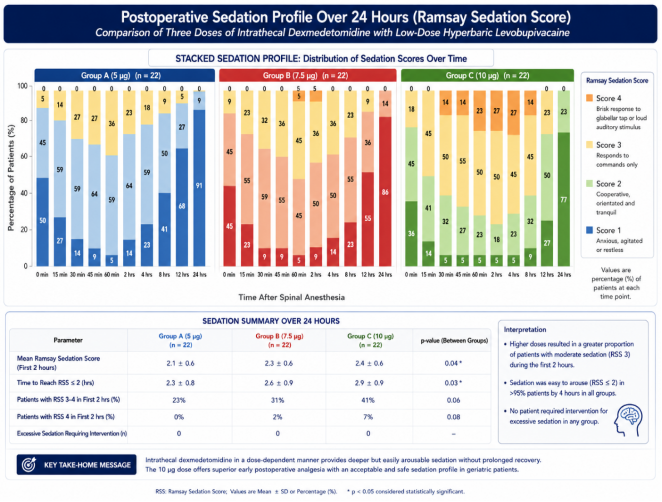
Postoperative Ramsay Sedation Scores showed a dose-dependent increase in early postoperative sedation with higher doses of intrathecal dexmedetomidine. Patients in Group C demonstrated significantly higher sedation scores during the immediate postoperative period, particularly within the first 4 hours after surgery, compared with Groups A and B (p < 0.001). However, despite the higher sedation levels, patients remained calm, cooperative, easily arousable, and responsive to verbal commands, with no evidence of respiratory compromise or need for active intervention.
Sedation scores gradually declined in all groups over time, approaching baseline values within 12-24 postoperative hours. Although Group C maintained slightly higher sedation scores during the early recovery phase, orientation and cognitive responsiveness remained intact, and overall recovery was smooth. The mild increase in early postoperative sedation observed with the 10 µg dose may have contributed to greater patient comfort, improved analgesia, and lower postoperative pain scores without negatively affecting respiratory or cognitive recovery (
Figure 4).
Figure 4. Comparative postoperative sedation profile and early recovery characteristics among the three intrathecal dexmedetomidine dose groups in geriatric patients undergoing urological surgery.
3.5. Safety and Complications
The overall incidence of adverse events was comparable among all three groups, with no statistically significant differences observed (p>0.05). Although patients in Group C experienced a relatively higher frequency of bradycardia and hypotension, these episodes were mild, transient, and responded well to standard treatment measures without the need for continuous vasopressor support or advanced hemodynamic management.
The occurrence of postoperative nausea and vomiting was similar across the groups. No patient developed respiratory depression or clinically significant oxygen desaturation during the perioperative or postoperative period.
Sedation scores increased with higher doses of intrathecal dexmedetomidine; however, patients in Group C remained calm, cooperative, and easily arousable throughout the recovery period. All patients responded appropriately to verbal commands, and none required intervention for excessive sedation.
Postoperative cognitive assessment demonstrated satisfactory neurocognitive recovery in all groups. MMSE scores assessed at 12 postoperative hours remained comparable to preoperative baseline values. Similarly, delirium screening using the Confusion Assessment Method (CAM) revealed only minimal postoperative confusion, with no significant differences among the study groups. Most patients maintained appropriate orientation and cooperative behavior during recovery, particularly those in Group C.
Despite a greater degree of early postoperative sedation, the 10 µg dexmedetomidine group achieved superior analgesic outcomes, reflected by lower postoperative VAS scores and reduced rescue analgesic consumption, while maintaining stable hemodynamic, respiratory, and cognitive parameters in elderly patients undergoing spinal anaesthesia.
Table 6. Postoperative Cognitive Monitoring and Early Neurocognitive Recovery Profile.
Cognitive parameters | Group A (5 µg) (n=22) | Group B (7.5 µg) (n=22) | Group C (10 µg) (n=22) | p-value |
Baseline MMSE Score | 27.18 ± 1.51 | 26.95 ± 1.51 | 27.04 ± 1.36 | |
MMSE at 12hrs | 26.90 ± 1.51 | 26.72 ± 1.43 | 26.95 ± 1.38 | 0.91 |
Postoperative Delirium (CAM Positive) | 1 (4.5%) | 1 (4.5%) | 0 (0%) | 0.58 |
Preserved Orientation at 12hrs | 95.5% | 95.5% | 100% | 0.62 |
Cooperative Sedation Profile | 81.8% | 90.9% | 95.5% | 0.39 |
Excessive Sedation Requiring Intervention | 0 | 0 | 0 | _ |
Time to Cognitive Recovery (hrs) | 1.8 ± 0.6 | 2.4 ± 0.7 | 3.1 ± 0.8 | <0.001 |
Postoperative Confusion/Agitation | 1 (4.5%) | 0 | 0 | 0.36 |
Recall of Person/Place/Time at 12 hrs. | 90.9% | 95.5% | 100% | 0.28 |
MMSE denotes the Mini-Mental State Examination, and CAM refers to the Confusion Assessment Method. Postoperative cognitive recovery was evaluated through assessment of orientation status, delirium screening, cooperative sedation profile, and repeat MMSE during the first 12 postoperative hours (
Table 6). Data are presented as mean ± standard deviation (SD) or percentage (%), and a p-value <0.05 was considered statistically significant. Cooperative sedation was defined as a calm, easily arousable state in which patients remained responsive to verbal commands without agitation or respiratory compromise.
At 24-hour postoperative follow-up, patients in Group C exhibited superior analgesic outcomes compared with Groups A and B. This was reflected by significantly lower VAS scores and reduced total requirement of rescue analgesics over the first 24 hours (p < 0.001). Recovery of spontaneous bladder function and time to assisted ambulation were marginally delayed in Group C, most likely due to a more prolonged sensory and motor block; however, patients remained hemodynamically stable with preserved orientation and satisfactory cooperative recovery throughout (
Table 7).
CAM-based delirium assessment did not reveal any statistically significant differences between the groups, and no patient developed clinically relevant postoperative delirium or required intervention for excessive sedation. Patient satisfaction scores were highest in Group C, indicating better overall perioperative comfort and more sustained postoperative analgesia.
Table 7. 24 hours Postoperative Functional Recovery and Cognitive Outcome.
PARAMETER | Group A (5 µg) (n=22) | Group B (7.5 µg) (n=22) | Group C (10 µg) (n=22) | p-value |
VAS Score at 24 hrs | 4.8 ± 1.4 | 3.9 ± 1.2 | 2.9 ± 1.1 | <0.001 |
Total Rescue Analgesia in 24 hrs (mg Diclofenac) | 150 ± 0 | 112.5 ± 28.6 | 75 ± 21.4 | <0.001 |
CAM Positive at 24 hrs | 1 (4.5%) | 1 (4.5%) | 0 | 0.58 |
Preserved Orientation at 24 hrs | 90.9% | 95.55% | 100% | 0.31 |
Cooperative Recovery Profile | 81.8% | 90.9% | 95.5% | 0.39 |
Time to Ambulation (hrs) | 5.2 ± 0.8 | 6.4 ± 1.0 | 7.1 ± 1.2 | <0.001 |
Recovery of spontaneous bladder function* | 5.8 ± 1.1 | 6.7 ± 1.2 | 7.4 ± 1.3 | 0.002 |
Patient Satisfaction Score (1-5) | 3.4 ± 0.7 | 4.1 ± 0.6 | 4.7 ± 0.5 | <0.001 |
Delayed PONV | 3 (13.6%) | 2 (9.1%) | 2 (9.1%) | 0.81 |
Excessive Sedation Requiring Intervention | 0 | 0 | 0 | - |
Values are presented as mean ± standard deviation (SD) or number (%). CAM denotes Confusion Assessment Method, and VAS refers to Visual Analogue Scale. Cooperative recovery profile was defined as a calm, oriented, and easily arousable state without agitation or respiratory compromise. Patient satisfaction was evaluated using a 5-point Likert scale (1 = very dissatisfied, 5 = very satisfied). A p-value < 0.05 was considered statistically significant. *Time to first void was recorded only in non-catheterized patients.
4. Discussion
The present study evaluated the effects of three incremental doses of intrathecal dexmedetomidine (5 µg, 7.5 µg, and 10 µg) as an adjunct to low-dose hyperbaric levobupivacaine in geriatric patients undergoing urological procedures. The results demonstrated a clear dose-dependent improvement in the quality of spinal anaesthesia, including enhanced sensory block characteristics, prolonged analgesia, better postoperative pain control, and reduced rescue analgesic requirements, while maintaining acceptable hemodynamic and respiratory stability. Among the three regimens, the 10 µg dose provided the most sustained postoperative analgesia and the most favorable perioperative recovery profile.
Baseline demographic variables, frailty status, and cognitive scores were comparable across all groups, thereby minimizing potential confounding factors. Similar baseline comparability has been reported in earlier studies by Saha et al.
| [8] | Saha AK, Hembrom BPM, Laha B, Mitra T, Hazra A. Comparison of Different Doses of Dexmedetomidine as Adjuvant for Infraumbilical Surgery in Patients Receiving Bupivacaine Spinal Anesthesia: A Randomized Controlled Trial. Asian J Anesthesiol. 2022; 60(3): 101-108.
https://doi.org/10.6859/aja.202209_60(3).0002 |
[8]
; Kanazi et al.
| [9] | Kanazi GE, Aouad MT, Jabbour-Khoury SI, Al Jazzar MD, Alameddine MM, Al-Yaman R, Bulbul M, Baraka AS. Effect of low-dose dexmedetomidine or clonidine on the characteristics of bupivacaine spinal block. Acta Anaesthesiol Scand. 2006; 50(2): 222-7.
https://doi.org/10.1111/j.1399-6576.2006.00919.x |
[9]
and Bhirud et al.
| [10] | Bhirud PH, Chellam S, Mote MN, Toal PV. Effects of intravenous dexmedetomidine on spinal anesthesia and sedation - A comparison of two different maintenance infusions. J Anaesthesiol Clin Pharmacol. 2020; 36(1): 78-82.
https://doi.org/10.4103/joacp.JOACP_129_18 |
[10]
supporting the methodological consistency of dose-comparison trials involving intrathecal dexmedetomidine.
In this study, higher doses of dexmedetomidine were associated with a more rapid onset of sensory block and a prolonged duration of motor blockade. Group C showed the fastest sensory onset and the longest motor block duration among all groups. Comparable dose-dependent effects on spinal block characteristics have been reported in previous studies by Eid et al.
| [11] | Eid HEA, Shafie MA, Youssef HY. Dose-related prolongation of hyperbaric bupivacaine spinal anesthesia by dexmedetomidine. Ain Shams J Anesthesiol. 2011; 4: 83-95.
https://doi.org/10.9790/0853-14788490 |
[11]
; Harsoor et al.
| [12] | Harsoor S, Rani DD, Yalamuru B, Sudheesh K, Nethra S. Effect of supplementation of low dose intravenous dexmedetomidine on characteristics of spinal anaesthesia with hyperbaric bupivacaine. Indian J Anaesth. 2013; 57(3): 265-9.
https://doi.org/10.4103/0019-5049.115616 |
[12]
; Shukla et al.
| [13] | Shukla D, Agarwal A, Tyagi C, Verma A, Pandey H. Comparative study of intrathecal dexmedetomidine with intrathecal magnesium sulfate used as adjuvants to bupivacaine. J Anaesthesiol Clin Pharmacol. 2011; 27(4): 495-499.
https://doi.org/10.4103/0970-9185.86594 |
[13]
; Saha et al.
| [8] | Saha AK, Hembrom BPM, Laha B, Mitra T, Hazra A. Comparison of Different Doses of Dexmedetomidine as Adjuvant for Infraumbilical Surgery in Patients Receiving Bupivacaine Spinal Anesthesia: A Randomized Controlled Trial. Asian J Anesthesiol. 2022; 60(3): 101-108.
https://doi.org/10.6859/aja.202209_60(3).0002 |
[8]
; Bhirud et al.
| [10] | Bhirud PH, Chellam S, Mote MN, Toal PV. Effects of intravenous dexmedetomidine on spinal anesthesia and sedation - A comparison of two different maintenance infusions. J Anaesthesiol Clin Pharmacol. 2020; 36(1): 78-82.
https://doi.org/10.4103/joacp.JOACP_129_18 |
[10]
; Mahendru et al.
| [14] | Mahendru V, Tewari A, Katyal S, Grewal A, Singh MR, Katyal R. A comparison of intrathecal dexmedetomidine, clonidine, and fentanyl as adjuvants to hyperbaric bupivacaine for lower limb surgery: a double-blind controlled study. J Anaesthesiol Clin Pharmacol. 2013; 29(4): 496-502.
https://doi.org/10.4103/0970-9185.119151 |
[14]
and Bajwa et al
.
Prolonged two-segment regression time and extended duration of analgesia in the higher-dose group translated into significantly lower postoperative VAS scores and reduced requirement for rescue analgesics. These findings are consistent with those of Al-Ghanem et al.
| [16] | Al-Ghanem SM, Massad IM, Al-Mustafa MM, Al-Zaben KR, Qudaisat IY, Qatawneh AM, et al. Effect of adding dexmedetomidine versus fentanyl to intrathecal bupivacaine on spinal block characteristics in gynecological procedures: a double-blind controlled study. Am J Appl Sci. 2009; 6(5): 882-887. https://doi.org/10.3844/ajassp.2009.882.887 |
[16]
; Al-Mustafa et al.
| [17] | Al-Mustafa MM, Abu-Halaweh SA, Aloweidi AS, Murshidi MM, Ammari BA, Awwad ZM, et al. Effect of dexmedetomidine added to spinal bupivacaine for urological procedures. Saudi Med J. 2009; 30(3): 365-70. |
[17]
and Mehta et al.
| [18] | Mehta JB, Patel SJ, Shah NV, Chauhan DK, Thomas S. Efficacy of 5 µg and 10 µg dexmedetomidine as adjuvants to 3 mL 0.5% hyperbaric bupivacaine in pelvic and lower limb orthopaedic surgeries: a randomized clinical study. J Clin Diagn Res. 2025; 19(2).
https://doi.org/10.7860/JCDR/2025/75440.20585 |
[18]
who also reported prolonged postoperative analgesia with higher doses of intrathecal dexmedetomidine. Meta-analytic evidence further supports that dexmedetomidine prolongs sensory blockade, reduces postoperative analgesic consumption, and maintains respiratory stability. This opioid-sparing effect is particularly advantageous in elderly patients who are more susceptible to opioid-related adverse effects.
Although sedation scores were higher in the 7.5 µg and 10 µg groups, patients remained cooperative, easily arousable, and hemodynamically stable, without evidence of respiratory depression. This dose-dependent sedative effect is consistent with the known pharmacological profile of dexmedetomidine, characterized by sympatholysis and cooperative sedation. Similar observations have been reported by Ebert et al.
and Doo et al.
| [20] | Doo A, Joung J, Ko S. Comparison of midazolam and dexmedetomidine on postoperative delirium in older patients undergoing total knee replacement under spinal anesthesia. Perioper Med (Lond). 2025.
https://doi.org/10.1186/s13741-025-00607-8 |
[20]
who highlighted the favorable sedation quality associated with dexmedetomidine during spinal anaesthesia. Recent geriatric anaesthesia literature emphasizes the importance of maintaining cooperative sedation with preserved orientation and avoiding excessive sedation in elderly patients. Studies by Megalla et al.
| [21] | Megalla SA, Eid GM, Elshafie MM. Adding dexmedetomidine to bupivacaine-fentanyl mixture in high-risk elderly patients undergoing orthopedic surgery: a randomized double-blind controlled study. Res Opin Anesth Intensive Care. 2018; 5(3): 205-212. https://doi.org/10.4103/roaic.roaic_39_17 |
[21]
; Ko et al.
| [22] | Ko KH, Jun IJ, Lee S, Lim SH. Effective dose of dexmedetomidine to induce adequate sedation in elderly patients undergoing spinal anesthesia. Korean J Anesthesiol. 2015; 68(6): 575-580.
https://doi.org/10.4097/kjae.2015.68.6.575 |
[22]
and Geng et al.
| [23] | Geng P, Shang Z, Cheng F, Zhang Y, Deng X, Chen X, et al. Preoperative low-dose dexmedetomidine reduces postoperative delirium in elderly patients with hip fracture under spinal anesthesia: a randomized double-blind controlled clinical study. J Clin Anesth. 2025; 111897.
https://doi.org/10.1016/j.jclinane.2025.111897 |
[23]
further support the role of dexmedetomidine in improving perioperative recovery and potentially reducing the risk of postoperative delirium in elderly patients undergoing regional anaesthesia.
A key strength of this study is the inclusion of geriatric-specific perioperative assessments, including MMSE, Clinical Frailty Scale, postoperative cognitive monitoring, and functional recovery parameters alongside standard spinal anaesthesia outcomes. The integration of frailty and cognitive evaluation enhances perioperative risk stratification and strengthens the applicability of findings to elderly surgical populations.
Limitations
This study has certain limitations. It was conducted at a single centre with a relatively small sample size limited to ASA I-II patients, which may restrict generalizability to higher-risk geriatric populations with significant comorbidities. Additionally, although three doses of dexmedetomidine were evaluated, a broader dose range was not assessed, and therefore the definitive optimal dose could not be established. Postoperative cognitive assessment was limited to the first 24 hours, and long-term neurocognitive outcomes were not evaluated. Furthermore, detailed neuropsychological testing for postoperative cognitive dysfunction was not performed, and repeated MMSE assessments may have been influenced by postoperative pain, residual sedation, and educational variability among elderly patients. Assessment of bladder recovery was also partially confounded by routine catheterization in patients undergoing TURP. Despite these limitations, the randomized double-blind design and inclusion of geriatric-focused outcomes enhance the clinical relevance of the study.
5. Conclusion
Intrathecal dexmedetomidine combined with low-dose hyperbaric levobupivacaine improved the quality and duration of spinal anaesthesia in geriatric patients undergoing urological procedures in a dose-dependent manner. The 10 µg dose provided superior postoperative analgesia, lower pain scores, and reduced rescue analgesic consumption compared with lower doses, while maintaining stable hemodynamic and respiratory parameters without clinically significant respiratory depression.
Although higher early postoperative sedation was observed with the 10 µg dose, patients remained cooperative, easily arousable, and oriented, without evidence of postoperative delirium during the observation period. The inclusion of frailty, cognitive, and functional recovery assessments further supports the geriatric relevance of the findings. Overall, the results suggest that 10 µg intrathecal dexmedetomidine may be a useful adjuvant for enhanced recovery-oriented spinal anaesthesia in elderly patients undergoing urological surgery.
Abbreviations
ASA I & II | American Society of Anesthesiologists Physical Status I or II |
TURP | Transurethral Resection of Prostate (TURP) |
MMSEE | Mini-Method State Examination |
CFS | Clinical Frailty Scale |
POD | Postoperative Delirium |
URSL | Ureteroscopic Lithotripsy |
VAS | Visual Analogue Scale |
ADL | Activities of Daily Living |
CAM | Confusion Assessment Method |
CTRI | Clinical Trials Registry India |
Acknowledgments
The authors sincerely thank the nurses, medical staff, and all healthcare personnel at Sri Guru Ram Das Institute of Medical Sciences & Research Hospital, Vallah, Amritsar, for their support and cooperation during the conduct of this study. Their assistance in patient care, accurate maintenance of medical records, and facilitation of data collection was greatly appreciated. The authors are grateful for their professionalism, dedication, and valuable contribution to the successful completion of this research.
Author Contributions
Jobanjeet Kaur Hundal: Conceptualization, Data curation, Formal Analysis, Investigation, Methodology, Writing – original draft
Lakshmi Mahajan: Conceptualization, Methodology, Supervision, Validation, Writing – review & editing
Arvinder Pal Singh: Data curation, Investigation, Resources, Validation
Harpreet Babrah: Conceptualization, Methodology, Project administration, Supervision, Writing – review & editing
Surbhi Sharma: Data curation, Investigation, Validation, Visualization
Prabhjot Kaur Gill: Formal analysis, Visualization, Writing – review & editing
Data Availability Statement
The data generated and/or analyzed during this study are not publicly available to protect participant confidentiality. However, the datasets are available from the corresponding author upon reasonable request, subject to applicable ethical and institutional requirements.
Conflicts of Interest
The authors declare no conflicts of interest.
References
| [1] |
Raja SN, Carr DB, Cohen M, Finnerup NB, Flor H, Gibson S, Keefe FJ, Mogil JS, Ringkamp M, Sluka KA, Song XJ, Stevens B, Sullivan MD, Tutelman PR, Ushida T, Vader K. The revised International Association for the Study of Pain definition of pain: concepts, challenges, and compromises. Pain. 2020; 161(9): 1976-1982.
https://doi.org/10.1097/j.pain.0000000000001939
|
| [2] |
Shellito AD, Dworsky JQ, Kirkland PJ, Rosenthal RA, Sarkisian CA, Ko CY, Russell MM. Perioperative Pain Management Issues Unique to Older Adults Undergoing Surgery: A Narrative Review. Ann Surg Open. 2021; 2(3): e072.
https://doi.org/10.1097/AS9.0000000000000072
|
| [3] |
Mahender A, Chavan SS, Saroa R, Chauhan M. Recent advances in geriatric anaesthesia. Indian J Anaesth. 2023; 67(1): 152-158.
https://doi.org/10.4103/ija.ija_1029_22
|
| [4] |
Pienta M, He C, Clark MJ, Fanning JS, Azoury FM, Grelecki L, Alnajjar RM, Pruitt AL, Pagani FD; Michigan Society of Thoracic and Cardiovascular Surgeons Quality Collaborative. Clinical Frailty Scale Assessment Before Cardiac Surgery. Ann Thorac Surg. 2026; 121(3): 696-703.
https://doi.org/10.1016/j.athoracsur.2025.10.028
|
| [5] |
Basuni AS, Ezz HA. Dexmedetomidine as supplement to low-dose levobupivacaine spinal anesthesia for knee arthroscopy. Egyptian Journal of Anaesthesia. 2014; 30(2): 149-53.
https://doi.org/10.1016/j.egja.2013.11.003
|
| [6] |
Al Harbi MK, Alshaghroud SM, Aljahdali MM, Ghorab FA, Baba F, Al Dosary R, Bahadeq M. Regional anesthesia for geriatric population. Saudi J Anaesth. 2023; 17(4): 523-532.
https://doi.org/10.4103/sja.sja_424_23
|
| [7] |
Talebi G, Moayeri H, Rahmani K, Nasseri K. Comparison of Three Different Doses of Dexmedetomidine Added to Bupivacaine in Ultrasound-Guided Transversus Abdominis Plane Block; A Randomized Clinical Trial. Anesth Pain Med. 2021; 11(2): e113778.
https://doi.org/10.5812/aapm.113778
|
| [8] |
Saha AK, Hembrom BPM, Laha B, Mitra T, Hazra A. Comparison of Different Doses of Dexmedetomidine as Adjuvant for Infraumbilical Surgery in Patients Receiving Bupivacaine Spinal Anesthesia: A Randomized Controlled Trial. Asian J Anesthesiol. 2022; 60(3): 101-108.
https://doi.org/10.6859/aja.202209_60(3).0002
|
| [9] |
Kanazi GE, Aouad MT, Jabbour-Khoury SI, Al Jazzar MD, Alameddine MM, Al-Yaman R, Bulbul M, Baraka AS. Effect of low-dose dexmedetomidine or clonidine on the characteristics of bupivacaine spinal block. Acta Anaesthesiol Scand. 2006; 50(2): 222-7.
https://doi.org/10.1111/j.1399-6576.2006.00919.x
|
| [10] |
Bhirud PH, Chellam S, Mote MN, Toal PV. Effects of intravenous dexmedetomidine on spinal anesthesia and sedation - A comparison of two different maintenance infusions. J Anaesthesiol Clin Pharmacol. 2020; 36(1): 78-82.
https://doi.org/10.4103/joacp.JOACP_129_18
|
| [11] |
Eid HEA, Shafie MA, Youssef HY. Dose-related prolongation of hyperbaric bupivacaine spinal anesthesia by dexmedetomidine. Ain Shams J Anesthesiol. 2011; 4: 83-95.
https://doi.org/10.9790/0853-14788490
|
| [12] |
Harsoor S, Rani DD, Yalamuru B, Sudheesh K, Nethra S. Effect of supplementation of low dose intravenous dexmedetomidine on characteristics of spinal anaesthesia with hyperbaric bupivacaine. Indian J Anaesth. 2013; 57(3): 265-9.
https://doi.org/10.4103/0019-5049.115616
|
| [13] |
Shukla D, Agarwal A, Tyagi C, Verma A, Pandey H. Comparative study of intrathecal dexmedetomidine with intrathecal magnesium sulfate used as adjuvants to bupivacaine. J Anaesthesiol Clin Pharmacol. 2011; 27(4): 495-499.
https://doi.org/10.4103/0970-9185.86594
|
| [14] |
Mahendru V, Tewari A, Katyal S, Grewal A, Singh MR, Katyal R. A comparison of intrathecal dexmedetomidine, clonidine, and fentanyl as adjuvants to hyperbaric bupivacaine for lower limb surgery: a double-blind controlled study. J Anaesthesiol Clin Pharmacol. 2013; 29(4): 496-502.
https://doi.org/10.4103/0970-9185.119151
|
| [15] |
Bajwa SJ, Kaur J. Clinical profile of levobupivacaine in regional anesthesia: a systematic review. J Anaesthesiol Clin Pharmacol. 2013; 29(4): 530-539.
https://doi.org/10.4103/0970-9185.119172
|
| [16] |
Al-Ghanem SM, Massad IM, Al-Mustafa MM, Al-Zaben KR, Qudaisat IY, Qatawneh AM, et al. Effect of adding dexmedetomidine versus fentanyl to intrathecal bupivacaine on spinal block characteristics in gynecological procedures: a double-blind controlled study. Am J Appl Sci. 2009; 6(5): 882-887.
https://doi.org/10.3844/ajassp.2009.882.887
|
| [17] |
Al-Mustafa MM, Abu-Halaweh SA, Aloweidi AS, Murshidi MM, Ammari BA, Awwad ZM, et al. Effect of dexmedetomidine added to spinal bupivacaine for urological procedures. Saudi Med J. 2009; 30(3): 365-70.
|
| [18] |
Mehta JB, Patel SJ, Shah NV, Chauhan DK, Thomas S. Efficacy of 5 µg and 10 µg dexmedetomidine as adjuvants to 3 mL 0.5% hyperbaric bupivacaine in pelvic and lower limb orthopaedic surgeries: a randomized clinical study. J Clin Diagn Res. 2025; 19(2).
https://doi.org/10.7860/JCDR/2025/75440.20585
|
| [19] |
Ebert TJ, Hall JE, Barney JA, Uhrich TD, Colinco MD. The effects of increasing plasma concentrations of dexmedetomidine in humans. Anesthesiology. 2000; 93(2): 382-94.
https://doi.org/10.1097/00000542-200008000-00016
|
| [20] |
Doo A, Joung J, Ko S. Comparison of midazolam and dexmedetomidine on postoperative delirium in older patients undergoing total knee replacement under spinal anesthesia. Perioper Med (Lond). 2025.
https://doi.org/10.1186/s13741-025-00607-8
|
| [21] |
Megalla SA, Eid GM, Elshafie MM. Adding dexmedetomidine to bupivacaine-fentanyl mixture in high-risk elderly patients undergoing orthopedic surgery: a randomized double-blind controlled study. Res Opin Anesth Intensive Care. 2018; 5(3): 205-212.
https://doi.org/10.4103/roaic.roaic_39_17
|
| [22] |
Ko KH, Jun IJ, Lee S, Lim SH. Effective dose of dexmedetomidine to induce adequate sedation in elderly patients undergoing spinal anesthesia. Korean J Anesthesiol. 2015; 68(6): 575-580.
https://doi.org/10.4097/kjae.2015.68.6.575
|
| [23] |
Geng P, Shang Z, Cheng F, Zhang Y, Deng X, Chen X, et al. Preoperative low-dose dexmedetomidine reduces postoperative delirium in elderly patients with hip fracture under spinal anesthesia: a randomized double-blind controlled clinical study. J Clin Anesth. 2025; 111897.
https://doi.org/10.1016/j.jclinane.2025.111897
|
Cite This Article
-
APA Style
Hundal, J. K., Mahajan, L., Singh, A. P., Babrah, H., Sharma, S., et al. (2026). Dose-Response Evaluation of Intrathecal Dexmedetomidine with Low-Dose Hyperbaric Levobupivacaine for Geriatric Urological Surgery: A Randomized Double-Blind Trial. International Journal of Anesthesia and Clinical Medicine, 14(2), 131-144. https://doi.org/10.11648/j.ijacm.20261402.13
 Copy
|
Copy
|
 Download
ACS Style
Hundal, J. K.; Mahajan, L.; Singh, A. P.; Babrah, H.; Sharma, S., et al. Dose-Response Evaluation of Intrathecal Dexmedetomidine with Low-Dose Hyperbaric Levobupivacaine for Geriatric Urological Surgery: A Randomized Double-Blind Trial. Int. J. Anesth. Clin. Med. 2026, 14(2), 131-144. doi: 10.11648/j.ijacm.20261402.13
Copy
|
Download
AMA Style
Hundal JK, Mahajan L, Singh AP, Babrah H, Sharma S, et al. Dose-Response Evaluation of Intrathecal Dexmedetomidine with Low-Dose Hyperbaric Levobupivacaine for Geriatric Urological Surgery: A Randomized Double-Blind Trial. Int J Anesth Clin Med. 2026;14(2):131-144. doi: 10.11648/j.ijacm.20261402.13
Copy
|
Download
-
@article{10.11648/j.ijacm.20261402.13,
  author = {Jobanjeet Kaur Hundal and Lakshmi Mahajan and Arvinder Pal Singh and Harpreet Babrah and Surbhi Sharma and Ruchi Gupta and Prabhjot Kaur Gill},
  title = {Dose-Response Evaluation of Intrathecal Dexmedetomidine with Low-Dose Hyperbaric Levobupivacaine for Geriatric Urological Surgery: A Randomized Double-Blind Trial},
  journal = {International Journal of Anesthesia and Clinical Medicine},
  volume = {14},
  number = {2},
  pages = {131-144},
  doi = {10.11648/j.ijacm.20261402.13},
  url = {https://doi.org/10.11648/j.ijacm.20261402.13},
  eprint = {https://article.sciencepublishinggroup.com/pdf/10.11648.j.ijacm.20261402.13},
  abstract = {Background: The ideal intrathecal adjuvant in elderly patients should prolong postoperative analgesia while maintaining hemodynamic stability and facilitating smooth recovery. This study compared three doses of intrathecal dexmedetomidine combined with low-dose hyperbaric levobupivacaine in geriatric patients undergoing elective urological surgery. Methods: In this prospective, randomized, double-blind study, 66 ASA I-II patients aged 60-82 years were allocated into three groups (n=22 each). All patients received 2.2 ml of 0.5% hyperbaric levobupivacaine with dexmedetomidine 5 µg (Group A), 7.5 µg (Group B), or 10 µg (Group C). The primary outcome was duration of postoperative analgesia. Secondary outcomes included onset and duration of sensory and motor blockade, Visual Analogue Scale (VAS) scores, rescue analgesic consumption, sedation scores, hemodynamic parameters, and adverse events. Preoperative geriatric assessment included Activities of Daily Living, Mini-Mental State Examination, and Clinical Frailty Scale. Results: Baseline demographic and geriatric assessment parameters were comparable among groups. Group C demonstrated significantly faster sensory block onset (1.08±0.42 min) and longer postoperative analgesia (181.37±9.79 min) than Groups A and B (p < 0.001). Postoperative VAS scores and rescue analgesic requirements were significantly lower in Group C. Sedation scores were slightly higher in the early postoperative period in Group C; however, hemodynamic and respiratory parameters remained stable, with no significant increase in adverse effects. Conclusion: Intrathecal dexmedetomidine improved spinal anaesthesia quality in a dose-dependent manner. A 10 µg dose provided superior postoperative analgesia with reduced analgesic requirement and acceptable safety in elderly patients undergoing urological surgery.},
 year = {2026}
}
Copy
|
Download
-
TY  - JOUR
T1  - Dose-Response Evaluation of Intrathecal Dexmedetomidine with Low-Dose Hyperbaric Levobupivacaine for Geriatric Urological Surgery: A Randomized Double-Blind Trial
AU  - Jobanjeet Kaur Hundal
AU  - Lakshmi Mahajan
AU  - Arvinder Pal Singh
AU  - Harpreet Babrah
AU  - Surbhi Sharma
AU  - Ruchi Gupta
AU  - Prabhjot Kaur Gill
Y1  - 2026/07/24
PY  - 2026
N1  - https://doi.org/10.11648/j.ijacm.20261402.13
DO  - 10.11648/j.ijacm.20261402.13
T2  - International Journal of Anesthesia and Clinical Medicine
JF  - International Journal of Anesthesia and Clinical Medicine
JO  - International Journal of Anesthesia and Clinical Medicine
SP  - 131
EP  - 144
PB  - Science Publishing Group
SN  - 2997-2698
UR  - https://doi.org/10.11648/j.ijacm.20261402.13
AB  - Background: The ideal intrathecal adjuvant in elderly patients should prolong postoperative analgesia while maintaining hemodynamic stability and facilitating smooth recovery. This study compared three doses of intrathecal dexmedetomidine combined with low-dose hyperbaric levobupivacaine in geriatric patients undergoing elective urological surgery. Methods: In this prospective, randomized, double-blind study, 66 ASA I-II patients aged 60-82 years were allocated into three groups (n=22 each). All patients received 2.2 ml of 0.5% hyperbaric levobupivacaine with dexmedetomidine 5 µg (Group A), 7.5 µg (Group B), or 10 µg (Group C). The primary outcome was duration of postoperative analgesia. Secondary outcomes included onset and duration of sensory and motor blockade, Visual Analogue Scale (VAS) scores, rescue analgesic consumption, sedation scores, hemodynamic parameters, and adverse events. Preoperative geriatric assessment included Activities of Daily Living, Mini-Mental State Examination, and Clinical Frailty Scale. Results: Baseline demographic and geriatric assessment parameters were comparable among groups. Group C demonstrated significantly faster sensory block onset (1.08±0.42 min) and longer postoperative analgesia (181.37±9.79 min) than Groups A and B (p < 0.001). Postoperative VAS scores and rescue analgesic requirements were significantly lower in Group C. Sedation scores were slightly higher in the early postoperative period in Group C; however, hemodynamic and respiratory parameters remained stable, with no significant increase in adverse effects. Conclusion: Intrathecal dexmedetomidine improved spinal anaesthesia quality in a dose-dependent manner. A 10 µg dose provided superior postoperative analgesia with reduced analgesic requirement and acceptable safety in elderly patients undergoing urological surgery.
VL  - 14
IS  - 2
ER  -
Copy
|
Download

 ,
Lakshmi Mahajan
,
Lakshmi Mahajan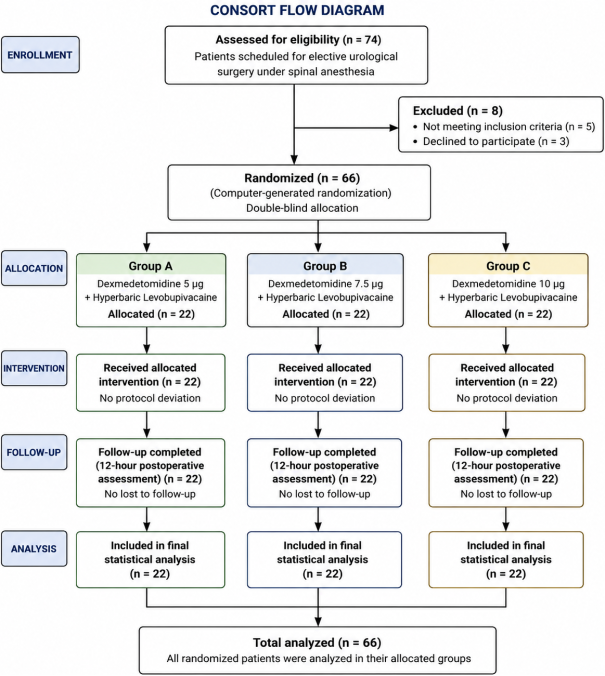



 Share This Article
 Twitter
 Linked In
 Facebook