Abstract
Background: Maternal awareness of fetal movement is a simple, non-invasive method for monitoring fetal well-being during pregnancy. Adequate knowledge of normal fetal movement, recognition of reduced fetal movement, and awareness of the need for timely health-care assessment may enable pregnant women to identify potential fetal compromise and seek appropriate care. However, the global prevalence of adequate knowledge of fetal-movement monitoring among pregnant women remains uncertain. Objective: To estimate the global prevalence of adequate knowledge of fetal-movement monitoring among pregnant women and to identify maternal, obstetric, socioeconomic, and health-care factors associated with adequate knowledge. Methods: We conducted a systematic review and meta-analysis according to the Preferred Reporting Items for Systematic Reviews and Meta-Analyses (PRISMA) 2020 statement. We searched PubMed/MEDLINE, Scopus, Web of Science, CINAHL, African Journals Online, and Google Scholar from database inception to March 2026. We included cross-sectional, cohort, case-control, and baseline data from intervention studies involving pregnant women and reporting knowledge or awareness of fetal movement and/or fetal-movement monitoring. Two reviewers independently screened records, extracted data, and assessed risk of bias using the Joanna Briggs Institute (JBI) Critical Appraisal Checklist for Studies Reporting Prevalence Data. Random-effects meta-analysis was used to pool prevalence estimates. Heterogeneity was assessed using Cochran’s Q and I2 statistics. The certainty of evidence was assessed using the Grading of Recommendations Assessment, Development and Evaluation (GRADE) approach. Results: Three cross-sectional studies involving 725 pregnant women from Canada and Nigeria were included. The pooled prevalence of adequate knowledge of fetal-movement monitoring was 27.6% (95% confidence interval [CI] 18.5-39.0). Substantial heterogeneity was observed (I2 = 89.6%; τ2 = 0.186; Q = 19.27; degrees of freedom = 2). Individual study estimates ranged from 18.5% to 35.1%. Maternal education was significantly associated with correct knowledge of decreased fetal movement in one study (P = 0.026), whereas receipt of written and verbal information from health-care providers was associated with appropriate intended self-management in another. All included studies were judged to have moderate risk of bias. The certainty of evidence was very low. Conclusions: Fewer than one in three pregnant women may have adequate knowledge of fetal-movement monitoring. The findings highlight an important need for clear, consistent, and woman-centered antenatal education on fetal movement, particularly recognition of reduced fetal movement and timely care-seeking. Further high-quality studies from diverse global settings, particularly low- and middle-income countries, are needed.
Keywords
Fetal Movement, Fetal-movement Monitoring, Reduced Fetal Movement, Knowledge, Pregnant Women, Systematic Review, Meta-analysis
1. Introduction
Fetal movement is one of the simplest and most accessible indicators of fetal well-being available to pregnant women. Maternal perception of fetal movement allows women to participate directly in the surveillance of their unborn baby and may promote awareness of changes in fetal condition
| [1] | Raynes-Greenow CH, Gordon A, Li Q, Hyett JA. A cross-sectional study of fetal movement and perinatal outcomes. BMC Pregnancy Childbirth. 2013; 13: 127. |
| [2] | Saastad E, Winje BA, Stray Pedersen B, Frøen JF. Fetal movement counting—effects on maternal-fetal attachment: a multicenter randomized controlled trial. Birth. 2011; 38(4): 282-290. |
[1, 2]
. Reduced fetal movement is a recognized concern during pregnancy and may be associated with adverse perinatal outcomes, including intrauterine fetal death, fetal growth restriction, and neonatal morbidity. Reduced fetal movement affects up to 15% of pregnancies and may be an important warning sign that requires timely assessment
| [1] | Raynes-Greenow CH, Gordon A, Li Q, Hyett JA. A cross-sectional study of fetal movement and perinatal outcomes. BMC Pregnancy Childbirth. 2013; 13: 127. |
| [3] | Tveit JV, Saastad E, Stray-Pedersen B, et al. Reduction of late stillbirth with the introduction of fetal movement information and guidelines—a clinical quality improvement project. BMC Pregnancy Childbirth. 2009; 9: 32.
https://doi.org/10.1186/1471-2393-9-32 |
| [4] | Bellussi F, Po’ G, Livi A, Saccone G, De Vivo V, Oliver EA, et al. Fetal movement counting and perinatal mortality: a systematic review and meta-analysis. Obstet Gynecol. 2020; 135(2): 453-462. |
[1, 3, 4]
.
Knowledge of normal fetal-movement patterns, recognition of reduced or excessive movement, and awareness of when to seek medical assessment are essential components of fetal-movement monitoring
| [4] | Bellussi F, Po’ G, Livi A, Saccone G, De Vivo V, Oliver EA, et al. Fetal movement counting and perinatal mortality: a systematic review and meta-analysis. Obstet Gynecol. 2020; 135(2): 453-462. |
| [5] | Bradford B, Maude R. Maternal perception of fetal movements in the third trimester: a qualitative description. Women Birth. 2018; 31(5): e287-e293.
https://doi.org/10.1016/j.wombi.2017.12.007 |
[4, 5]
. Pregnant women who understand their baby’s individual pattern of movement may be better able to identify a reduction or change in movement and seek timely assessment from a midwife, physician, or maternity unit. Conversely, women with poor knowledge, incorrect beliefs about normal fetal movement, or uncertainty about when to seek care may delay presentation, thereby missing opportunities for timely evaluation and intervention
| [3] | Tveit JV, Saastad E, Stray-Pedersen B, et al. Reduction of late stillbirth with the introduction of fetal movement information and guidelines—a clinical quality improvement project. BMC Pregnancy Childbirth. 2009; 9: 32.
https://doi.org/10.1186/1471-2393-9-32 |
| [5] | Bradford B, Maude R. Maternal perception of fetal movements in the third trimester: a qualitative description. Women Birth. 2018; 31(5): e287-e293.
https://doi.org/10.1016/j.wombi.2017.12.007 |
[3, 5]
.
Adequate maternal knowledge may influence health-seeking behavior. Women who understand that reduced fetal movement can signal fetal compromise may be more likely to contact maternity services promptly. In contrast, women who believe that decreased movement is normal near term, who do not know how to monitor movement, or who are uncertain about the appropriate response may delay seeking care. This delay may be particularly consequential in settings where access to emergency obstetric care is limited or where maternal health literacy is low
| [6] | World Health Organization. WHO recommendations on antenatal care for a positive pregnancy experience. Geneva: World Health Organization; 2016. |
[6]
.
Health-care providers play an important role in fetal-movement education. Antenatal counseling can help women understand that every baby has an individual pattern of movement, that a reduction or change in movement should not be ignored, and that concerns about fetal movement should be assessed promptly. Written information, verbal counseling, and opportunities to ask questions may improve maternal understanding and appropriate self-management. However, the content, timing, and consistency of fetal-movement education vary widely across health-care settings
| [7] | National Institute for Health and Care Excellence. Antenatal care. NICE guideline NG201. London: NICE; 2021. |
| [8] | National Health Service England. Reduced fetal movements (RFM) in pregnancy guideline. 2023. |
| [9] | RCOG. Your baby’s movements in pregnancy: information for you. London: Royal College of Obstetricians and Gynaecologists; 2019. |
[7-9]
.
Previous research has examined fetal-movement counting interventions
| [2] | Saastad E, Winje BA, Stray Pedersen B, Frøen JF. Fetal movement counting—effects on maternal-fetal attachment: a multicenter randomized controlled trial. Birth. 2011; 38(4): 282-290. |
| [10] | Grant A, Valentin L, Elbourne D, Alexander S. Routine formal fetal movement counting and risk of antepartum late death in normally formed singletons. Lancet. 1989; 2(8659): 345-349. https://doi.org/10.1016/s0140-6736(89)90535-7 |
[2, 10]
, maternal perceptions of fetal movement, maternal concerns, and associations between fetal movement and perinatal outcomes. However, these studies do not consistently provide a global estimate of the proportion of pregnant women who have adequate knowledge of fetal-movement monitoring. Existing systematic reviews have focused on the effect of formal fetal-movement counting on maternal psychological outcomes or on the association between fetal movements and perinatal outcomes, rather than synthesizing maternal knowledge prevalence
| [2] | Saastad E, Winje BA, Stray Pedersen B, Frøen JF. Fetal movement counting—effects on maternal-fetal attachment: a multicenter randomized controlled trial. Birth. 2011; 38(4): 282-290. |
| [4] | Bellussi F, Po’ G, Livi A, Saccone G, De Vivo V, Oliver EA, et al. Fetal movement counting and perinatal mortality: a systematic review and meta-analysis. Obstet Gynecol. 2020; 135(2): 453-462. |
[2, 4]
.
Therefore, the global burden of inadequate fetal-movement knowledge among pregnant women remains unclear. This gap limits the ability of clinicians, midwives, public-health planners, and policy makers to design targeted antenatal education programs and to identify populations that may benefit most from improved fetal-movement counseling.
To address this gap, we conducted a systematic review and meta-analysis to estimate the global prevalence of adequate knowledge of fetal-movement monitoring among pregnant women and to identify factors associated with adequate knowledge. The findings may inform antenatal-care practice, maternal-health education, and future research on stillbirth prevention and timely care-seeking.
1.1. Review Question
What is the global prevalence of adequate knowledge of fetal-movement monitoring among pregnant women, and which maternal, obstetric, socioeconomic, and health-care factors are associated with adequate knowledge?
1.2. Objectives
The primary objective was to estimate the pooled global prevalence of adequate knowledge of fetal-movement monitoring among pregnant women.
The secondary objectives were:
1) To identify maternal, obstetric, socioeconomic, and health-care factors associated with adequate knowledge of fetal-movement monitoring.
2) To assess heterogeneity among included studies.
3) To assess the risk of bias and certainty of the available evidence.
4) To identify gaps in fetal-movement education and priorities for future research.
2. Methods and Materials
2.1. Study Design, Registration and Framework
This systematic review and meta-analysis was conducted and reported according to the Preferred Reporting Items for Systematic Reviews and Meta-Analyses (PRISMA) 2020 statement
| [11] | Page MJ, McKenzie JE, Bossuyt PM, et al. The PRISMA 2020 statement: an updated guideline for reporting systematic reviews. BMJ. 2021; 372: n71.
https://doi.org/10.1136/bmj.n71 |
[11]
. The review protocol was registered in the Open Science Framework (OSF) before data extraction began. Any deviations from the registered protocol were documented and reported in the final manuscript.
This review included observational studies reporting the prevalence of adequate knowledge of fetal-movement monitoring among pregnant women. Because the primary outcome was a prevalence estimate, a random-effects meta-analysis of proportions was used. The review did not include an intervention or comparator because the objective was to estimate knowledge prevalence and identify associated factors.
The review addressed the following question: What is the global prevalence of adequate knowledge of fetal-movement monitoring among pregnant women, and which maternal, obstetric, socioeconomic, and health-care factors are associated with adequate knowledge?
The review followed a population, outcome, and study-design framework:
1) Population: Pregnant women in any country and at any gestational age.
2) Outcome: Adequate knowledge, awareness, understanding, or familiarity with fetal movement and/or fetal-movement monitoring, including recognition of reduced fetal movement and appropriate care-seeking behavior.
3) Study designs: Cross-sectional studies, cohort studies, case-control studies, and baseline or pre-intervention data from intervention studies.
2.2. Eligibility Criteria
2.2.1. Inclusion Criteria
Studies were included if they met all of the following criteria:
1) The study population included pregnant women, irrespective of age, parity, gestational age, country, income setting, or health-care setting.
2) The study assessed knowledge, awareness, understanding, or familiarity with fetal movement and/or fetal-movement monitoring.
3) The study reported a prevalence or proportion of adequate knowledge, or provided sufficient data—numerator and denominator—to calculate it.
4) The study reported at least one associated factor, or provided data permitting extraction of an associated-factor estimate.
5) The study was published as a full-text article in English or had an available full-text translation.
6) The study was published in a peer-reviewed journal.
2.2.2. Exclusion Criteria
Studies were excluded if they met any of the following criteria:
1) The study did not include pregnant women or did not report results separately for pregnant women.
2) The study assessed only fetal-movement perception, counting behavior, anxiety, or clinical outcomes without a quantifiable knowledge outcome.
3) The study was qualitative-only and did not report a prevalence or proportion of adequate knowledge.
4) The study was a review, editorial, commentary, guideline, conference abstract, protocol, or thesis without sufficient data.
5) The study was an intervention study that reported only post-intervention knowledge without a usable baseline estimate.
6) The study included a highly selected clinical subgroup without reporting results for the general pregnant population, unless the subgroup was explicitly included in a predefined subgroup analysis.
7) Duplicate publications or studies using overlapping datasets were identified; in such cases, the study with the largest, most complete, or most recent dataset was included.
2.3. Information Sources and Search Strategy
The following electronic databases were searched from database inception to March 2026.
1) PubMed/MEDLINE
2) Scopus
3) Web of Science
4) Cumulative Index to Nursing and Allied Health Literature (CINAHL)
5) African Journals Online
6) Google Scholar
The reference lists of included studies and relevant systematic reviews were also screened for additional eligible studies. The International Prospective Register of Systematic Reviews (PROSPERO) was searched to identify existing or ongoing related reviews, but it was not used as a source of primary studies.
The search strategy combined terms related to fetal movement, knowledge, and pregnancy. The following search strategy was used for PubMed/MEDLINE and adapted for other databases:
("fetal movement"[Title/Abstract] OR "foetal movement"[Title/Abstract] OR "fetal movements"[Title/Abstract] OR "foetal movements"[Title/Abstract] OR "kick count"[Title/Abstract] OR "kick counts"[Title/Abstract] OR "fetal movement monitoring"[Title/Abstract] OR "foetal movement monitoring"[Title/Abstract] OR "fetal movement counting"[Title/Abstract] OR "foetal movement counting"[Title/Abstract]) AND (knowledge[Title/Abstract] OR awareness[Title/Abstract] OR understanding[Title/Abstract] OR familiarity[Title/Abstract] OR literacy[Title/Abstract]) AND (pregnan*[Title/Abstract] OR maternal[Title/Abstract] OR mother*[Title/Abstract] OR obstetric*[Title/Abstract])
No restriction was placed on country, income setting, or publication year during the initial search. The final search date was March 2026.
2.4. Study Selection
All identified records were exported to EndNote, and duplicate records were removed. Titles and abstracts of all remaining records were screened independently by two reviewers against the eligibility criteria. Full texts of potentially eligible studies were retrieved and assessed independently by the same two reviewers.
Disagreements during title/abstract screening or full-text assessment were resolved through discussion. If disagreement persisted, a third reviewer was consulted. The study-selection process was documented using the PRISMA 2020 flow diagram, including the number of records identified, screened, excluded, and included
| [11] | Page MJ, McKenzie JE, Bossuyt PM, et al. The PRISMA 2020 statement: an updated guideline for reporting systematic reviews. BMJ. 2021; 372: n71.
https://doi.org/10.1136/bmj.n71 |
[11]
.
2.5. Data Extraction and Outcome Definitions
Data were extracted independently by two reviewers using a standardized, pilot-tested Microsoft Excel data-extraction form. Disagreements were resolved by discussion or consultation with a third reviewer. When essential information was missing, the corresponding author was contacted by email. If no response was received the study was included only if sufficient data were available from the published report (
Table 1).
The following data were extracted:
Table 1. Data items extracted from included studies.
Domain | Extracted variables |
Study identification | First author, publication year, country, World Health Organization (WHO) region, World Bank income group, study setting, study period, funding source, and conflicts of interest |
Methods | Study design, sampling method, recruitment setting, inclusion and exclusion criteria, data-collection method, response rate, and statistical analysis |
Participants | Total and analytic sample size, maternal age, gestational age or trimester, parity, gravidity, education, marital status, employment, residence, income or wealth, antenatal care attendance, previous stillbirth or adverse pregnancy outcome, and high-risk pregnancy status |
Outcome | Definition of adequate knowledge, knowledge domains assessed, measurement tool, number of items, scoring method, cutoff for adequate knowledge, outcome timing, numerator, denominator, prevalence, and 95% confidence interval (CI) |
Associated factors | Factor name, categories, reference group, crude odds ratio (OR), adjusted OR, 95% confidence interval, adjusted covariates, and P-value |
Risk of bias | JBI item-level judgments, justification for each judgment, and overall risk-of-bias category |
The primary outcome was adequate knowledge of fetal-movement monitoring, defined as the proportion of pregnant women who demonstrated adequate knowledge or awareness of fetal movement and/or fetal-movement monitoring according to the cutoff used in the primary study.
Because studies may use different definitions, the following hierarchy was applied:
1) If a study reported a composite measure of knowledge of fetal-movement monitoring, including recognition of reduced fetal movement and appropriate response, this was used as the primary estimate.
2) If no composite measure was available, knowledge of reduced or decreased fetal movement and the need to seek timely health-care assessment was used.
3) Knowledge of excessive fetal movement alone was not used as the primary estimate but was reported separately.
4) Receipt of fetal-movement information alone was not considered adequate knowledge unless the study explicitly measured and reported knowledge.
When a study used a knowledge score, adequate knowledge was defined according to the study’s original cutoff. If more than one cutoff was reported, the study’s primary or prespecified cutoff was used, and alternative cutoffs were recorded for sensitivity analysis.
2.6. Risk-of-bias Assessment
The methodological quality and risk of bias of included studies were independently assessed by two reviewers using the Joanna Briggs Institute (JBI) Critical Appraisal Checklist for Studies Reporting Prevalence Data
| [12] | Joanna Briggs Institute. Checklist for prevalence studies. Adelaide: JBI; 2020. |
[12]
. This tool was selected because the primary outcome was a prevalence estimate and most eligible studies were expected to be cross-sectional surveys.
The JBI checklist includes nine items covering the appropriateness of the sample frame, appropriateness of participant sampling, adequacy of sample size, detailed description of study subjects and setting, sufficient coverage of the identified sample in the analysis, valid methods to identify the condition, standardized and reliable measurement, appropriate statistical analysis, and adequate response rate with appropriate management of non-response.
Each item was judged as “yes,” “no,” “unclear,” or “not applicable.” Disagreements were resolved by discussion or consultation with a third reviewer. The reason for each judgment and the page, table, figure, or section supporting it were recorded in the risk-of-bias form.
For summary purposes, studies were classified as follows (
Table 2):
Table 2. Overall risk-of-bias classification rules.
Overall risk of bias | Rule |
Low risk | “Yes” for at least 7 of 9 applicable items, including valid and standardized outcome measurement |
Moderate risk | “Yes” for 5-6 of 9 applicable items, or important uncertainty in sampling, measurement, or response rate |
High risk | “Yes” for 4 or fewer of 9 applicable items, or major concerns regarding sampling, outcome measurement, missing data, or response rate |
“Unclear” responses were not counted as “yes.” If a study had several unclear items, it was not automatically classified as high risk; the overall judgment considered the number, importance, and likely impact of the unclear items.
2.7. Statistical Analysis
All analyses were performed using Review Manager (RevMan) software, version 5.4. The primary analysis estimated the pooled prevalence of adequate knowledge of fetal-movement monitoring among pregnant women.
Because prevalence data are binomial and heterogeneity was anticipated, study-specific proportions were transformed to logit values before pooling. A random-effects model using the DerSimonian-Laird method
was used for the primary analysis. Pooled prevalence and 95% confidence intervals were calculated and presented in a forest plot.
Between-study heterogeneity was assessed using Cochran’s Q test and quantified using the I
2 statistic
. Heterogeneity was interpreted as follows: 0-40%, may be unimportant; 30-60%, moderate; 50-90%, substantial; and 75-100%, considerable. A random-effects model was selected a priori because differences in study populations, countries, gestational age, knowledge tools, and cutoffs were expected.
2.8. Subgroup and Sensitivity Analyses
Subgroup analyses were conducted to explore sources of heterogeneity:
1) WHO region: Africa, Americas, South-East Asia, Europe, Eastern Mediterranean, and Western Pacific.
2) World Bank income group: high-income versus low- and middle-income countries.
3) Study setting: community, antenatal clinic, hospital, or mixed setting.
4) Gestational age: first trimester, second trimester, third trimester, term, or mixed.
5) Knowledge definition: composite fetal-movement monitoring knowledge, reduced fetal-movement knowledge, or fetal-movement counting knowledge.
6) Sampling method: random, systematic, or consecutive sampling versus convenience sampling.
7) Risk of bias: low or moderate risk versus high risk.
Subgroup differences were described narratively and, where sufficient studies were available, assessed using meta-regression or interaction tests.
Sensitivity analyses were conducted to assess the robustness of the pooled estimate:
1) Leave-one-out analysis, excluding each study one at a time.
2) Exclusion of studies judged to be at high risk of bias.
3) Separate analyses by knowledge definition.
4) Fixed-effect versus random-effects models, reported as a sensitivity analysis only.
5) Exclusion of studies with unclear sample-size calculations or sampling methods.
2.9. Publication Bias and Certainty of Evidence
Publication bias was assessed visually using a funnel plot and statistically using Egger’s regression test, provided that at least ten studies were included. Because fewer than ten studies were available, publication bias could not be formally assessed and was reported as not assessable.
The certainty of evidence for the primary outcome was assessed using the Grading of Recommendations Assessment, Development and Evaluation (GRADE) approach. Observational prevalence studies began at low certainty. Certainty was downgraded for risk of bias, inconsistency, indirectness, imprecision, and publication bias
.
2.10. Ethical Considerations
This study was a systematic review and meta-analysis of previously published studies; therefore, ethical approval and informed consent were not required. All included studies were appropriately cited.
3. Results
3.1. Study Selection
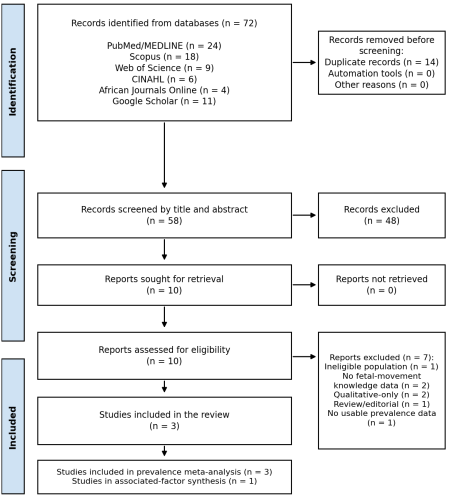
The database search identified 72 records. After removal of 14 duplicate records, 58 records were screened by title and abstract. Of these, 48 records were excluded because they did not meet the eligibility criteria. Ten full-text articles were assessed for eligibility.
Seven full-text articles were excluded: one because of an ineligible population, two because they did not report fetal-movement knowledge data, two because they were qualitative-only studies, one because it was a review or editorial, and one because it did not provide a usable prevalence estimate or numerator and denominator. Therefore, three studies were included in the final systematic review and meta-analysis
| [16] | Berndl AM, O’Connell CM, McLeod NL. Fetal movement monitoring: how are we doing as educators? J Obstet Gynaecol Can. 2013; 35(1): 22-28.
https://doi.org/10.1016/S1701-2163(15)31044-6 |
| [17] | Pakenham S, Copeland A, Farine D. Kick-starting action: Canadian women’s understanding of fetal movement guidelines. J Obstet Gynaecol Can. 2013; 35(2): 111-118.
https://doi.org/10.1016/S1701-2163(15)31014-8 |
| [18] | Olagbuji BN, Igbarumah S, Akintayo AA, Olofinbiyi BA, Aduloju PO, Alao OO. Maternal understanding of fetal movement in third trimester: a means for fetal monitoring and reducing stillbirth. Niger J Clin Pract. 2014; 17(4): 489-494. |
[16-18]
(
Figure 1).
Figure 1. PRISMA 2020 flow diagram of study selection.
The PRISMA flow diagram shows that 72 records were identified, 14 duplicates were removed, 58 records were screened, 48 were excluded, 10 full texts were assessed, 7 were excluded, and 3 studies were included in the final meta-analysis (
Figure 1).
3.2. Characteristics of Included Studies
Three cross-sectional studies involving 725 pregnant women were included: two from Canada and one from Nigeria. The studies were published between 2013 and 2014. Two studies were conducted in high-income countries, and one was conducted in a low- or lower-middle-income country
| [16] | Berndl AM, O’Connell CM, McLeod NL. Fetal movement monitoring: how are we doing as educators? J Obstet Gynaecol Can. 2013; 35(1): 22-28.
https://doi.org/10.1016/S1701-2163(15)31044-6 |
| [17] | Pakenham S, Copeland A, Farine D. Kick-starting action: Canadian women’s understanding of fetal movement guidelines. J Obstet Gynaecol Can. 2013; 35(2): 111-118.
https://doi.org/10.1016/S1701-2163(15)31014-8 |
| [18] | Olagbuji BN, Igbarumah S, Akintayo AA, Olofinbiyi BA, Aduloju PO, Alao OO. Maternal understanding of fetal movement in third trimester: a means for fetal monitoring and reducing stillbirth. Niger J Clin Pract. 2014; 17(4): 489-494. |
[16-18]
(
Table 3).
Table 3. Characteristics of included studies.
| Berndl et al., 2013 | Pakenham et al., 2013 | Olagbuji et al., 2014 |
Country | Canada | Canada | Nigeria |
WHO region | Region of the Americas | Region of the Americas | African Region |
Income setting | High-income | High-income | Low or lower-middle income |
Study design | Cross-sectional survey | Cross-sectional survey | Cross-sectional questionnaire survey |
Setting | Antenatal clinic, Izaak Walton Killam (IWK) Health Centre, Halifax | Large tertiary obstetric centre | Prenatal clinics of two tertiary hospitals |
Population | Pregnant women attending antenatal care | Pregnant women at term | Pregnant women in third trimester |
Gestational age | More than 26 weeks | Term | Third trimester |
Sampling method | Convenience sample | Convenience sample | Unclear |
Sample size analysed | 298 | 202 | 225 |
Knowledge assessment | Survey of fetal-movement knowledge, monitoring, and response | Survey of Society of Obstetricians and Gynaecologists of Canada (SOGC) fetal-movement guidelines | Self-administered questionnaire on fetal-movement knowledge and behavior |
Adequate-knowledge definition | Knowledge of normal fetal movement and monitoring plus appropriate response to decreased movement | Knowledge of fetal-movement counting and appropriate action | Correct knowledge of decreased fetal movement |
3.3. Prevalence of Adequate Knowledge
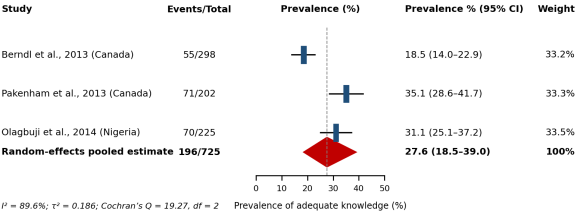
The pooled prevalence of adequate knowledge of fetal-movement monitoring was 27.6% (95% CI 18.5-39.0). Individual study estimates ranged from 18.5% to 35.1%. Heterogeneity was substantial (I
2 = 89.6%; τ
2 = 0.186; Q = 19.27; degrees of freedom = 2)
| [16] | Berndl AM, O’Connell CM, McLeod NL. Fetal movement monitoring: how are we doing as educators? J Obstet Gynaecol Can. 2013; 35(1): 22-28.
https://doi.org/10.1016/S1701-2163(15)31044-6 |
| [17] | Pakenham S, Copeland A, Farine D. Kick-starting action: Canadian women’s understanding of fetal movement guidelines. J Obstet Gynaecol Can. 2013; 35(2): 111-118.
https://doi.org/10.1016/S1701-2163(15)31014-8 |
| [18] | Olagbuji BN, Igbarumah S, Akintayo AA, Olofinbiyi BA, Aduloju PO, Alao OO. Maternal understanding of fetal movement in third trimester: a means for fetal monitoring and reducing stillbirth. Niger J Clin Pract. 2014; 17(4): 489-494. |
[16-18]
(
Table 4;
Figure 2).
Table 4. Prevalence of adequate knowledge of fetal-movement monitoring.
| Events | Total | Prevalence (%) | 95% CI (%) | Knowledge domain |
Berndl et al., 2013 | 55 | 298 | 18.5 | 14.0-22.9 | Composite fetal-movement monitoring knowledge |
Pakenham et al., 2013 | 71 | 202 | 35.1 | 28.6-41.7 | Fetal-movement counting and response |
Olagbuji et al., 2014 | 70 | 225 | 31.1 | 25.1-37.2 | Knowledge of decreased fetal movement |
Pooled estimate | 196 | 725 | 27.6 | 18.5-39.0 | Random-effects model |
Figure 2. Forest plot of adequate knowledge of fetal-movement monitoring among pregnant women.
The diamond represents the random-effects pooled prevalence. The wide confidence interval reflects the small number of studies and substantial heterogeneity.
The pooled prevalence of 27.6% suggests that approximately 27.6% of pregnant women in the included studies had adequate knowledge of fetal-movement monitoring. This means that more than 70% of pregnant women in the included studies did not have adequate knowledge according to the definitions used by the primary studies.
However, the pooled estimate should be interpreted cautiously. The three studies used different definitions of adequate knowledge. Berndl et al. assessed a composite outcome including knowledge of normal fetal movement, monitoring, and appropriate response to decreased movement. Pakenham et al. assessed familiarity with guideline-based fetal-movement counting and response. Olagbuji et al. assessed correct knowledge of decreased fetal movement
| [16] | Berndl AM, O’Connell CM, McLeod NL. Fetal movement monitoring: how are we doing as educators? J Obstet Gynaecol Can. 2013; 35(1): 22-28.
https://doi.org/10.1016/S1701-2163(15)31044-6 |
| [17] | Pakenham S, Copeland A, Farine D. Kick-starting action: Canadian women’s understanding of fetal movement guidelines. J Obstet Gynaecol Can. 2013; 35(2): 111-118.
https://doi.org/10.1016/S1701-2163(15)31014-8 |
| [18] | Olagbuji BN, Igbarumah S, Akintayo AA, Olofinbiyi BA, Aduloju PO, Alao OO. Maternal understanding of fetal movement in third trimester: a means for fetal monitoring and reducing stillbirth. Niger J Clin Pract. 2014; 17(4): 489-494. |
[16-18]
.
3.4. Subgroup Analyses
Subgroup analyses were conducted by country income setting. Because only three studies were included, other planned subgroup analyses could not be performed meaningfully (
Table 5).
Table 5. Subgroup analysis by country income setting.
| Studies | Events | Total | Pooled prevalence (%) | 95% CI (%) | I2 (%) |
High-income countries | 2 | 126 | 500 | 25.9 | 13.0-45.2 | 94.2 |
Low- or lower-middle-income countries | 1 | 70 | 225 | 31.1 | 25.4-37.5 | Not applicable |
Overall | 3 | 196 | 725 | 27.6 | 18.5-39.0 | 89.6 |
The Nigerian study estimated a higher prevalence of knowledge of decreased fetal movement (31.1%) than the pooled high-income estimate (25.9%). However, the high-income subgroup itself was highly heterogeneous because the two Canadian studies measured different knowledge constructs. Therefore, the subgroup results should be interpreted with caution.
3.5. Sensitivity Analyses
Leave-one-out sensitivity analyses were conducted to assess the influence of each study on the pooled estimate (
Table 6).
The pooled estimate ranged from 24.2% to 33.1% after sequentially excluding each study. The estimate was most stable when Berndl et al. was excluded, because the remaining two studies had more similar prevalence estimates. This finding confirms that the result was sensitive to study selection and outcome definition.
Table 6. Leave-one-out sensitivity analysis.
| Study excluded | Remaining studies | Pooled prevalence (%) | 95% CI (%) | I2 (%) |
Excluding Berndl et al., 2013 | 2 | 33.1 | 28.7-37.7 | 0.0 | |
Excluding Pakenham et al., 2013 | 2 | 24.2 | 14.0-38.6 | 91.0 | |
Excluding Olagbuji et al., 2014 | 2 | 25.9 | 13.0-45.2 | 94.2 | |
3.6. Associated Factors
Only one included study clearly reported a statistically significant associated factor in the available data. Olagbuji et al. found that maternal education was significantly associated with correct knowledge of decreased fetal movement (P = 0.026). Berndl et al. found that receipt of written and verbal fetal-movement information from health-care providers was associated with appropriate intended self-management. Pakenham et al. did not identify major differences by parity, pregnancy-risk status, or provider type
| [16] | Berndl AM, O’Connell CM, McLeod NL. Fetal movement monitoring: how are we doing as educators? J Obstet Gynaecol Can. 2013; 35(1): 22-28.
https://doi.org/10.1016/S1701-2163(15)31044-6 |
| [17] | Pakenham S, Copeland A, Farine D. Kick-starting action: Canadian women’s understanding of fetal movement guidelines. J Obstet Gynaecol Can. 2013; 35(2): 111-118.
https://doi.org/10.1016/S1701-2163(15)31014-8 |
| [18] | Olagbuji BN, Igbarumah S, Akintayo AA, Olofinbiyi BA, Aduloju PO, Alao OO. Maternal understanding of fetal movement in third trimester: a means for fetal monitoring and reducing stillbirth. Niger J Clin Pract. 2014; 17(4): 489-494. |
[16-18]
(
Table 7).
Table 7. Factors associated with adequate knowledge.
| Study | Factor | Comparison | Effect estimate | 95% CI | P-value | Interpretation |
Olagbuji et al., 2014 | Maternal education | Higher versus lower education | Association reported; OR not available | Not reported | 0.026 | Higher education associated with correct knowledge of decreased fetal movement | |
Berndl et al., 2013 | Written and verbal provider information | Received versus not received | Association reported; OR not available | Not reported | Not reported | Provider information increased appropriate intended self-management | |
Pakenham et al., 2013 | Parity, risk status, provider type | Various | No significant association highlighted | Not reported | Not reported | Knowledge appeared similar across groups | |
Because only one study provided a statistically significant associated-factor estimate, a meaningful pooled odds-ratio meta-analysis was not possible. The associated-factor results should therefore be interpreted narratively.
3.7. Risk of Bias
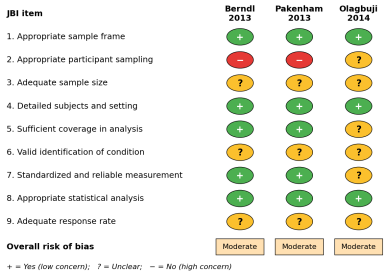
All three studies were judged to be at moderate risk of bias. Common limitations included convenience or unclear sampling, unclear sample-size calculations, uncertain questionnaire validation, and unclear response rates
| [16] | Berndl AM, O’Connell CM, McLeod NL. Fetal movement monitoring: how are we doing as educators? J Obstet Gynaecol Can. 2013; 35(1): 22-28.
https://doi.org/10.1016/S1701-2163(15)31044-6 |
| [17] | Pakenham S, Copeland A, Farine D. Kick-starting action: Canadian women’s understanding of fetal movement guidelines. J Obstet Gynaecol Can. 2013; 35(2): 111-118.
https://doi.org/10.1016/S1701-2163(15)31014-8 |
| [18] | Olagbuji BN, Igbarumah S, Akintayo AA, Olofinbiyi BA, Aduloju PO, Alao OO. Maternal understanding of fetal movement in third trimester: a means for fetal monitoring and reducing stillbirth. Niger J Clin Pract. 2014; 17(4): 489-494. |
[16-18]
(
Table 8;
Figure 3).
Table 8. Risk-of-bias assessment using the JBI prevalence checklist.
| Berndl 2013 | Pakenham 2013 | Olagbuji 2014 |
Appropriate sample frame | Yes | Yes | Yes |
Appropriate participant sampling | No | No | Unclear |
Adequate sample size | Unclear | Unclear | Unclear |
Detailed subjects and setting | Yes | Yes | Yes |
Sufficient coverage in analysis | Yes | Yes | Unclear |
Valid identification of condition | Unclear | Unclear | Unclear |
Standardized and reliable measurement | Yes | Yes | Unclear |
Appropriate statistical analysis | Yes | Yes | Yes |
Adequate response rate | Unclear | Unclear | Unclear |
Overall risk of bias | Moderate | Moderate | Moderate |
Figure 3. Risk-of-bias summary of the included studies using the JBI Critical Appraisal Checklist for Studies Reporting Prevalence Data.
3.8. Certainty of Evidence
The certainty of evidence for the pooled prevalence of adequate fetal-movement-monitoring knowledge was very low (
Table 9).
Table 9. GRADE evidence profile.
| Studies | Pooled estimate | Risk of bias | Inconsistency | Indirectness | Imprecision | Publication bias | Certainty |
Adequate knowledge of fetal-movement monitoring | 3 observational studies; 725 women | 27.6% (95% CI 18.5-39.0) | Serious limitations | Very serious: I2 = 89.6%; different outcome definitions | Not serious | Serious: few studies and wide CI | Cannot be assessed | Very low |
4. Discussion
This systematic review and meta-analysis estimated the global prevalence of adequate knowledge of fetal-movement monitoring among pregnant women. Based on three cross-sectional studies involving 725 pregnant women from Canada and Nigeria, the pooled prevalence of adequate knowledge was 27.6% (95% CI 18.5-39.0). This suggests that fewer than one in three pregnant women may have adequate knowledge of fetal movement, fetal-movement monitoring, or the appropriate response to reduced fetal movement. However, the certainty of this estimate is very low because of the small number of studies, substantial heterogeneity, and methodological limitations.
4.1. Main Findings
The included studies reported widely different prevalence estimates, ranging from 18.5% to 35.1%. Berndl et al.
found that only 18.5% of pregnant women had adequate combined knowledge of normal fetal movement, monitoring, and appropriate response to decreased movement. Pakenham et al.
reported that 35.1% knew fetal-movement counting guidelines and the appropriate action to take, while Olagbuji et al.
| [18] | Olagbuji BN, Igbarumah S, Akintayo AA, Olofinbiyi BA, Aduloju PO, Alao OO. Maternal understanding of fetal movement in third trimester: a means for fetal monitoring and reducing stillbirth. Niger J Clin Pract. 2014; 17(4): 489-494. |
[18]
found that 31.1% had correct knowledge of decreased fetal movement.
The pooled estimate of 27.6% should therefore be interpreted as an approximate global summary rather than a precise universal prevalence. The high heterogeneity (I2 = 89.6%) was expected because the studies used different populations, gestational-age groups, knowledge tools, and outcome definitions. In particular, Berndl et al. assessed a composite outcome including normal fetal movement, monitoring, and response to decreased movement; Pakenham et al. assessed familiarity with guideline-based fetal-movement counting and response; and Olagbuji et al. assessed knowledge of decreased fetal movement.
4.2. Interpretation of Findings
The low pooled prevalence highlights a potentially important gap in antenatal education. Fetal movement is a readily accessible signal of fetal well-being, and maternal awareness of reduced fetal movement may promote earlier contact with maternity services. Reduced fetal movement is a recognized concern in pregnancy and may be associated with adverse perinatal outcomes, including stillbirth.
At the same time, the findings should not be interpreted as evidence that fetal-movement counting itself prevents stillbirth. The WHO recommends that daily fetal-movement counting, such as count-to-ten kick charts, be used only in the context of rigorous research
| [6] | World Health Organization. WHO recommendations on antenatal care for a positive pregnancy experience. Geneva: World Health Organization; 2016. |
[6]
. Therefore, the practical implication of this review is not necessarily to promote universal formal kick counting, but to ensure that pregnant women understand their baby’s individual movement pattern and know to seek timely assessment if they are concerned about reduced or altered movement.
4.3. Associated Factors
Maternal education was significantly associated with correct knowledge of decreased fetal movement in the Nigerian study by Olagbuji et al.
| [18] | Olagbuji BN, Igbarumah S, Akintayo AA, Olofinbiyi BA, Aduloju PO, Alao OO. Maternal understanding of fetal movement in third trimester: a means for fetal monitoring and reducing stillbirth. Niger J Clin Pract. 2014; 17(4): 489-494. |
[18]
(P = 0.026). This finding is biologically and socially plausible: women with higher education may have greater health literacy, better access to health information, and more effective communication with health-care providers.
Berndl et al.
also found that receiving both written and verbal information from health-care providers was associated with appropriate intended self-management. This suggests that the mode and consistency of antenatal education may matter. Written information alone may be insufficient for some women, particularly where literacy, language, or health-literacy barriers exist. A combined approach using clear verbal counseling, simple written materials, and opportunities for questions may be more effective.
Pakenham et al.
did not identify major differences in knowledge by parity, pregnancy-risk status, or provider type. This may indicate that fetal-movement education is inconsistently delivered across patient groups, or that the study was not powered to detect differences.
4.4. Comparison with Existing Evidence
The prevalence estimates in this review are consistent with prior studies showing that many pregnant women have incomplete understanding of fetal movement. For example, studies have reported that a substantial proportion of women do not know what fetal-movement counting is, do not recognize reduced fetal movement as a warning sign, or do not know when to seek care.
However, direct comparison with previous research is difficult because studies define “adequate knowledge” differently. Some studies measure awareness of fetal-movement counting, others measure knowledge of reduced fetal movement, and others assess a composite of knowledge, attitude, and practice. This heterogeneity is a central limitation of the current evidence base and explains the wide confidence interval around the pooled estimate.
4.5. Clinical Implications
The findings support routine, clear, and woman-centered fetal-movement education during antenatal care. Health professionals should ask women about their baby’s movements at antenatal contacts after 24 weeks of gestation, help them recognize their baby’s normal pattern, and advise them to contact maternity services at any time if they are concerned about reduced or altered movement.
Education should emphasize three practical messages:
1) Every baby has an individual normal pattern of movement.
2) A reduction or change in fetal movement should not be ignored.
3) Women should contact their midwife, doctor, or maternity unit promptly if they are concerned about reduced fetal movement.
Health-care providers should avoid advising women to delay presentation in order to stimulate fetal movement through food, cold drinks, or rest. Current guidance emphasizes that reports of reduced or absent fetal movement should be taken seriously and assessed promptly
| [7] | National Institute for Health and Care Excellence. Antenatal care. NICE guideline NG201. London: NICE; 2021. |
| [8] | National Health Service England. Reduced fetal movements (RFM) in pregnancy guideline. 2023. |
| [9] | RCOG. Your baby’s movements in pregnancy: information for you. London: Royal College of Obstetricians and Gynaecologists; 2019. |
[7-9]
.
4.6. Implications for Low- and Middle-Income Settings
The included evidence came from only one low- or lower-middle-income country, Nigeria, and two high-income countries, Canada. This limits the ability to draw firm conclusions about regional differences. Nevertheless, the Nigerian estimate of 31.1% knowledge of decreased fetal movement suggests that fetal-movement education may also be an important gap in resource-limited settings.
In low- and middle-income settings, where access to timely obstetric assessment may be more limited, poor knowledge of reduced fetal movement could contribute to delayed care-seeking. Integrating simple fetal-movement awareness messages into routine antenatal contacts, community health-worker visits, mobile-health platforms, and maternal-health education materials may be feasible and low-cost approaches.
4.7. Strengths and Limitations
This review has several strengths. It used a clearly defined review question, a predefined eligibility framework, a structured data-extraction form, and the JBI tool for risk-of-bias assessment. The use of random-effects meta-analysis was appropriate given anticipated clinical and methodological heterogeneity.
However, the review also has important limitations. Only three studies were included, and all were cross-sectional surveys. The total sample size was modest, and the studies came from only two countries. Therefore, the results cannot be considered globally representative.
The main limitation was heterogeneity in the definition and measurement of “adequate knowledge.” Some studies assessed knowledge of fetal-movement counting, others assessed knowledge of reduced fetal movement, and others used composite outcomes. This makes pooling challenging and may explain the high I2 value.
Additional limitations include convenience sampling, unclear sample-size calculations, uncertain questionnaire validation, and unclear response rates. These issues increase the possibility of selection, measurement, and non-response bias. Publication bias could not be assessed because fewer than ten studies were included.
4.8. Future Research
Future studies should use validated, standardized instruments to measure fetal-movement knowledge and should clearly report the numerator, denominator, prevalence, confidence interval, and knowledge cutoff. Studies should also distinguish knowledge from perception, attitude, counting behavior, and actual care-seeking.
Research is particularly needed in low- and middle-income countries, among women with low literacy, adolescents, first-time mothers, and women with high-risk pregnancies. Future studies should also evaluate whether improved fetal-movement education increases timely presentation for reduced fetal movement and whether this improves perinatal outcomes without increasing unnecessary anxiety or health-service use.
5. Conclusion
This systematic review and meta-analysis found that the pooled prevalence of adequate knowledge of fetal-movement monitoring among pregnant women was 27.6% (95% CI 18.5-39.0), based on three cross-sectional studies involving 725 women from Canada and Nigeria. The findings suggest that fewer than one in three pregnant women may have adequate knowledge of fetal movement, fetal-movement monitoring, or the appropriate response to reduced fetal movement. However, this estimate should be interpreted with caution because the certainty of the evidence was very low.
Substantial heterogeneity was observed across studies (I2 = 89.6%), largely because the included studies used different populations, gestational-age groups, knowledge-assessment tools, and definitions of adequate knowledge. Therefore, the pooled estimate should be viewed as an approximate global summary rather than a precise worldwide prevalence.
The review highlights an important gap in antenatal education. Maternal education and receipt of clear information from health-care providers were associated with better fetal-movement knowledge or appropriate intended self-management in the available studies. This supports the need for clear, consistent, and woman-centered counseling during routine antenatal care.
Health professionals should discuss fetal movements with pregnant women after 24 weeks of gestation, ask about concerns at each antenatal contact, and advise women to contact maternity services promptly if they notice reduced or changed fetal movements. The goal should be awareness of the baby’s individual movement pattern and timely care-seeking, rather than routine universal fetal-movement counting, which WHO recommends only in the context of rigorous research
| [6] | World Health Organization. WHO recommendations on antenatal care for a positive pregnancy experience. Geneva: World Health Organization; 2016. |
[6]
.
Future research should use validated and standardized tools to measure fetal-movement knowledge, clearly report prevalence data, and include diverse populations—particularly women in low- and middle-income countries. Studies should also evaluate whether improved fetal-movement education increases timely presentation for reduced fetal movement and improves maternal and perinatal outcomes without causing unnecessary anxiety.
6. Summary of Key Points
6.1. Key Messages
Adequate knowledge of fetal-movement monitoring was an important component of maternal awareness and recognition of potential fetal compromise during pregnancy. Knowledge levels varied across populations and settings, reflecting differences in maternal education, antenatal care experiences, access to pregnancy-related information, and healthcare providers’ communication practices. Maternal education, antenatal care attendance, counseling about fetal movements, previous pregnancy experience, and exposure to pregnancy-related information were important factors associated with adequate knowledge of fetal-movement monitoring. Differences in the measurement and definition of adequate knowledge complicated comparisons across countries and study populations, highlighting the value of a standardized synthesis of the available evidence.
The systematic review and meta-analysis provided an integrated assessment of the global prevalence of adequate knowledge and its associated factors, identifying important gaps in maternal education and antenatal counseling.
6.2. What Is Already Known on This Topic
Fetal-movement monitoring is an important aspect of maternal awareness during pregnancy because changes in fetal movement patterns can indicate potential fetal compromise and warrant timely clinical assessment. Maternal knowledge of normal fetal movements, awareness of changes that require attention, and understanding of when to seek medical care are essential components of appropriate fetal-movement monitoring. However, knowledge varies among pregnant women, and some women have limited understanding of fetal-movement patterns and the significance of reduced fetal movements. Previous studies have identified several maternal and healthcare-related factors associated with adequate knowledge of fetal-movement monitoring, including maternal educational attainment, antenatal care attendance, counseling by healthcare professionals, previous pregnancy experience, and access to pregnancy-related information. Differences in educational opportunities, healthcare access, cultural beliefs, and the quality of antenatal counseling have contributed to variation in maternal knowledge across settings. Although individual studies have examined these factors, differences in study populations, assessment tools, and definitions of adequate knowledge have limited direct comparisons of their findings.
A comprehensive synthesis of the available evidence has therefore been important for estimating the prevalence of adequate knowledge of fetal-movement monitoring and identifying factors consistently associated with maternal knowledge across different settings. Such evidence has provided a foundation for evaluating gaps in antenatal education and informing approaches to improve maternal awareness, recognition of reduced fetal movements, and timely care-seeking during pregnancy.
6.3. What This Research Adds
This systematic review and meta-analysis provides a comprehensive pooled estimate of the global prevalence of adequate knowledge of fetal-movement monitoring among pregnant women, offering a broader perspective than individual studies conducted in specific countries or healthcare settings. The study identifies and synthesizes maternal, obstetric, educational, and healthcare-related factors associated with adequate knowledge, highlighting the roles of maternal education, antenatal care attendance, counseling about fetal movements, previous pregnancy experience, and access to pregnancy-related information. By examining evidence across different geographical regions and populations, this research demonstrates the extent of variation in maternal knowledge and highlights populations in which gaps in fetal-movement awareness are particularly important. The findings highlight the importance of antenatal counseling that explains normal fetal-movement patterns, the significance of reduced fetal movements, and the need for prompt clinical assessment when concerning changes occur. They also emphasize the role of healthcare professionals in delivering clear, consistent, and understandable information during routine antenatal visits.
By bringing together evidence on both the prevalence and associated factors, this study provides an evidence base for strengthening maternal education, improving the consistency of fetal-movement counseling, and informing context-specific interventions to improve maternal awareness and timely care-seeking during pregnancy.
6.4. How This Research Affects Research, Practice, and Policy
Research: This systematic review and meta-analysis provides a foundation for future research on maternal knowledge of fetal-movement monitoring by identifying gaps in the available evidence, variations in knowledge assessment, and factors associated with adequate knowledge. The findings highlight the importance of standardized definitions and validated assessment tools to improve comparability across populations and healthcare settings. They also support further investigation into whether targeted antenatal education improves maternal knowledge, timely reporting of reduced fetal movements, and pregnancy outcomes.
Practice: The findings emphasize the importance of integrating structured fetal-movement education into routine antenatal care. Healthcare professionals can use the identified factors associated with adequate knowledge to recognize women who require additional counseling and adapt educational approaches to their literacy levels, cultural backgrounds, and previous pregnancy experiences. Clear explanations of fetal-movement patterns, recognition of reduced movements, and the importance of prompt clinical assessment can strengthen maternal awareness and support timely care-seeking. The findings also reinforce the value of consistent counseling throughout pregnancy rather than relying exclusively on written information or maternal self-education.
Policy: The findings provide evidence to inform maternal health policies and antenatal care guidelines that prioritize fetal-movement awareness as part of routine pregnancy education. Health authorities and healthcare institutions can use the pooled prevalence estimates and associated factors to identify educational gaps, prioritize resources for underserved populations, and strengthen the delivery of standardized, culturally appropriate counseling. The results also support incorporating fetal-movement education into maternal health promotion programs, healthcare worker training, and antenatal care quality-improvement initiatives. By linking maternal knowledge with accessible education and appropriate care-seeking messages, these measures can support efforts to improve recognition of potential fetal compromise and strengthen the quality of maternal and fetal healthcare.
Abbreviations
CI | Confidence Interval |
CINAHL | Cumulative Index to Nursing and Allied Health Literature |
df | Degrees of Freedom |
GRADE | Grading of Recommendations Assessment, Development and Evaluation |
I2 | Inconsistency Index (Percentage of Variability due to Between-Study Heterogeneity) |
IWK | Izaak Walton Killam |
JBI | Joanna Briggs Institute |
OR | Odds Ratio |
OSF | Open Science Framework |
PRISMA | Preferred Reporting Items for Systematic Reviews and Meta-Analyses |
PROSPERO | International Prospective Register of Systematic Reviews |
Q | Cochran’s Q Statistic |
RevMan | Review Manager |
SOGC | Society of Obstetricians and Gynaecologists of Canada |
WHO | World Health Organization |
τ2 | Between-study Variance |
Author Contributions
Habtamu Fekadu Andeta: Conceptualization, Data curation, Formal Analysis, Investigation, Methodology, Validation, Writing – original draft, Writing – review & editing
Data Availability Statement
All data generated or analysed during this study are included in the manuscript and its supplementary files.
Conflicts of Interest
The author declares no conflicts of interest.
References
| [1] |
Raynes-Greenow CH, Gordon A, Li Q, Hyett JA. A cross-sectional study of fetal movement and perinatal outcomes. BMC Pregnancy Childbirth. 2013; 13: 127.
|
| [2] |
Saastad E, Winje BA, Stray Pedersen B, Frøen JF. Fetal movement counting—effects on maternal-fetal attachment: a multicenter randomized controlled trial. Birth. 2011; 38(4): 282-290.
|
| [3] |
Tveit JV, Saastad E, Stray-Pedersen B, et al. Reduction of late stillbirth with the introduction of fetal movement information and guidelines—a clinical quality improvement project. BMC Pregnancy Childbirth. 2009; 9: 32.
https://doi.org/10.1186/1471-2393-9-32
|
| [4] |
Bellussi F, Po’ G, Livi A, Saccone G, De Vivo V, Oliver EA, et al. Fetal movement counting and perinatal mortality: a systematic review and meta-analysis. Obstet Gynecol. 2020; 135(2): 453-462.
|
| [5] |
Bradford B, Maude R. Maternal perception of fetal movements in the third trimester: a qualitative description. Women Birth. 2018; 31(5): e287-e293.
https://doi.org/10.1016/j.wombi.2017.12.007
|
| [6] |
World Health Organization. WHO recommendations on antenatal care for a positive pregnancy experience. Geneva: World Health Organization; 2016.
|
| [7] |
National Institute for Health and Care Excellence. Antenatal care. NICE guideline NG201. London: NICE; 2021.
|
| [8] |
National Health Service England. Reduced fetal movements (RFM) in pregnancy guideline. 2023.
|
| [9] |
RCOG. Your baby’s movements in pregnancy: information for you. London: Royal College of Obstetricians and Gynaecologists; 2019.
|
| [10] |
Grant A, Valentin L, Elbourne D, Alexander S. Routine formal fetal movement counting and risk of antepartum late death in normally formed singletons. Lancet. 1989; 2(8659): 345-349.
https://doi.org/10.1016/s0140-6736(89)90535-7
|
| [11] |
Page MJ, McKenzie JE, Bossuyt PM, et al. The PRISMA 2020 statement: an updated guideline for reporting systematic reviews. BMJ. 2021; 372: n71.
https://doi.org/10.1136/bmj.n71
|
| [12] |
Joanna Briggs Institute. Checklist for prevalence studies. Adelaide: JBI; 2020.
|
| [13] |
DerSimonian R, Laird N. Meta-analysis in clinical trials. Control Clin Trials. 1986; 7(3): 177-188.
https://doi.org/10.1016/0197-2456(86)90046-2
|
| [14] |
Higgins JPT, Thompson SG, Deeks JJ, Altman DG. Measuring inconsistency in meta-analyses. BMJ. 2003; 327(7414): 557-560.
https://doi.org/10.1136/bmj.327.7414.557
|
| [15] |
Guyatt GH, Oxman AD, Vist GE, et al. GRADE: an emerging consensus on rating quality of evidence and strength of recommendations. BMJ. 2008; 336: 924-926.
https://doi.org/10.1136/bmj.39489.470347.AD
|
| [16] |
Berndl AM, O’Connell CM, McLeod NL. Fetal movement monitoring: how are we doing as educators? J Obstet Gynaecol Can. 2013; 35(1): 22-28.
https://doi.org/10.1016/S1701-2163(15)31044-6
|
| [17] |
Pakenham S, Copeland A, Farine D. Kick-starting action: Canadian women’s understanding of fetal movement guidelines. J Obstet Gynaecol Can. 2013; 35(2): 111-118.
https://doi.org/10.1016/S1701-2163(15)31014-8
|
| [18] |
Olagbuji BN, Igbarumah S, Akintayo AA, Olofinbiyi BA, Aduloju PO, Alao OO. Maternal understanding of fetal movement in third trimester: a means for fetal monitoring and reducing stillbirth. Niger J Clin Pract. 2014; 17(4): 489-494.
|
Cite This Article
-
APA Style
Andeta, H. F. (2026). Global Prevalence and Associated Factors of Adequate Knowledge of Fetal-Movement Monitoring Among Pregnant Women: A Systematic Review and Meta-Analysis. European Journal of Clinical and Biomedical Sciences, 12(5), 77-91. https://doi.org/10.11648/j.ejcbs.20261205.11
 Copy
|
 Download
ACS Style
Andeta, H. F. Global Prevalence and Associated Factors of Adequate Knowledge of Fetal-Movement Monitoring Among Pregnant Women: A Systematic Review and Meta-Analysis. Eur. J. Clin. Biomed. Sci. 2026, 12(5), 77-91. doi: 10.11648/j.ejcbs.20261205.11
Copy
|
Download
AMA Style
Andeta HF. Global Prevalence and Associated Factors of Adequate Knowledge of Fetal-Movement Monitoring Among Pregnant Women: A Systematic Review and Meta-Analysis. Eur J Clin Biomed Sci. 2026;12(5):77-91. doi: 10.11648/j.ejcbs.20261205.11
Copy
|
Download
-
@article{10.11648/j.ejcbs.20261205.11,
  author = {Habtamu Fekadu Andeta},
  title = {Global Prevalence and Associated Factors of Adequate Knowledge of Fetal-Movement Monitoring Among Pregnant Women: A Systematic Review and Meta-Analysis},
  journal = {European Journal of Clinical and Biomedical Sciences},
  volume = {12},
  number = {5},
  pages = {77-91},
  doi = {10.11648/j.ejcbs.20261205.11},
  url = {https://doi.org/10.11648/j.ejcbs.20261205.11},
  eprint = {https://article.sciencepublishinggroup.com/pdf/10.11648.j.ejcbs.20261205.11},
  abstract = {Background: Maternal awareness of fetal movement is a simple, non-invasive method for monitoring fetal well-being during pregnancy. Adequate knowledge of normal fetal movement, recognition of reduced fetal movement, and awareness of the need for timely health-care assessment may enable pregnant women to identify potential fetal compromise and seek appropriate care. However, the global prevalence of adequate knowledge of fetal-movement monitoring among pregnant women remains uncertain. Objective: To estimate the global prevalence of adequate knowledge of fetal-movement monitoring among pregnant women and to identify maternal, obstetric, socioeconomic, and health-care factors associated with adequate knowledge. Methods: We conducted a systematic review and meta-analysis according to the Preferred Reporting Items for Systematic Reviews and Meta-Analyses (PRISMA) 2020 statement. We searched PubMed/MEDLINE, Scopus, Web of Science, CINAHL, African Journals Online, and Google Scholar from database inception to March 2026. We included cross-sectional, cohort, case-control, and baseline data from intervention studies involving pregnant women and reporting knowledge or awareness of fetal movement and/or fetal-movement monitoring. Two reviewers independently screened records, extracted data, and assessed risk of bias using the Joanna Briggs Institute (JBI) Critical Appraisal Checklist for Studies Reporting Prevalence Data. Random-effects meta-analysis was used to pool prevalence estimates. Heterogeneity was assessed using Cochran’s Q and I2 statistics. The certainty of evidence was assessed using the Grading of Recommendations Assessment, Development and Evaluation (GRADE) approach. Results: Three cross-sectional studies involving 725 pregnant women from Canada and Nigeria were included. The pooled prevalence of adequate knowledge of fetal-movement monitoring was 27.6% (95% confidence interval [CI] 18.5-39.0). Substantial heterogeneity was observed (I2 = 89.6%; τ2 = 0.186; Q = 19.27; degrees of freedom = 2). Individual study estimates ranged from 18.5% to 35.1%. Maternal education was significantly associated with correct knowledge of decreased fetal movement in one study (P = 0.026), whereas receipt of written and verbal information from health-care providers was associated with appropriate intended self-management in another. All included studies were judged to have moderate risk of bias. The certainty of evidence was very low. Conclusions: Fewer than one in three pregnant women may have adequate knowledge of fetal-movement monitoring. The findings highlight an important need for clear, consistent, and woman-centered antenatal education on fetal movement, particularly recognition of reduced fetal movement and timely care-seeking. Further high-quality studies from diverse global settings, particularly low- and middle-income countries, are needed.},
 year = {2026}
}
Copy
|
Download
-
TY  - JOUR
T1  - Global Prevalence and Associated Factors of Adequate Knowledge of Fetal-Movement Monitoring Among Pregnant Women: A Systematic Review and Meta-Analysis
AU  - Habtamu Fekadu Andeta
Y1  - 2026/11/23
PY  - 2026
N1  - https://doi.org/10.11648/j.ejcbs.20261205.11
DO  - 10.11648/j.ejcbs.20261205.11
T2  - European Journal of Clinical and Biomedical Sciences
JF  - European Journal of Clinical and Biomedical Sciences
JO  - European Journal of Clinical and Biomedical Sciences
SP  - 77
EP  - 91
PB  - Science Publishing Group
SN  - 2575-5005
UR  - https://doi.org/10.11648/j.ejcbs.20261205.11
AB  - Background: Maternal awareness of fetal movement is a simple, non-invasive method for monitoring fetal well-being during pregnancy. Adequate knowledge of normal fetal movement, recognition of reduced fetal movement, and awareness of the need for timely health-care assessment may enable pregnant women to identify potential fetal compromise and seek appropriate care. However, the global prevalence of adequate knowledge of fetal-movement monitoring among pregnant women remains uncertain. Objective: To estimate the global prevalence of adequate knowledge of fetal-movement monitoring among pregnant women and to identify maternal, obstetric, socioeconomic, and health-care factors associated with adequate knowledge. Methods: We conducted a systematic review and meta-analysis according to the Preferred Reporting Items for Systematic Reviews and Meta-Analyses (PRISMA) 2020 statement. We searched PubMed/MEDLINE, Scopus, Web of Science, CINAHL, African Journals Online, and Google Scholar from database inception to March 2026. We included cross-sectional, cohort, case-control, and baseline data from intervention studies involving pregnant women and reporting knowledge or awareness of fetal movement and/or fetal-movement monitoring. Two reviewers independently screened records, extracted data, and assessed risk of bias using the Joanna Briggs Institute (JBI) Critical Appraisal Checklist for Studies Reporting Prevalence Data. Random-effects meta-analysis was used to pool prevalence estimates. Heterogeneity was assessed using Cochran’s Q and I2 statistics. The certainty of evidence was assessed using the Grading of Recommendations Assessment, Development and Evaluation (GRADE) approach. Results: Three cross-sectional studies involving 725 pregnant women from Canada and Nigeria were included. The pooled prevalence of adequate knowledge of fetal-movement monitoring was 27.6% (95% confidence interval [CI] 18.5-39.0). Substantial heterogeneity was observed (I2 = 89.6%; τ2 = 0.186; Q = 19.27; degrees of freedom = 2). Individual study estimates ranged from 18.5% to 35.1%. Maternal education was significantly associated with correct knowledge of decreased fetal movement in one study (P = 0.026), whereas receipt of written and verbal information from health-care providers was associated with appropriate intended self-management in another. All included studies were judged to have moderate risk of bias. The certainty of evidence was very low. Conclusions: Fewer than one in three pregnant women may have adequate knowledge of fetal-movement monitoring. The findings highlight an important need for clear, consistent, and woman-centered antenatal education on fetal movement, particularly recognition of reduced fetal movement and timely care-seeking. Further high-quality studies from diverse global settings, particularly low- and middle-income countries, are needed.
VL  - 12
IS  - 5
ER  -
Copy
|
Download





 Share This Article
 Twitter
 Linked In
 Facebook