
Malaria remains a serious public health concern contributing significantly to maternal and neonatal morbidity and mortality. Impact of malaria infection seems high in pregnant women due to their immunological changes that increases susceptibility to plasmodium falciparum infections and can be controlled with preventive interventions. This study evaluates antenatal-care (ANC) impact in mitigating malaria in pregnancy using SIRS-SI deterministic compartmental model that accounts for malaria interventions at different uptake of intermittent preventive treatment in pregnancy (IPTp). The equilibrium states and effective reproduction number were obtained using next-generation matrix while numerical simulations were done via RStudio in R using Makurdi data extracted from District Health Information Systems (DHIS-2) covering 2021 to 2023. The various interventions mitigated malaria in pregnancy with insecticide treated net (ITN) effective usage having the highest impact at early stage of IPTp uptake. Pregnant women were more proactive in taking IPTp first dose (IPTp-1) during ANC (average of 67.7%) than subsequent doses (50.8% and 30.9% respectively). Artemisinin-based combination therapy (ACT) aids recovery of those infected while IPTp significantly reduced susceptibility of pregnant women. Infected cases were reduced from 43.1% to 38.3%, 38.7% and 31.5% in proportion to the susceptible that took IPTp-1, IPTp-2 and IPTp-3 respectively. Mixed intervention generated better outcome for malaria control in pregnancy relative to the impact of each intervention done singly. Consequently, early preventive interventions during ANC, especially ITN effective usage and IPTp uptake should be strongly encouraged to minimize malaria infection risk and ACT support given to those infected whenever necessary.
| Published in | American Journal of Applied Mathematics (Volume 14, Issue 4) |
| DOI | 10.11648/j.ajam.20261404.16 |
| Page(s) | 227-243 |
| Creative Commons |
This is an Open Access article, distributed under the terms of the Creative Commons Attribution 4.0 International License (http://creativecommons.org/licenses/by/4.0/), which permits unrestricted use, distribution and reproduction in any medium or format, provided the original work is properly cited. |
| Copyright |
Copyright © The Author(s), 2026. Published by Science Publishing Group |
Malaria in Pregnancy, Infectious Disease, Intervention, Antenatal-care, Mathematical Model
Initial States | Known Parameters | Fitted Parameters | |||
|---|---|---|---|---|---|
Variables | Values | Symbols | Values | Symbols | Values |
| 8,696 |
| 725 |
| 0.615818 |
| 4,780 |
| 2,175 |
| 11.011331 |
| 12 |
| 0.0009 |
| 0.003081 |
| 0 |
| 0.0012 |
| 0.109259 |
| 1,484 |
| 0.7142 |
| 0.5107 |
| 3 |
| 0.57 |
| 0.2123 |
| 0 |
| 0.00267 |
| 0.0367 |
| 1,388 |
| 0.171 |
| 0.0125 |
| 3 |
| 0.16 |
| 0.171 |
| 0 |
| 0.118 |
| 0.16 |
| 1,024 |
| 0.00736 |
| 0.118 |
| 2 |
| 0.6158 |
| 1.069223 |
| 0 |
| 0.07357 |
| 0.402168 |
| 26,028 |
| 1.106852 | ||
| 60 | ||||
Source | Total Number of Infected Cases |
|---|---|
DHIS-2 value | 3,528 |
Simulated value | 3,589 |
Scale (%) | Total number of infected cases | ||||||||||||||
|---|---|---|---|---|---|---|---|---|---|---|---|---|---|---|---|
Recovered transiting rate due to IPTp uptake | Effective rate of IPTp in reducing susceptibility | Susceptible transiting rate due to IPTp uptake | ITN effective usage rate | Recovery rate aided by ACT | Waning rate before and after IPTp uptake | ||||||||||
|
|
|
|
|
|
|
|
|
|
|
|
|
|
| |
0.1 | 3,591 | 4,311 | 3,701 | 3,603 | 3,662 | 3,699 | 18,452 | 7,962 | 4,803 | 87,075 | 24,107 | 3,577 | 2,279 | 3,205 | 3,336 |
15.7 | 3,589 | 3,597 | 3,569 | 3,255 | 3,476 | 3,466 | 3,810 | 3,612 | 3,452 | 64,642 | 1,748 | 3,584 | 3,337 | 4,533 | 5,870 |
31.3 | 3,587 | 3,283 | 3,523 | 2,937 | 3,299 | 3,245 | 2,479 | 2,924 | 3,199 | 38,332 | 373 | 3,587 | 3,939 | 5,241 | 6,999 |
46.9 | 3,587 | 3,110 | 3,501 | 2,648 | 3,128 | 3,037 | 2,053 | 2,664 | 3,098 | 11,992 | 182 | 3,588 | 4,307 | 5,658 | 7,576 |
62.5 | 3,586 | 3,002 | 3,488 | 2,386 | 2,965 | 2,842 | 1,836 | 2,526 | 3,037 | 1,843 | 124 | 3,589 | 4,551 | 5,928 | 7,917 |
Interventions | Value (%) | Total Infected Cases | |
|---|---|---|---|
Baseline | |||
ITN | 57 | 3,337 | |
IPTp | 17.1 | ||
ACT | 11 | ||
Singly | |||
ITN | 62.5 | 1,742 | |
IPTp | 31.3 | 1,707 | |
ACT | 15.7 | 1,638 | |
Mixed | |||
ITN + IPTp | ITN | 62.5 | |
IPTp | 31.3 | 1,046 | |
IPTp + ACT | IPTp | 31.3 | |
ACT | 15.7 | 916 | |
ITN + ACT | ITN | 62.5 | |
ACT | 15.7 | 908 | |
ITN + IPTp + ACT | ITN | 62.5 | |
IPTp | 31.3 | ||
ACT | 15.7 | 598 | |
ANC | Antenatal-Care |
SI | Susceptible-Infected |
SIRS | Susceptible-Infected-Removed-Susceptible |
IPTp | Intermittent Preventive Treatment in Pregnancy |
SP | Sulfadoxine-Pyrimethamine |
DHIS-2 | District Health Information Systems 2 |
ITN | Insecticide Treated Net |
ACT | Artemisinin-based Combination Therapy |
IRS | Indoor Residual Spraying |
LGA | Local Government Area |
WHO | World Health Organization |
nlsLM | Non-linear Least Squares Method |
| [1] | Balami, A. D., Salmiah, M. S., and Nor Afiah, M. Z. Malaria in pregnancy: A review, International Journal of Public Health and Clinical Sciences. 2018, 5(2). |
| [2] | WHO Guidelines for Malaria, 2023. Geneva: World Health Organization. WHO/UCN/GMP/2023.01 Rev. 1. |
| [3] | Minwuyelet, A., Yewhalaw, D., Siferih, M., and Atenafu, G. Current update on malaria in pregnancy: a systematic review, Tropical Diseases, Travel Medicine and Vaccines. 2025, 11-14. |
| [4] | Adabara, N. U., Kuta, F. A., Tijani, R., Bala, J. D., Adedeji, A. S., Zakari, H., and Tijani, R. Prevalence of malaria among pregnant women attending antenatal clinic at the General Hospital, Minna, Nigeria. Journal of Science, Technology, Mathematics and Education (JOSTMED). 2017, 13(3). |
| [5] | World Health Organization Regional Office for Africa. Pregnant women attending antenatal care at least once and receiving at least 3 doses of Intermittent Preventive Treatment of Malaria for Pregnant Women (IPTp3) (%). WHO Global Health Observatory 2024. |
| [6] | Edmond, M., Esuabom, M., Ishaku, A., Dambazau, Z., Ademu, C., Jude, M. R., and Musa, I. E. Why does malaria remain endemic in Nigeria despite proven interventions? Severe Malaria Observatory 2026. |
| [7] | Olasupo, I. I., Bakare, E. A., and Salaudeen, L. O. Modelling the role of human and vector behavioural patterns on the persistent transmission of Plasmodium falciparum malaria in Nigeria. medRxiv 2026. |
| [8] | Alom, U. A., Manyi, M. M., and Azua, E. T. Abundance and Species Composition of Common Mosquito Species in Makurdi Metropolis, Benue State Nigeria. International Journal of Research. 2023, 10(9), 15-24. |
| [9] | Amede, P. O., Umeokonkwo, C. D., Abege, S., Akawe, J., Derek, J., Adedire, E. and Balogun, M. S. Evaluation of malaria surveillance system in Benue State, Nigeria, Malaria Journal. 2022, 21: 348. |
| [10] | Report on malaria in Nigeria 2022. World Health Organization, Regional Office for Africa; 2023. |
| [11] | Ahmed, U. C., Matur, B. M., and Malann, Y. D. Comparative assessment of the vector competence and transmission of malaria and filariasis in Makurdi, Benue State, Nigeria. International Journal of Mosquito Research. 2018, 3(2), 76-81. |
| [12] | Adaji, J. O., Idoko, O. J., Atu, B. O. Epidemiology of Malaria in an Urban and a Rural Area of Benue State of Nigeria. IOSR Journal of Pharmacy and Biological Sciences (IOSR-JPBS), 2022, 17(2): 1-22. |
| [13] | Steketee, R. W., Nahlen, B. L., Parise, M. E., and Menendez, C. The burden of malaria in pregnancy in malaria-endemic areas, American Journal of Tropical Medicine and Hygiene. 2001, 64(1, 2) S, 28-35. |
| [14] | Das, J. K., Lakhani, S., Rahman, A. R., Siddiqui, F., Ali Padhani, Z., Rashid, Z., et al. Malaria in pregnancy: Meta-analyses of prevalence and associated complications. Epidemiology and Infection. 2024, 152, e39. |
| [15] | Chua, C. L. L., Khoo, S. K. M., Ong, J. L. E., Ramireddi, G. K., Yeo, T. W., and Teo, A. Malaria in pregnancy: From placental infection to its abnormal development and damage. Frontiers in Microbiology. 2021, 12, 777343. |
| [16] | Onyinyechi, O. M., Ismail, S., and Nazan, A. Prevention of malaria in pregnancy through health education intervention programs on insecticide-treated nets use: a systematic review, BMC Public Health. 2024, 24, 755. |
| [17] | Takem, E. N., and D’Alessandro, U. Malaria in Pregnancy: A Review, Mediterranean Journal of Hematology and Infectious Diseases. 2013, 5(1). |
| [18] | Lagerberg, R. E. Malaria in pregnancy: A literature review. Journal of Midwifery and Women‘s Health. 2008, 53(3), 209-215. |
| [19] | Gill, J. and Anvikar, A. R. New strides in prevention of malaria during pregnancy present multitudinous opportunities. ACS Infectious Diseases. 2024, 10(11), 3721-3735. |
| [20] | WHO ANC. DT. 38 Deworming and malaria prophylaxis. WHO Antenatal Care Guideline Implementation Guide 2025. |
| [21] | Babylon, P., Onyekwena, P. S. R., Rahila, T., Headman, C. N., Ibrahim, K. M., Ubandoma, E. F., and Audu, N. B. Some advances in malaria control in Nigeria: A critical review. Direct Research Journal of Health and Pharmacology. 2025, 12(1). |
| [22] | Amuta, E., Houmsou, R., Wama, E., and Ameh, M. Malarial infection among antenatal and maternity clinics attendees at the Federal Medical Centre, Makurdi, Benue State, Nigeria. Infectious Disease Reports. 2014, 6(1), 5050. |
| [23] | Nigeria malaria fact sheet. National Malaria Elimination Programme (NMEP) 2021, Abuja, Nigeria. |
| [24] | World Malaria Report 2022. Geneva: World Health Organization. |
| [25] | Balami, A. D., Said, S. M., Zulkefli, N. M., Norsa’adah B., and Audu, B. Improving malaria preventive practices and pregnancy outcomes through a health education intervention: A randomized controlled trial, Malaria Journal. 2021, 20, 55. |
| [26] | Atser, P. N., Hayat, G., and Okafor, U. B. Effect of health education intervention on knowledge and adherence to intermittent preventive treatment of malaria in pregnancy among women. Healthcare. 2025, 13, 105. |
| [27] | Omole, O. R., Ezirim, E. O., Abali, I. O., Akwuruoha, E. M., Airaodion, A. I., et al. Prevalence, knowledge and prevention of malaria among pregnant women attending antenatal care at a Teaching Hospital in Southern Nigeria. Journal of Gynecology and Reproductive Health. 2024, 2(1), 1-11. |
| [28] | Gutman, J. R., Mwesigwa, J. N., Arnett, K., Robertson, M. et al. Using antenatal care as a platform for malaria surveillance data collection: study protocol. Malaria Journal. 2023, 22, 99. |
| [29] | Jaleta, S. F., Duressa, G. F., and Deressa, C. T. A novel ABC fractional-order mathematical model for malaria transmission dynamics incorporating treatment-seeking behavior. PLOS ONE. 2025, 20(6), e0319166. |
| [30] | Walker, P. G. T., Cairns, M., Slater, H., ter Kuile, F. O., et al. Modelling the incremental benefit of introducing malaria screening strategies to antenatal care in Africa. Nature Communications. 2020, 11(1), 3799. |
| [31] | Chitnis, N., Schapira, A., Smith, D. L., Hay, S. I., Smith, T., and Steketee, R. W. Mathematical modelling to support malaria control and elimination. Progress and impact series. 2010, 5(2010), World Health Organization on behalf of the Roll Back Malaria Partnership Secretariat. |
| [32] | Blanchard, P., Devaney, R. L., and Hall, G. R. Differential equation, 4th ed., Cengage Learning, 2019. |
| [33] | Knight, G. M., Dharan, N. J., Fox, G. J., Stennis, N., Zwerling, A., Khurana, R., and Dowdy, D. W. Bridging the gap between evidence and policy for infectious diseases: How models can aid public health decision-making. International Journal of Infectious Diseases. 2016, 42(2016), 17-23. |
| [34] | Kretzschmar, M. Disease modeling for public health: added value, challenges, and institutional constraints. Journal of Public Health Policy. 2020, 41(2020), 39-51. |
| [35] | Mandal, S., Sarkar, R. R., and Sinha, S. Mathematical models of malaria - a review. Malaria Journal. 2011, 10(1), 202. |
| [36] |
Cirera, L., Sacoor, C., Meremikwu, M., Ranaivo, L., Manun’Ebo, M. F., Pons-Duran, C. et al. Cost-effectiveness of community-based distribution of intermittent preventive treatment of malaria in pregnancy in Madagascar, Mozambique, Nigeria, and the Democratic Republic of Congo. BMJ Global Health, 2023, 8.
https://www https://doi.org/10.1136/bmjgh-2022-010238 |
| [37] | Ozodiegwu, I. J., Ambrose, M., Galatas, B., Runge, M., Nandi, K. O., Dhanoa, N. P. et al. Application of mathematical modelling to inform national malaria intervention planning in Nigeria. Malaria Journal. 2023, 22(1), 137. |
| [38] | Darnius, O., and Siahaan, D. Modelling of risk factors that influence malaria infection using binary logistics regression Journal of Physics: Conference Series. 2023, 2421(2023), 1-7. |
| [39] | Oniyelu, D. O., Folorunsho, O., Adewole, L., Bakare, E. A., Okoronkwo, C., Eze, N. et al. Time series analysis of malaria in pregnancy, using wavelet and SARIMAX models. PLOS One. 2025, 20(8), 1-41. |
| [40] | Ogunsakin, R. E., Chen, D. G. Bayesian Spatial-Temporal Disease Modeling with Application to Malaria. In: Chen, X., Chen, D. G. (eds) Statistical Methods for Global Health and Epidemiology. ICSA Book Series in Statistics: Springer, Cham; 2020, pp. 319-334. |
| [41] | Adeniyi, M. O., Aderele, O. R., Oludoun, O. Y., Ekum, M. I., Matadi, M. B., Oke, S. I., and Ntiamoah, D. A mathematical and exploratory data analysis of malaria disease transmission through blood transfusion. Frontiers in Applied Mathematics and Statistics. 2023, 9, 1-18. |
| [42] | Opaginni, D. B., and Durojaye, M. O. Mathematical modelling and analysis of malaria transmission dynamics with early and late treatment interventions. Asian Research Journal of Mathematics. 2025, 21(7), 78-98. |
| [43] | Akinnubi, R. T., and Ojo, M. O. Persistent disparities and climate vulnerabilities: Analysing Nigeria's malaria burden (2010-2022) and pathways to climate-resilient control. Anchor University Journal of Science and Technology. 2025, 6(1). |
| [44] | Suleiman, A. G., Kareen, L., and Obi, C. Modelling the effect of indoor residual spraying on malaria transmission in Nassarawa State, North-central Nigeria. Nigerian Medical Journal. 2025, 66(2), 528-539. |
| [45] | Imoukhedeme, P., Tasiu, A. R., and Jafar, A. Mathematical modeling of the effects of optimized drainage systems on mosquito dynamics in prevention of malaria. Intermaths. 2025, 6(1), 37-63. |
| [46] | Alhassan, C. J., and Achema, K. O. A spatial nonlinear mathematical model of malaria transmission dynamics using vector control strategies. Annals of Communications in Mathematics. 2024, 7(3), 205-240. |
| [47] | Rahman, B., Khoshnaw, S. H. A., Agaba, G. O., Basir, F. A. l. How containment can effectively suppress the outbreak of covid-19: A mathematical modelling. Axioms. 2021, 10(3). |
| [48] | National Bureau of Statistics, Federal Republic of Nigeria, 2006 Population Census, Nigeria. |
| [49] | Nigeria population projections and demographic indicators: National and States, National Population Commission, Abuja, Nigeria. 2020. |
| [50] | Manyi, M., Vajime, C. G., Imandeh, G. N., Manyi, M. M. Seasonal changes of microfilarial infection and infectivity rates in mosquito populations within Makurdi, Benue State, Nigeria, International Journal of Mosquito Research. 2014, 1(4), 1-9. |
| [51] | Ochieng, F. O. SEIRS model for malaria transmission dynamics incorporating seasonality and awareness campaign. Infectious Disease Modelling. 2024, 9(1), 84-102. |
| [52] | Durnez, L., and Coosemans, M. Residual transmission of malaria: An old issue for new approaches. Anopheles mosquitoes - New insights into malaria vectors, 2013. |
| [53] | Korsah, M. A., Johnson, S. T., Tiedje, K. E., Day, K. P., Flegg, J. A., and Walker, C. R. Mathematical assessment of the role of intervention programs for malaria control. Mathematical Biology. 2024, 86, 91. |
| [54] | Shaukat, A. M., Breman, J. G., Mckenzie, E. Using the entomological inoculation rate to assess the impact of vector control on malaria parasite transmission and elimination. Malaria Journal. 2010, 9, 122. |
APA Style
Agaba, G. O., Ofurum, I. C. (2026). Compartmental Modelling of Antenatal-care Interventions for Malaria in Pregnancy, Makurdi, Benue State, Nigeria. American Journal of Applied Mathematics, 14(4), 227-243. https://doi.org/10.11648/j.ajam.20261404.16
ACS Style
Agaba, G. O.; Ofurum, I. C. Compartmental Modelling of Antenatal-care Interventions for Malaria in Pregnancy, Makurdi, Benue State, Nigeria. Am. J. Appl. Math. 2026, 14(4), 227-243. doi: 10.11648/j.ajam.20261404.16
@article{10.11648/j.ajam.20261404.16,
  author = {Grace Omeche Agaba and Ifeoma Chinyere Ofurum},
  title = {Compartmental Modelling of Antenatal-care Interventions for Malaria in Pregnancy, Makurdi, Benue State, Nigeria},
  journal = {American Journal of Applied Mathematics},
  volume = {14},
  number = {4},
  pages = {227-243},
  doi = {10.11648/j.ajam.20261404.16},
  url = {https://doi.org/10.11648/j.ajam.20261404.16},
  eprint = {https://article.sciencepublishinggroup.com/pdf/10.11648.j.ajam.20261404.16},
  abstract = {Malaria remains a serious public health concern contributing significantly to maternal and neonatal morbidity and mortality. Impact of malaria infection seems high in pregnant women due to their immunological changes that increases susceptibility to plasmodium falciparum infections and can be controlled with preventive interventions. This study evaluates antenatal-care (ANC) impact in mitigating malaria in pregnancy using SIRS-SI deterministic compartmental model that accounts for malaria interventions at different uptake of intermittent preventive treatment in pregnancy (IPTp). The equilibrium states and effective reproduction number were obtained using next-generation matrix while numerical simulations were done via RStudio in R using Makurdi data extracted from District Health Information Systems (DHIS-2) covering 2021 to 2023. The various interventions mitigated malaria in pregnancy with insecticide treated net (ITN) effective usage having the highest impact at early stage of IPTp uptake. Pregnant women were more proactive in taking IPTp first dose (IPTp-1) during ANC (average of 67.7%) than subsequent doses (50.8% and 30.9% respectively). Artemisinin-based combination therapy (ACT) aids recovery of those infected while IPTp significantly reduced susceptibility of pregnant women. Infected cases were reduced from 43.1% to 38.3%, 38.7% and 31.5% in proportion to the susceptible that took IPTp-1, IPTp-2 and IPTp-3 respectively. Mixed intervention generated better outcome for malaria control in pregnancy relative to the impact of each intervention done singly. Consequently, early preventive interventions during ANC, especially ITN effective usage and IPTp uptake should be strongly encouraged to minimize malaria infection risk and ACT support given to those infected whenever necessary.},
 year = {2026}
}
TY  - JOUR
T1  - Compartmental Modelling of Antenatal-care Interventions for Malaria in Pregnancy, Makurdi, Benue State, Nigeria
AU  - Grace Omeche Agaba
AU  - Ifeoma Chinyere Ofurum
Y1  - 2026/07/24
PY  - 2026
N1  - https://doi.org/10.11648/j.ajam.20261404.16
DO  - 10.11648/j.ajam.20261404.16
T2  - American Journal of Applied Mathematics
JF  - American Journal of Applied Mathematics
JO  - American Journal of Applied Mathematics
SP  - 227
EP  - 243
PB  - Science Publishing Group
SN  - 2330-006X
UR  - https://doi.org/10.11648/j.ajam.20261404.16
AB  - Malaria remains a serious public health concern contributing significantly to maternal and neonatal morbidity and mortality. Impact of malaria infection seems high in pregnant women due to their immunological changes that increases susceptibility to plasmodium falciparum infections and can be controlled with preventive interventions. This study evaluates antenatal-care (ANC) impact in mitigating malaria in pregnancy using SIRS-SI deterministic compartmental model that accounts for malaria interventions at different uptake of intermittent preventive treatment in pregnancy (IPTp). The equilibrium states and effective reproduction number were obtained using next-generation matrix while numerical simulations were done via RStudio in R using Makurdi data extracted from District Health Information Systems (DHIS-2) covering 2021 to 2023. The various interventions mitigated malaria in pregnancy with insecticide treated net (ITN) effective usage having the highest impact at early stage of IPTp uptake. Pregnant women were more proactive in taking IPTp first dose (IPTp-1) during ANC (average of 67.7%) than subsequent doses (50.8% and 30.9% respectively). Artemisinin-based combination therapy (ACT) aids recovery of those infected while IPTp significantly reduced susceptibility of pregnant women. Infected cases were reduced from 43.1% to 38.3%, 38.7% and 31.5% in proportion to the susceptible that took IPTp-1, IPTp-2 and IPTp-3 respectively. Mixed intervention generated better outcome for malaria control in pregnancy relative to the impact of each intervention done singly. Consequently, early preventive interventions during ANC, especially ITN effective usage and IPTp uptake should be strongly encouraged to minimize malaria infection risk and ACT support given to those infected whenever necessary.
VL  - 14
IS  - 4
ER  -
Nursing/Public Health/Toxicology Division, University of Port Harcourt, Port Harcourt, Nigeria
Biography: Grace Omeche Agaba is a Senior Lecturer at Mathematics/Computer Science Department, Rev. Fr. Moses Orshio Adasu University, Makurdi, Nigeria. She holds a PhD degree in Mathematics from University of Sussex, Brighton, UK, specializes in mathematical modelling and epidemiology with several publications in reputable journals. She has participated in multiple international research collaborations and currently a member of the Editorial Board of Nigerian Annals of Pure and Applied Sciences, Fellow of the Nigeria Malaria Modelling Fellowship, Corona Management System, Abuja and a Postgraduate student at Africa Centre of Excellence in Public Health and Toxicological Research, University of Port Harcourt, Nigeria.
Research Fields: Mathematics, Biomathematics, Numerical Analysis, Mathematical Modelling, Epidemiology.

Department of Preventive and Social Medicine, University of Port Harcourt, Port Harcourt, Nigeria
Biography: Ifeoma Chinyere Ofurum is a distinguished public health lecturer at University of Port Harcourt with extensive experience in academia, health administration, and youth health services. She previously served as Principal Assistant Registrar and Health Administrator, leading sexual and reproductive health programs and coordinating malaria morbidity reporting. Holding doctoral degrees in Public Health and Community Health respectively, she specializes in sexual and reproductive health, adolescent health, and public health interventions. Dr. Ofurum teaches and supervises postgraduate and medical students, contributes to research and scholarly publishing, reviews academic journals, and actively participates in professional public health organizations focused on health advancement.
Research Fields: Sexual and Reproductive Adolescent Health, Malaria Morbidity Reporting, Public Health Interventions, HIV/AIDS, Family Planning.

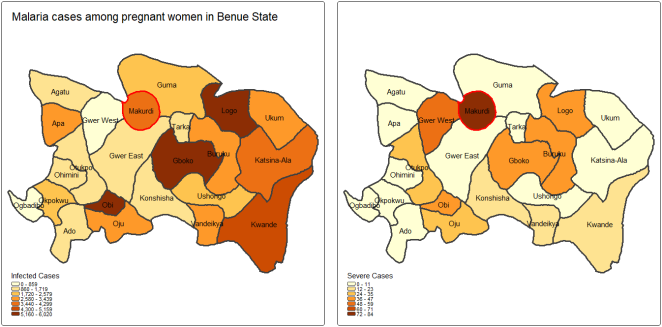
Figure 1. The Map of Benue State showing the total number of incidence and severe cases of malaria in pregnant women respectively within the 23 Local Government Areas.
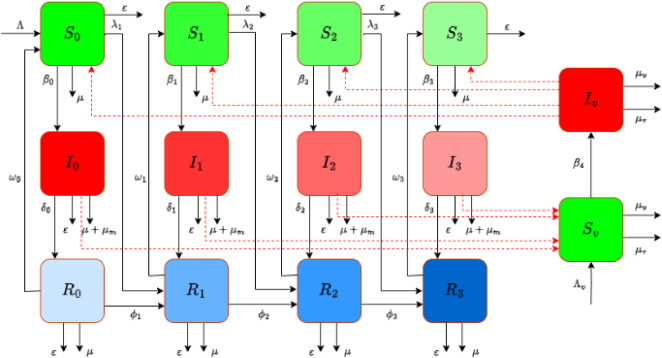
Figure 2. The schematic flow diagram of the model.
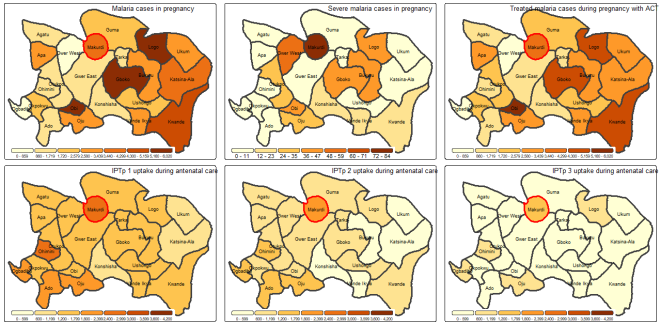
Figure 3. The Map of Benue State showing the total of malaria cases, ACT intervention and IPTp uptake in the 23 Local Government Areas.
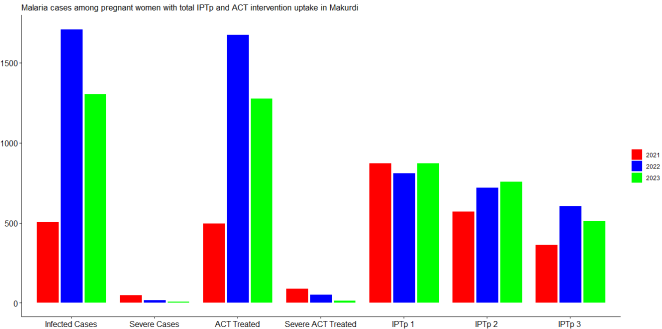
Figure 4. The total yearly reported malaria cases in Makurdi and the various interventions.
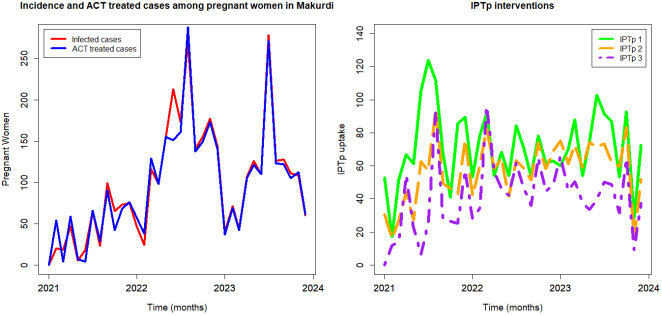
Figure 5. The monthly total recorded malaria incidence cases in Makurdi and the interventions.
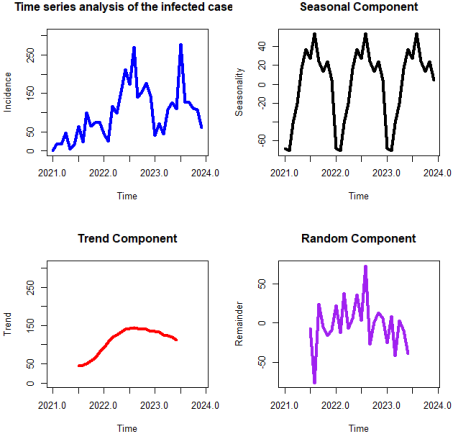
Figure 6. Time series decomposition of the incidence cases into trend, random and seasonal components.
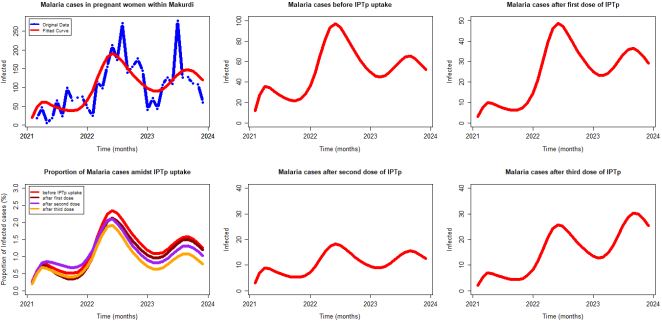
Figure 7. Dynamics for infected pregnant women in Makurdi LGA (DHIS-2) and the fitted curve obtained via numerical simulation.
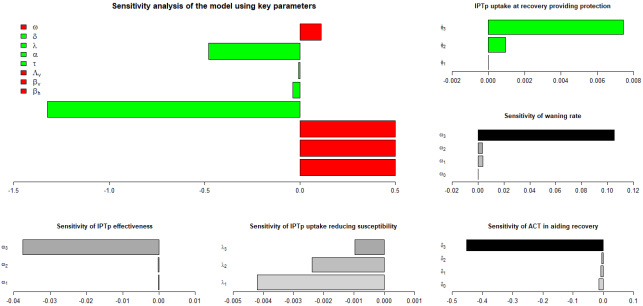
Figure 8. The sensitivity of the model parameters on .
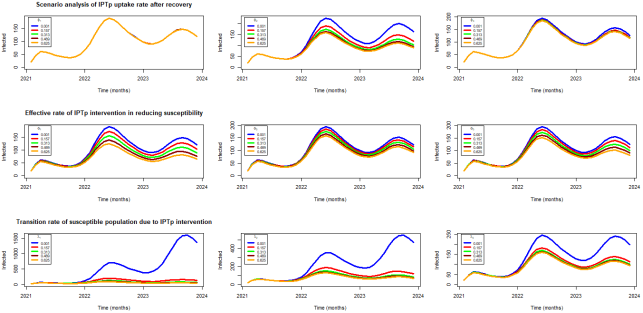
Figure 9. The impact of IPTp interventions in pregnant women in reducing susceptibility and also at recovery stage.
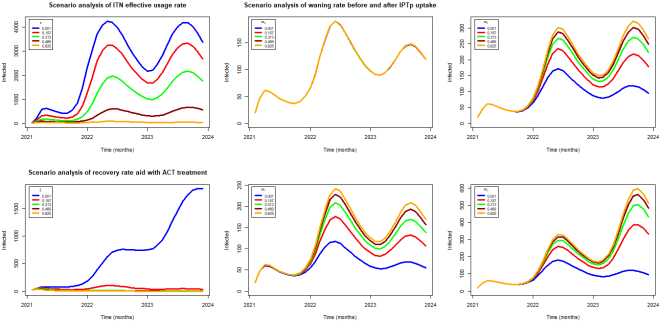
Figure 10. The impact of the various interventions (ITN, antimalaria drugs, and IPTp uptake at different dosage) on the disease dynamics at different scale.
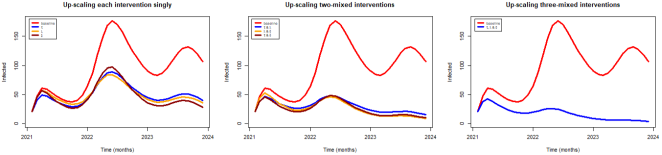
Figure 11. The impact of the various intervention mixes at different scales on the disease dynamics.

Information



 Share This Article
 Twitter
 Linked In
 Facebook
 Copy
Copy Download